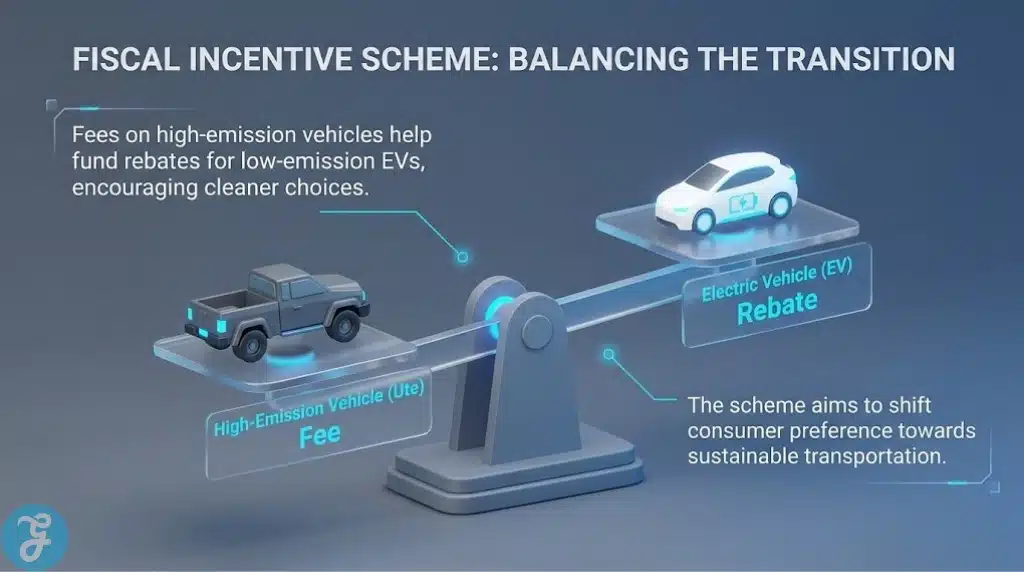
The global push to decarbonize transport has seen various governments experiment with aggressive financial incentives, but few policies were as dramatic, effective, or politically polarizing as New Zealand’s Clean Car Discount. Launched in 2021 by the Labour government and abruptly repealed at the end of 2023 by the incoming National-led coalition, this “feebate” scheme fundamentally altered the Kiwi automotive landscape. It was designed to accelerate the transition to electric and low-emission vehicles by offering substantial cash rebates, funded by penalizing the purchase of high-emission gas guzzlers. However, the scheme’s execution and its staggering market impact caught almost everyone—including the government—by surprise.
Understanding the mechanics of this now-defunct policy provides crucial insights into how financial levers can manipulate consumer behavior and automotive markets.
Our Selection Criteria
To provide an accurate post-mortem of this landmark policy, we analyzed the market data from 2021 through to its repeal in 2023, and the subsequent fallout in 2024 and 2025.
-
Review of official Waka Kotahi (NZ Transport Agency) registration data and emissions reports.
-
Analysis of the fiscal balance between the fees collected and rebates paid.
-
Evaluation of the political and social backlash, specifically from rural communities.
-
Assessment of the secondary market impacts, particularly the influx of Japanese used imports.
Understanding these parameters helps contextualize why the scheme was both a monumental environmental success and a political lightning rod.
Whom This Policy Breakdown Is For
This analysis is tailored for environmental policy researchers, automotive industry analysts, and everyday Kiwis looking to understand the tumultuous recent history of vehicle pricing and emissions regulations in Aotearoa.
With the context set, let’s explore the realities of this ambitious, controversial, and highly impactful scheme.
7 Surprising Facts About New Zealand’s Clean Car Discount
The Clean Car Discount (CCD) was never just a simple subsidy; it was a complex financial mechanism that exposed the cultural and economic divides within the country. Here are the most surprising truths about its tenure.
The first major surprise was how quickly the policy became a battleground for rural versus urban voters.
1. The Infamous “Ute Tax” Rebellion
Almost immediately upon its announcement, the fee structure of the Clean Car Discount ignited fierce opposition from the agricultural and trades sectors. Because the scheme penalized high-emission vehicles—which primarily consisted of the diesel utility vehicles (utes) essential for farming and construction—it was quickly dubbed the “Ute Tax.” This perceived attack on rural livelihoods led to massive nationwide tractor protests organized by groups like Groundswell NZ, turning a climate policy into one of the most contentious political issues of the election cycle.
Best for: Understanding the intense political friction between urban environmental goals and rural operational realities.
Why We Chose It:
-
It highlights how poorly targeted environmental penalties can trigger massive cultural pushback.
-
The “Ute Tax” branding was so effective that it became a central campaign talking point that eventually led to the scheme’s repeal.
Things to consider: At the time the fees were introduced, there were virtually no fully electric utes available in the NZ market capable of replacing diesel workhorses, leaving tradespeople feeling trapped.
The second surprise was purely financial: the scheme worked far too well.
2. It Was Financially “Too Successful”
The Clean Car Discount was originally designed to be “fiscally neutral,” meaning the penalties collected from high-emission vehicles were supposed to perfectly cover the cost of the rebates given to EV and hybrid buyers. However, the rebate proved so incredibly popular that the uptake of low-emission vehicles drastically exceeded government expectations. Nearly three times the amount of rebates were paid out compared to the charges collected, forcing the government to inject massive taxpayer top-ups (over $100 million in Budget 2023) just to keep the scheme afloat before altering the rebate caps.
Best for: Demonstrating the unpredictability of consumer behavior when presented with a strong financial incentive.
Why We Chose It:
-
It proves that financial incentives can shift market habits much faster than modeled projections.
-
The collapse of the “fiscal neutrality” design was a major administrative failure that armed political critics.
Things to consider: The rapid depletion of funds forced mid-cycle adjustments that caused confusion and frustration among car dealerships and buyers.
Despite the financial chaos, the environmental impact was staggeringly immediate.
3. A Massive 33% Drop in Average Fleet Emissions
The core goal of the scheme was to reduce transport emissions, and in that regard, it was an overwhelming success. Before the CCD began in July 2021, the average carbon dioxide emissions from newly registered vehicles in New Zealand was 188 grams per kilometer. By September 2023, that average had plummeted to just 126 grams per kilometer—a nearly 33% reduction in just over two years. This drastic drop was kick-started by a massive surge in hybrid sales, which outnumbered petrol car registrations following the scheme’s expansion in 2022.
Best for: Environmental advocates looking for proof that aggressive financial intervention works.
Why We Chose It:
-
It is one of the fastest recorded drops in national fleet emissions globally.
-
It proved that a “feebate” structure directly forces consumers to prioritize fuel efficiency.
Things to consider: While new registrations became cleaner, the overall national fleet takes decades to turn over, meaning total atmospheric emissions will take time to reflect these gains.
The scheme also utilized a unique approach to ensure subsidies weren’t just for the wealthy.
4. The Used Import EV Boom
Unlike many global EV subsidies (like those in the US) that only apply to brand-new cars, New Zealand’s Clean Car Discount heavily incentivized the purchase of used, low-emission imports. By offering rebates of up to $3,450 (later adjusted) for qualifying used imports, the scheme democratized EV ownership. This led to a massive influx of used Nissan Leafs and hybrid vehicles from Japan, allowing middle-to-lower-income families to transition away from expensive petrol without needing to finance a brand-new $70,000 electric SUV.
Best for: Budget-conscious buyers who capitalized on the secondary EV market.
Why We Chose It:
-
It was a highly equitable design feature that prevented the rebate from being a “rich person’s tax break.”
-
It utilized New Zealand’s unique position as a major importer of right-hand-drive Japanese used vehicles.
Things to consider: The reliance on used imports brought older battery technology into the country, raising future concerns about battery degradation and recycling infrastructure.
The psychological impact of the deadline was just as profound as the financial one.
5. The 62% Purchasing Acceleration
The discount didn’t just convince people to buy EVs; it convinced them to buy them now. Research conducted by the Energy Efficiency and Conservation Authority (EECA) found that a staggering 62% of EV owners admitted they expedited their vehicle purchase specifically because of the Clean Car Discount. The fear of missing out on a government payout drove a massive acceleration in the purchasing cycle, essentially pulling future EV sales forward by several years.
Best for: Behavioral economists studying the impact of limited-time government subsidies.
Why We Chose It:
-
It quantifies the exact psychological leverage the policy held over the buying public.
-
It explains the sudden “cliff edge” drop in EV sales that occurred immediately after the scheme was repealed.
Things to consider: Pulling sales forward created an artificial bubble in the automotive market that resulted in severe stagnation for dealerships once the rebate ended.
The end of the scheme was as dramatic as its tenure.
6. The December 2023 Registration Rush
When the incoming National-led coalition government fulfilled its campaign promise to repeal the “Ute Tax” by December 31, 2023, it triggered unprecedented market chaos. Knowing that the rebates would vanish (and fees on large vehicles would disappear) on January 1, 2024, buyers rushed the dealerships. Dealerships saw a massive spike in EV registrations in late December to capture the final rebates, while buyers of high-emission utes actively delayed their deliveries until January to avoid the penalties.
Best for: Illustrating the volatility caused by abrupt legislative changes in the retail sector.
Why We Chose It:
-
It resulted in one of the most distorted, chaotic months of vehicle sales in New Zealand’s history.
-
It highlighted the logistical nightmares faced by the NZ Transport Agency in processing thousands of last-minute applications.
Things to consider: The government was strictly unforgiving; any vehicle registered after 11:59 PM on December 31 received zero rebate, regardless of when it was ordered.
The hangover from the rebate party brought a harsh new reality for EV owners.
7. The RUC Reality Check of 2024
The repeal of the Clean Car Discount was quickly followed by another financial blow to EV drivers. Since 2009, light electric vehicles had been exempt from Road User Charges (RUCs) to encourage uptake. However, with EVs making up a significant portion of the fleet post-CCD, the government ended this exemption in April 2024. Suddenly, EV and Plug-in Hybrid (PHEV) owners were required to pre-purchase RUCs (currently $76 per 1,000km for BEVs), completely altering the long-term running cost calculations that had justified their initial purchase.
Best for: EV owners navigating the new, un-subsidized reality of the New Zealand road network.
Why We Chose It:
-
It represents the final transition of EVs from a “subsidized novelty” to a mainstream, tax-paying utility.
-
It significantly eroded the “cheap running costs” argument that was a major selling point during the CCD era.
Things to consider: While RUCs add to the running costs, EVs often still remain cheaper per kilometer to run than petrol equivalents when charging on dedicated overnight power plans.
To fully grasp the rapid shifts in policy, it is helpful to look at the timeline of these interventions.
An Overview Of the Clean Car Discount Timeline
The following table breaks down the rapid evolution and subsequent dismantling of New Zealand’s most aggressive vehicle emissions policy.
Overview Comparison Table
| Phase | Timeframe | Key Market Impact | Primary Beneficiary |
| Initial Rebate Launch | July 2021 – March 2022 | Subsidies for EVs only | Early EV Adopters |
| Full “Feebate” Rollout | April 2022 – June 2023 | Fees on Utes, Rebates on Hybrids | Hybrid Buyers, Used Importers |
| Scheme Adjustment | July 2023 – Dec 2023 | Reduced Rebates, Increased Fees | The Government (Deficit Reduction) |
| Scheme Repeal | Dec 31, 2023 | Immediate halt to all fees/rebates | High-Emission Vehicle Buyers |
| RUC Implementation | April 2024 Onward | EVs pay per kilometer traveled | National Land Transport Fund |
Analyzing this timeline helps prospective car buyers understand the current, unsubsidized market environment.
Our Top 3 Picks and Why?
While all these facts are surprising, three aspects of the CCD era stand out as truly historic:
-
The 33% Drop in Emissions: Because achieving such a drastic reduction in national fleet emissions in just 24 months is a globally significant environmental achievement.
-
The “Ute Tax” Rebellion: Because it perfectly encapsulates how climate policy must balance environmental goals with the practical realities of the working class.
-
The Used Import Boom: Because subsidizing the secondary market was a stroke of genius that allowed everyday citizens to participate in the green transition.
Navigating the current automotive market without the discount requires a recalibration of how you calculate vehicle value.
How to Choose a Vehicle in the Post-CCD Era by Yourself?
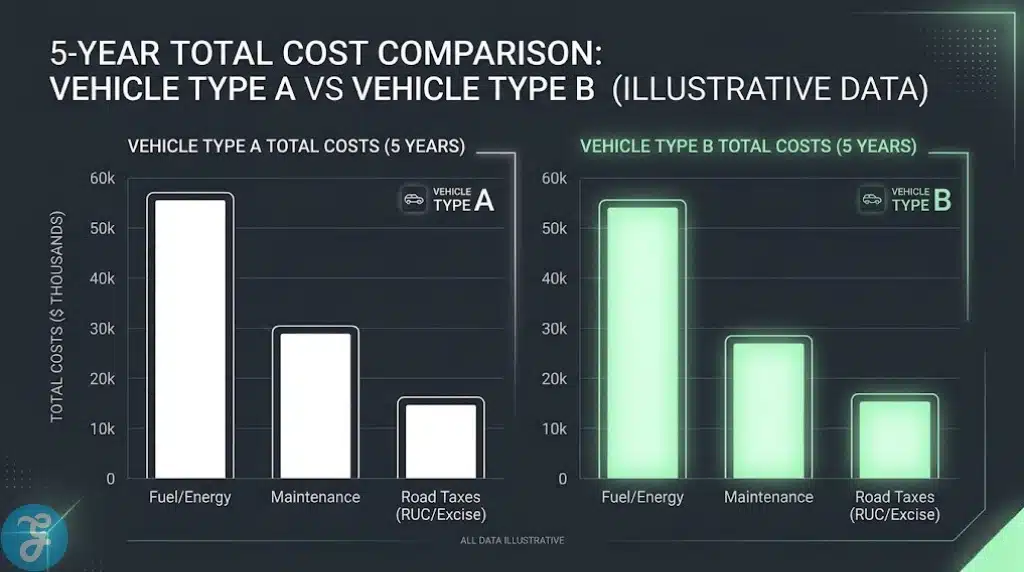
Without government rebates softening the sticker price, buyers must be far more diligent in calculating the Total Cost of Ownership (TCO).
-
Factor in the RUC: When comparing an EV to a petrol car, you must calculate the Road User Charges ($76 per 1,000km) against the equivalent fuel excise duty.
-
Look Beyond the Sticker Price: Evaluate your home charging capabilities; if you can charge off-peak or via solar, the EV still holds a massive operational advantage over a combustion engine.
-
Monitor the Clean Car Standard: While the Discount is gone, the Clean Car Standard (which taxes importers, not buyers) still exists, meaning high-emission vehicles will naturally become more expensive at the dealership level over time.
Before signing on the dotted line for a new or used vehicle, run through this final checklist.
The Final Checklist
Ensure you have evaluated these five points in the 2026 un-subsidized vehicle market.
-
Have you calculated your annual mileage to accurately project your yearly RUC bill?
-
Have you compared the insurance premiums of an EV versus an equivalent combustion vehicle?
-
Are you aware of the battery health (State of Health percentage) if purchasing a used Japanese import?
-
Do you have access to a dedicated EV power plan from your electricity provider?
-
Have you factored in the higher depreciation rates currently affecting the secondary EV market?
Moving past the numbers, we must look at the cultural legacy this scheme left behind in Aotearoa.
The Legacy of the CCD
Looking back from 2026, New Zealand’s Clean Car Discount stands as a fascinating, chaotic, and ultimately successful experiment in blunt-force environmental economics. The scheme forced an uncomfortable truth upon the New Zealand public: transitioning away from fossil fuels is not a frictionless, cost-free endeavor. While the policy was eventually killed by the very political polarization it created—particularly the alienation of the rural sector via the “Ute Tax”—its legacy is permanently bolted into the national fleet. It artificially accelerated EV adoption by a decade, forcing essential infrastructure upgrades and normalizing electric vehicles in Kiwi driveways far faster than market forces ever could have.
However, the subsequent introduction of RUCs for EVs serves as a sobering reminder that environmental subsidies are always temporary; eventually, the piper must be paid. The CCD proved that if you want to change the world quickly, you have to hit people in the wallet, but if you want that change to survive an election cycle, you have to ensure everyone is brought along for the ride.
Understanding the current landscape often brings up questions from those who missed the rebate window.
Frequently Asked Questions (FAQs) About New Zealand’s Clean Car Discount
Here are the most common questions regarding the end of the scheme and the current EV landscape.
Can I still claim a rebate if I bought my car in 2023 but didn’t register it?
No. The legislation was strictly tied to the date of registration, not the date of purchase. Any vehicle registered on or after January 1, 2024, is ineligible for any rebate, regardless of when the sales contract was signed.
Do I still have to pay a fee if I import a high-emission vehicle now?
Direct buyer fees under the Clean Car Discount ended on December 31, 2023. However, importers are still subject to the Clean Car Standard, which penalizes them for importing high-emission vehicles. This cost is usually passed down to the buyer in the sticker price.
Why do EV owners have to pay Road User Charges (RUCs) now?
RUCs fund the upkeep of New Zealand’s roads. Petrol drivers pay this via a tax included in the pump price. EV drivers were exempt to encourage adoption, but now that EVs are mainstream, they must contribute to road maintenance like everyone else.
Are EVs still cheaper to run without the Clean Car Discount?
Yes, generally. Even with RUCs factored in, the cost of electricity per kilometer is typically significantly lower than the cost of petrol or diesel, especially if you charge at home during off-peak hours.
Did the scheme actually help the environment?
Yes. By aggressively shifting consumer purchasing habits toward hybrids and EVs, the scheme resulted in a massive 33% reduction in the average carbon emissions of newly registered vehicles between 2021 and 2023.