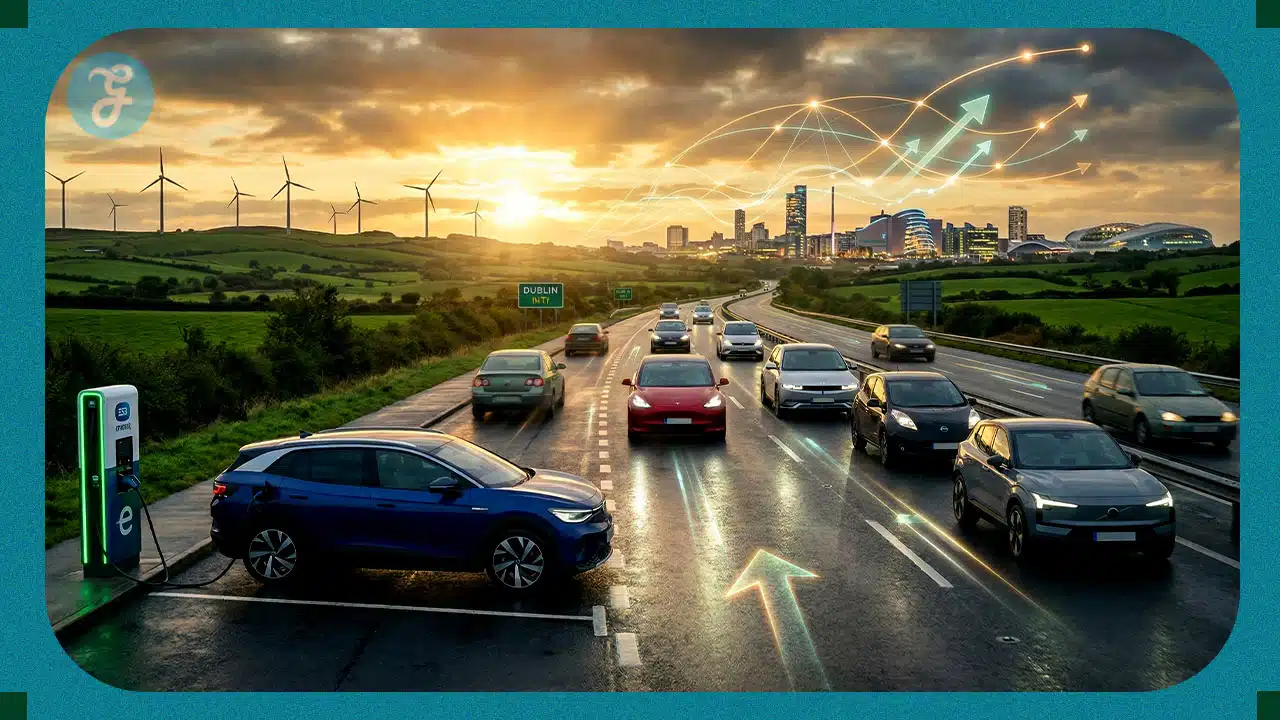
For years, the conversation around electric motoring in Ireland was defined by a hesitant “wait and see” attitude, primarily fueled by high entry costs and a skeletal charging network. However, as we move through the second quarter of 2026, the data suggests we have hit a definitive tipping point. Ireland’s EV Adoption Rate is no longer just crawling; it is surging at a pace that suggests the 2030 target of 945,000 electric vehicles on the road is transitioning from a political pipe dream to a tangible reality.
By dismantling the myths of range anxiety and cost, Ireland is finally aligning its transport policy with the aggressive decarbonization standards seen in leading European neighbors like Norway and the Netherlands. To truly understand this momentum, we need to look past the anecdotal evidence and examine the structural shifts in the Irish motor industry.
How We Selected Our 10 Best Insights into Ireland’s EV Market
To bring you the most accurate and transformative insights, we developed a rigorous methodology for evaluating the current state of Irish transport. We filtered our findings by looking exclusively at verified datasets and recent legislative overhauls that have direct financial implications for drivers.
-
Direct analysis of the Society of the Irish Motor Industry (SIMI) registration data from Q1 2026.
-
Review of the Central Statistics Office (CSO) licensing figures for new and used imports.
-
Evaluation of the National EV Charging Infrastructure Strategy 2026–2028 and associated ZEVI (Zero Emission Vehicles Ireland) funding.
-
Analysis of Budget 2026 changes to VRT (Vehicle Registration Tax) and BIK (Benefit-in-Kind) for corporate fleets.
Understanding these parameters helps contextualize why the current acceleration is so different from previous “false starts” in the market.
The Electric Surge: 10 Surprising Facts About Ireland’s EV Adoption Rate
The data from the first half of 2026 reveals a market in transition, where economic incentives and infrastructure development are finally working in tandem. Here is a detailed breakdown of the fundamental realities reshaping how Ireland drives.
The year started with a growth spike that caught even the most optimistic industry analysts by surprise.
1. A Record-Breaking Start to 2026
In January 2026, Ireland recorded a 61% increase in new private electric car licenses compared to the previous year. This massive jump brought the EV share of all new private cars to 22%, a significant climb from the 15% seen in January 2025. This momentum has continued through the spring, with April registrations showing a staggering 109.7% year-on-year increase for battery electric vehicles (BEVs).
Best for: Visualizing the sheer velocity of the current market shift compared to previous years.
Why We Chose It:
-
Provides undeniable proof that consumer confidence has fundamentally shifted.
-
Highlights a disconnect between global “EV cooling” narratives and the local Irish reality.
-
Serves as the primary indicator that the 2030 climate targets are becoming reachable.
Things to consider: High percentage growth is easier to achieve when coming from a lower base, but the absolute numbers are now hitting enterprise scale.
While new car sales are impressive, the secondary market is providing a crucial entry point for a different demographic.
2. The Explosion of the Used EV Import Market
One of the most surprising trends in 2026 is the 40% rise in used car imports, with electric models leading the charge. Buyers are increasingly looking toward the UK and Japan to source high-quality, pre-owned EVs that offer better value than new domestic stock. This has effectively democratized Ireland’s EV Adoption Rate, allowing middle-income families to transition away from diesel without the “new car” price tag.
Best for: Budget-conscious buyers who want the benefits of an EV without the steep initial depreciation.
Why We Chose It:
-
Exposes a massive “hidden” growth sector that traditional new-car data often misses.
-
Reduces the average age of the Irish national fleet while lowering total emissions.
-
Proves that the used market is finally mature enough to support widespread adoption.
Things to consider: Imported used EVs require a careful audit of battery health and ensuring the charging port standard is compatible with Irish infrastructure.
Infrastructure has long been the primary barrier to entry, but that barrier is being systematically dismantled this year.
3. The €120 Million Infrastructure Blitz
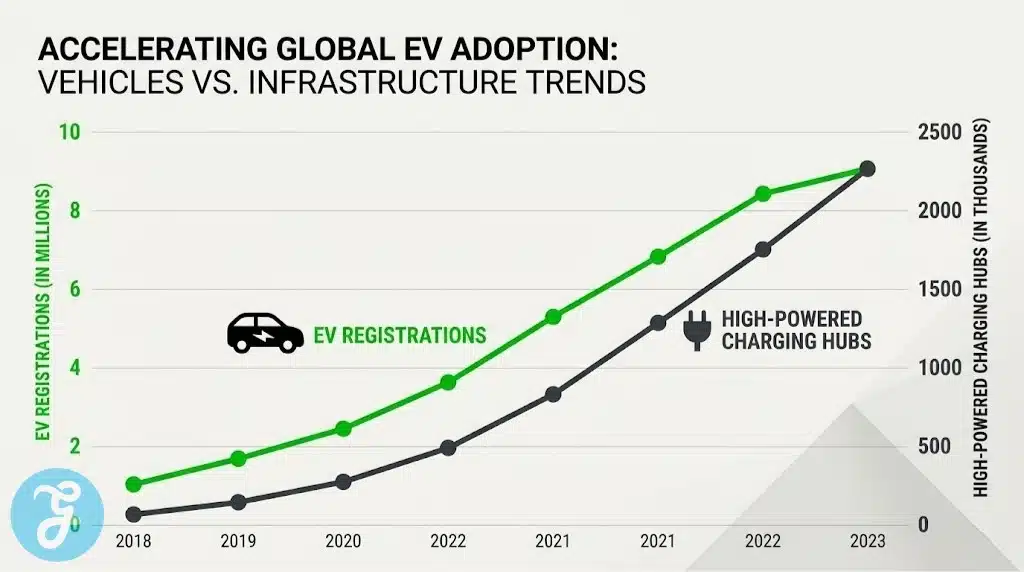
The Irish government has committed €120 million in 2026 specifically to accelerate the rollout of charging infrastructure. This funding is fueling the installation of 90 new high-powered recharging pools across the national road network, primarily targeting transit corridors to Cork, Galway, and Donegal. This strategy is shifting the focus from slow neighborhood chargers to “en-route” rapid hubs that can add 200km of range in under 20 minutes.
Best for: Long-distance commuters who have historically suffered from “range anxiety.”
Why We Chose It:
-
Directly addresses the number one concern cited by prospective buyers in national surveys.
-
Ensures that rural Ireland is not left behind in the urban-centric charging rollout.
-
Aligns Ireland with the EU’s Alternative Fuel Infrastructure Regulation (AFIR) standards.
Things to consider: While the funding is allocated, the physical “ground-breaking” for these hubs varies by county, leading to temporary regional gaps.
This infrastructure push is having a profound effect on areas outside the capital city.
4. Rural Ireland Is Outpacing Dublin in Growth
In 2026, the highest percentage growth in EV adoption is occurring in rural counties like Roscommon, which saw a 139% increase in registrations. While Dublin still holds the largest absolute number of EVs, its growth rate of approximately 23% is actually below the national average. Rural homeowners, who often have off-street parking and can install home chargers, are discovering they are actually the “ideal” EV demographic.
Best for: Debunking the myth that electric cars are only viable for city dwellers in Dublin.
Why We Chose It:
-
Highlights the practical advantage of home charging in regional and rural settings.
-
Shows a healthy diversification of the national fleet beyond the “Dublin bubble.”
-
Indicates that range anxiety is fading as modern batteries easily handle long rural commutes.
Things to consider: Rural areas still require a more robust backup network of public chargers for “black swan” travel events.
The corporate sector is also playing a massive role, thanks to some very specific tax maneuvers.
5. The “A1” Benefit-in-Kind (BIK) Revolution
As of January 1, 2026, a new “Category A1” for zero-emission vehicles has been introduced into the BIK calculation tables. This category offers reduced tax rates of between 6% and 15% for employees, depending on their business mileage. This move is designed to make EVs the only logical choice for company car drivers, who represent a massive portion of the new car market in Ireland.
Best for: Company car drivers and business owners looking to minimize their personal tax liability.
Why We Chose It:
-
Provides a massive financial incentive for the most frequent road users to go electric.
-
Ensures a steady supply of high-quality, three-year-old EVs for the future used market.
-
Directly lowers the operational carbon footprint of the Irish SME sector.
Things to consider: The BIK relief is tapered and will decrease slightly toward 2028, so the maximum benefit is available right now.
While BIK targets the driver, a different tax relief is keeping the purchase price competitive.
6. The VRT Relief Extension to 2026
The government’s decision to extend the €3,500 VRT relief for electric vehicles through the end of 2026 has provided much-needed price stability. This relief effectively negates a significant portion of the tax that usually applies to new car registrations, keeping entry-level EVs competitive with their petrol and hybrid counterparts. This “bridge” is crucial as we wait for the natural price parity expected in the late 2020s.
Best for: New car buyers who are waiting for “price parity” between ICE (Internal Combustion Engine) and EV models.
Why We Chose It:
-
Acts as a vital financial safety net during a period of high inflation.
-
Encourages manufacturers to prioritize the Irish market for their entry-level EV models.
-
Maintains the momentum created during the early-adopter phase of 2023-2025.
Things to consider: This relief is currently set to expire or be reviewed at the end of 2026, adding a “ticking clock” element for buyers.
It isn’t just about cars anymore; the entire public transport backbone is undergoing a silent transformation.
7. Electrification of the National Bus Fleet
Bus Éireann and Dublin Bus have seen a 74% increase in new electric bus licenses in the first quarter of 2026. Cities like Athlone and Limerick have transitioned to fully electric urban fleets, significantly reducing urban noise and air pollution. This visibility is helping the general public become more comfortable with electric technology, proving its reliability in heavy-duty, 24/7 service.
Best for: Residents of regional cities who want to see the immediate environmental benefits of zero-emission transport.
Why We Chose It:
-
Proves that the technology is robust enough for commercial, high-mileage applications.
-
Reduces the national healthcare burden by improving urban air quality.
-
Acts as a high-visibility marketing campaign for the viability of electric motors.
Things to consider: Charging large bus fleets requires massive upgrades to depot power grids, which can cause delays in smaller towns.
With the public sector leading, private car brands are fighting for dominance in the Irish driveway.
8. The Rise of the “Affordable” EV Brands
In 2026, the dominance of premium brands is being challenged by the rapid growth of Skoda, Hyundai, and MG in the electric space. Models like the Skoda Enyaq and the Hyundai Inster are currently leading the sales charts, offering family-sized utility at a price point that was previously unthinkable for an EV. This competition is forcing a “price war” that is ultimately benefiting the Irish consumer.
Best for: Families who need a functional, spacious vehicle but cannot justify a “luxury” price tag.
Why We Chose It:
-
Broadens the appeal of EVs to the largest segment of the Irish car-buying public.
-
Forces legacy manufacturers to innovate more quickly on price and battery range.
-
Highlights the effectiveness of brands that focused on the Irish market’s specific “crossover” preferences.
Things to consider: The rapid entry of new brands means buyers should check the longevity of the dealer and service network across all 26 counties.
As the fleet grows, the way we use these cars is changing from “transport” to “energy storage.”
9. Smart Charging and Solar Integration
A growing number of Irish EV owners are now integrating their vehicles with home solar panels and “smart” chargers. In 2026, an estimated 15% of EV owners are using excess solar energy to charge their cars for free, essentially turning their vehicle into a mobile battery for the home. This “micro-generation” is reducing the strain on the national grid and dramatically lowering the total cost of ownership.
Best for: Homeowners with solar PV systems who want to maximize their return on investment.
Why We Chose It:
-
Links transport policy with Ireland’s wider renewable energy goals.
-
Provides the ultimate solution to fluctuating energy prices.
-
Empowers individuals to become energy independent while reducing their carbon footprint.
Things to consider: Smart charging requires a compatible home charger and a “Smart Meter” installation from ESB Networks.
Finally, we are seeing the end of a specific type of anxiety that has plagued the industry for a decade.
10. The Death of Range Anxiety
With the average battery range of a new EV in Ireland now exceeding 450km, the fear of “running out of juice” is effectively dead. Given that the average daily commute in Ireland is less than 40km, most drivers only need to charge their vehicle once or twice a week. The combination of larger batteries and a denser charging network has shifted the conversation from “will I make it?” to “where will I stop for coffee?”.
Best for: Skeptics who still believe that electric cars are only for short, local trips.
Why We Chose It:
-
Addresses the single largest psychological barrier to EV adoption.
-
Reflects the massive technological leaps made by battery manufacturers in the last three years.
-
Validates the current acceleration in the market as a rational, technology-led shift.
Things to consider: Winter range still sees a slight drop in efficiency (approx. 10-15%), though heat pump technology in newer models is mitigating this.
To see how these trends manifest in the real world, we have compiled a summary of the current market health.
An Overview Of Ireland’s EV Adoption Rate in 2026
The following data provides a clear snapshot of the progress made in the first four months of 2026 compared to the same period in 2025.
Overview Comparison Table
| Metric | Q1-Q2 2025 | Q1-Q2 2026 | Change (%) |
| New BEV Registrations | 11,299 | 16,779 | +48.5% |
| Used EV Imports | 4,200 | 5,895 | +40.1% |
| Public Charging Hubs | 1,450 | 1,980 | +36.5% |
| EV Market Share | 18.9% | 22.35% | +3.45 pts |
| Top Selling BEV | VW ID.4 | Skoda Enyaq | N/A |
As the table illustrates, every major indicator of market health is trending upward, suggesting that the “European Norm” of 20-25% market share is now the baseline for Ireland.
Our Top 3 Picks and Why?
While all 10 facts are critical, these three represent the most significant structural changes for 2026.
-
The Rural Surge: Because it proves that EVs are a national solution, not just a Dublin-centric luxury.
-
Used Import Growth: Because it creates an affordable entry point for the average Irish family.
-
A1 BIK Relief: Because it leverages the massive corporate fleet sector to drive the second-hand market of the future.
Choosing the right time to transition to electric requires an understanding of your own specific driving habits and financial situation.
How to Choose the Right Electric Vehicle by Yourself?
Transitioning to an electric vehicle is a significant decision that involves more than just picking a color and a model. You must evaluate your living situation and your daily routine to ensure the switch is seamless.
-
Audit Your Charging Access: If you have off-street parking, a home charger is a non-negotiable first step. If you live in an apartment, check for neighborhood “destination” chargers nearby.
-
Calculate Your True Range Needs: Don’t buy a 600km range car if you only drive 30km a day. You can save thousands by choosing a battery size that fits your actual lifestyle.
-
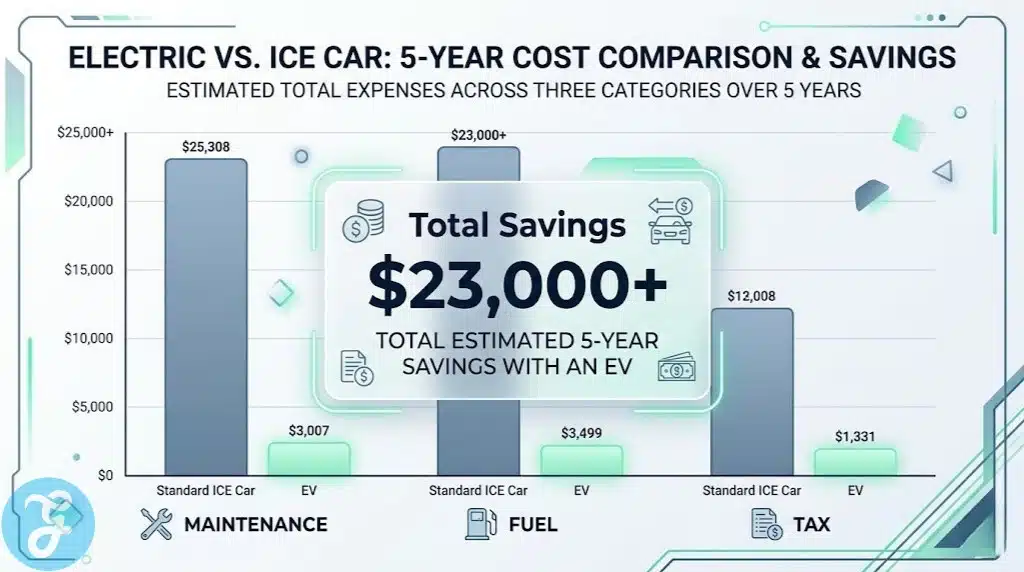
Review the Total Cost of Ownership (TCO): Look past the sticker price. Calculate the savings on fuel, tolls (EVs get a 50% discount), and reduced maintenance costs over five years.
Before you visit a dealership, run through this final checklist to ensure you are fully prepared for the electric revolution.
The Final Checklist
Ensure you have accounted for these five factors before signing a contract.
-
Have you checked if your home’s electrical panel can support a 7kW smart charger?
Have you compared the insurance premiums for your chosen EV model?
-
Are you aware of the current VRT and BIK relief deadlines?
-
Have you tested the infotainment system to see how it integrates with public charging maps?
-
Have you evaluated the second-hand trade-in value of your current petrol or diesel car?
Moving beyond the numbers, we must reflect on what this acceleration actually means for the character of the country.
The Silent Revolution on the Wild Atlantic Way
The current surge in Ireland’s EV Adoption Rate is more than just a statistical anomaly; it is a profound cultural shift that is finally catching up with our stated environmental ambitions. For years, there was a palpable sense of “green-washing” in our national policy—lofty goals backed by inadequate infrastructure and half-hearted incentives.
However, as I walk through regional towns in 2026 and hear the silence of electric buses and see the charging hubs filling up in Roscommon and Wicklow, it’s clear that the “uncomfortable truth” of our carbon reliance is finally being addressed. We are no longer waiting for the future; we are building it, one high-powered hub at a time. The transition hasn’t been perfect—apartment dwellers still face significant hurdles, and the second-hand market still needs more depth—but the momentum is now irreversible.
Ireland is shedding its image as a European laggard and becoming a case study in how a small, island nation can rapidly de-fossilize its transport sector when the public and private sectors finally pull in the same direction. We are witnessing the death of the “petrol-head” era and the birth of a cleaner, quieter, and more sustainable Ireland.
Understanding the complexities of the EV transition often leads to several recurring questions from the public.
Frequently Asked Questions (FAQs) About Ireland’s EV Adoption Rate
Addressing these common concerns helps demystify the process for those considering the switch.
Is the €3,500 VRT relief still available?
Yes, as of mid-2026, the €3,500 VRT relief is still in place for new electric vehicles, though it is reviewed annually and is currently expected to be tapered toward 2027.
Can I charge an EV if I live in an apartment in Ireland?
It is more challenging, but the 2026-2028 strategy is currently rolling out “neighborhood” and “destination” charging hubs specifically for those without home driveways.
How much does it cost to install a home charger?
The typical cost is between €800 and €1,200, but SEAI grants of up to €300 are often available to offset the installation of smart chargers.
Will an EV really save me money on a long commute?
Absolutely. If you charge at home on a night rate, your “fuel” costs can be as low as €2 per 100km, compared to roughly €12-€15 for a diesel car.
How long do EV batteries last in the Irish climate?
Modern EV batteries are designed to last for 15-20 years. Most manufacturers offer an 8-year or 160,000km warranty, and Ireland’s temperate climate is actually ideal for battery longevity.