Do you ever wonder why you keep reaching for that hot sauce bottle? You know your mouth will be on fire, and your stomach might protest later. Yet, you just cannot stop eating it. Many of us face this same struggle every single day. The science behind spicy food craving is actually a fascinating journey into human biology. Your body and brain are working together to make you crave that heat. It is not a matter of willpower or just plain taste.
I am going to walk you through exactly what happens when that heat hits your tongue. We will explore the real reasons you crave those fiery flavors, and I will share a few secrets about building your tolerance safely. Grab a glass of milk, and let us get started.
The Chemistry of Spicy Food
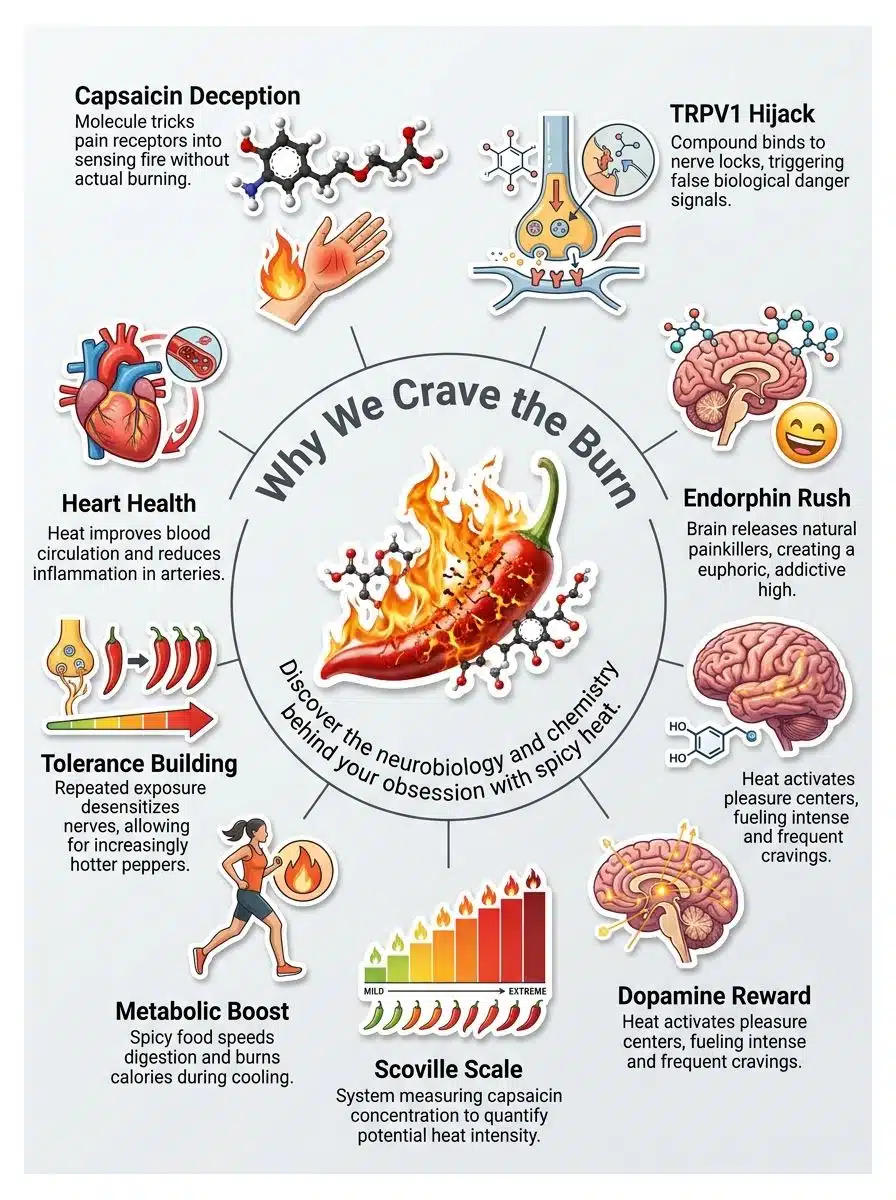
When you bite into a jalapeño or ghost pepper, a single compound called capsaicin triggers the whole fireworks show in your mouth. This powerful molecule does not actually burn your tongue, but rather tricks your brain into thinking it does, and that is where the real magic starts.
Capsaicin: The active compound
When you bite into a pepper, a single compound called capsaicin triggers the whole fireworks show in your mouth. This powerful molecule sits inside pepper cells, waiting to trigger your taste receptors. Capsaicin does not actually burn your mouth. It tricks your brain into thinking heat is there by attaching to pain receptors in your mouth.
Your nervous system gets a false alarm, and your body responds as if a real fire is present. This sensation-seeking experience is what makes spicy food so thrilling for millions of Americans. In fact, the US hot sauce market topped $3 billion recently because we simply love this chemical reaction.
Different peppers contain different amounts of capsaicin. A standard bell pepper scores a zero on the Scoville Heat Unit scale. Meanwhile, the current US-bred champion, Pepper X from South Carolina, hits a staggering 2.69 million units.
Understanding capsaicin concentration helps you manage your reward sensitivity and intense body reactions. Your taste receptors and nociceptors work together to create that addictive sensation you crave.
How capsaicin interacts with TRPV1 receptors
This fiery compound travels deeper into your nervous system to find specific targets called TRPV1 receptors. Think of these receptors as tiny locks sitting on nerve cells throughout your mouth and digestive tract. Capsaicin acts as the perfect key to open them.
A fun fact from a Nobel Prize-winning study at the University of California, San Francisco, showed that TRPV1 receptors normally only activate when they detect physical heat above 109 degrees Fahrenheit. Capsaicin forces these locks open at room temperature.
Once the key turns, your nerve cells fire up and send urgent pain signals to your brain. Your brain interprets these signals as a severe burning sensation within seconds of eating spicy food. This triggers the trigeminal reflex, which is a protective response your body launches against potential threats.
Your face flushes, your eyes water, and you start sweating profusely. Your nociceptors are completely fooled by the chemical interaction, mimicking extreme temperature. Your body then kicks its cooling mechanisms into overdrive to save you from a fire that does not exist.
The Role of Scoville Heat Units (SHU)
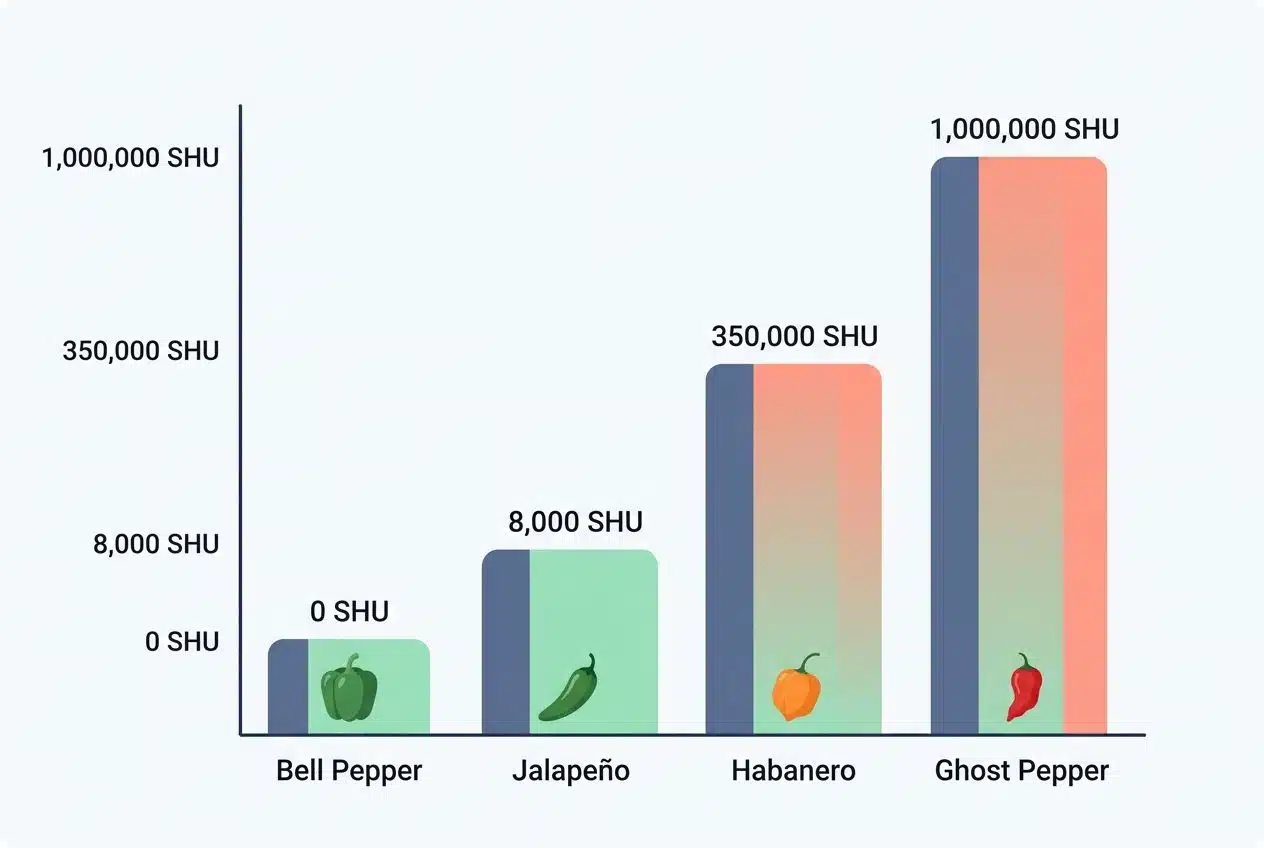
Scoville Heat Units, or SHU, measure exactly how hot a pepper really is. Pharmacist Wilbur Scoville created this scale back in 1912, and it remains the standard today. Here is a quick look at how popular peppers rank on the Scoville scale to help you gauge your next meal:
- Bell Pepper: 0 SHU (Zero heat, pure crunch)
- Jalapeño: 2,500 to 8,000 SHU (The standard US pub food staple)
- Habanero: 100,000 to 350,000 SHU (Serious heat for seasoned fans)
- Ghost Pepper: Over 1,000,000 SHU (A blistering challenge)
The higher the SHU rating, the more capsaicin the pepper contains. Your body’s reward sensitivity actually increases as you eat spicier peppers with higher SHU numbers.
The SHU scale helps you pick peppers that match your tolerance level and your appetite for risk-taking. Your nociceptors fire up more intensely with each jump up the scale, so pace yourself.
The Body’s Reaction to Spicy Food
When you eat spicy food, your body springs into action like a fire alarm going off. Your mouth sends pain signals to your brain, your heart races, and sweat starts pouring down your face as your body fights back against the heat.
Pain signals and the sensation of heat
Your mouth touches a spicy pepper, and your pain receptors spring into immediate action. These nociceptors detect the capsaicin molecule and send distress signals racing to your brain. Your brain interprets this chemical binding as actual heat.
The trigeminal reflex kicks in, which triggers the massive trigeminal nerve that spans your entire face. This is exactly why sweat beads form on your forehead, your eyes water, and your nose starts running. Capsaicin has successfully tricked your nervous system.
Your taste receptors work alongside these pain receptors to create a full sensory experience. This dual activation makes the sensation intense and memorable. The more capsaicin you consume, the stronger those pain signals become. Your body responds with the exact same protective mechanisms every single time you eat a hot pepper.
Endorphin release and the “feel-good” effect
Spicy food triggers a powerful chemical reaction inside your brain that feels surprisingly great. Capsaicin activates your nociceptors, which send loud distress signals to your nervous system. Your brain interprets this as immediate danger and springs into action by flooding your body with endorphins.
These natural chemicals block pain and create a feeling of euphoria. In fact, the endorphin rush from a spicy meal is chemically similar to the famous runner’s high you get after a long jog. Dopamine also gets released during this process, strengthening your reward sensitivity.
This massive dopamine hit explains why spicy food lovers keep coming back for more heat. Eating hot peppers becomes less about the flavor and more about chasing that chemical reward. Your tolerance builds over time, so repeat consumers need hotter peppers to achieve the same feel-good effect.
The trigeminal reflex activates alongside this endorphin production to create a full-body experience. Mild heat simply might not cut it anymore for seasoned spice enthusiasts.
Activation of the body’s cooling mechanisms
Your body fights back hard when capsaicin hits your taste receptors. Your pain receptors send signals to your brain that trick it into thinking your mouth is literally on fire.
“Your body’s cooling response to capsaicin is a survival mechanism that humans have relied on for thousands of years.”
Your body kicks into overdrive, activating cooling mechanisms to protect itself from perceived heat. You start sweating, your blood vessels dilate to release heat, and your body temperature regulation system goes on full alert.
This trigeminal reflex happens automatically, without you having to think about it. Your mouth waters and beads of perspiration form on your forehead as your body tries to cool things down. Endorphins flood your system during this process, which explains why sensation-seeking people enjoy the experience.
The more you expose yourself to spicy food, the better your body learns to handle the heat. Over time, the same level of capsaicin produces less of a cooling response. Your nociceptors simply become less reactive, requiring you to find hotter dishes to get that palatability satisfaction.
Why We Crave Spicy Food
Your brain floods with dopamine when you eat spicy food, and that rush makes you want more. Read on to discover why your body treats hot peppers like a reward.
The role of dopamine in reward pathways
Dopamine is your brain’s primary reward chemical, and spicy food triggers it instantly. Eating hot peppers activates your brain’s pleasure centers, flooding your system with this feel-good neurotransmitter. Dopamine makes you feel amazing, satisfied, and incredibly happy.
Your brain starts linking spicy food with these positive feelings, and over time, this connection grows incredibly strong. You start craving that dopamine rush, so you reach for hotter peppers and spicier dishes. This sensation-seeking behavior kicks in because dopamine makes risk-taking feel highly rewarding.
It is the exact same chemical mechanism that makes watching celebrity interviews on spicy wing shows like Hot Ones so entertaining. We love seeing that dopamine and adrenaline rush in real-time. Reward sensitivity varies from person to person.
People with higher reward sensitivity get bigger dopamine hits from eating hot food, making spicy cravings much stronger. The dopamine system essentially trains your body to seek out more heat, more flavor, and more intensity.
Psychological and cultural influences
Your love of spicy food goes way beyond your taste buds. Culture shapes what you eat, and it plays a massive role in shaping your cravings, too. Growing up in a household where your family cooked with hot peppers wires your brain differently than someone raised on mild flavors.
You learn to associate spicy heat with comfort, celebration, and home. Families pass down recipes and taste preferences like treasured heirlooms. Society plays a huge role in your spicy food habits today.
Current 2026 grocery trends show that Gen Z shoppers in the US are driving a massive boom in extreme spicy snacks and sauces. Young adults often view eating spicy food as a fun risk-taking challenge to share with friends. Gastronomy shows off spicy dishes as sophisticated and adventurous.
The trigeminal reflex that makes you feel the heat becomes tied to social bonding and identity. Eating spicy food transforms from a simple meal into a bold statement about who you are.
Health Benefits of Spicy Food
Spicy food does more than just make your mouth burn. It actually supercharges your body’s health in surprising ways.
Improved digestion and metabolism
Capsaicin actually fires up your digestive system in some incredibly helpful ways. Your stomach produces more gastric juices when you eat spicy food. This increased digestive activity breaks down meals faster and processes nutrients better.
The heat sensation triggers your nociceptors, signaling your body to work harder at digestion. Your metabolism gets a nice boost from spicy food, too. A 2024 nutrition report highlighted that consuming capsaicin can help your body burn an extra 50 calories a day just by trying to cool itself down.
While that calorie-burning effect is modest, it definitely adds up over time when you regularly consume hot peppers. Your flavor perception changes as you eat more spicy foods, making you crave them more often.
People who eat spicy cuisine often report feeling more energized after meals. Their reward sensitivity gets triggered by the heat, and their bodies work efficiently during digestion.
Potential heart health benefits
Your heart gets a fantastic boost from spicy food in ways that go beyond just feeling good. Capsaicin helps your entire cardiovascular system function much better.
Studies presented by the American Heart Association show that eating spicy foods regularly provides several cardiovascular perks:
- Lower Blood Pressure: Capsaicin triggers your body to release compounds that relax blood vessel walls.
- Reduced Inflammation: Regular chili pepper eaters show less swelling in their arteries.
- Improved Circulation: Blood flows more smoothly, meaning your heart does not have to work as hard.
The capsaicin compound also helps prevent blood clots from forming, which cuts your risk of heart attacks. In fact, regular chili pepper eaters have a significantly lower risk of cardiovascular disease. Adding peppers to your plate becomes a simple, tasty way to protect your heart.
Pain relief and anti-inflammatory properties
Capsaicin does more than make your mouth burn. It actually fights pain throughout your entire body. This compound activates nociceptors, and repeated capsaicin exposure makes these receptors less sensitive over time.
Scientists found that capsaicin reduces substance P, a chemical messenger that carries pain signals to your brain. This is exactly why doctors in the US often recommend over-the-counter capsaicin creams, or even prescribe the high-strength Qutenza patch, to treat severe nerve and muscle pain.
The heat sensation you feel tricks your body into releasing endorphins that block pain signals naturally. Inflammation drives many health problems, and capsaicin tackles this issue head-on.
The compound suppresses inflammatory molecules in your body, meaning less swelling and discomfort in your joints. Athletes frequently rub capsaicin on sore muscles because it reduces inflammation faster than rest alone.
The Science Behind Tolerance to Spicy Food
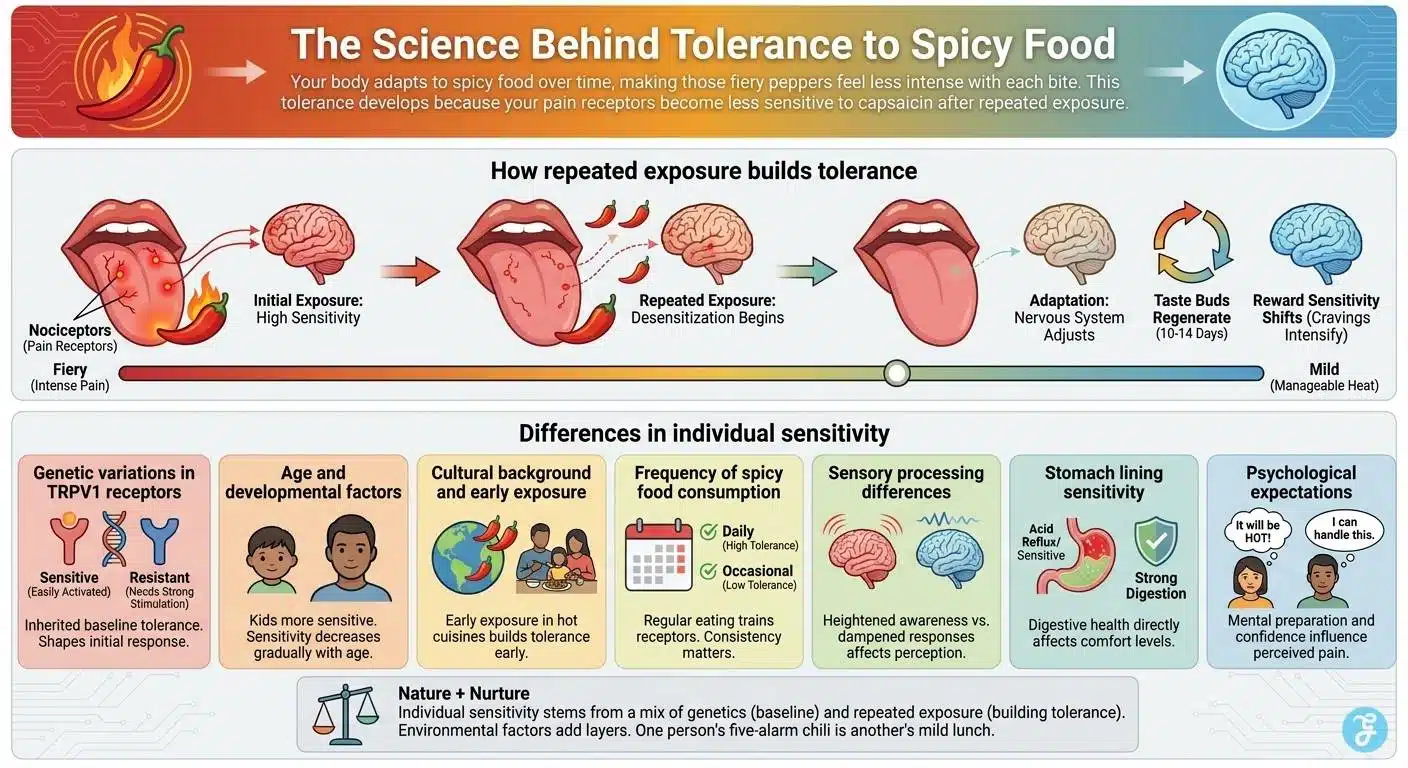
Your body adapts to spicy food over time, making those fiery peppers feel less intense with each bite. This tolerance develops because your pain receptors become less sensitive to capsaicin after repeated exposure.
How repeated exposure builds tolerance
Your taste buds adapt surprisingly fast when you eat spicy food on a regular basis. Each time capsaicin triggers your nociceptors, your body learns to handle the heat a little better. Repeated exposure desensitizes these pain receptors.
The jalapeño that made you sweat last month will probably feel mild today. Human taste buds regenerate every 10 to 14 days, allowing your nervous system to adjust its response to capsaicin continuously. Spicy cravings intensify as your reward sensitivity shifts.
Differences in individual sensitivity explain why some people tolerate extreme heat while others tap out quickly. Genetics play a major role in how your taste receptors respond to capsaicin. Cultural background matters too. People raised eating hot cuisine develop a much higher tolerance early in life.
Differences in individual sensitivity
Not everyone reacts the same way to spicy food, and science perfectly explains why some people can handle ghost peppers while others prefer mild salsa.
| Factor | Impact on Spicy Food Sensitivity |
|---|---|
| Genetic variations in TRPV1 receptors | People inherit different versions of pain receptors. Some folks have receptors that activate easily when capsaicin is present. Others have receptors that require stronger stimulation. This genetic variation shapes your baseline tolerance from birth. |
| Age and developmental factors | Kids typically avoid spicy foods because their taste buds are more sensitive. As people age, taste receptors lose some sensitivity. Adults often enjoy spicy foods more than children do. The change happens gradually over decades. |
| Cultural background and early exposure | Growing up in cultures that cook with chili peppers builds tolerance early. Mexican, Indian, and Thai cuisines expose children to capsaicin from a young age. People raised on bland foods struggle more when they encounter heat later. |
| Frequency of spicy food consumption | Eating spicy foods regularly trains your pain receptors to respond less intensely. Someone who eats jalapeños daily barely notices the heat. Occasional consumers experience stronger burning sensations. Consistency matters far more than genetics alone. |
| Sensory processing differences | Some people have heightened sensory awareness across all senses. These individuals perceive spice more intensely than average. Others have naturally dampened sensory responses. Brain wiring influences how signals reach consciousness. |
| Stomach lining sensitivity | Acid reflux or gastritis makes spicy foods feel more uncomfortable. People with sensitive digestive systems report stronger burning. Those with strong digestion tolerate heat better. Physical health directly affects spice tolerance. |
| Psychological expectations | Thinking a food will be hot can amplify the sensation. Mental preparation shapes how your body perceives capsaicin. Confidence reduces perceived pain levels. The brain plays a significant role in the spicy experience. |
Individual sensitivity to spice stems from a fascinating mix of nature and nurture. Genetics gives you a baseline, but repeated exposure builds your higher tolerance. Environmental factors like stomach health and sensory sensitivity add more layers to the puzzle. One person’s five-alarm chili is simply another person’s mild Tuesday lunch.
Why Some People Dislike Spicy Food
Not everyone’s taste buds dance with joy when spicy peppers hit their tongue, and that is totally okay. Your genes and personal sensory wiring shape how your mouth responds to heat, making some people natural spice lovers while others reach for the milk.
Genetic factors affecting taste perception
Your genes play a huge role in shaping how you taste spicy food. Some people carry genetic variations that make their taste receptors incredibly sensitive to heat and intense flavors. These differences affect how your nociceptors respond to the capsaicin molecule.
Scientists have discovered that specific genes, like the TAS2R38 gene, control your sensitivity to bitter tastes and spicy sensations. People with active versions of these genes are often called “supertasters.” They have more taste buds and experience stronger sensory responses to all flavors, including heat.
If your parents loved hot peppers, you likely inherited genes that make you crave them too. Genetic variations also determine your reward sensitivity, shaping how much pleasure your brain gets from eating spicy food.
Other folks are “non-tasters,” so they need heavily spiced food to feel the same sensation-seeking rush. Understanding your genetic makeup completely explains your personal taste preferences.
The role of sensory preferences
Genetics set the stage, but your unique sensory preferences finalize your food choices. Some people inherit taste receptors that make spicy heat feel like a reward, while others inherit receptors that scream danger.
Your brain’s reward sensitivity plays a massive role in dictating your preferences:
- High Reward Sensitivity: You crave the dopamine rush that spicy food delivers, turning heat into a thrilling adventure.
- Low Reward Sensitivity: You skip the intense peppers and reach for comforting, milder options instead.
Sensation-seeking personalities naturally gravitate toward spicy dishes. Risk-taking individuals find the trigeminal reflex absolutely exhilarating. The endorphins flood their system, and they feel truly alive.
Meanwhile, people who prefer predictable, gentle flavors find spicy food overwhelming and unpleasant. Your sensory preferences shape whether you will become a hot sauce devotee or stick with mild cuisine. Neither preference is wrong. They are just different paths your brain takes based on what feels rewarding to you.
The Downside of Spicy Food
Spicy food can irritate your stomach lining, trigger acid reflux, and cause digestive distress that leaves you running for milk. Push too hard with the heat, and you might damage your gut health or experience painful inflammation that makes eating feel like a risky game.
Irritation and Digestive Sensitivities
Capsaicin triggers pain receptors called nociceptors in your mouth, throat, and stomach. Your body feels genuine heat and discomfort, even without actual temperature changes. This powerful sensation can easily irritate your digestive tract, especially if you eat too much spicy food too fast.
Roughly 10 to 15 percent of the US population manages Irritable Bowel Syndrome, and for them, hot peppers are a major trigger for flare-ups. Your stomach lining becomes inflamed and produces extra acid. Heartburn, cramping, and bathroom troubles frequently follow.
The trigeminal reflex fires up intensely in sensitive individuals. Tolerance builds over time, but digestive sensitivities remain a real concern for millions of people. Eating spicy food on an empty stomach amplifies this irritation dramatically.
Gradual exposure helps your body adjust without causing major discomfort. Pairing hot peppers with dairy products or proteins reduces irritation significantly.
Overconsumption Risks
Spicy food can turn into a serious problem when you eat too much of it. In recent years, US Poison Control centers have even reported spikes in calls related to extreme spicy food challenges. Your body sends clear signals that you have gone too far.
Here are the most common risks:
- Stomach irritation strikes hard when you consume excessive amounts of hot peppers regularly. Your digestive tract experiences inflammation and acid reflux.
- Heartburn becomes a frequent visitor for people who push their spicy food intake beyond reasonable limits. The capsaicin irritates your esophagus.
- Ulcers can flare up in your stomach lining if you consistently eat extreme levels of spicy foods. The heat aggravates the protective mucus layers.
- Diarrhea occurs because spicy foods speed up your digestive tract. Your intestines push food through your system too quickly to absorb water properly.
- Nausea and vomiting happen when your body reaches its maximum tolerance threshold. Your trigeminal reflex goes into overdrive as a defense mechanism.
- Hemorrhoids can develop from straining during uncomfortable bowel movements. The irritation compounds when hot compounds pass through your system.
- Dehydration sets in because spicy foods trigger heavy sweating. Your body loses fluids and electrolytes faster than normal.
- Medication interactions occur when capsaicin interferes with certain prescriptions. Always talk to your doctor about your spicy food habits.
- Addiction patterns emerge as your reward sensitivity intensifies. Your dopamine pathways strengthen, making you crave hotter foods constantly.
- Sleep disruption follows late-night spicy eating. Your body temperature rises, and your stomach works overtime digesting the heavy food.
Wrapping Up
Spicy food addiction runs deeper than just chasing heat and thrills. Capsaicin triggers your nociceptors, sending urgent signals racing through your trigeminal nerve. Your brain floods with endorphins in response to this alarm. This reward sensitivity creates a powerful, repeating cycle.
Your body craves that sensation-seeking rush, so you reach for spicier dishes. The Science Behind Why Spicy Food Is So Addictive proves that dopamine makes the experience feel genuinely pleasurable.
Your taste receptors and flavor perception adapt over time, building a strong tolerance. Your individual sensitivity to capsaicin depends entirely on your genetics and cultural background. The gastronomy of spicy cuisine spans cultures worldwide. Your body’s cooling mechanisms kick in, you sweat, and somehow it just feels amazing.
Craving spicy food is not a flaw. It is your nervous system transforming pain into pleasure through pure neurochemistry.
Frequently Asked Questions (FAQs) on The Science Behind Spicy Food
1. Why do people crave spicy food so much?
When you bite into something spicy, your tongue’s pain receptors activate, and your brain thinks you’re in trouble. It responds by releasing endorphins, which are the same feel-good chemicals released during exercise or laughter. That natural high is why so many people keep coming back for more heat.
2. What makes spicy food taste “hot”?
The burn comes from capsaicin, a compound found in chili peppers that binds to pain receptors in your mouth. On the Scoville scale, which measures heat levels, a jalapeño ranges from 2,500 to 8,000 units, while a Carolina Reaper can hit over 2 million units.
3. Can eating lots of spicy food change how much heat I can handle?
Yes, regular exposure to spicy food can actually desensitize your pain receptors over time. What once felt unbearable can start to feel mild after just a few weeks of consistent spicy meals.
4. Is there any science behind why we enjoy the burn from spicy foods?
Absolutely! Your brain releases endorphins and dopamine when you eat spicy food, creating a natural rush similar to what you’d get from a good workout.