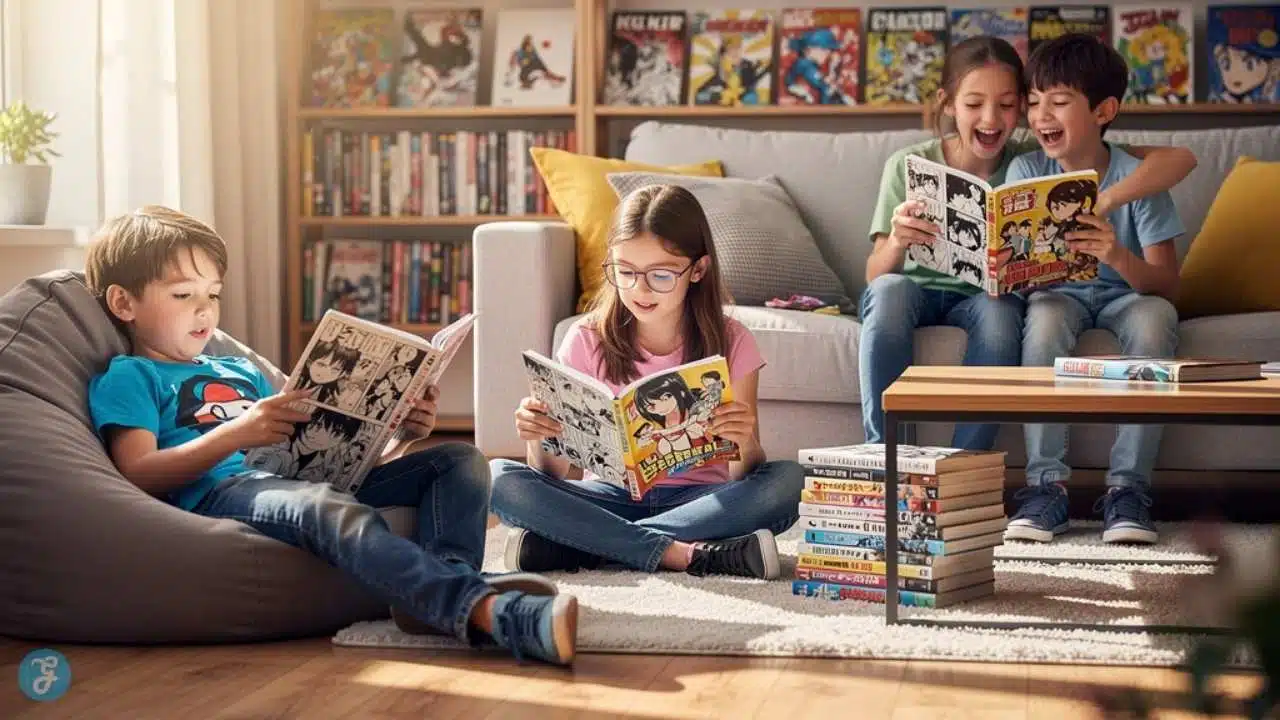
Are you watching your child choose a phone screen over a book every single day? You probably worry they are losing their interest in stories entirely. The struggle feels very real for parents across the US. Here is a helpful secret I discovered: having your kids read manga changes everything. I found that this specific style of comic book works magic on reluctant readers.
We are going to look closely at Manga reading benefits for kids. I will walk you through the exact steps I use to introduce these books. You will see the benefits immediately. Let us explore the details together.
What Is Manga?
Manga is a Japanese style of comic art and storytelling that captures hearts across the globe. These graphic novels tell stories through a mix of illustrations, text, and sequential panels that readers follow from right to left. A 2024 report by Grand View Research valued the US manga market at $1.06 billion. That massive number means your child’s friends and classmates are likely already reading these books.
The art style is bold and expressive. It often features large eyes, dramatic expressions, and action-packed scenes that jump off the page. Major US publishers like Viz Media and Kodansha translate and print these books locally. Manga covers every genre you can think of, from adventure and fantasy to romance and mystery.
Kids pick up manga books and cannot put them down because the stories feel fresh and exciting. The illustrations carry just as much weight as the words.
Manga proves that reading just has to engage kids and pull them into worlds they want to explore.
Some kids struggle with thick novels full of text. Manga makes reading feel less like a chore and more like an exciting adventure.
Why Manga Appeals to Young Readers
Kids pick up manga because it speaks their language literally and visually. Pictures and words work together on the page, making stories jump out and grab readers.
Visual storytelling format
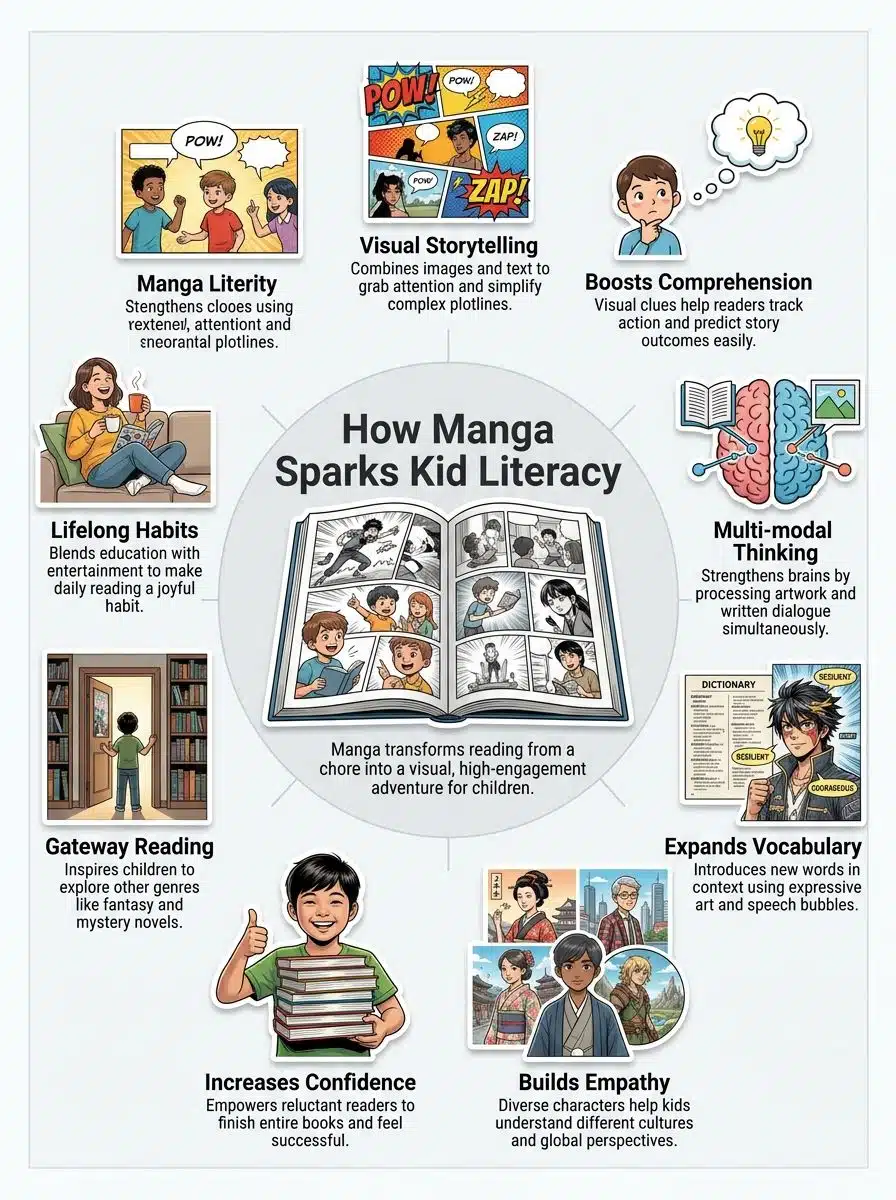
Manga uses pictures and words together to tell stories in a way that grabs kids’ attention fast. Each panel shows action, emotion, and plot details through art instead of long paragraphs of text. Your child’s eyes move from one frame to the next, following the story like watching a movie on paper. Artists focus on the expressiveness of the characters, using specific tools like action lines to create a sense of speed and movement right on the page.
This visual approach makes reading feel like fun. The illustrations carry meaning that words alone cannot express. Kids who struggle with traditional books often find manga easier because the pictures support their comprehension. The graphic novel format teaches children how to process information in multiple ways at once.
They learn to read dialogue bubbles, interpret facial expressions, and follow panel sequences. This multi-modal thinking strengthens their developing brains.
Engaging characters and storylines
Characters in manga jump off the page with bold personalities, quirky traits, and real struggles that kids recognize. Young readers connect with these heroes because they face challenges, make mistakes, and grow stronger.
Here are a few reasons the storylines hook kids so quickly:
- Familiar heroes: Series like Pokémon Adventures let kids read about characters they already know from video games.
- Underdog journeys: Books like My Hero Academia feature a powerless kid gaining strength, a deeply relatable theme for growing children.
- Cultural exploration: Kids encounter characters from different backgrounds, expanding their view of other places.
- Fast pacing: The narrative style means pages fly by, turning reluctant readers into devoted fans.
This passion for storytelling naturally leads kids to explore other literary formats with open minds.
Easy-to-follow panels and design
Manga’s panel layout makes reading feel simple and natural for kids. Each page breaks down into boxes that guide your eyes seamlessly. Simple design choices mean kids stay focused on the narrative instead of struggling with layout confusion. A great example for beginners is Yotsuba&! by Kiyohiko Azuma.
The panels in that specific series are clean, spacious, and extremely easy for young eyes to track. This combination of images and text builds reading comprehension effortlessly.
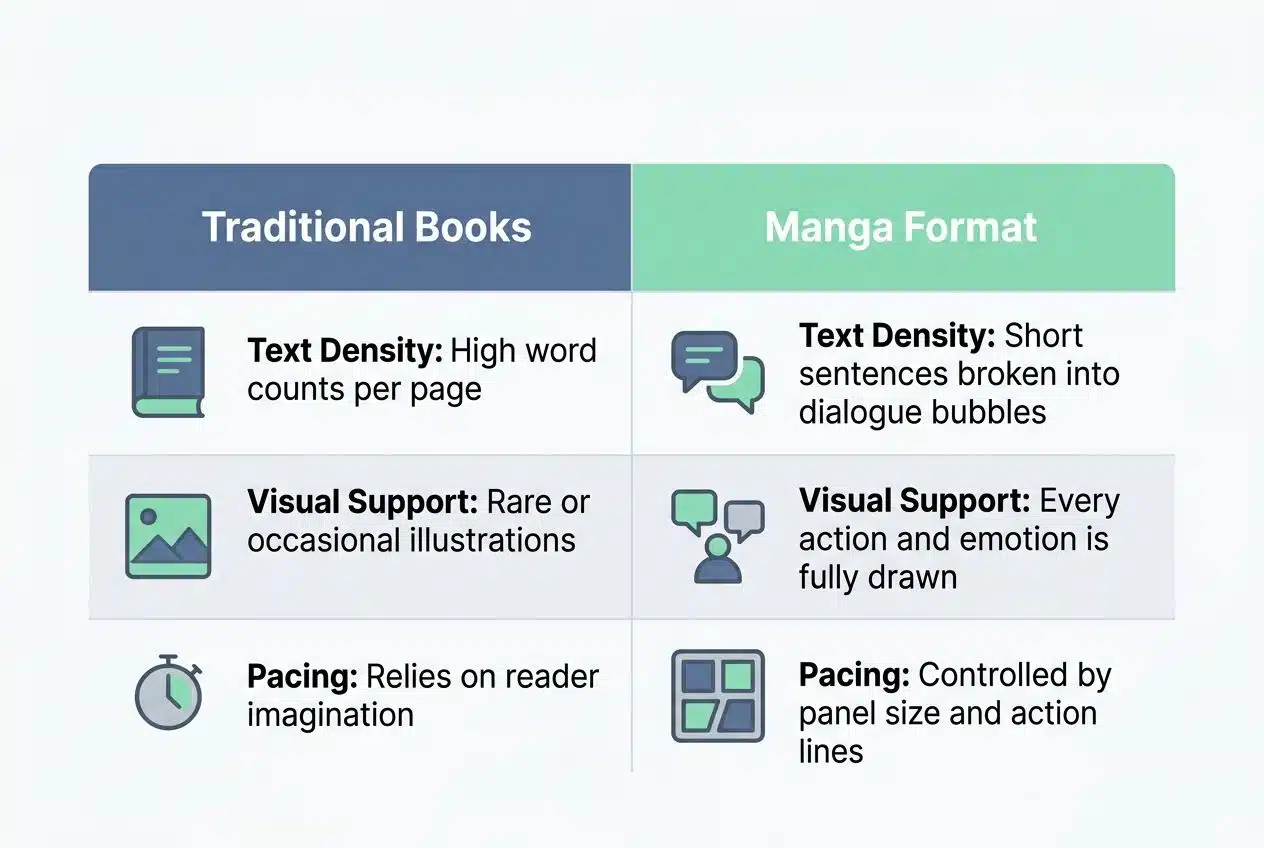
Here is how manga design compares to traditional reading formats:
| Feature | Traditional Books | Manga Format |
|---|---|---|
| Text Density | High word counts per page | Short sentences broken into dialogue bubbles |
| Visual Support | Rare or occasional illustrations | Every action and emotion is fully drawn |
| Pacing | Relies on the reader’s imagination | Controlled by panel size and action lines |
The straightforward design removes barriers for reluctant readers. It makes graphic novels feel accessible and fun rather than intimidating.
Educational Benefits of Manga
Manga sharpens your child’s reading skills, boosts their vocabulary, and trains their brain to think in multiple ways all at the same time.
Improves reading comprehension
Manga stories pull readers into complex plots through pictures and words working together. Kids follow action sequences across panels, which trains their brains to track storylines and predict what happens next.
Many experts in child development note that providing information in both verbal and visual formats helps readers retain information much better. A 2024 article referencing the Northwestern Center for Talent Development highlighted this exact benefit for visual texts.
Their comprehension skills grow stronger with each page they turn. Readers learn to connect clues from pictures to understand the full story. Many popular manga series perfectly match the Lexile reading levels required for elementary and middle school students. You can easily find engaging titles resting safely in the 500L to 1000L Lexile range.
Kids build confidence as they complete entire stories. This success sparks their desire to tackle harder reading material.
Encourages multi-modal thinking
Manga stories pull kids into a world where pictures and words work together as a team. Kids read the text while their eyes take in the artwork at the same time.
This combination forces young readers to think in multiple ways at once. Educators often refer to this process using Dual Coding Theory, which suggests that processing text and images simultaneously creates stronger memory pathways.
Literacy skills grow stronger when children use multiple senses and methods to learn.
The panels guide their eyes across the page in a specific order. This teaches them how to follow a narrative through both formats. At the same time, they decode words and follow dialogue bubbles. This dual engagement sharpens their ability to think critically about stories. Their brains become more flexible and more creative. They stand ready to tackle different types of reading material.
Expands vocabulary and language skills
This multi-modal thinking opens doors to explosive vocabulary growth. Manga stories introduce readers to new words in context, making learning feel completely natural.
A 2023 dissertation from the University of South Florida analyzed how graphic novels introduce challenging vocabulary to students in third through sixth grades. The study found that visual elements directly support a child’s ability to acquire unknown words.
Here is how manga actively builds a child’s vocabulary:
- Contextual clues: A character might use a difficult word like “melancholy,” but the artwork clearly shows them looking sad and isolated.
- Repeated exposure: Series run for many volumes, giving kids repeated practice with the author’s specific descriptive language.
- Conversational slang: Kids pick up formal expressions alongside everyday dialogue, teaching them the natural rhythm of speech.
- Sound effects: Japanese manga often translates specific sound effect words, exposing readers to unique onomatopoeia.
Reading comprehension improves when vocabulary expands. The combination of images and text teaches kids how words work together to create meaning.
Emotional and Social Benefits of Manga
Manga opens doors to characters from all walks of life, and kids see themselves reflected in these stories. Through these connections, young readers build empathy and grow more confident.
Enhances empathy through diverse characters
Diverse characters in manga stories help kids understand people who look different and live different lives. Young readers meet characters from Japan, Korea, and other countries.
A perfect example is the series A Silent Voice by Yoshitoki Oima. This beautifully written story tackles difficult topics like deafness, bullying, and forgiveness in a way middle schoolers can easily grasp. Kids start to care about these characters and their struggles. This caring builds empathy, which means kids learn to feel what others feel.
Readers connect with these struggles and learn that many people share similar feelings. This expression of different viewpoints helps young readers develop genuine sensitivity to the people around them. Kids see themselves reflected in some characters and discover new perspectives through others. Reading these tales turns kids into more thoughtful, understanding people.
Fosters cultural understanding
Manga stories transport readers across the globe, introducing them to Japanese traditions and ways of life. Kids discover new customs through vibrant illustrations that feel alive on the page.
You will often notice your kids picking up cultural nuances directly from the pages. Here are a few ways manga fosters this understanding:
- Food culture: Kids learn about traditional meals like bento boxes, ramen, and onigiri simply by watching their favorite characters eat lunch.
- Language basics: Readers quickly learn the meaning behind Japanese honorifics, such as calling a respected teacher “sensei.”
- Social values: Stories heavily emphasize family loyalty, teamwork, and a deep respect for elders.
- Geography: Readers see actual maps and famous landmarks of cities like Tokyo or Kyoto, sparking an interest in travel.
This visual approach makes cultural lessons stick in their minds far better than textbooks. Manga opens doors to worlds beyond a reader’s own neighborhood.
A child reading about a character’s journey in Tokyo develops empathy across cultures. Young readers realize that people everywhere share similar hopes and fears.
Builds confidence in reluctant readers
Kids who struggle with reading often feel left behind. Manga changes that feeling fast by replacing frustration with immediate success. The visual format lets reluctant readers follow stories without getting stuck on long paragraphs. For example, the Splatoon manga by Sankichi Hinodeya is based directly on the wildly popular Nintendo game.
Gamers who hate reading will eagerly devour this series because they already love the world. This immediate engagement creates a powerful shift in mindset.
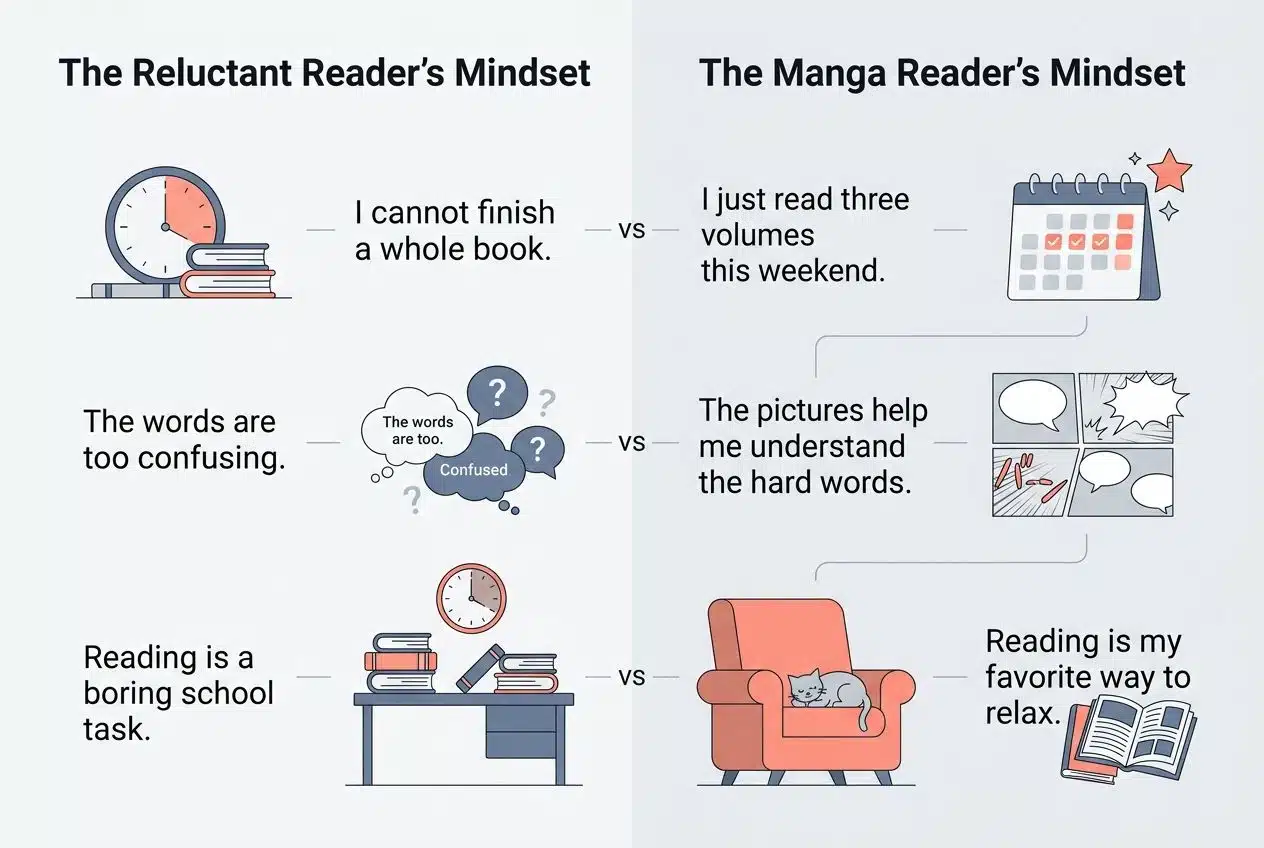
Here is how that transformation usually happens:
| The Reluctant Reader’s Mindset | The Manga Reader’s Mindset |
|---|---|
| “I cannot finish a whole book.” | “I just read three volumes this weekend.” |
| “The words are too confusing.” | “The pictures help me understand the hard words.” |
| “Reading is a boring school task.” | “Reading is my favorite way to relax.” |
Each completed manga story proves they can do hard things. This shift in confidence opens doors to discovering that reading brings pure joy.
Manga as a Gateway to Reading
Manga opens doors to stories kids never knew existed. Kids who start with manga often find themselves craving more stories of all kinds.
Inspires interest in other literary genres
Kids who fall in love with manga often find themselves hungry for more stories. Graphic novels become a stepping stone to traditional books. A child who reads magical girl stories like Sailor Moon will often naturally gravitate toward young adult fantasy novels next. They gain confidence in their reading skills, so they feel brave enough to tackle harder books.
Stories matter to kids now, whether those stories appear in colorful panels or in traditional text.
Books in different genres suddenly seem less scary to reluctant readers. The transition to text-heavy chapter books happens naturally because kids already know they enjoy reading. Vocabulary grows, comprehension improves, and literacy skills strengthen as kids explore fresh genres. The journey leads to a lifetime of literary exploration.
Encourages rereading for deeper understanding
Manga readers often flip back through pages to catch details they missed the first time around. A single panel might hold layers of hidden symbolism. Kids love hunting for “Easter eggs” or secret background jokes hidden by the artist. This habit strengthens comprehension skills because rereading forces young minds to think critically about what they see.
They start asking questions about why a character reacted a certain way. These questions push their brains to work harder. Young readers develop patience with complex narratives and learn that stories reward careful attention. This practice transforms reading into an active, engaging process.
The more they reread, the more they want to explore other books, creating a powerful cycle of literacy growth.
Parent Tips for Introducing Manga to Kids
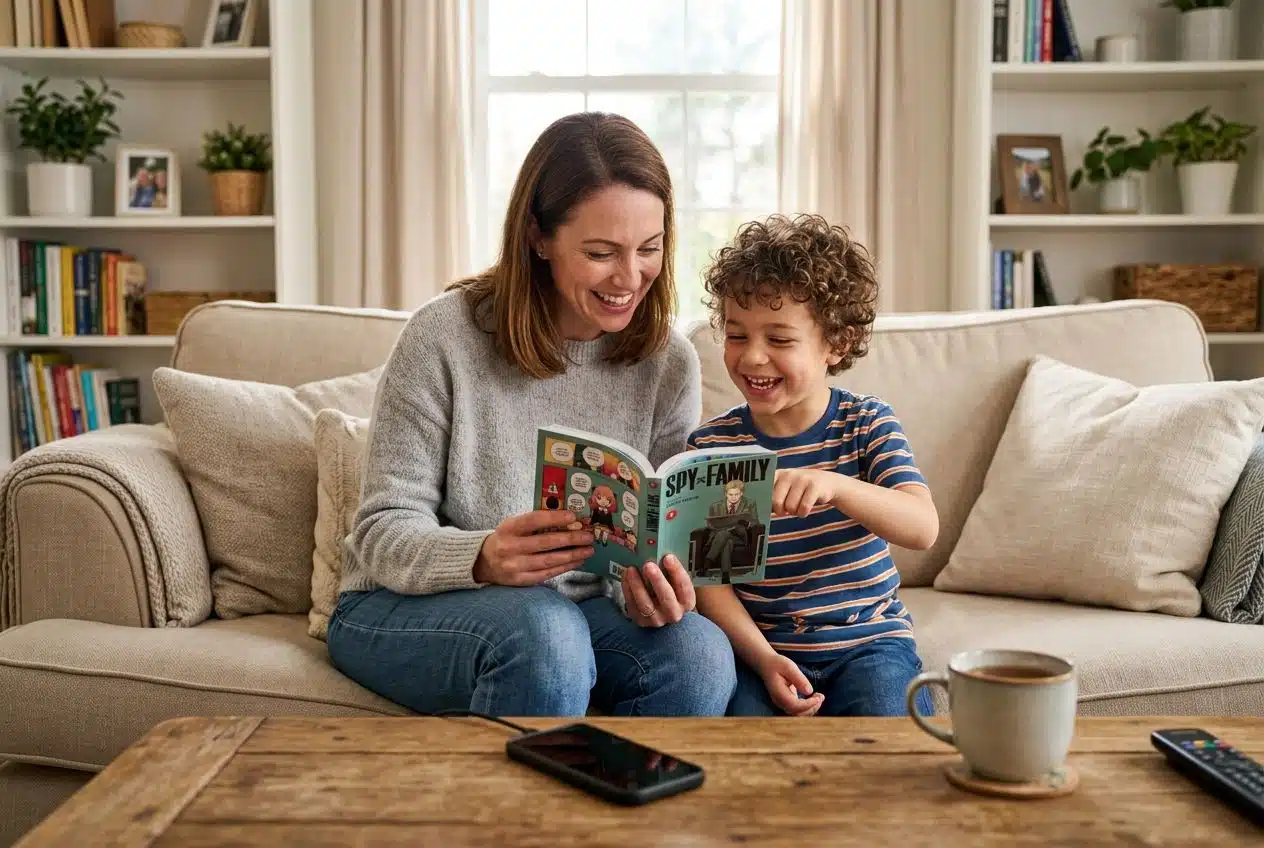
Parents can start small by picking manga stories that match their child’s age and interests. You will spark real conversations when you read manga together.
Choose age-appropriate titles
Picking the right manga titles makes all the difference in your child’s reading journey. Your kids will stay hooked when stories match their age and maturity level.
- Look for trusted publishers: Mainstream publishers are releasing excellent beginner options, like Scholastic’s recent release of Unico: Awakening.
- Start with animal stories: Titles like Chi’s Sweet Home by Konami Kanata are universally loved by young readers and completely safe for early grades.
- Check the age ratings: Publishers clearly label books on the back cover with ratings like “All Ages,” “Teen,” or “Older Teen.”
- Read reviews first: A quick online search reveals what parents and librarians say about each title’s specific content.
- Borrow from the library: Test out a few different series from your local library before spending money on full collections.
This hands-on approach helps you make smart choices about what enters your home.
Explore different genres within manga
Manga offers so many different genres that every reader finds something they absolutely love. Your child can explore mysterious fantasy worlds or everyday school drama.
Here are some of the most popular genres to help you get started:
- Action and Adventure (Shonen): Fast-paced plots about courage and friendship keep kids completely hooked.
- Sports and Competition: Series like Haikyu!! Combine intense volleyball matches with emotional character growth and lessons on teamwork.
- Magical Fantasy: These stories transport readers to enchanted kingdoms, building vocabulary as kids learn new words for spells and creatures.
- Slice-of-Life: Characters experience normal school days and friendships, helping kids see their own daily lives reflected on the page.
- Mystery and Puzzle: This genre improves reading comprehension because kids must pay close attention to clues hiding in the artwork.
Mixing up these genres will keep your child’s engagement high month after month.
Use manga as a tool for learning and discussion
Manga opens doors to rich conversations between parents, teachers, and kids. These graphic novels spark questions that lead to meaningful learning moments.
Try these simple strategies to discuss books with your child:
- Ask for predictions: Have kids guess what happens next in a series, encouraging them to think critically about character motivation.
- Analyze the artwork: Ask your child to point out how a character’s facial expression changes the meaning of their dialogue.
- Connect to reality: Show kids how characters solve problems that mirror challenges in their own school lives.
- Create inspired art: Let children express their reading comprehension by drawing their own comic panels based on the story.
- Trade reading turns: Read manga aloud together, taking turns reading different dialogue bubbles to make the experience interactive.
These discussions transform reading from a solo activity into a shared family journey.
How Manga Supports Lifelong Reading Habits
Manga transforms reading from a chore into a joy.
Combines education with entertainment
Manga stories pack learning into every page without feeling like actual work. Kids absorb new vocabulary and cultural details while rooting for beloved characters. Some series are overtly educational. For instance, the popular series Cells at Work! personifies human blood cells to teach readers actual biological facts about the immune system.
The visual format helps young readers grasp complex ideas faster because images and text work perfectly together. This blend of education and entertainment hooks reluctant readers who normally avoid textbooks.
Students discover that literacy can be fun, engaging, and rewarding all at once. Kids develop reading habits that stick because they genuinely want to return to their favorite series. This approach turns reading from something forced into something they choose to do every single day.
Sparks creativity and imagination
Beyond mixing learning with fun, manga opens doors to incredible creative thinking. Kids see how artists design characters and build entire worlds on the page. This creative spark ignites something powerful in young minds across the US.
- Drawing practice: Readers often begin sketching and inventing tales inspired by what they see in graphic novels.
- Community events: Many kids channel their imagination into creating costumes, known as “cosplay,” to dress up as their favorite heroes.
- Writing stories: The visual arts act like a launchpad, inspiring kids to write their own fan fiction and original dialogue.
- Voice acting: Some kids love reading the dialogue aloud using different character voices, which doubles as fantastic fluency practice.
This blend of storytelling and visual expression builds massive confidence. A child who feels shy about reading suddenly finds courage through this engaging format. The combination of education and entertainment creates reading habits that stay active for a lifetime.
The Closing Thoughts
Manga opens doors that many kids thought were locked shut permanently. Kids who once avoided books now race through colorful panels with genuine excitement. This shift happens because manga speaks their language, combining art with storytelling in ways that feel completely natural.
Parents and teachers watch reluctant readers transform into eager ones. Understanding Manga reading benefits for kids helps us support their literary growth. The graphic novel format removes barriers that traditional books often create. Your child’s reading journey does not end with a comic book; it actually begins right there.
These stories build incredible confidence, expand vocabulary, and strengthen comprehension skills that transfer to every other book they pick up. Kids learn that reading is thrilling and full of endless possibilities. Manga serves as a perfect bridge between entertainment and education. The intense engagement sparked by these stories creates lifelong readers who understand the power of imagination.
Frequently Asked Questions (FAQs) on Manga Reading Benefits For Kids
1. How does manga help kids start loving reading?
Manga grabs attention with pictures and simple words, making stories feel more like watching a movie than reading homework. According to a School Library Journal survey, over 60% of US librarians reported that manga helped reluctant readers become more engaged with books. Kids follow action and emotions without getting stuck in long paragraphs.
2. Why do children find manga easier to read than regular books?
The mix of art and text gives kids visual clues, so if a word is tough, the drawing shows what’s happening. Research from the University of Oregon found that graphic novels like manga help children build visual literacy skills while learning new vocabulary. That way, they keep going even when they don’t know every single word.
3. Can manga improve my child’s reading skills?
Yes, absolutely! A study published by the Literacy Research Association found that students who read manga showed a 23% increase in reading comprehension over one school year. Kids learn new words as part of the adventure, and turning pages keeps their eyes moving and minds working.
4. Is all manga good for young readers?
Not every series fits every age group, since some stories are made for teens or adults. Parents should look for the official manga rating system used by publishers like VIZ Media, which labels books as All Ages, Teen, or Mature, so each kid gets a safe and fun experience.