


In the complex socio-economic landscape of 2026, the South African boardroom has moved past the era of mere compliance. For decades, the mandate was clear, but the execution was often stagnant; however, a new generation of leadership is proving that navigating transformation and inclusion is the single greatest lever for long-term commercial sustainability. As global investors place a higher premium on ESG (Environmental, Social, and Governance) metrics, local firms are finding that deep-rooted equity is no longer a “nice-to-have” but a fundamental requirement for market access.
By moving beyond the “tick-box” mentality of previous cycles, progressive South African corporates are rewriting the script on how to build a truly representative economy that reflects the rich multitudes of its people. To understand the most effective methods currently in play, we developed a structured evaluation model based on real-world impact and systemic change.
How We Selected Our 10 Methods for Inclusion in SA
To bring you the most actionable insights, we analyzed the 2026 landscape of the JSE’s top-tier performers. We filtered our findings by looking exclusively at methods that have shown measurable progress in both employee sentiment and B-BBEE scorecard performance over the last 24 months.
-
Direct impact on the Broad-Based Black Economic Empowerment (B-BBEE) level status.
-
Documented improvement in representation at the Senior Management and Exco levels.
-
Scalability across different sectors, from mining to fintech.
-
Integration with international ESG reporting standards.
Understanding the filters used to select these strategies provides a clear context for why these specific actions were prioritized in our analysis.
Whom This Insight Is For
This operational breakdown is tailored for Chief People Officers, transformation managers, and business owners who are seeking to evolve their corporate culture from passive compliance to active, inclusive excellence.
Once the strategic baseline is established, we can examine the specific tactical shifts that are moving the needle in 2026.
The following strategies represent a blend of legislative adherence and innovative cultural design. Each is designed to address a specific bottleneck in the traditional South African corporate structure.
Moving toward a more holistic view of empowerment is often where the most significant progress begins.
1. Strategic B-BBEE Ownership Evolution
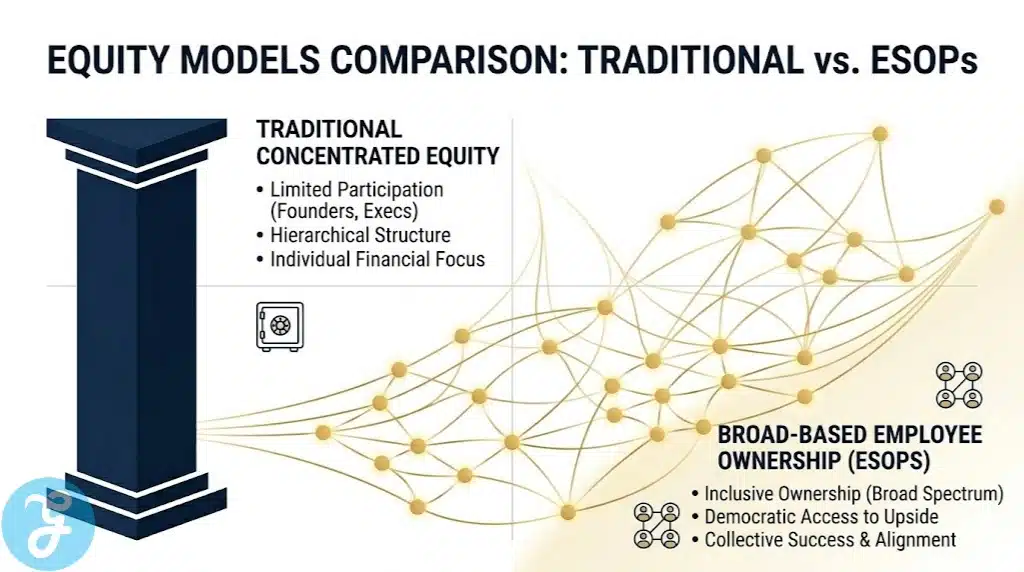
Modern South African firms are moving away from surface-level equity deals toward “broad-based” structures that include employee share ownership schemes (ESOPs). By giving the workforce a tangible stake in the company’s success, leadership creates a culture of shared destiny. This approach ensures that ownership metrics are not just held by a small group of investors but are felt across the factory floor and the office cubicle.
Best for: Ensuring long-term wealth redistribution and increasing employee engagement at every organizational level.
Why We Chose It:
-
Moves ownership beyond a simple administrative metric.
-
Directly improves the Ownership pillar of the B-BBEE scorecard.
-
Aligns employee interests with overall shareholder value.
Things to consider: ESOPs require extensive financial literacy training for employees to ensure they understand the long-term value of their shares.
While ownership is the foundation, the daily experience of the workforce is shaped by those in positions of power.
2. Inclusive Leadership Development
Corporate South Africa is investing heavily in EQ (Emotional Intelligence) training for middle and senior management. This training focuses specifically on managing diverse teams and identifying unconscious bias in performance reviews. It ensures that the leaders tasked with navigating transformation and inclusion have the emotional tools required to handle the nuances of a multi-cultural environment.
Best for: Reducing turnover among young, diverse talent by improving the quality of daily management.
Why We Chose It:
-
Addresses the “culture clash” often found in legacy corporate environments.
-
Empowers managers to lead with empathy rather than just authority.
-
Provides a standardized framework for conflict resolution in diverse teams.
Things to consider: Leadership training is a slow-burn investment that requires consistent follow-up rather than a once-off workshop.
Ensuring that the talent pipeline is supported as it moves upward is the next logical step for sustainable equity.
3. Formalized Sponsorship and Mentorship
There is a critical difference between a mentor (who talks to you) and a sponsor (who talks about you). Top SA firms are establishing formalized sponsorship programs where senior executives are paired with high-potential black professionals. The sponsor’s role is to actively advocate for their protégé during promotion cycles, ensuring that talent from underrepresented backgrounds doesn’t get overlooked in “closed-door” sessions.
Best for: Rapidly diversifying the “C-suite” and senior management pipelines.
Why We Chose It:
-
Directly counters the “old boys’ club” dynamics of traditional boardrooms.
-
Provides young professionals with high-level exposure they might not otherwise get.
-
Creates a tangible pathway for succession planning.
Things to consider: The program must be performance-based to maintain its integrity and avoid accusations of favoritism.
Extending the impact beyond the walls of the office ensures a wider socio-economic benefit.
4. Impactful Enterprise and Supplier Development
Rather than just buying goods, corporates are using their procurement power to incubate black-owned SMEs. This involves providing small suppliers with early payment terms, technical assistance, and long-term contracts. By strengthening the supply chain, the corporate doesn’t just gain a loyal partner; it helps build the broader middle-class economy that will eventually become its customer base.
Best for: Building a resilient, local supply chain while maximizing B-BBEE procurement points.
Why We Chose It:
-
Creates a multiplier effect in the local economy.
-
Reduces reliance on international logistics by fostering local capability.
-
Builds long-term brand loyalty within the supplier network.
Things to consider: Small suppliers may require significant initial administrative support to meet corporate compliance standards.
Investing in the future workforce remains a pillar of national transformation.
5. Targeted Skills Development and Upskilling
With the rise of AI and automation, SA firms are focusing their training budgets on “future-proofing” their black workforce. This includes data science, digital literacy, and technical certifications that are globally recognized. This ensures that as the company evolves technologically, its demographic representation remains intact rather than being automated out of existence.
Best for: Protecting the workforce from technological displacement and closing the digital divide.
Why We Chose It:
-
Aligns with the national Skills Development Act requirements.
-
Ensures the company has the technical talent it needs to compete globally.
-
Provides employees with portable skills that increase their lifetime value.
Things to consider: Training programs must be carefully aligned with the actual technical needs of the business to ensure a return on investment.
Creating safe spaces for dialogue is essential for maintaining cultural health.
6. Employee Resource Groups (ERGs)
Leading firms are supporting the creation of voluntary, employee-led groups that foster a diverse, inclusive workplace. Whether focused on women in leadership, LGBTQ+ rights, or cultural heritage, these groups provide a safe space for employees to voice concerns and propose cultural changes. They act as an early-warning system for leadership regarding toxic micro-cultures.
Best for: Identifying and fixing deep-seated cultural issues that HR might miss.
Why We Chose It:
-
Gives employees a sense of belonging and agency within the firm.
-
Provides leadership with a direct pulse on the “lived experience” of the staff.
-
Fosters intersectional understanding across the organization.
Things to consider: ERGs must have a clear line of communication to the board to be effective, otherwise they risk becoming mere “social clubs.”
The question of pay remains a central point of tension that requires radical honesty.
7. Transparent Pay Equity Audits
To address the historical wage gap, companies are conducting third-party audits of their compensation structures. By being transparent about pay bands and the criteria for bonuses, they remove the suspicion of “race-based” or “gender-based” salary discrepancies. This level of honesty is becoming a major selling point for top-tier talent looking for a fair environment.
Best for: Eliminating internal resentment and building absolute institutional trust.
Why We Chose It:
-
Directly addresses the “uncomfortable truth” of the legacy wage gap.
-
Forces a meritocratic approach to compensation.
-
Significantly improves the firm’s attractiveness to the modern talent market.
Things to consider: Fixing identified gaps can be expensive and may require a multi-year budgetary adjustment.
Inclusion in 2026 must also account for the diverse ways our brains function.
8. Neurodiversity Inclusion Initiatives
A relatively new but vital focus in South Africa is the inclusion of neurodivergent talent, including individuals with autism, ADHD, and dyslexia. Corporates are adapting their recruitment processes—moving away from high-stress interviews toward skills-based assessments. This allows them to tap into specialized problem-solving and creative skill sets that are often ignored in traditional corporate settings.
Best for: Accessing high-level technical and creative skills that are often overlooked.
Why We Chose It:
-
Expands the definition of “inclusion” to be truly holistic.
-
Provides a competitive advantage in sectors like tech and finance.
-
Fosters a more patient and adaptable management style.
Things to consider: The physical office environment may need adjustments to accommodate sensory sensitivities.
Accessibility must be built into the very design of the workspace.
9. Physical and Digital Accessibility Audits
Inclusion isn’t just about culture; it’s about physical access. Companies are auditing both their physical offices and their digital tools to ensure that employees with disabilities can function at 100%. This includes everything from screen-reader compatibility to wheelchair-friendly office layouts. By removing physical barriers, the company proves its commitment to every member of the team.
Best for: Meeting the legal requirements of the Employment Equity Act and respecting the rights of the disabled.
Why We Chose It:
-
Unlocks a significant pool of talent that is often marginalized.
-
Signals a high level of empathy and operational excellence.
-
Ensures that the digital transformation is truly inclusive.
Things to consider: Retrofitting old buildings can be costly, so accessibility should be a priority in any new office design.
Finally, the way a company reports its progress determines its credibility in the global market.
10. Integrated ESG and B-BBEE Reporting
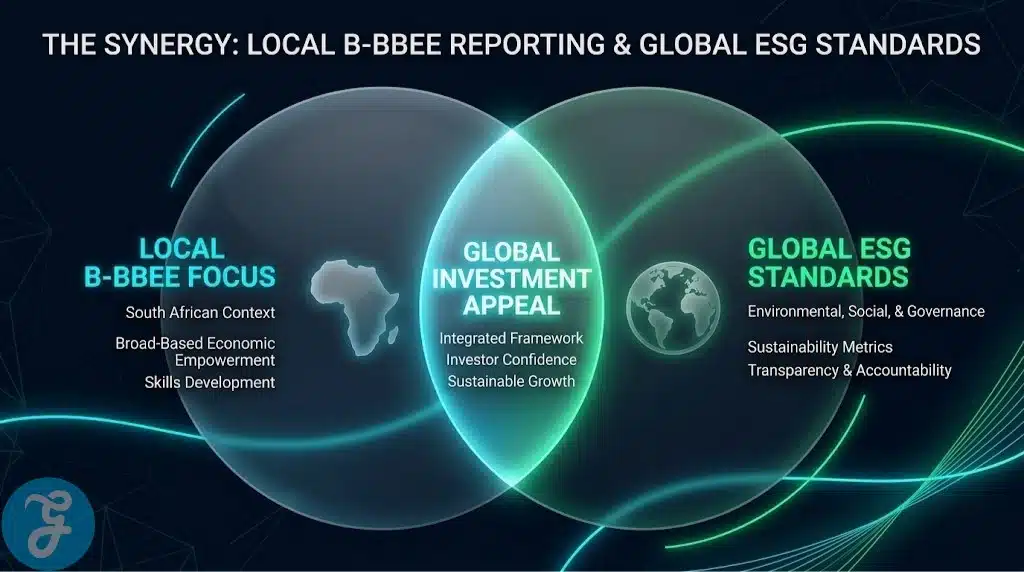
The most successful SA firms are now merging their local B-BBEE reporting with their global ESG disclosures. By treating transformation as a core business risk and opportunity, they provide investors with a clear, audited view of their progress. This transparency ensures that the company is held accountable by the global capital market as much as by local regulators.
Best for: Securing international investment and building a reputation for high integrity.
Why We Chose It:
-
Standardizes the “social” element of ESG for the South African context.
-
Forces a high level of data accuracy in transformation metrics.
-
Provides a competitive edge in global capital markets.
Things to consider: Requires a sophisticated data-collection system to ensure that local and global metrics are aligned.
To better understand how these strategies stack up, we have prepared a summary of their core focus areas.
The current corporate landscape requires a balanced approach that covers both internal culture and external socio-economic impact.
Overview Comparison Table
| Strategy | Primary Focus Area | Implementation Ease | ROI Timeline |
| Ownership Evolution | Equity & Wealth | Difficult | Long-term |
| Inclusive Leadership | Cultural Health | Medium | Medium-term |
| Mentorship Programs | Talent Pipeline | Medium | Medium-term |
| Supplier Development | Economic Impact | Difficult | Long-term |
| Skills Upskilling | Future-proofing | Easy | Short-term |
| Resource Groups | Social Cohesion | Easy | Short-term |
| Pay Equity Audits | Fairness & Trust | Medium | Short-term |
| Neurodiversity | Cognitive Talent | Medium | Medium-term |
| Accessibility Audits | Physical Inclusion | Medium | Medium-term |
| Integrated Reporting | Accountability | Difficult | Long-term |
Analyzing these strategies reveals which paths offer the most immediate impact for a transitioning firm.
Our Top 3 Picks and Why?
While all ten strategies are vital, three stand out as the most critical for immediate success in the current climate.
-
Inclusive Leadership Training: Because the culture of a company starts and ends with its people-managers.
-
Skills Development and Upskilling: Because it is the most direct way to protect the workforce from the volatility of the AI era.
-
Transparent Pay Equity Audits: Because it is the most powerful way to build immediate trust and loyalty within the organization.
Implementing these strategies effectively requires a clear framework for decision-making and execution.
Every company is at a different stage of its journey, and the “best” strategy depends entirely on your current organizational maturity.
-
Assess Your Current Baseline: Use anonymous surveys to understand the “unfiltered” experience of your diverse staff.
-
Identify the Biggest Friction Point: Is the problem recruitment, retention, or the “glass ceiling” at management levels?
-
Align with Business Goals: Ensure your inclusion strategies actually help the company solve its core operational challenges.
Before you begin your next transformation cycle, run through this final list to ensure your foundations are secure.
The Final Checklist
Ensure you have covered these five points before launching your next inclusion initiative.
-
Have you secured a “buy-in” from the CEO and the board for these changes?
-
Are your transformation goals backed by a specific, dedicated budget?
-
Do you have a clear, data-driven way to measure the success of the initiative?
-
Have you consulted with the people who are actually meant to benefit from the program?
-
Is your communication strategy transparent enough to avoid internal gossip or resentment?
Moving beyond the metrics, we must consider the human element that drives these systemic changes.
The Soul of Equity in 2026
As we look toward the horizon of the late 2020s, it’s becoming clear that navigating transformation and inclusion is not a destination we reach, but a muscle we must consistently train. The “uncomfortable” truth that many South African corporates still grapple with is that the scars of the past do not heal through press releases or superficial branding. True equity requires a level of raw, radical honesty that can feel destabilizing to those who have traditionally held the reins of power. It demands that we look at our boardrooms not just as centers of capital, but as mirrors of the society we wish to build.
The future belongs to the organizations that realize inclusion is the ultimate competitive advantage—not because it’s a moral requirement, but because it’s the most efficient way to unlock the dormant potential of an entire nation. If we continue to treat these initiatives as secondary “side-projects,” we risk becoming irrelevant in a global market that is increasingly allergic to social stagnation. The soul of our economy is found in the shared seat at the table, where the diversity of our thought is matched only by the sincerity of our action. It is a messy, difficult, and profoundly rewarding journey that remains the only viable path for a thriving South Africa.
Understanding the nuances of these corporate shifts often brings up several recurring questions from the market.
Addressing these common queries helps demystify the process of corporate change.
Is B-BBEE still relevant for global companies operating in SA?
Yes. Global firms are finding that B-BBEE compliance is increasingly aligned with international ESG standards, making it a vital component of their global “Social” reporting.
What is the most common mistake companies make in transformation?
The most common mistake is treating it as a “human resources” issue rather than a core strategic business priority that is led by the CEO.
How do you measure the success of inclusion beyond the scorecard?
Success is measured through employee retention rates among diverse talent, internal promotion statistics, and “belonging” scores in anonymous cultural audits.
Does inclusive leadership training actually work?
Yes, but only if it is integrated into the manager’s actual performance KPIs. If there are no consequences for poor inclusive leadership, the training becomes ineffective.
Small businesses can focus on “low-cost, high-impact” actions like mentoring young talent, creating a flexible work environment, and conducting their own informal pay equity reviews.






















