For some, gaming is a fleeting pastime, but for those who have stood on the cliffs of Hyrule or felt the weight of a choice in a post-apocalyptic wasteland, it is the most visceral form of modern storytelling. We are no longer in an era where games are just “toys”; they are complex, emotional, and technically profound experiences that mirror the human condition. Determining which Video Games You Must Play before you die is a journey through digital history, identifying the titles that didn’t just entertain us, but fundamentally changed the way we perceive interactive media.
Whether you are a seasoned veteran or a curious newcomer, these experiences represent the absolute zenith of what is possible when technology meets unbridled creativity. To filter through the thousands of titles released over the last four decades, we established a strict set of criteria to identify true, life-changing masterpieces.
How We Selected Our 10 Best Gaming Masterpieces for Your Bucket List
Our selection process avoided “hype” in favor of long-term cultural impact and mechanical perfection. We analyzed how each title influenced the industry and whether its emotional resonance holds up years after its initial launch.
-
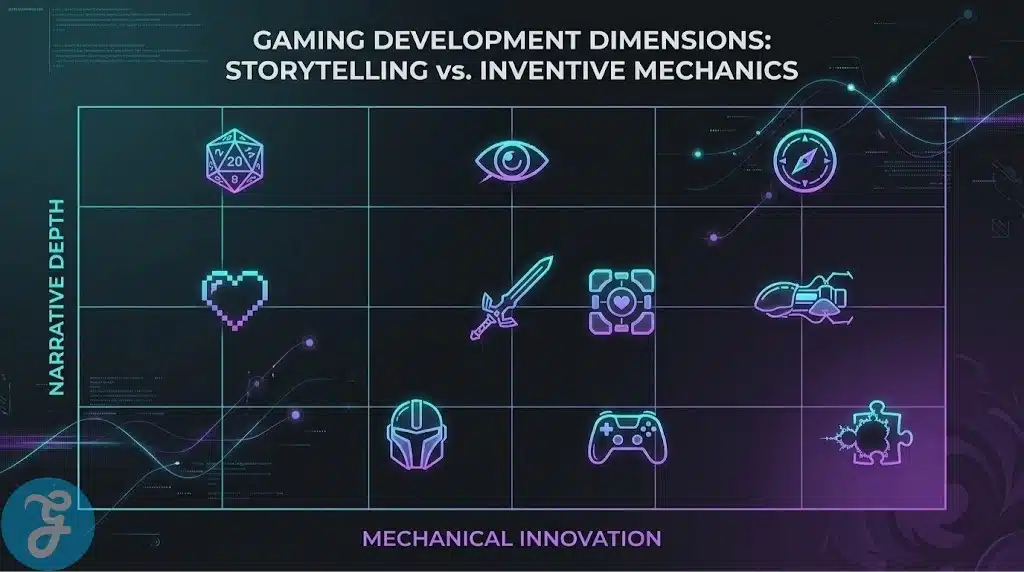
Mechanical Innovation: Did the game introduce a system that changed the industry forever?
-
Narrative Depth: Does the story offer more than just a reason to move from point A to point B?
-
Artistic Direction: Does the visual and auditory design create a unique, cohesive world?
-
Legacy and Replayability: Is the experience still relevant and enjoyable in the current year?
Understanding these filters helps contextualize why certain “popular” games were left off in favor of those that offer a deeper, more permanent impact on the player.
The Definitive List of 10 Video Games You Must Play for Every Human Being
The following titles have been chosen because they represent the “gold standard” of their respective genres, offering experiences that stay with you long after the credits roll.
Every journey into gaming excellence should begin with the title that redefined the meaning of freedom in a digital world.
1. The Legend of Zelda: Breath of the Wild
Released as a swan song for one era and a herald for another, this title dismantled the “ubisoft-tower” style of open-world design. It replaced checklists with genuine curiosity, allowing players to go anywhere and solve problems using a robust chemistry engine. It is a masterclass in “subtractive design,” where what is left out of the UI is just as important as what is included on the screen.
Best for: Players who value discovery and organic exploration over guided tutorials.
Why We Chose It:
-
It reinvented a 30-year-old franchise while simultaneously setting a new bar for the entire open-world genre.
-
The “if you can see it, you can go there” philosophy provides an unmatched sense of scale.
-
Its physics-based puzzles encourage creative solutions rather than single “correct” answers.
Things to consider: The weapon durability system is a point of contention for some, though it is central to the game’s resource management loop.
While Zelda offers freedom of movement, our next entry offers a profound, heartbreaking look at the freedom of the human spirit under pressure.
2. The Last of Us Part I
Rarely does a game manage to bridge the gap between “cinema” and “gameplay” so seamlessly that the two become indistinguishable. The story of Joel and Ellie is a brutal, grounded exploration of love, loss, and the lengths a person will go to for a surrogate child. It proved to the world that video games could handle complex, adult themes with more nuance than most Hollywood blockbusters.
Best for: Anyone looking for a high-stakes, emotionally heavy narrative that feels earned.
Why We Chose It:
-
It features some of the most realistic character writing and performance capture in history.
-
The tension between its stealth-action gameplay and quiet character moments is perfectly paced.
-
It forces players into uncomfortable moral gray areas that spark conversation long after finishing.
Things to consider: The gameplay is highly linear, focusing on the curated narrative experience rather than player-driven exploration.
Moving from scripted emotion to the raw, unyielding challenge of a dying world, we find the modern pinnacle of atmospheric design.
3. Elden Ring
Building on the “Soulslike” foundation, this title expanded the genre into a vast, hauntingly beautiful “Lands Between.” It rewards patience and observation, turning every boss encounter into a high-stakes dance of skill and strategy. It is perhaps the most rewarding experience in gaming, where the satisfaction of overcoming a hurdle is directly proportional to the difficulty of the task.
Best for: Those who find joy in challenge and love uncovering deep, cryptic lore hidden in the environment.
Why We Chose It:
-
It offers an incredible variety of playstyles, allowing for hundreds of hours of unique character builds.
-
The sense of awe provided by its world-building and architectural design is unparalleled.
-
It treats the player with respect, refusing to “hand-hold” and allowing for genuine “Eureka” moments.
Things to consider: The difficulty curve can be steep for those unaccustomed to the FromSoftware style of games.
If Elden Ring is about the struggle to survive, our next selection is about the sheer, unlimited joy of creation.
4. Minecraft
It is difficult to overstate the impact of a game that essentially became the “Lego” of a digital generation. With no set goals, players are dropped into a blocky world and told to survive, build, and innovate. Whether you are constructing a simple dirt hut or a working 16-bit computer out of Redstone, it remains the ultimate sandbox for the human imagination.
Best for: Creative minds, families, and those who enjoy setting their own goals in a boundless world.
Why We Chose It:
-
It is one of the few games that is truly “infinite,” limited only by the player’s patience.
-
The community-driven mods and maps have extended its life far beyond its original scope.
-
It bridges the gap between a technical tool and a relaxing digital retreat.
Things to consider: The lack of a clear “end goal” can be disorienting for players who prefer structured objectives.
While Minecraft lets you build your own world, the next title invites you into one of the most richly realized fictional landscapes ever committed to code.
5. The Witcher 3: Wild Hunt
In a genre often filled with “fetch quests,” Geralt of Rivia’s third outing raised the stakes for side-content. Every minor mission feels like a self-contained short story, often with moral consequences that ripple through the main narrative. It is a dark, gritty, and deeply human take on fantasy that avoids the “chosen one” tropes in favor of professional monster hunting and political intrigue.
Best for: Fans of deep RPG systems and world-class writing that treats side-quests with the same weight as the main story.
Why We Chose It:
-
The world feels “lived-in,” with a political and social history that adds immense weight to your actions.
-
It features some of the best-written characters and dialogue in the RPG genre.
-
The two expansion packs, Hearts of Stone and Blood and Wine, are considered among the best DLC ever made.
Things to consider: The combat system can feel slightly floaty compared to more dedicated action titles like Elden Ring.
Transitioning from fantasy to the dying embers of the American frontier, we encounter a level of detail that borders on obsessive.
6. Red Dead Redemption 2
This is less a game and more a simulation of an era. The slow-burn tragedy of Arthur Morgan and the Van der Linde gang is told with a level of environmental detail—from the way mud sticks to your boots to the wildlife ecosystems—that remains unmatched. It demands that the player “slow down” and inhabit the world, making it a meditative and eventually heartbreaking experience.
Best for: Players who value immersion, realism, and a slow-burn character study over fast-paced action.
Why We Chose It:
-
The level of technical polish and environmental interaction is the current industry peak.
-
Arthur Morgan is widely regarded as one of the most complex protagonists in any medium.
-
It serves as both a gripping Western and a somber reflection on the end of a lifestyle.
Things to consider: The deliberate pacing and realistic animations can feel “clunky” to those who prefer snappier gameplay loops.
From the hyper-realistic to the abstractly perfect, we must acknowledge the game that proved mechanics are timeless.
7. Tetris
While it lacks a story or a 4K open world, it is arguably the only “perfect” game ever made. Its simple loop of rotating blocks to clear lines triggers a primal psychological response that transcends age, culture, and language. It is the foundation upon which the entire industry was built, proving that a strong enough mechanic can remain relevant for half a century.
Best for: Everyone. It is the most accessible and addictive puzzle experience in existence.
Why We Chose It:
-
It is the ultimate proof that graphics are secondary to a compelling “flow state” gameplay loop.
-
It is available on virtually every electronic device ever made, making it a universal cultural touchstone.
-
The “Tetris Effect” is a documented psychological phenomenon, proving the game’s impact on the human brain.
Things to consider: It is purely mechanical, so don’t expect any narrative payoff or character growth.
If Tetris is perfection in mechanics, our next choice is perfection in atmosphere and artistic restraint.
8. Shadow of the Colossus
This title is a haunting, minimalist masterpiece that asks: “What are you willing to do for love?” By removing all standard enemies and focusing only on sixteen massive, awe-inspiring Colossi, it creates a sense of loneliness and scale that is rarely replicated. Every victory feels like a tragedy, forcing the player to question their own role in the world they are destroying.
Best for: Artistic souls and those who appreciate “less is more” in game design.
Why We Chose It:
-
It proves that a game doesn’t need “fluff” or “grinding” to be an epic, unforgettable journey.
-
The scale of the boss encounters was revolutionary for its time and still impresses today.
-
The ending is one of the most poignant and discussed finales in gaming history.
Things to consider: The controls and camera are notoriously “heavy,” designed to make the player feel the physical struggle of the protagonist.
From a somber journey on horseback, we move to a sterile laboratory where the only weapon is a portal gun and your own wit.
9. Portal 2
This is the peak of the puzzle-platformer, elevated by some of the funniest and most clever writing in the medium. The relationship between the silent protagonist, the sarcastic AI GLaDOS, and the bumbling Wheatley turns a series of physics puzzles into a gripping narrative. It is a rare game that manages to be both intellectually challenging and genuinely hilarious.
Best for: Puzzle lovers and anyone who appreciates dry, dark humor and tight level design.
Why We Chose It:
-
The “Portal” mechanic is one of the most creative and satisfying tools ever given to a player.
-
The voice acting performances by Ellen McLain and Stephen Merchant are industry-defining.
-
The co-op campaign offers a completely separate, equally brilliant experience for two players.
Things to consider: If you have motion sickness, the rapid portal transitions and gravity shifts might be a challenge.
Finally, we close the list with a modern masterpiece that proves the “Metroidvania” genre still has new depths to explore.
10. Hollow Knight
Developed by a tiny team, this game offers a sprawling, interconnected world beneath the earth that rivals the biggest AAA productions. Its atmosphere—a mixture of melancholy, mystery, and cute-but-creepy insect characters—is thick enough to touch. It is a grueling, beautiful, and deeply polished experience that rewards those willing to get lost in its tunnels.
Best for: Fans of “Metroidvania” games who want a massive world to map out and difficult bosses to conquer.
Why We Chose It:
-
The art style and soundtrack create an atmosphere that is uniquely captivating.
-
The tight, responsive combat and movement make every death feel like a learning experience rather than a failure.
-
The amount of content and hidden secrets included is staggering for an indie title.
Things to consider: It is very easy to get lost, and the game does not provide a map until you find the specific NPC in each area.
To help you decide which of these legendary experiences to tackle first, the following summary compares their core strengths.
An Overview Of the 10 Video Games You Must Play Before You Die
The diversity of these titles ensures that no matter your preference, there is a masterpiece waiting for you.
Overview Comparison Table
| Title | Genre | Primary Appeal | Time Commitment |
| Zelda: Breath of the Wild | Open World | Total Freedom | 60+ Hours |
| The Last of Us Part I | Narrative Action | Emotional Impact | 15-20 Hours |
| Elden Ring | Action RPG | Sense of Discovery | 80+ Hours |
| Minecraft | Sandbox | Infinite Creativity | Endless |
| The Witcher 3 | Story-Driven RPG | Quest Design | 70+ Hours |
| Red Dead Redemption 2 | Western Simulation | Immersion | 50+ Hours |
| Tetris | Puzzle | Pure Mechanics | 5-Minute Bursts |
| Shadow of the Colossus | Artistic Action | Atmosphere | 8-10 Hours |
| Portal 2 | Puzzle Platformer | Humor & Wit | 10-12 Hours |
| Hollow Knight | Metroidvania | Exploration | 40+ Hours |
Identifying your specific gaming “flavor” can help prioritize this daunting list of masterpieces.
Our Top 3 Picks and Why?
While all ten are essential, these three represent the absolute peak of their respective “styles” of gaming:
-
The Legend of Zelda: Breath of the Wild: For those who want the ultimate feeling of “adventure” and a break from the guided experiences of modern life.
-
The Last of Us Part I: For anyone who needs proof that games can be as emotionally devastating and narratively rich as the finest novels.
-
Tetris: Because it is the purest expression of “game” ever created; a timeless proof of the power of simple interactivity.
Curating your own digital bucket list requires understanding what you personally value in a medium that is constantly evolving.
How to Curate Your Own Gaming Bucket List?
Not every “masterpiece” will resonate with every player, and that is the beauty of the medium. To find your own Video Games You Must Play, you should look for titles that challenge your preconceptions of what a game can be.
-
Focus on Genres You Avoid: Sometimes the most profound experiences come from stepping outside your comfort zone (e.g., trying a Soulslike if you usually play shooters).
-
Follow the “Auteur” Creators: Look for games led by specific visionaries (like Hideo Kojima or Hidetaka Miyazaki) whose distinct voices shine through the corporate noise.
-
Prioritize Cultural Significance: Play the games that shifted the industry, even if they aren’t your typical style, just to understand the “language” of gaming.
Before you invest your time into a 100-hour epic, running through this final checklist will ensure you are ready for the journey.
The Final Checklist
Ensure you have these five things in place before diving into your next masterpiece.
-
Do you have the appropriate hardware to experience the game at its intended quality?
-
Have you cleared enough “mental space” to handle a potentially heavy emotional narrative?
-
Are you willing to commit at least 5-10 hours to a game before deciding if it’s “for you”?
-
Have you avoided spoilers to ensure the narrative twists have their intended impact?
-
Do you have a comfortable setup for long-form sessions, especially for the larger RPGs?
Reflecting on these experiences allows us to see how digital art has permanently altered our cultural landscape.
The Digital Legacy of Interactive Art
As we navigate the mid-2020s, the line between reality and simulation continues to blur, yet the core of what makes a game “essential” remains remarkably human. Mastering the Video Games You Must Play is about more than just checking off a list; it is about experiencing the specific, localized magic that only happens when a player’s agency meets a developer’s vision. There is an “uncomfortable” truth in gaming: most of what we play today is designed to be addictive rather than impactful, optimized for “engagement” over artistry.
However, the titles on this list stand as a defiant rebuttal to the commodification of our free time. They don’t just want your hours; they want your perspective. Looking forward, as AI-driven generation begins to saturate the market with “content,” these hand-crafted milestones will only become more precious. They serve as a reminder that the most powerful experiences aren’t generated by algorithms, but by people trying to share a piece of themselves across a digital divide. To play these games is to participate in a global conversation that has been building since the first block was cleared in Tetris, and it is a conversation that every human being deserves to join at least once.
Navigating the vast world of gaming often leads to common questions about how to best experience these legendary titles.
Frequently Asked Questions (FAQs) About Video Games You Must Play
Addressing these concerns will help you approach these masterpieces with the right mindset.
Do I need to play the previous games in a series to enjoy these?
Generally, no. For games like The Witcher 3 or Zelda, the stories are designed to be accessible to newcomers. While prior knowledge adds flavor, the core experience remains intact.
What is the best platform to play these on?
Most of these are available across PC, PlayStation, and Xbox. However, Zelda remains a Nintendo exclusive, so you will need a Switch to experience that specific masterpiece.
Are these games too hard for beginners?
While Elden Ring and Hollow Knight are famously difficult, others like Tetris, Minecraft, and Portal 2 are very beginner-friendly and accessible to all skill levels.
Should I use a controller or keyboard and mouse?
For third-person action games like Elden Ring or Red Dead, a controller is usually preferred. For first-person games like Portal 2, keyboard and mouse offer better precision.
How do I avoid spoilers for story-driven games?
The best way is to stay off specific subreddits or YouTube comment sections. These games are best experienced “blind” to ensure the emotional beats land with full force.