

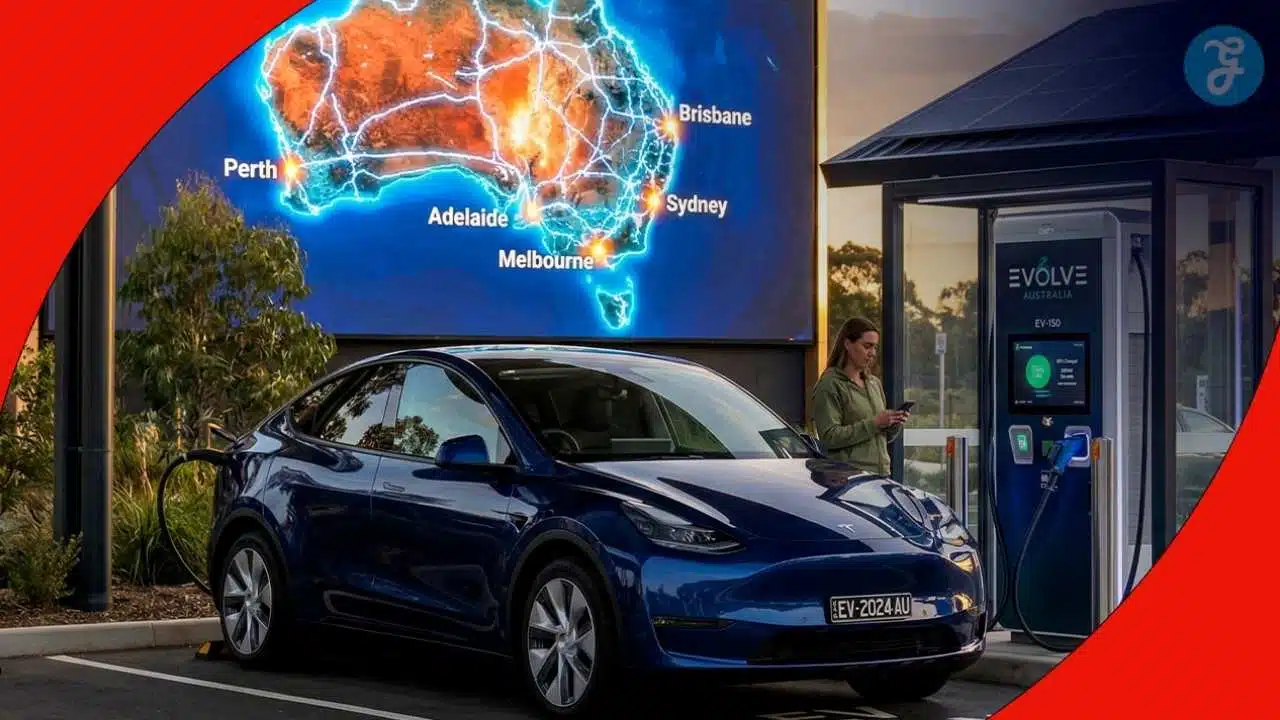
The vehicles sharing the road with you today look a whole lot different than they did just a few years ago. You barely have to look around to spot a battery powered car silently rolling through city traffic or parked outside your local grocery store. High gas prices and a massive lineup of affordable new models are pushing everyday drivers to rethink how they handle their daily commute.
EV adoption in Australia is no longer a niche hobby reserved for wealthy tech enthusiasts with deep pockets. It is a mainstream reality happening right before our eyes. Buyers are skipping hybrid midway points and jumping straight into fully electric models to save cash. If you want to know exactly where the local auto market is heading, let us explore the core facts shaping the electric vehicle landscape today.
How Sales Surges Are Driving EV Adoption in Australia?
Buying habits across the nation are changing fast as drivers crunch the numbers on fuel savings. When gas pushes past the comfort zone, the math on running an electric car just makes complete sense for the average household budget. We are seeing historic registration milestones being absolutely smashed month after month. It all points to a permanent structural shift in how people buy and drive cars.
1. EVs Captured 16.4 Percent of the Market in April 2026
The shift toward battery power is happening much faster than anyone expected. By April 2026, fully electric cars made up 16.4 percent of all new vehicle sales across the nation. This means roughly one out of every six brand new cars leaving a dealership has a plug instead of a gas tank. Just a couple of years ago, this number was stuck in the low single digits.
Drivers are clearly feeling more confident about making the switch today. They see charging stations popping up everywhere and realize the technology is totally ready for everyday life. This high market share proves that electric cars are no longer just an experiment for early adopters. They have officially become a normal, practical choice for the average buyer looking for a reliable ride.
| Market Share Metric | Data Point Observed | Industry Meaning |
| Overall Share | 16.4 Percent | Mass market acceptance achieved |
| Ratio of Sales | 1 in 6 Vehicles | Mainstream buyer confidence is high |
| Growth Trajectory | Rapid Increase YoY | Gas vehicles are losing market dominance |
2. Traditional Fuel Vehicle Sales Are Plunging
While electric cars fly out of showrooms, the demand for traditional gas and diesel vehicles is falling off a cliff. We saw a massive 30 percent drop in gas vehicle sales in April 2026 compared to the exact same time last year. People are tired of paying wildly fluctuating prices at the fuel pump every single week.
Buyers are also doing the math on vehicle depreciation and realizing that a gas car might lose its value incredibly fast over the next decade. Nobody wants to be stuck holding the keys to an obsolete piece of machinery when the whole world is moving forward. The steep decline in gas car sales shows a permanent change in consumer habits rather than just a temporary dip in the market.
| Sales Category | April 2026 Performance | Consumer Driver |
| Gas and Diesel Vehicles | 30 Percent Decrease | Avoidance of high pump prices |
| Depreciation Outlook | High Risk Asset | Fear of owning obsolete technology |
| Long Term Trend | Permanent Decline | Shift to cheaper running costs |
3. The 100,000 Sales Milestone Was Crushed in 2025
A massive psychological barrier broke in 2025 when the country recorded over 100,000 electric vehicle sales in a single year. Crossing that six figure mark gave the entire automotive industry a huge wake up call. Dealerships and service centers realized they had to adapt immediately or get left behind completely.
Because of this high volume, local mechanics are finally getting the training they need to safely repair high voltage battery systems. Car insurance companies have gathered enough real world driving data to stop charging premium prices just because a car has a battery. We are also starting to see a really healthy used car market develop, making these vehicles accessible to young drivers and families on a tight budget.
| Milestone Data | Real World Impact | Benefit to Drivers |
| 100,000 Units Sold | Industry wide adaptation | Better local service and support |
| Mechanic Training | High voltage certification | More options for routine repairs |
| Insurance Premiums | Actuarial data normalization | Cheaper yearly policy renewals |
Changing Brands and Unprecedented Consumer Choice
You are no longer stuck choosing between an expensive luxury sedan and a tiny hatchback that cannot fit a week of groceries. The floodgates have opened, bringing in fresh brands that aggressively undercut legacy automakers on price. Overseas manufacturers realize the market is hungry for options, and they are shipping over family SUVs, sporty sedans, and practical work trucks.
4. BYD Dethroned Tesla in Monthly EV Sales
Tesla owned the electric vehicle space for a very long time, but the competition finally caught up. In early 2026, the BYD Sealion 7 actually outsold the historically popular Tesla Model Y to become the top selling electric vehicle for the month. This shift is a massive deal for regular buyers because it breaks a long standing monopoly.
Companies like BYD are proving you can get high quality manufacturing and top tier technology without paying luxury prices. This fierce rivalry forces every single automaker to fight harder for your money. They have to constantly improve their battery range and slash prices just to stay relevant. Buyers win every time big companies have to battle it out for market dominance.
| Brand Dynamic | Current Status | Market Effect |
| Top Selling Model | BYD Sealion 7 | Ends single brand market dominance |
| Tesla Position | Pushed to Second Place | Forces aggressive price cuts |
| Consumer Choice | High Tech Budget Options | Lowers the barrier to entry |
5. More Than 110 EV Models Are Now Available
One of the biggest complaints drivers had in the past was a total lack of vehicle variety. You basically had to choose between an expensive status symbol or a compact car that struggled on the highway. Today, you can walk into dealerships and choose from over 110 different electric models. The market is flooded with spacious family SUVs, rugged utility vehicles, and zippy cars for daily city commuting.
This massive variety completely ruins the old excuse that electric cars do not fit the rugged local lifestyle. Automakers understand that buyers need vehicles that can handle school drop offs, weekend camping trips, and heavy loads. There is quite literally a battery powered option for every possible driving need today.
| Vehicle Type | Availability Status | Target Demographic |
| Family SUVs | Widely Available | School runs and family road trips |
| Utility Trucks | Growing Segment | Tradespeople and heavy towing |
| City Hatchbacks | Highly Abundant | Commuters and young drivers |
6. Chinese-Made Vehicles Replaced Japan as the Top Source
Global supply chains look completely different today than they did a decade ago. Thanks to the exploding popularity of brands like BYD, MG, and Zeekr, vehicles built in China officially overtook Japanese imports as the largest source of new cars. This is a historic shift that completely rearranged the entire automotive market.
Chinese factories are producing electric cars at a scale and speed that legacy automakers simply cannot match right now. Because they can build them so efficiently, these cars arrive at dealerships with incredibly low price tags. This flood of affordable imports is the main reason why middle class families can finally afford to park a zero emission vehicle in their driveway.
| Import Source | Market Position | Key Advantage |
| China | Number One Source | Massive scale and fast production |
| Japan | Pushed to Second Place | Struggling to match EV volume |
| Price Point | Highly Affordable | Makes EVs accessible to everyone |
Nationwide Charging Infrastructure Upgrades
The biggest fear keeping people tied to gas pumps was the dread of running out of battery in the middle of nowhere. Thankfully, the map is quickly filling up with high speed charging plugs in cities, suburbs, and regional towns. Major gas retailers are ripping up concrete to install chargers, and dedicated charging networks are expanding rapidly everywhere you look.
7. Public Charging Sites Have Surpassed 5,000 Nationwide
Range anxiety is basically a thing of the past for the vast majority of drivers. The country now features a sprawling network of over 5,000 public charging sites covering cities, suburbs, and rural highways. You can hardly drive a few miles without spotting a fast charging plug at a local shopping center or a dedicated transport hub.
Big money investments from private networks and traditional gas station chains have totally blanketed the map with reliable power options. Drivers can leave home with a low battery and confidently know they will find a working plug on their route. The sheer volume of new stations guarantees that you will rarely have to wait in a long line just to get enough juice to reach your destination.
| Infrastructure Metric | Current Volume | Driver Benefit |
| Public Charging Sites | Over 5,000 locations | Eliminates daily range anxiety |
| Private Investments | Massive funding rounds | Constant expansion of new sites |
| Gas Station Conversions | Adding high speed plugs | Familiar locations for refueling |
8. The 7,000-Kilometer WA EV Network Is Fully Operational
Taking a road trip through remote regional areas used to be a terrifying thought for battery powered vehicle owners. That completely changed when the WA EV Network wrapped up construction and opened to the public. This massive government backed project covers a staggering 7,000 kilometers of highway, making it one of the longest connected charging routes in the world.
They strategically placed fast chargers roughly every 200 kilometers along the entire route. Families can now safely explore the vast and rugged terrain purely on battery power without stressing over the state of charge. This infrastructure upgrade proved that vast distances are absolutely no longer a dealbreaker for clean transportation.
| Network Details | Specification | Travel Impact |
| Total Distance Covered | 7,000 Kilometers | Connects deeply remote areas |
| Station Spacing | Roughly 200 Kilometers | Safe distance between charges |
| Project Backing | Government Supported | Boosts regional tourism heavily |
9. 66 Percent of Tesla Superchargers Are Open to All EVs
Tesla spent years building an incredibly reliable and fast charging network that was entirely locked down for their own customers. Recently, they made a massive change and opened up 66 percent of their charging locations to drivers of any electric brand. This means someone driving a Hyundai, Kia, or Ford can simply download an app and plug into a previously restricted power source.
Opening these gates drastically reduced the charging bottlenecks that used to plague major highways during busy holiday travel weekends. Sharing this premium infrastructure is a massive win for the entire electric vehicle community. It instantly expanded the usable charging map for thousands of drivers overnight without the need to pour new concrete.
| Supercharger Metric | Network Status | Community Benefit |
| Open Access Rate | 66 Percent | Expands map for non Tesla drivers |
| Bottleneck Reduction | Significant Drop | Less waiting during holiday travel |
| App Integration | Seamless Access | Easy payment and plug initiation |
10. Curbside Charging Solutions Are Expanding for Urbanites
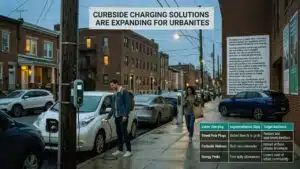
Charging a car is super easy if you have a private garage, but apartment renters faced a massive headache until recently. Local governments and energy startups are now bolting smart chargers directly onto city street poles and curbsides in dense neighborhoods. This lets people who rely entirely on street parking plug their cars in overnight just like a homeowner would.
Some of these creative energy networks even offer a free daily power allowance to help offset urban living costs. Bringing the plug directly to the street removes the biggest hurdle stopping city dwellers from ditching their gas cars. Nobody should be locked out of the clean energy transition simply because of their living situation.
| Urban Charging | Implementation Style | Target Audience |
| Street Pole Plugs | Bolted directly to grids | Renters and apartment dwellers |
| Curbside Stations | Built into sidewalks | Homes without private driveways |
| Energy Perks | Free daily allowances | Lowers cost of urban commuting |
11. The East Coast Is Now Exceptionally Well-Covered
Planning a long coastal drive from Brisbane down through Sydney and into Melbourne takes almost zero effort today. The main highway corridors connecting these major cities are completely packed with ultra fast charging stations. You can easily find multiple reliable locations every 100 to 200 kilometers along the entire journey.
Interestingly enough, the time it takes to top up a battery lines up perfectly with the safety breaks that highway patrols recommend anyway. Drivers simply pull over, grab a hot coffee, stretch their legs, and get right back on the road safely. The abundance of chargers means you never have to panic about making it to the next major town.
| Coastal Route | Charging Density | Driving Experience |
| Major Corridors | Very High Coverage | Zero logistical stress |
| Distance Gaps | 100 to 200 Kilometers | Constant safety net for drivers |
| Rest Stops | Aligns with safety breaks | Reduces driver fatigue naturally |
The Green Grid and Government Boosts
Switching to battery power is heavily tied to cleaning up our environment. State and federal governments are leaning in hard, offering financial perks that make the sticker price of a new car much easier to swallow. At the same time, the energy powering these vehicles is getting incredibly clean.
12. Government Policies Continue to Fuel Market Demand
A massive driver behind this rapid adoption rate comes directly from clever state and federal government policies. Tax exemptions and clean car discounts make financing an electric car significantly cheaper than buying an equivalent gas model. Everyday office workers are using novated leasing arrangements to save thousands of dollars a year on their income taxes.
When you combine these heavy tax breaks with the lack of tailpipe emissions, the financial math is simply impossible to ignore. The government effectively lowered the barrier to entry so normal working class families could participate in the clean energy switch. These strategic financial nudges proved that people will happily adopt new technology when it actively saves them money.
| Policy Type | Financial Incentive | Buyer Result |
| Fringe Benefits Tax | Full Exemption | Massively lowers lease costs |
| Novated Leases | Pre Tax Payments | Saves thousands on income tax |
| State Discounts | Point of Sale Rebates | Lowers the initial purchase price |
13. Renewables Are Powering the EV Shift
Critics love to argue that battery powered cars simply shift pollution from the tailpipe to a distant coal power plant, but the actual data completely destroys that myth. The national energy grid is getting greener at a blindingly fast pace as old coal plants shut down for good. On bright and breezy days, multiple states frequently see wind and solar generation cover more than half of their total power needs.
Millions of households also have solar panels on their roofs, meaning they charge their cars directly from the sun for absolute zero cost. Driving an electric car today means you are actively running on clean, renewable energy that gets better every single year.
| Energy Source | Grid Impact | Environmental Reality |
| Rooftop Solar | Free Home Charging | True zero emission daily driving |
| Wind and Solar Farms | Dominating the grid | Coal dependency is plummeting |
| Future Outlook | Greening every year | Cars get cleaner over their lifespan |
Final Thoughts
The days of debating whether electric cars will catch on are entirely behind us. The factual data from the market makes one thing incredibly clear. EV adoption in Australia has crossed the point of no return. The old hurdles regarding steep purchase prices and nowhere to plug in are disappearing as aggressive automakers bring affordable models to the country.
Major charging networks continue to connect our most remote towns. For the everyday driver, the math simply works in their favor now. We are looking at drastically lower running costs, nearly zero maintenance, and a much quieter commute. With gas prices staying painfully high and the government actively rewarding you for going electric, holding onto an aging gas vehicle is becoming a massive financial risk.
Frequently Asked Questions (FAQs) About EV Adoption in Australia
1. What happens to old EV batteries in Australia?
Most batteries are actually designed to outlast the car itself. When they do finally degrade, local recycling facilities recover up to 95 percent of the core materials like lithium and copper to build brand new batteries. Sometimes, they are simply repurposed for stationary home battery storage to hold solar power.
2. Do electric vehicles pay road user charges?
It really depends on the state you live in. Some states attempted to introduce a road user charge to make up for lost fuel taxes, but federal court rulings have complicated this system. The government is actively restructuring how road maintenance will be funded long term as gas tax revenues plummet.
3. How does extreme outback heat affect EV range?
Extreme heat does force the thermal management system to work a bit harder, which can slightly reduce your total driving range. Modern electric cars use active liquid cooling systems to protect the battery cells. This ensures safe and reliable operation even during the hottest 40 degree summer days.
4. Are home EV chargers covered by standard home insurance?
A permanently hardwired wall charger is generally considered a fixed fixture of your house and is usually covered under standard building insurance policies. It is always highly recommended to notify your insurance provider after installation to ensure your coverage limits reflect the added property value.
5. Do electric cars require a lot of special maintenance?
Electric cars require significantly less maintenance than traditional gas vehicles. They do not have spark plugs, oil filters, or complex transmissions that break down over time. Your main maintenance items are simply checking tire rotations, topping up windshield wiper fluid, and inspecting brake pads periodically.






















