

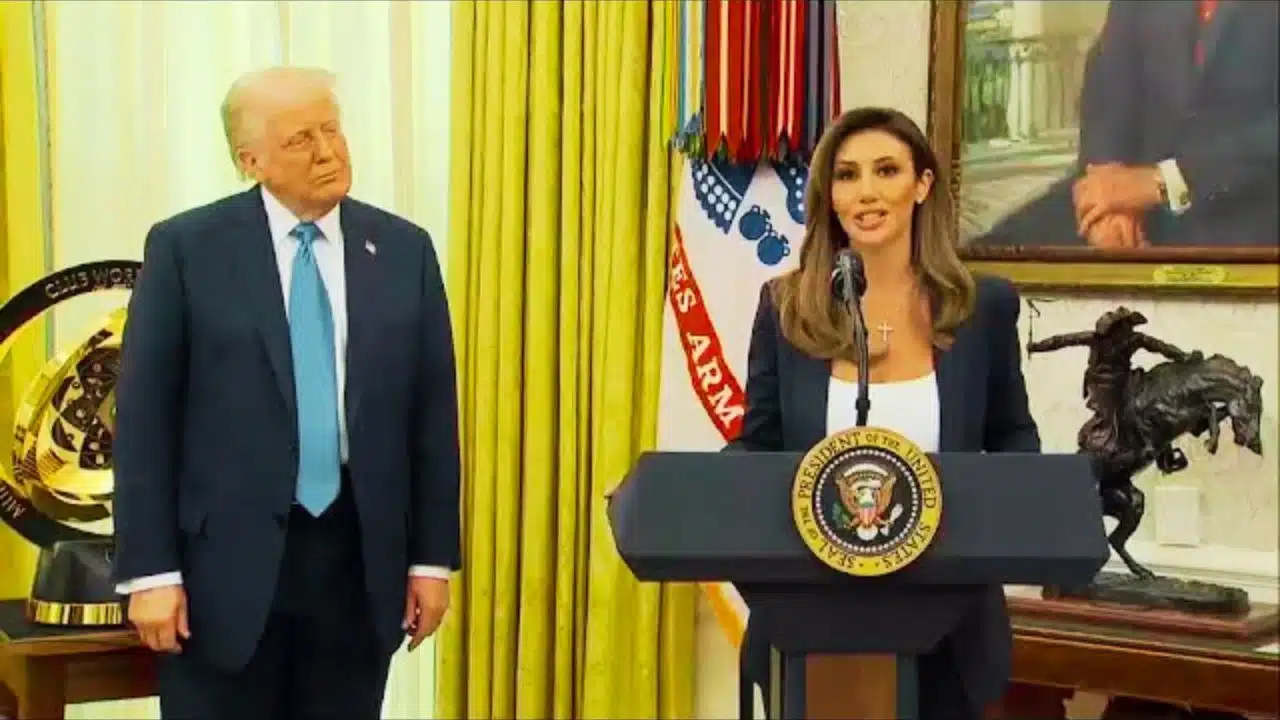
Alina Habba has resigned as the acting U.S. attorney for the District of New Jersey after a federal appeals court upheld rulings that found her appointment unlawful. Her exit follows a major legal defeat at the U.S. Court of Appeals for the Third Circuit, which concluded that the Trump administration violated federal law in keeping her in the role.
What happened
Alina Habba, a former personal lawyer to President Donald Trump, was appointed earlier this year as interim and then acting U.S. attorney for the District of New Jersey, overseeing federal prosecutions and civil cases across the state. Her appointment quickly became the subject of multiple legal challenges from criminal defendants and advocacy groups who argued that the administration had bypassed statutory and constitutional procedures for filling the powerful post.
On Monday, December 8, 2025, Habba announced that she was stepping down as New Jersey’s top federal prosecutor “to protect the stability and integrity” of the office after the Third Circuit Court of Appeals upheld lower-court findings that she had been unlawfully appointed. The appeals court’s decision is widely seen as the major court loss that forced her resignation, effectively affirming that the administration could not keep her in place without Senate confirmation or a valid statutory basis.
Attorney General Pam Bondi said she had accepted Habba’s resignation but criticized the judiciary, arguing that the ruling made it impossible for Habba to effectively run the office despite her record as a loyal Trump ally and aggressive prosecutor. Bondi and Justice Department officials indicated that Habba will remain at Main Justice in Washington as a senior adviser on U.S. attorney matters and could potentially return to the New Jersey office if a future Supreme Court appeal were to overturn the Third Circuit’s ruling.
Court ruling and appointment battle
The legal fight that culminated in this major court loss began in the summer, when defendants in New Jersey federal cases argued that Habba was signing indictments and overseeing prosecutions without lawful authority. In August, a federal district judge concluded that she was “not legally serving” as acting U.S. attorney under the Federal Vacancies Reform Act and ordered that she be barred from further participation in ongoing matters.
The Trump administration responded with a series of procedural maneuvers designed to keep Habba in charge even after the statutory 120‑day limit on her interim tenure had run out. Federal district court judges in New Jersey, exercising a long‑standing authority, instead selected her deputy, Desiree Leigh Grace, to lead the office, prompting the Justice Department to abruptly fire Grace within hours and reassert Habba’s leadership.
Defendants and legal groups appealed, and on December 1, 2025, the Third Circuit unanimously upheld the lower‑court ruling, finding that Habba’s continued service violated the Vacancies Reform Act and that the administration could not sidestep Senate confirmation and local judicial selection rules. That appellate decision, which undercut the legal basis for her authority, is the “major court loss” that directly precipitated Habba’s resignation as New Jersey U.S. attorney.
Key timeline of the Habba controversy
| Date (2025) | Event | Details |
| March 23 | Trump appoints Habba interim U.S. attorney | President Donald Trump names his former personal attorney Alina Habba as interim U.S. attorney for the District of New Jersey, using a statute that allows a 120‑day interim term. |
| July 22 | Judges move to replace Habba | With the interim term expiring, federal district judges in New Jersey decline to extend Habba and instead vote to install her deputy, Desiree Leigh Grace, as U.S. attorney. |
| July 22–28 | DOJ fires Grace, keeps Habba | The Justice Department fires Grace within hours of her appointment, triggering a power struggle over who legally leads the office. |
| August 21 | District judge disqualifies Habba | A federal judge rules that Habba is “not legally serving” as acting U.S. attorney and must be disqualified from ongoing cases, citing violations of the Federal Vacancies Reform Act. |
| December 1 | Third Circuit upholds ruling | The U.S. Court of Appeals for the Third Circuit affirms that Habba’s appointment and continued service as New Jersey’s top federal prosecutor were unlawful. |
| December 7–8 | Habba resigns | Following the appeals court decision, Habba announces her resignation as U.S. attorney for New Jersey, framing it as a step to preserve the office’s stability while vowing to keep fighting legally and politically. |
This timeline highlights how a routine interim appointment escalated into a constitutional and statutory clash between the White House, the judiciary, and criminal defendants in New Jersey. It also underscores that the decisive blow to Habba’s tenure came from the appellate ruling rather than from electoral or internal Justice Department politics, aligning the narrative with the “major court loss” focus keyword.
Fallout and what comes next
The Habba case has raised broader questions about how far President Trump and his Justice Department can go in installing loyalists in top prosecutorial posts without Senate confirmation. Legal experts note that the Third Circuit’s opinion could limit future administrations’ ability to rely on extended “acting” appointments in politically sensitive U.S. attorney offices, especially when courts and defendants are prepared to challenge those moves.
In New Jersey, the immediate task is to stabilize leadership at the U.S. Attorney’s Office after months of uncertainty, contested authority, and overlapping appointments. Until a new, Senate‑confirmed U.S. attorney is in place, the Justice Department is expected to rely on career prosecutors and interim arrangements that comply strictly with the Vacancies Reform Act and the judges’ selection powers.
Politically, Habba’s resignation deprives the Trump administration of a high‑profile loyalist in a key battleground jurisdiction while giving critics a concrete example of courts pushing back against perceived executive overreach. Yet with the Justice Department openly considering further appeals and promising to keep Habba in a senior advisory role, the clash over her appointment may continue to shape debates about prosecutorial independence and the balance of powers well beyond New Jersey.





















