

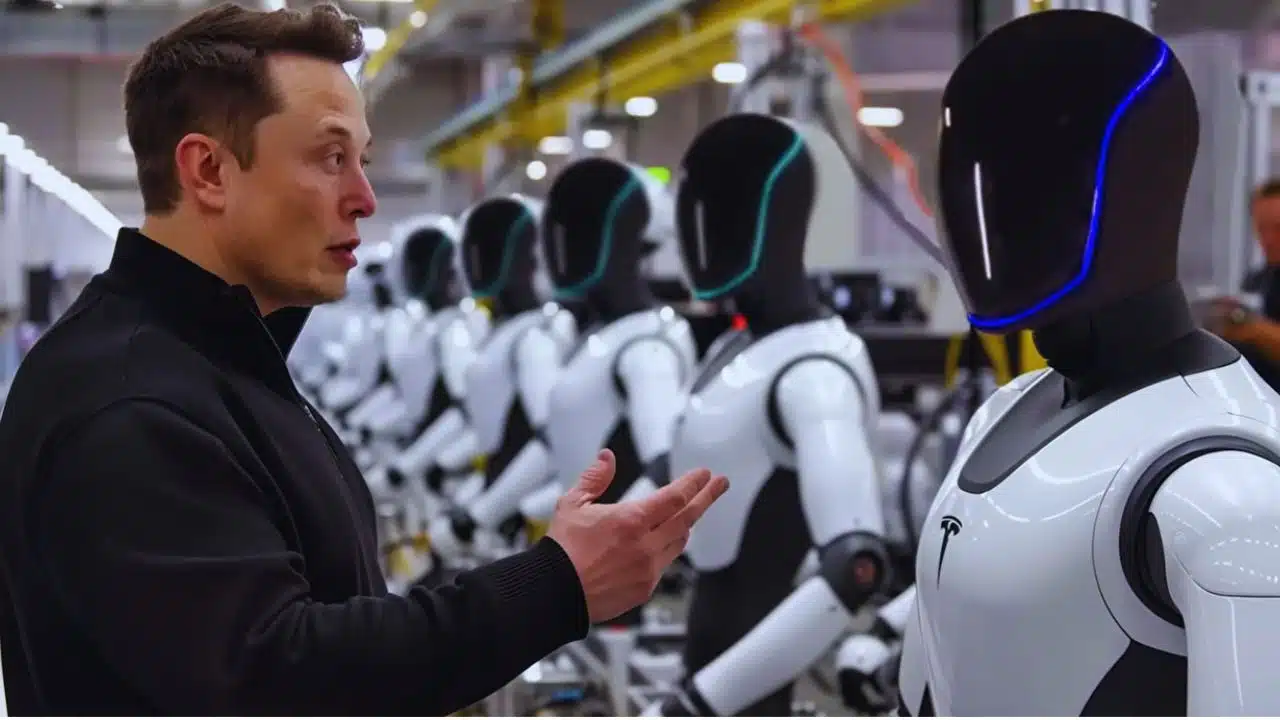
Elon Musk, the visionary entrepreneur and CEO of SpaceX and Tesla, has become synonymous with groundbreaking innovation and futuristic technology. His ambitious ventures span multiple industries, each aimed at revolutionizing the way we live, work, and interact with the world around us.
This comprehensive article explores ten significant ways in which Elon Musk is actively shaping the future of technology, highlighting his contributions to space travel, renewable energy, transportation, artificial intelligence, and beyond.
1. Space exploration with SpaceX
SpaceX, founded by Musk in 2002, is at the forefront of transforming space exploration and making it more accessible. The company’s primary mission is to reduce space transportation costs and enable the colonization of Mars.
Reusable Rockets: A Game-Changer
One of SpaceX’s most significant innovations is the development of reusable rockets. Traditional rockets are discarded after a single use, making space launches extremely expensive. SpaceX’s Falcon 9 and Falcon Heavy rockets can land vertically after launch, allowing them to be refueled and reused multiple times.
Benefits:
- Drastically reduced launch costs
- Increased launch frequency
- Sustainable space exploration
Challenges:
- Complex engineering and precision landing technology
- Refurbishment costs and turnaround time
Real-world example: In 2018, SpaceX successfully launched and landed all three boosters of its Falcon Heavy rocket, marking a significant milestone in reusable rocket technology.
The Starship Project
SpaceX’s most ambitious project to date is the Starship, a fully reusable spacecraft designed for missions to Mars and beyond. The Starship aims to carry up to 100 people on long-duration interplanetary flights.
Impact:
- Potential for human colonization of Mars
- Revolutionary space tourism opportunities
- Possibility of point-to-point travel on Earth
Future potential:
- Establishing a self-sustaining city on Mars
- Mining resources from asteroids and other celestial bodies
- Enabling deep space exploration
Revolutionizing Satellite Deployment
SpaceX has also disrupted the satellite industry with its rideshare program, allowing multiple small satellites to be launched on a single rocket. This has made satellite deployment more affordable for smaller companies and research institutions.
2. Electric vehicles with Tesla
Tesla, co-founded by Musk in 2003, has been instrumental in accelerating the world’s transition to sustainable energy through electric vehicles (EVs).
Pioneering long-range EVs
Tesla’s breakthrough was proving that electric cars could be both high-performance and long-range. The Model S, introduced in 2012, was the first EV to achieve over 200 miles of range on a single charge.
Benefits:
- Zero direct emissions, reducing the carbon footprint
- Lower operating costs compared to gasoline vehicles
- High performance and instant torque
Challenges:
- Higher initial purchase cost (though prices are decreasing)
- Battery production and recycling concerns
- Charging infrastructure development
Real-world example: The Tesla Model 3 became the best-selling electric car in history, with over 1 million units sold by 2021.
Advanced Battery Technology
Tesla’s continuous improvements in battery technology have been crucial to the success of its EVs. The company has focused on increasing energy density, reducing costs, and improving manufacturing efficiency.
Impact:
- Longer driving ranges for EVs
- Reduced battery costs make EVs more affordable.
- Potential applications in grid-scale energy storage
Future potential:
- Solid-state batteries with even higher energy density
- Million-mile battery lifespan
- Vehicle-to-grid technology for energy management
Autonomous driving features
Tesla’s Autopilot and Full Self-Driving (FSD) capabilities are pushing the boundaries of autonomous vehicle technology. While not yet fully autonomous, these systems continue to evolve through over-the-air updates.
Benefits:
- Enhanced safety features
- Reduced driver fatigue on long trips
- Potential for future fully autonomous operations
Challenges:
- Regulatory approval for higher levels of autonomy
- Ethical considerations in decision-making algorithms
- Public trust and acceptance
3. Solar Energy with SolarCity (now part of Tesla)
Musk’s vision for sustainable energy extends beyond electric vehicles to solar power generation and energy storage solutions.
Solar Roof Tiles
Tesla’s Solar Roof, developed after the acquisition of SolarCity, integrates solar cells directly into roof tiles. This innovative approach makes solar power more aesthetically pleasing and potentially more durable than traditional solar panels.
Benefits:
- Seamless integration with home architecture
- Dual functionality as both a roof and a power generator
- Potential for increased home value
Challenges:
- Higher upfront costs compared to traditional solar panels
- Limited styles and colors are available.
- Complexity of installation
Real-world example: Tesla has been gradually rolling out solar roof installations across the United States, with plans for international expansion.
Powerwall and Large-Scale Energy Storage
The Tesla Powerwall, a home battery system, allows homeowners to store excess solar energy for use during peak hours or power outages. On a larger scale, Tesla’s Powerpack and Megapack systems provide grid-level energy storage solutions.
Impact:
- Increased energy independence for homeowners
- Grid stability and load balancing for utilities
- Enablement of higher renewable energy penetration
Future potential:
- Virtual power plants combine distributed energy resources.
- Microgrids for community-level energy resilience
- Integration with smart home systems for optimized energy use
4. Advancements in AI with OpenAI
Although Musk is no longer directly involved with OpenAI, his co-founding of the organization in 2015 has had a lasting impact on the field of artificial intelligence.
Promoting Safe and Beneficial AI
OpenAI’s mission is to ensure that artificial general intelligence (AGI) benefits all of humanity. The organization conducts cutting-edge research and develops AI systems with a focus on safety and ethical considerations.
Benefits:
- Advancement of AI capabilities in various domains
- Open-source approaches to fostering collaboration
- Focus on the long-term societal impact of AI.
Challenges:
- Balancing openness with the potential misuse of AI
- Addressing bias and fairness in AI systems
- Ensuring AI aligns with human values
Real-world example: OpenAI’s GPT-3 language model has demonstrated remarkable natural language processing capabilities, being used in various applications from content creation to code generation.
AI in robotics
OpenAI’s work extends to robotics, with projects aimed at creating more versatile and adaptable robots. This research has implications for industries ranging from manufacturing to healthcare.
Impact:
- Improved human-robot interaction
- More efficient and flexible automation systems
- Potential for robots to assist in complex or dangerous tasks
Future potential:
- Robots capable of learning and adapting to new situations
- Integration of AI and robotics in everyday life
- Advancements in prosthetics and assistive technologies
5. Hyperloop Transportation
Musk’s 2013 white paper on the Hyperloop concept sparked a new wave of innovation in high-speed transportation.
The hyperloop concept
The Hyperloop envisions pods traveling through low-pressure tubes at speeds exceeding 700 mph (1,127 km/h), potentially revolutionizing long-distance travel.
Benefits:
- Drastically reduced travel times between cities
- Lower energy consumption compared to traditional modes
- Potential for carbon-neutral operation with renewable energy
Challenges:
- High infrastructure costs
- Technical challenges in maintaining vacuum tubes
- Passenger safety and comfort at high speeds
Real-world example: Several companies, including Virgin Hyperloop, have conducted successful test runs of Hyperloop prototypes.
Inspiring a New Industry
While Musk himself is not directly developing the Hyperloop, his concept has inspired numerous startups and research initiatives worldwide.
Impact:
- Renewed interest in high-speed ground transportation
- Potential for economic corridors connecting distant cities
- Competition is driving innovation in transportation technology.
Future potential:
- A global network of hyperloop systems
- Integration with other transportation modes for seamless travel
- New urban planning possibilities with ultra-fast intercity connections
6. Brain-Computer Interface with Neuralink
Neuralink, founded by Musk in 2016, is working on developing implantable brain-machine interfaces (BMIs).
Advanced Neural Implants
Neuralink’s BMI technology aims to create a high-bandwidth connection between the human brain and external devices.
Benefits:
- Potential treatment for neurological conditions
- Enhanced human cognitive capabilities
- Direct brain control of external devices
Challenges:
- Ensuring the long-term biocompatibility of implants
- Ethical considerations for enhancing human cognition
- Data privacy and security concerns
Real-world example: Neuralink has demonstrated its technology in animal trials, including a monkey playing video games through direct brain control.
Medical Applications
The initial focus of Neuralink is on medical applications, such as helping people with paralysis regain movement or restoring sensory functions.
Impact:
- Improved quality of life for people with disabilities
- Advancements in understanding brain function
- Potential for new treatments for neurological disorders
Future potential:
- Direct brain-to-brain communication
- Enhanced learning and memory capabilities
- Integration of human cognition with artificial intelligence
7. Starlink Satellite Internet
SpaceX’s Starlink project aims to provide global broadband coverage through a constellation of low-earth orbit satellites.
Global Internet Access
Starlink’s goal is to provide high-speed internet access to underserved areas and create a new option for internet service in developed regions.
Benefits:
- Internet access in remote and rural areas
- Low-latency, high-bandwidth connections
- Potential for improved global communication
Challenges:
- Managing space debris and satellite collisions
- Concerns about light pollution affecting astronomy
- Regulatory approvals in various countries
Real-world example: Starlink has begun providing service to users in several countries, with plans for global coverage.
Enabling New Technologies
The widespread availability of high-speed internet could enable new technologies and services.
Impact:
- Bridging the digital divide in education and healthcare
- Enabling Internet of Things (IoT) devices in remote areas
- Supporting real-time applications like autonomous vehicles
Future potential:
- Global 5G coverage from space
- Enhanced disaster response and communication
- New opportunities for remote work and digital nomadism
8. Autonomous Driving Technology
Tesla’s Autopilot and Full Self-Driving (FSD) systems are at the forefront of autonomous vehicle technology.
Advanced Driver Assistance Systems
Tesla’s Autopilot provides advanced driver assistance features such as adaptive cruise control, lane keeping, and automatic lane changes.
Benefits:
- Enhanced safety through constant vigilance
- Reduced driver fatigue on long trips
- Gradual introduction of autonomous features
Challenges:
- Ensuring driver attention and responsibility
- Handling edge cases and unpredictable scenarios
- Building public trust in autonomous systems
Real-world example: Tesla vehicles have logged billions of miles with Autopilot engaged, providing valuable data for improving the system.
Path to Full Autonomy
Tesla’s FSD package aims to eventually enable full autonomous driving capabilities, with the system learning and improving through real-world driving data.
Impact:
- Potential for significantly reduced traffic accidents
- Increased mobility for non-drivers (elderly, disabled)
- Transformation of urban planning and parking needs
Future potential:
- Fully autonomous taxi and delivery services
- Platooning of autonomous trucks for efficient logistics
- Integration with smart city infrastructure
9. Sustainable Energy Storage
Tesla’s energy division focuses on developing and deploying large-scale energy storage solutions.
Grid-Scale Battery Systems
Projects like the Hornsdale Power Reserve in Australia demonstrate the potential of battery storage to stabilize power grids and enable higher renewable energy penetration.
Benefits:
- Grid stability and reduced blackouts
- Ability to store excess renewable energy
- Reduced need for peaker power plants
Challenges:
- High initial investment costs
- Battery degradation and replacement
- Integration with existing grid infrastructure
Real-world example: The Tesla Megapack has been deployed in various locations worldwide, including a 730 MWh installation in Moss Landing, California.
Virtual Power Plants
Tesla is working on creating networks of distributed energy resources, including home Powerwall batteries, to form virtual power plants.
Impact:
- Increased grid resilience and flexibility
- New revenue streams for homeowners with battery systems
- More efficient use of renewable energy resources
Future potential:
- Peer-to-peer energy trading
- Automated demand response systems
- Integration of electric vehicles in grid balancing
10. Space Tourism
SpaceX’s developments in reusable rockets and spacecraft are paving the way for commercial space tourism.
Democratizing Space Travel
With projects like the Crew Dragon spacecraft, SpaceX is making space more accessible to private citizens and not just professional astronauts.
Benefits:
- Inspiration and education through space experiences
- Scientific research opportunities in microgravity
- Potential for space-based entertainment and media
Challenges:
- Ensuring passenger safety in the harsh space environment
- High costs are limiting accessibility.
- Environmental concerns about increased rocket launches
Real-world example: SpaceX’s Inspiration4 mission in 2021 was the first all-civilian orbital spaceflight.
Beyond Earth Orbit
Future SpaceX missions aim to take paying customers around the Moon and eventually to Mars.
Impact:
- Advancing technologies for long-duration spaceflight
- Creating a new industry of space hospitality
- Inspiring the next generation of scientists and engineers
Future potential:
- Orbital space hotels
- Lunar tourism
- Preparation for eventual Mars colonization
Conclusion
Elon Musk’s diverse and ambitious ventures are reshaping multiple industries and pushing the boundaries of what’s possible in technology. From sustainable energy and transportation to space exploration and artificial intelligence, Musk’s companies are addressing some of the most pressing challenges facing humanity.
While each of these innovations comes with its own set of challenges and potential drawbacks, the overall impact of Musk’s work is driving us towards a more sustainable, interconnected, and technologically advanced future. His vision continues to inspire entrepreneurs, scientists, and dreamers worldwide, sparking a new era of innovation and exploration.
As these technologies continue to evolve and mature, they have the potential to fundamentally change how we live, work, and interact with our world and beyond. The next few decades will be crucial in determining how these innovations are implemented and integrated into society and what long-term effects they will have on our planet and our species.
Elon Musk’s relentless pursuit of groundbreaking technologies serves as a catalyst for global innovation, challenging us to think bigger and reach further in our quest to solve humanity’s greatest challenges. As we move forward, it will be essential to carefully consider the ethical implications and societal impacts of these advancements, ensuring that technological progress aligns with human values and benefits all of humanity.






















