
An effective online learning career skills plan helps adults build practical abilities through flexible study, focused courses, projects, and feedback. It can support a career change or new responsibilities while making it easier to study around work and family commitments.
Start with a task you want to handle better: create a spreadsheet report, coordinate a project, or communicate clearly with colleagues. Then choose a course that gives you opportunities to practice, receive useful feedback, and check your progress.
These seven benefits explain how online learning can support career development and what to consider before enrolling. Completing lessons is only part of the process. The real value comes from applying what you learn to tasks you can confidently perform at work.
1. Make Time for Regular Practice
A working parent with half an hour after dinner may be able to complete a recorded lesson, even when attending an evening class is unrealistic. Flexible delivery can reduce the scheduling barriers that work and family commitments create.
Before choosing online learning career skills training, check what “flexible” includes. Recorded lessons may come with weekly deadlines, live assessments, or group meetings. Check the time zone as well as the session time.
Budget for the work around each lesson. A 20-minute spreadsheet demonstration might fit into one evening, with the next evening reserved for rebuilding it. Trying to squeeze both into a tired half-hour can leave the exercise unfinished.
If open-ended study keeps slipping, a course with scheduled sessions may suit you better than one with unlimited access. Flexibility is useful when it helps you return to the work.
2. Close Specific Skills Gaps
An experienced administrator may already handle scheduling, customer communication, and record keeping. If the missing skill is producing a monthly report, focused spreadsheet training could be more useful than a broad business course.
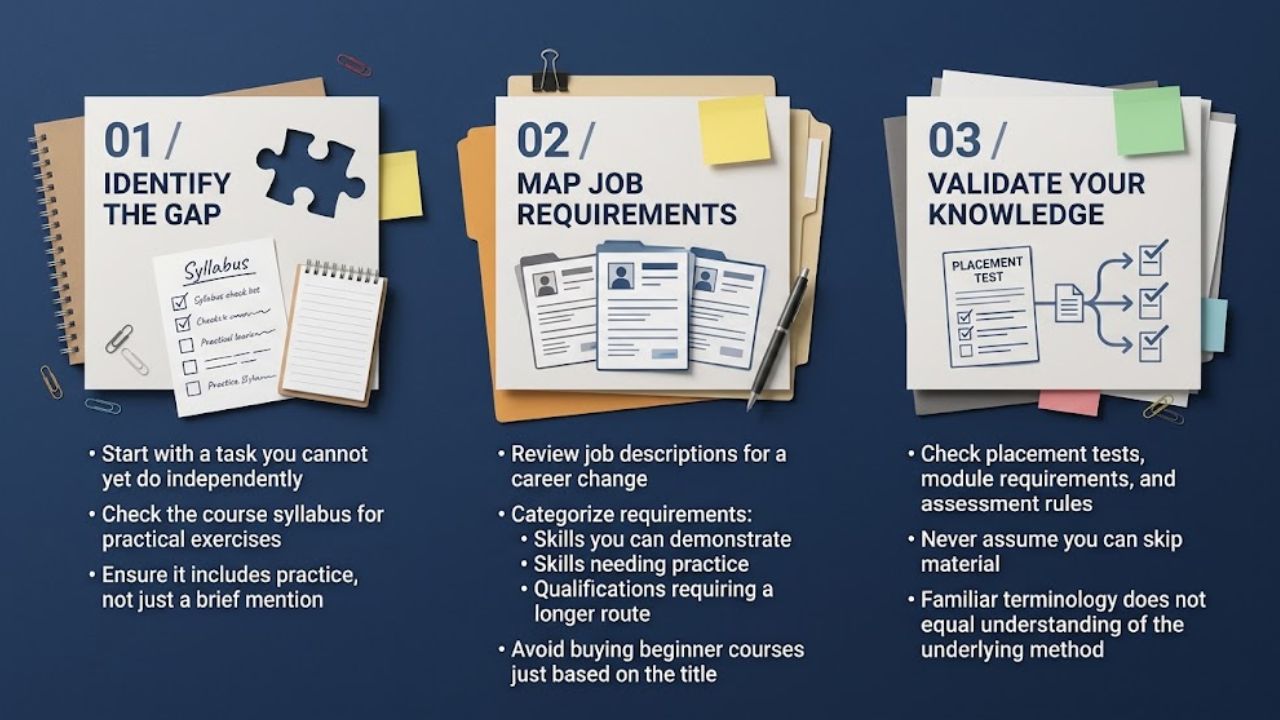
Start your online learning career skills plan with a task you cannot yet complete independently. Compare that task with the syllabus. Does the course include the relevant exercises, or does it only mention the subject?
For a career change, review several relevant job descriptions. Separate recurring requirements into skills you can demonstrate, skills needing practice, and qualifications requiring a longer route. This helps prevent buying a beginner course because its title resembles the job you want.
Some digital programs account for existing knowledge through tailored pathways. Check placement tests, module requirements, and assessment rules before assuming you can skip material. Familiar terminology does not always mean you understand the underlying method.
3. Create Work Samples
A finished project gives you something concrete to discuss with a manager or prospective client. It can also expose gaps that a short quiz misses.
Coursera’s Professional Certificate programs include hands-on projects intended to produce work samples. Check the individual syllabus for the assignments involved; the project and assessment matter more than the platform name.
An online learning career skills project could take several forms:
- A sales dashboard built from a public dataset.
- An onboarding guide written for a fictional business.
- A project schedule showing dependencies and responsibilities.
- A small website with an explanation of design decisions.
After following a tutorial, change something substantial: the dataset, audience, or requirements. Then attempt the task without copying each step.
Keep the brief, your finished work, and a short explanation of what you corrected. Label simulated projects clearly. If everyone produces the same assignment, an independent extension can give you more of your own decisions to discuss.
4. Practice Digital Working Habits
Shared assignments can provide practice in dividing responsibilities, explaining revisions, and handing work over to another person. Include them in your online learning career skills plan if collaboration is something you need to improve. Watching recorded lessons alone offers little practice in those behaviors.
Use the assignment to develop clear working habits. Name files so others can identify them, document changes, and write updates that cover completed work, the next action, and any help needed.
Check equipment requirements before enrolling. A phone may handle videos while being unsuitable for a required spreadsheet or coding exercise. If basic file management is unfamiliar, introductory digital support may be a better starting point than specialized training.
5. Use Feedback to Improve
Feedback is worth examining before you pay for an online learning career skills course. Find out who reviews assignments, what they comment on, and whether you can revise your work.
A score tells you how an attempt performed. Detailed comments can explain why a recommendation is unclear, where evidence is missing, or why a piece of code fails. Educational research finds that feedback effects vary, with the information provided influencing its usefulness.
For business writing, look for review of clarity, reasoning, and recommendations. For coding, seek explanations you can apply to the next problem.
Peer review can introduce useful perspectives, although reviewers may misunderstand the task. Compare conflicting comments with the assessment criteria and ask for clarification where possible.
A smaller course with meaningful review may be worth more to you than a large video library with no response to your work.
6. Explore a New Career Direction
Before committing to a longer program, try a task from the field. Someone considering data analysis could clean a messy dataset and explain the results. Notice how you feel about the checking and correction involved, as well as the finished chart.
The Open University’s OpenLearn offers free courses and downloadable study materials. Its statements of participation and digital badges do not carry formal academic credit. Check whether the exercises also work offline.
Keep an exploratory online learning career skills plan small: one introductory course, one relevant task, and a conversation with someone doing the job. A short course can help you judge your interest; it cannot show every pressure or responsibility of the occupation.
7. Prepare for New Responsibilities
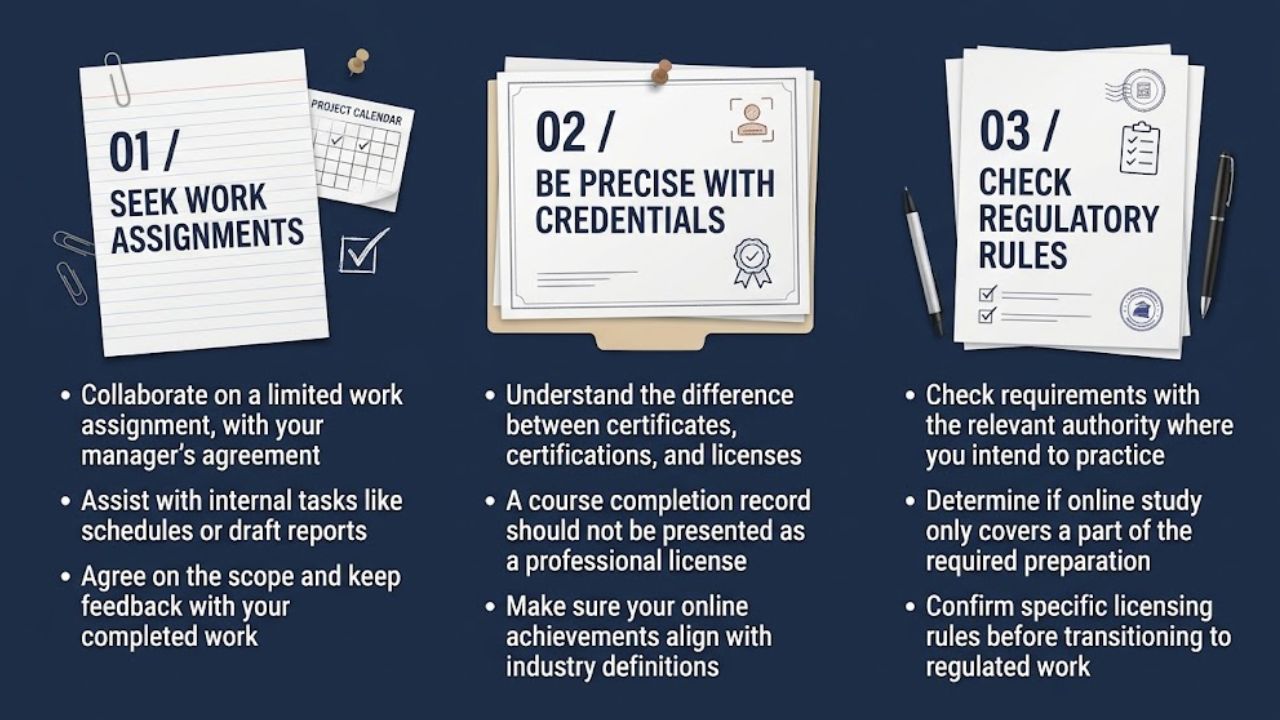
You may have an opportunity to use a new skill before changing jobs. Connect your online learning career skills goals with a limited assignment at work, with your manager’s agreement.
An employee studying project coordination could help maintain an internal schedule. Someone learning reporting might prepare a draft analysis for review. Agree on the scope, support available, and how the work will be assessed. Keep the feedback alongside your completed work.
Be precise about credentials. In US labor statistics, educational certificates, professional certifications, and occupational licenses are separate categories. A course completion record should not be presented as a professional license.
For regulated work, check requirements with the relevant authority where you intend to practice. Online study may cover only part of the preparation required.
What a Course Cannot Solve
Another course will not fix every career problem. If you can already perform the task, you may need portfolio feedback, stronger applications, or relevant work experience.
Check the full cost before enrolling, including required software, assessments, equipment, and subscription renewals. Confirm the teaching language, accessibility features, and device requirements.
Practical occupations may require supervised experience that online study alone cannot provide. Choose training around the actual gap between your current ability and the work you want to do.
Final Thoughts
Choose one task for your online learning career skills plan and decide what a successful attempt would look like. Then find teaching, practice, and feedback that support it. Finish a usable piece of work before adding another course. Explaining your choices and correcting weaknesses will give you a clearer next step than another completed-video counter.
Frequently Asked Questions (FAQs) About Online Learning Career Skills
Where Do Online Learning Career Skills Belong on a Resume?
List relevant courses under education or professional development, using the provider’s correct credential name. Put demonstrated abilities in project descriptions or work examples. Mark unfinished study as in progress, and avoid listing courses that add little to the role you want.
Should You Ask Your Employer to Fund a Course?
Ask before enrolling. Explain the work problem, expected cost, and study time required. Confirm approval and reimbursement conditions in writing, including any repayment terms if you leave.
When Should You Stop Taking More Courses?
Pause when you keep collecting lessons but postpone doing the task. Complete a project or seek feedback before deciding what else you need to learn.