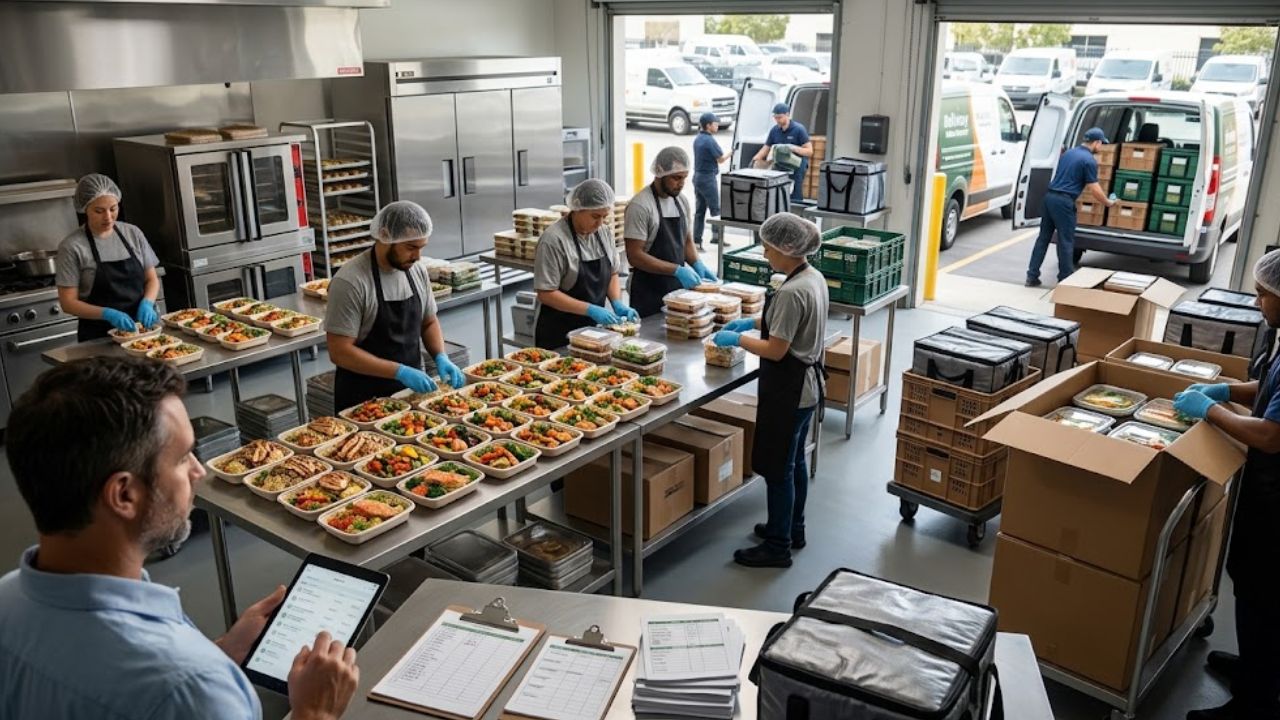
A meal can sell well and still lose money by the time it reaches the customer. Ingredients are only part of the bill. Someone must portion the food, pack the order, answer the address-change message, and drive to a building where the customer has forgotten to leave an entry code.
Starting a profitable meal prep delivery business means designing that whole journey before expanding the menu or delivery area. The strongest starting point is a focused offer, a workable production schedule, and a price that covers the actual cost of fulfilling an order. Subscriptions and software can support that system, but neither fixes an order that costs more to serve than it brings in.
Start with a customer you can serve repeatedly
“Healthy food for everyone” leaves too many decisions unresolved. Office workers buying weekday lunches have different needs from parents ordering family dinners or gym members buying individually portioned meals.
Choose a customer group, a meal occasion, and a manageable delivery area. Then speak with prospective buyers about what they currently eat, what they spend, where their existing routine fails, and when they need food delivered. Ask about refrigerator access and reheating equipment as well as taste preferences.
Turn those answers into a small paid pilot once your operation is legally ready. Publish the actual menu, portion sizes, price, delivery window, and order deadline. A paid order provides more useful evidence than an encouraging reaction to a food photograph. Track who orders again without a second introductory discount.
For a fitness-focused offer, Editorialge’s guide to meal prep fundamentals for fitness provides useful background on meal structure and customer priorities. Translate those needs into clearly described portions and ingredients; avoid promising medical outcomes or treating one menu as suitable for every customer.
Confirm the kitchen and food-safety requirements first
Before signing a kitchen lease or taking orders, describe your proposed business to the relevant food authority. Explain what you will cook, where you will prepare it, whether meals will be chilled or frozen, how you will deliver them, and whether you will sell directly to consumers or through other businesses.
In the United States, the FDA’s food-business startup guidance explains that requirements depend on the product and facility, with state and local rules also applying. Do not assume that permission to sell some homemade foods covers refrigerated prepared meals.
Ask for a written list of requirements covering your premises, permits, training, inspections, labeling, and transport. Discuss insurance needs with an appropriate broker, including product liability and the vehicles or contractors used for deliveries. Other countries have their own authorities and requirements.
Build written procedures for receiving ingredients, storage, cooking, cooling, packing, cleaning, allergen controls, and delivery. Assign responsibility for checking records and handling exceptions. An order-management platform can flag an allergy note; it cannot prevent cross-contact in a poorly controlled kitchen.
The FDA Food Code is a model used by jurisdictions to develop their rules. Confirm the requirements actually adopted where you operate. Have a qualified food-safety professional validate your process, transport conditions, shelf life, and customer storage instructions. A weekly subscription does not establish that every meal is safe to refrigerate for an entire week.
Build a menu your kitchen can repeat
Start with enough variety to make the offer attractive, while keeping purchasing and preparation manageable. Each additional dish introduces ingredients, recipe instructions, packaging decisions, and opportunities for packing errors.
Create a recipe specification for every meal. Record ingredient weights, supplier specifications, batch yield, portion size, packaging, and the approved preparation process. Cost the finished portions using usable yield rather than assuming that every pound purchased becomes a pound sold.
Shared ingredients can simplify production. A vegetable component might support several dishes, provided the finished meals remain distinct and allergen controls remain appropriate. Avoid promising unlimited substitutions. Offer a defined set of choices that your team can purchase, prepare, label, and verify consistently.
Test how meals withstand your intended storage and reheating process, alongside professional food-safety validation. Texture matters commercially: a dish that photographs beautifully but becomes watery after reheating may generate trial orders without repeat business.
Price the order, including the delivery
Calculate contribution before calling the business profitable. Contribution is the revenue left after the variable costs of fulfilling the order; fixed overhead, financing, taxes, and other expenses still need to be covered.
The following is an illustrative calculation, not an industry average or a profit forecast. Assume a six-meal order sells for $72, with delivery included in that price.
| Item | Illustrative cost per order |
| Ingredients | $21.00 |
| Containers, labels, and outer packaging | $6.00 |
| Direct production and packing labor | $15.00 |
| Variable delivery cost | $8.00 |
| Payment processing | $2.50 |
| Expected waste, refunds, and replacements | $3.50 |
| Total variable cost | $56.00 |
| Contribution from $72 revenue | $16.00 |
That leaves approximately 22.2% of revenue to cover fixed costs and profit. If weekly fixed costs were $1,600, the simplified break-even point would be 100 comparable orders: $1,600 divided by $16.
This calculation assumes the same order mix and enough capacity to fulfill it. A new kitchen shift, vehicle, or supervisor can change the result. Include owner labor somewhere in the model, and avoid counting the same labor or kitchen expense twice.
Also test a less favorable week. What happens if ingredient prices rise, customers use a discount, or deliveries take longer? A $6 discount would reduce the example’s contribution from $16 to $10 before any other changes. Set minimum order sizes and delivery charges using those economics.
Keep a separate startup cash budget. Obtain quotes for kitchen access, deposits, permits, equipment, refrigeration, packaging, insurance, software, and launch marketing. Add working capital for supplier payments, payroll, refunds, and payment-settlement delays. Customer prepayments create a responsibility to deliver future meals; they are not all immediately available profit.
Give subscriptions clear rules
A subscription should make the next week easier for both the customer and the kitchen. Define the meal quantity, billing frequency, selection deadline, delivery schedule, and rules for skipping, pausing, or canceling.
A small launch offer might include a one-time trial pack and a recurring weekly pack. Keep the choices understandable before adding multiple portion sizes, dietary variants, and delivery frequencies.
Make these details visible before checkout:
- When the customer will be charged and how much they will pay.
- When meal selections and address changes close.
- What happens if the customer does not choose meals.
- How to skip, pause, or cancel, including any deadline.
- How failed payments, refunds, and missed deliveries are handled.
Have subscription terms and consent reviewed for the laws that apply to your customers. Operationally, a failed renewal payment should enter an exception queue before production quantities are finalized. Do not let the kitchen treat an unpaid recurring plan as an approved order without an explicit decision.
Send reminders early enough for customers to act. After a skip or cancellation, confirm which delivery and charge have changed. Otherwise, customers and staff may interpret the same account status differently.
Make one order record drive the weekly workflow
Orders arriving through a website, text messages, and social inboxes can leave staff working from conflicting versions. Establish one authoritative record for each order and a controlled process for changes.
Capture the order ID, customer contact details, delivery address, meal quantities, payment state, delivery date, and fulfillment notes. Keep dietary preferences separate from allergy information. Limit staff access to the customer information they need for their role.
Then move each order through defined stages: payment confirmed, production approved, prepared, packed, dispatched, and delivered—or an exception requiring action. Payment status and delivery status should remain distinct. A paid order can still be missing a delivery address.
A practical weekly rhythm could look like this:
| Stage | Work to complete | Output for the next team |
| Menu opens | Publish available meals, capacity, and deadlines | An accurate customer offer |
| Orders close | Reconcile payments, skips, and approved changes | A controlled production list |
| Purchasing | Convert recipe quantities into supplier orders | Ingredient requirements by batch |
| Production | Prepare meals under approved procedures | Counted, traceable portions |
| Packing | Check meal quantities, labels, and customer IDs | Verified bags by delivery route |
| Dispatch and review | Record handoffs, exceptions, and actual costs | Delivery evidence and next-week fixes |
Treat this as an operating template, not a requirement to cook or deliver only once a week. Your validated food-safety process and customer needs determine the schedule.
After the cutoff, record changes in a revision log. If an approved substitution changes ingredients or allergens, update the relevant production and labeling records before packing. Printing a new label while leaving an old packing list in circulation creates avoidable risk.
Design delivery zones around cost and service
A larger delivery radius can bring more sales while making each route less efficient. Begin with a compact service area and realistic windows. Consider pickup or a staffed collection partner where it is operationally and legally suitable.
Calculate delivery cost per successful drop, including driver time, mileage or vehicle expense, parking, packaging used for transport, and failed attempts. Track cost per meal too, because a six-meal delivery and a two-meal delivery may require similar travel.
Before dispatch, check addresses, building instructions, contact details, and route loading order. Validate packaging and transport conditions against the actual route, including delays. A route planner estimates travel; the business remains responsible for its food-safety process.
Write an exception policy for customers who are unavailable, inaccessible buildings, delays, and suspected temperature problems. Drivers need an escalation contact and clear instructions. Do not encourage improvised doorstep storage simply to mark a stop complete.
Keep delivery confirmation linked to the order. Use only the customer information necessary for the handoff, and establish appropriate retention and access rules for addresses and delivery photos.
Choose software by testing your operating cycle
The useful software question is whether one customer change reaches every affected record. If a subscriber skips a week, do the charge, meal totals, shopping list, labels, and route manifest all update correctly?
When evaluating a provider such as Meal Merchant, request a demonstration built around your actual weekly workflow. Have the vendor show a new subscription, a skipped delivery, a declined payment, an address change, and a refund. Confirm which functions are included, which require integrations, and what the complete fee structure looks like before committing.
Other tools illustrate why feature checks need to be specific. MealTrack’s published plans distinguish one-time ordering from subscription ordering, with subscription ordering listed in its Growth plan. Meal Prep Zone describes ordering, customer subscription controls, shopping lists, and order labels. By contrast, Sous describes client management and invoicing but says automated recurring orders and subscriptions are not currently available. These are vendor descriptions, not results from an independent product test.
Use a short acceptance checklist:
| Function | What to demonstrate |
| Ordering | Enforce delivery zones, minimum quantities, cutoffs, and capacity |
| Subscriptions | Handle skips, pauses, renewals, failed payments, and cancellation |
| Production | Reconcile paid orders with recipe and meal quantities |
| Packing | Keep labels and customer packing lists consistent after changes |
| Delivery | Export usable manifests and record failed handoffs |
| Reporting | Separate sales, discounts, refunds, fees, and fulfillment costs |
| Ownership | Export customer, order, menu, and subscription data in usable formats |
Ask about payment-processor charges, per-order fees, setup, messaging, support, and contract exit costs. Check whether moving providers would require customers to authorize payments again. Keep bookkeeping and food-safety records in suitable systems even if the ordering platform does not cover them.
Scale the constraint that is limiting profit
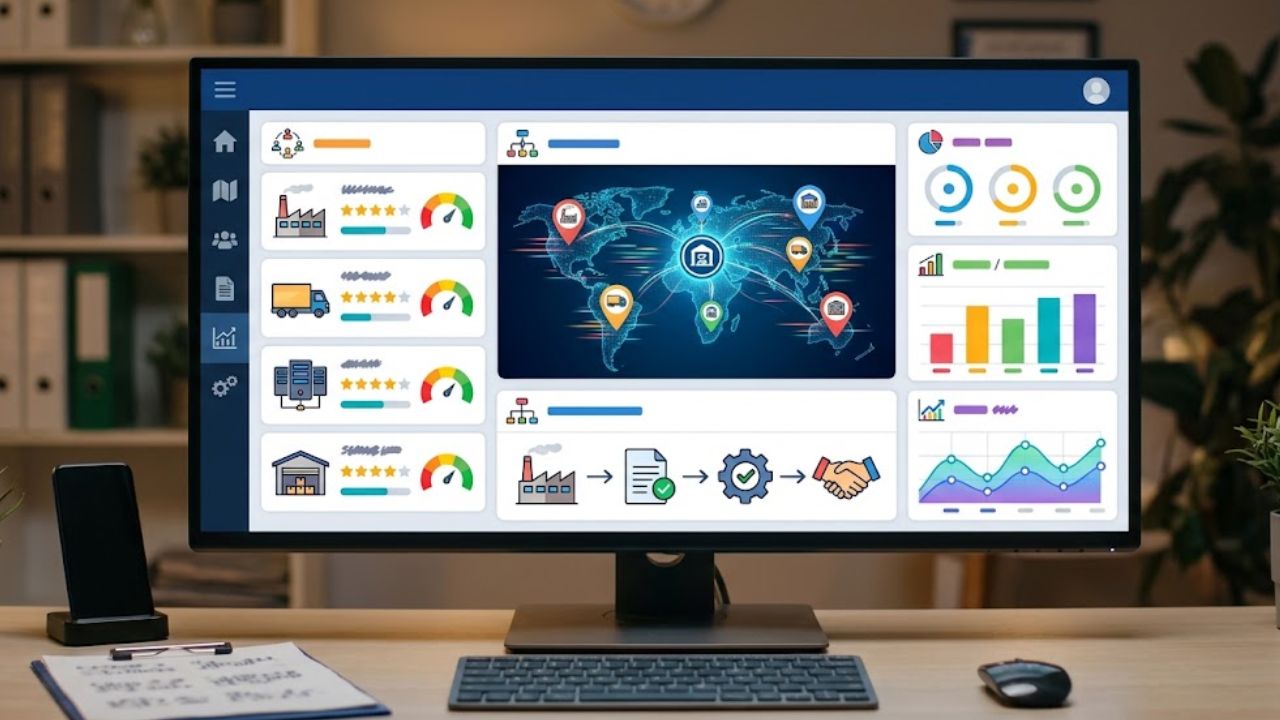
Before increasing marketing spend, establish a weekly dashboard that explains where money and capacity are going. Track contribution per order and delivery zone, paid repeat orders, waste, packing accuracy, delivery exceptions, and production labor per meal.
Define the measures consistently. For retention, follow customers who first paid in the same week and see how many make another paid purchase. Separate a temporary subscription pause from a cancellation. For delivery reliability, compare actual arrival with the window promised to that customer.
Use the results to choose the next expansion. If cooling or packing capacity limits output, more orders may worsen service. If a distant zone produces weak contribution, tighten the boundary or change its delivery terms. If customers stop after two weeks, inspect menu fatigue, portion satisfaction, and fulfillment problems before buying more traffic.
Test one growth channel at a time: a local employer, a gym partnership, a referral offer, or a neighborhood campaign. Measure acquisition cost against the contribution those customers actually generate. Revenue alone can make an expensive promotion look successful.
Expand to an adjacent zone only when the existing route works reliably and the new stops have credible economics. Add staff against a measured workload, with written procedures and training, rather than relying on the owner to correct every mistake.
A sensible launch sequence is to validate demand, establish a compliant production process, run a capped paid pilot, and improve it over repeated cycles. Open more capacity when repeat purchases, order accuracy, delivery performance, and contribution support the decision. The evidence to scale is a week your team can reproduce without losing control of the next one.