Medical-record cybersecurity is essential in personal injury claims because it protects the privacy, accuracy, and legal validity of your medical evidence.
The emergency room note from the morning after an accident is often the foundational proof of your injuries. As this vital record transfers between healthcare providers, digital patient portals, and your attorney’s files, its integrity matters just as much as the diagnosis itself. By preventing unauthorized access and data tampering, robust cybersecurity ensures your medical history remains intact, confidential, and fully available to help establish the treatment costs and compensation you deserve.
What Your Treatment Records Can Show
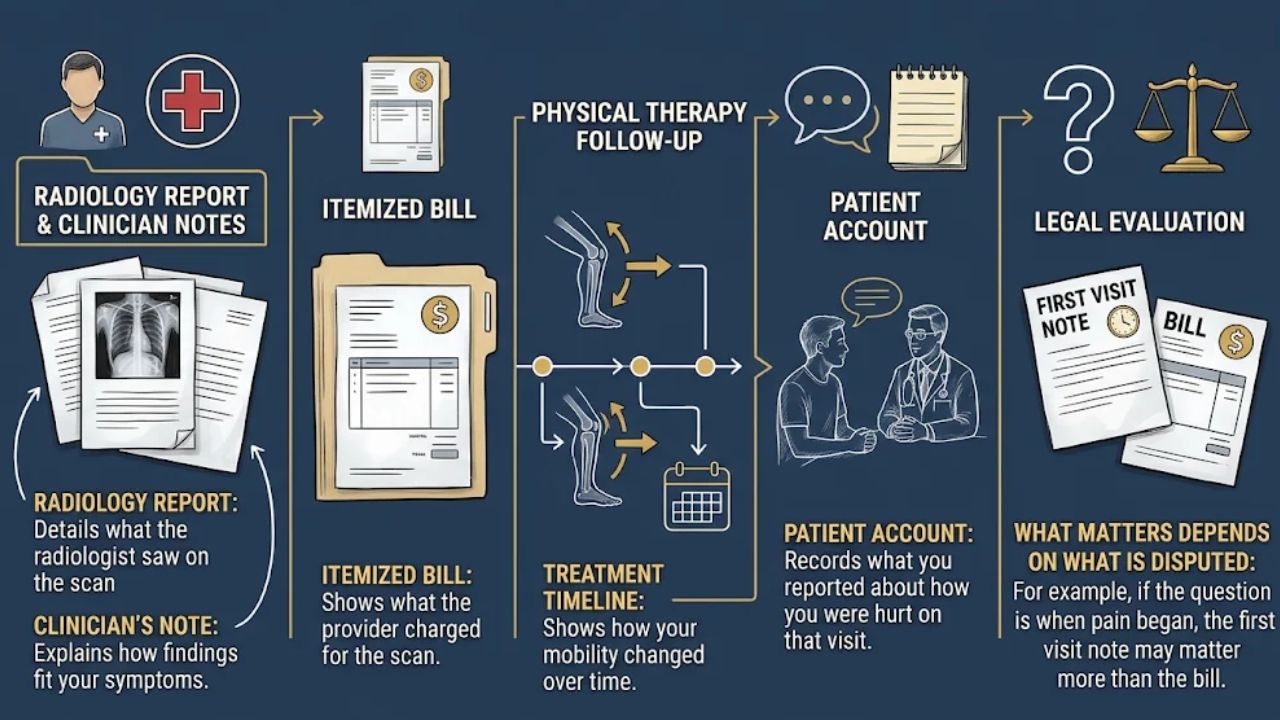
A radiology report describes what the radiologist saw on the scan. The treating clinician’s note may explain how those findings fit your symptoms, and an itemized bill shows what the provider charged for the scan. Follow-up notes from physical therapy can help fill out the treatment timeline for an injury claim by showing how your mobility changed over time.
A clinician may also write down your account of how you were hurt. That entry shows what you reported at the visit. Determining what caused the injury may take other evidence or a clinician’s interpretation. When an injury lawyer evaluates a claim, the documents that matter depend on what’s disputed. If the question is when your pain began, the first visit note may matter more than the bill from that visit.
How a Security Problem Can Affect Your Case
The HIPAA Security Rule requires regulated organizations to safeguard electronic protected health information. Confidentiality is about who can see it. Integrity protects the record against unauthorized changes or deletion. Availability means that authorized people can get to it when they need it.
| What happened | What to check |
| A claim packet went to the wrong person. | Confirm what was sent and who received it. If you shared a link, check whether you can revoke access. |
| Two copies show different versions of the same entry. | Compare export dates. Ask whether a signed addendum or the export settings explain the difference. |
| An outage stops the provider from exporting a chart. | Identify the missing visits or documents. Ask whether the provider or another authorized source has a copy. |
The consequences of an outage depend on what happened at the provider’s end. In one enforcement case, HHS reported that ransomware encrypted a New York neurology practice’s network and made its electronic health information inaccessible. If an entry simply disappears from your portal, ask the records office whether the underlying chart is still available.
What to Check When Two Copies Disagree
If your first portal download shows a physical therapy note without a work restriction, but a later export includes a signed addendum recommending two weeks without lifting, compare the dates before assuming someone changed the original. The visit date, the date the therapist signed the note, and the date the office exported the file may all be different. The later copy may include an addendum that wasn’t in the earlier export.
Keep both files as you received them. Write down where you got each one and point the records office to the exact entry that differs. Ask for the complete note, including any signed addendum. The Security Rule requires regulated organizations to record and review activity in systems that contain or use electronic protected health information. What the audit log can tell the provider depends on how the system is set up. The therapist can explain what the restriction meant for your care.
In federal court, Federal Rule of Evidence 902 allows certain records and electronic evidence to be authenticated by certification. Authentication establishes that the record is what the party says it is. Other evidence rules still determine whether the court admits it. Timestamped photos or other digital evidence from the incident may help you identify which date or event to check.
Who Can Obtain Your Records During an Injury Case
In the U.S., HIPAA generally gives patients the right to inspect and get copies of their health information from covered providers and health plans, with some exceptions. If a portal gives you only a visit summary, ask the records office for the specific note, imaging report, or bill you need. HHS explains how to access your records and request corrections.
A covered provider may share records under a valid authorization or when the law permits disclosure. A court order allows the provider to release the information it specifically describes. A subpoena without a court order carries different HIPAA conditions. Depending on the circumstances, the provider may need assurance that the requesting party took reasonable steps to notify the patient or seek a qualified protective order. The provider may also be able to make those efforts itself under the HIPAA rules for court orders and subpoenas.
In federal civil cases, Rule 26 generally limits discovery to nonprivileged information relevant to a claim or defense and proportional to the needs of the case. A prior record may be relevant if you had similar symptoms or received treatment for the same part of your body. State rules can differ. If you’re asked to sign a release, your lawyer can check which providers, dates, records, and recipients it covers.
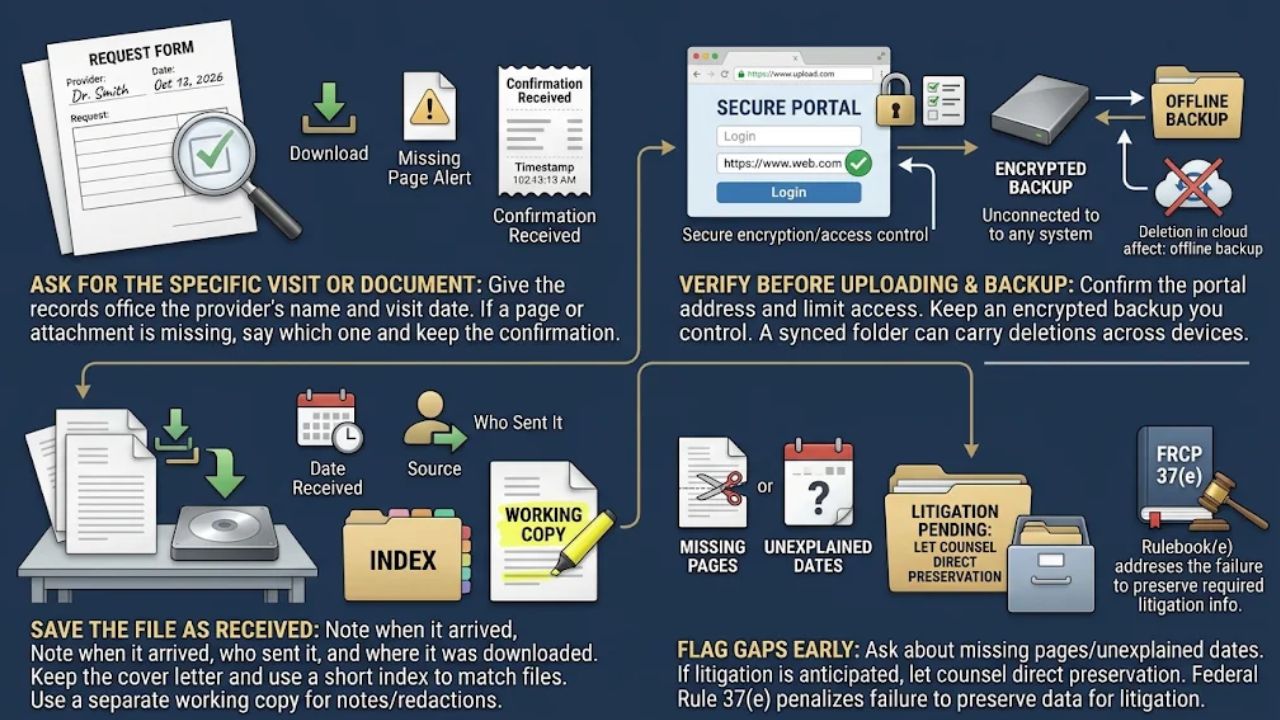
Ask for the specific visit or document. Give the records office the provider’s name and visit date. If your download is missing a page or an attachment, say which one and keep the confirmation of your request.
Save the file as received. Note when it arrived, who sent it, and where you downloaded it. Keep any cover letter. If you have files from several providers, a short index can help you match each file to its source. Use a separate working copy for notes, highlights, or redactions agreed with your lawyer.
Verify the destination before uploading. Confirm the portal address with the intended recipient and limit who can open the files. Keep an encrypted backup you control. A deletion can carry over to your other devices through a synced folder, which is one reason to keep a separate backup.
Flag gaps early. Ask the provider about missing pages or unexplained dates. If litigation is pending or reasonably anticipated, let counsel direct preservation. Federal Rule of Civil Procedure 37(e) addresses information a party should have kept for litigation. It applies when the party’s failure to take reasonable steps caused the loss and further discovery cannot restore or replace the information.
What to Do After a Breach Notice or Portal Outage
Save the notice or error message and call the provider using a number you already trust. Ask which records the incident affected and whether you can get copies. If you have a lawyer, send them the notice and flag any records needed for an upcoming deadline.
A portal outage may leave you unable to open your chart while the provider works out what happened. The HIPAA Breach Notification Rule sets separate notification duties for covered entities and business associates after qualifying breaches of unsecured protected health information. If you receive a notice, what you do next depends on the information involved. A data breach response checklist can help you keep track.
If you’re locked out, start with account recovery. If you’re waiting on a specific report, ask the facility that created it for a copy. Keep the file as it arrives, along with a note of who sent it and when. Those details give you somewhere to start if a different version turns up months later.
Frequently Asked Questions About Medical-Record Cybersecurity
How do medical records support an injury claim?
They can show when you reported symptoms, what care you received, and what you were charged. A court may weigh those records alongside other evidence when deciding what caused the injury.
Can my medical records be subpoenaed?
Yes. A party can seek them by subpoena. What a covered provider can release depends on the subpoena, the applicable court rules, and HIPAA’s disclosure conditions.
Can I correct an error in my medical records?
You can ask a covered provider or health plan to amend certain records. If it denies your request, you generally can submit a statement of disagreement for the record. Keep any copy you received before requesting the change.
Can a breach make a record unusable in court?
A court applies its evidence rules to the record offered. Whether someone accessed the file, changed it, or made it temporarily unavailable can affect the questions the court needs to resolve.