TransUnion SmartMove is worth shortlisting for standalone, pay-as-you-go reports; RentPrep offers a human-reviewed background-check option; and RentSpree combines screening with rental applications and optional bank-verified income information. Landlords who already use a rental-management platform may prefer screening inside that system, provided the package supplies the information they actually need.
The best tenant screening services for landlords make their report contents, charges, record limitations, and applicant support process clear. A low starting price is less helpful if it omits the credit report or eviction search you expected. An automated score cannot establish whether a particular record belongs to the applicant or whether it can lawfully be used in your decision.
This guide covers US residential rentals. It is a research-based comparison of official product and pricing pages checked on November 4, 2026, rather than a hands-on test or a ranking of report accuracy. Federal requirements apply alongside state and local rules; application fees, permissible records, and reusable-report requirements need a location-specific check.
Compare the package before comparing the price
Prices below are USD as displayed when checked. They are vendor offers, not a statement that a landlord may collect the same amount from an applicant in every jurisdiction. Taxes, add-ons, package eligibility, and payment arrangements can change.
| Service | Reason to shortlist it | Published screening cost | Important distinction |
|---|---|---|---|
| TransUnion SmartMove | Standalone screening without a subscription | $25 Basic; $42 Plus; $49 Premium, plus applicable tax | Basic lacks the full credit and eviction-related reports listed in Plus |
| RentPrep | Background screening with a human-review component | $29 credit-only or background-only; $49 combined package | Background-only is landlord-paid; other listed packages offer payment options |
| RentSpree | Applications, screening and optional income/reference checks | $39.99 Standard; $49.99 Comprehensive | Bank-verified income and reference checks are in Comprehensive |
| Avail | Screening within a broader DIY landlord platform | Confirm current report fee before ordering | Free or paid landlord software is separate from report charges |
| TurboTenant | Applications, screening and ongoing rental tools | $45 or $55 depending on landlord plan | Applicant-paid pricing is not “free screening” for everyone |
| Zillow Rental Manager | Screening tied to a widely used rental-application workflow | $40 applicant fee shown in official guidance | Participating-rental reuse and report details need checking in the current flow |
| Apartments.com | Applications with in-network report reuse | $32 plus tax, paid by applicant | Up to 10 participating landlords within 30 days |
| LeaseRunner | Bundles plus separately priced reports | $17 Basic; $40 Pro; $54 Ultimate; $64 Premium | Credit starts in Pro; eviction in Ultimate; payroll/cash flow in Premium |
| Innago | Screening alongside rental-management tools without a monthly software fee | $30–$35; income verification adds $10 | Confirm which reports the selected package includes |
| E-Renter | Standalone package choices | $21.95 Basic; $31.95 Premium; $36.95 Ultimate | Credit-check options add a $2.49 applicant verification fee; individual accounts do not promise full credit-file access |
The list numbers organize the comparison. “Best fit” judgments below describe documented workflow differences, not evidence that one provider predicts tenant behavior more accurately than another.
1. TransUnion SmartMove: For occasional standalone screening
SmartMove is a practical candidate when you need reports without adopting a full property-management system. It uses pay-as-you-go pricing, and the landlord can choose who pays where that arrangement is permitted.
Package selection matters. Basic lists ResidentScore and a criminal-background report. Plus adds a credit report and eviction-related report. Premium also lists Income Insights and an identity check.
Do not equate Income Insights with checking current payroll deposits. SmartMove describes a model that evaluates self-reported income using credit-report information and helps identify when additional verification may be useful.
Before ordering, check record restrictions for the property’s jurisdiction and preview the package. The least expensive tier is not the same report with fewer decorative features.
2. RentPrep: For landlords seeking human-reviewed background checks
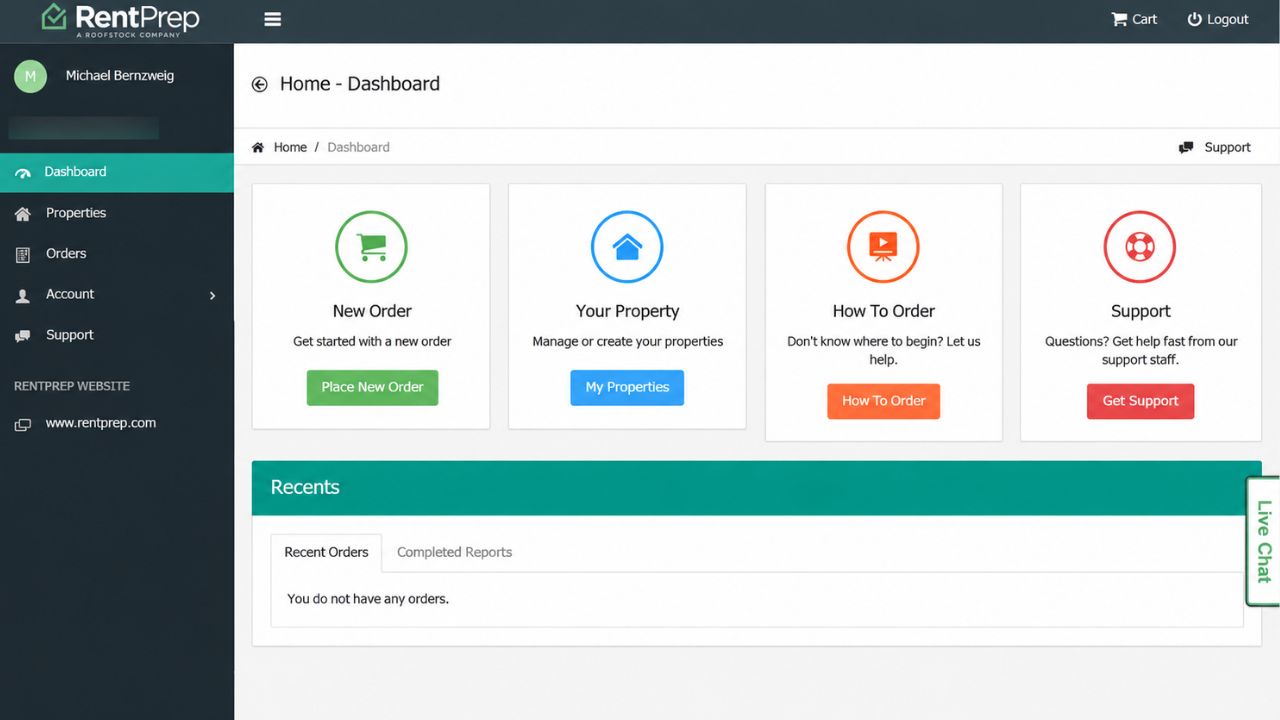
RentPrep distinguishes an automated credit-report option from background screening that includes review by what it describes as FCRA-certified screeners. Its current ordering links lead into Stessa.
The listed choices are $29 for credit only, $29 for a background check only, and $49 for the combined package. The background-only option is landlord-paid; the credit-only and complete packages list landlord or tenant payment options.
Human review is a reason to consider the service, but it does not eliminate the need to inspect a questionable match or understand a court record. Nor does a certification claim guarantee that a landlord’s selection policy complies with every applicable law.
Preview the sample for the exact package, then confirm which verification add-ons carry extra charges.
3. RentSpree: For a combined application and screening workflow
RentSpree lists a Standard report at $39.99, covering credit, background, and eviction information. Its $49.99 Comprehensive report adds bank-verified income and reference checks. The current pricing page allows the applicant or landlord to cover the screening fee.
That makes the service worth evaluating when the application and income-review steps are as important as the credit report. Check what a reference-check result actually contains and what happens if an applicant cannot complete bank verification.
RentSpree identifies TransUnion as the provider of its credit, background, and eviction reports. It also notes that legal restrictions can affect the information returned and when reports are released. Do not mistake the package label for a promise of unrestricted nationwide records.
4. Avail: For landlords who want screening inside a management platform
Avail combines rental applications and screening with functions such as rent collection and maintenance tracking. Its free Unlimited software tier includes the ability to request applications and reports; Unlimited Plus adds features including application customization.
Official application materials describe TransUnion credit, background, and eviction reports, along with landlord reference checks. This is a useful configuration to explore if you want the application and later tenancy administration in one place.
A current, readable support-page quote for the screening report fee could not be verified during this research. Confirm it in the ordering flow instead of assuming that the software subscription includes screening charges. Also check whether the application changes you want require the paid tier.
5. TurboTenant: For screening connected to everyday rental tasks
TurboTenant brings applications, screening, rental marketing, rent collection, and other landlord tasks into one platform. Its screening page describes a TransUnion credit report with score information, plus criminal background and eviction checks.
The published applicant charge is $45 or $55 depending on the landlord’s plan. That is different from saying there is no screening cost: the platform can be free for a landlord while the applicant pays for the report.
Compare the complete workflow and its total cost. Ask whether any income-verification option is included or separately charged, how incomplete applications are handled, and how you will review and document a decision. A single applicant dashboard does not remove those responsibilities.
6. Zillow Rental Manager: For a listing-centered application process
Zillow Rental Manager is worth considering when applicants are already finding the property through Zillow. Its official guidance describes a $40 applicant payment and reuse of the reports for participating Zillow rental applications within 30 days.
The service supplies application and third-party screening information, but document uploads and screening reports should be reviewed as different forms of evidence. A submitted income document is not automatically an independently authenticated employment or banking record.
Confirm the current report providers and contents before relying on older descriptions. The official pages inspected were inconsistent about the background-check provider, so this guide does not assign a single current provider name. Look at the report’s date, coverage, and dispute contact rather than assuming every branded report is identical.
7. Apartments.com: For reusable applications within its rental network
Apartments.com lets applicants pay $32 plus tax for an application and screening reports that can be shared with up to 10 participating landlords within 30 days. Landlords can receive applications and view those reports without a screening charge from the platform.
Its screening materials describe credit information and ResidentScore from TransUnion, alongside criminal and eviction screening. The reuse arrangement can reduce duplicate purchases for someone applying to several participating rentals.
Check the boundaries of that arrangement. In-network sharing does not mean the report is automatically transferable to every other platform. Separately, applicable law may address reusable reports, so confirm the rules for the property before requesting another paid report.
8. LeaseRunner: For selecting reports individually or by bundle
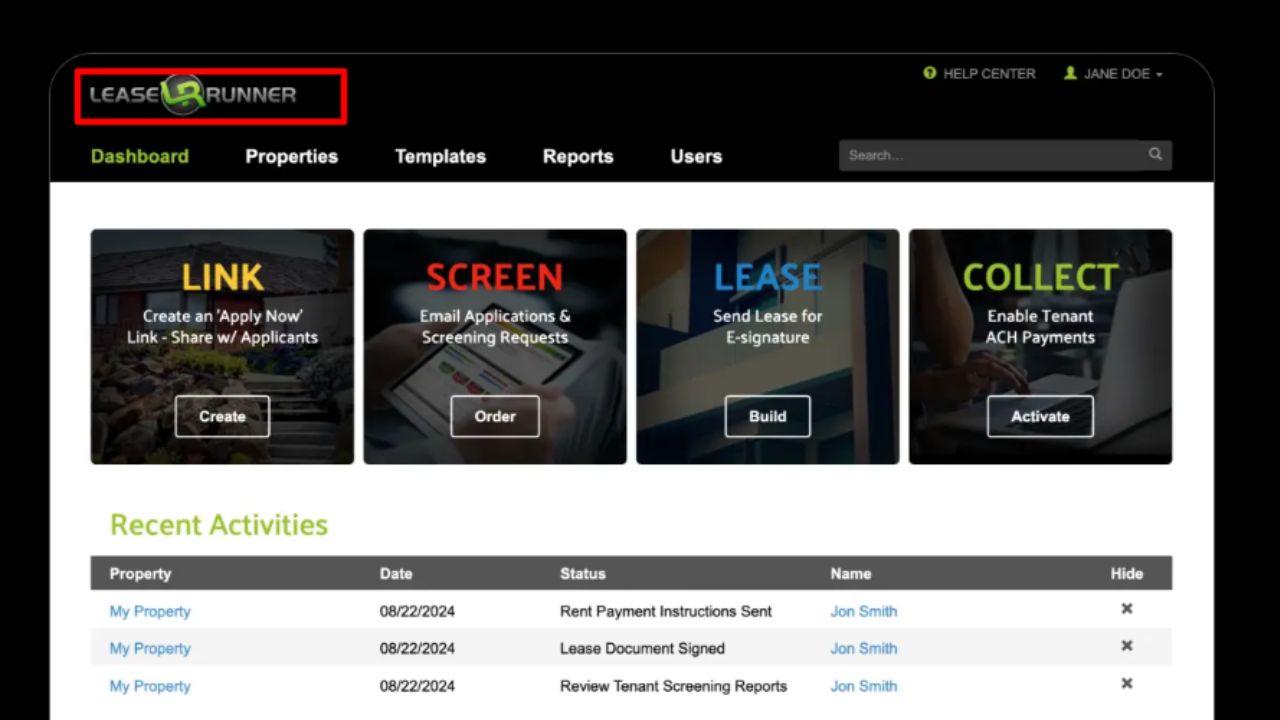
LeaseRunner offers both bundled screening and an à la carte menu. Its current packages show a meaningful progression: $17 Basic covers criminal background information; $40 Pro adds credit; $54 Ultimate adds eviction information and $64. Premium adds payroll verification and cash-flow information.
That structure suits a landlord who wants to see which component changes the price. It also makes comparisons with an all-in-one package easier: the $17 entry point is not a credit-plus-eviction bundle.
Review the sample for the tier you would actually buy. Ask about applicant steps, unavailable records, and the alternatives when payroll or bank connectivity cannot supply the intended information.
9. Innago: For ongoing management without a monthly software subscription
Innago combines customizable rental applications with screening and other property-management functions. Its FAQ states that the software has no monthly subscription or setup fee, while screening costs $30–$35 per applicant by default. Income verification adds $10.
It is a candidate when you need ongoing rental administration as well as the current screening request. The application builder allows supporting documents and different templates, which may help organize the process.
Confirm the exact screening selection and fee before inviting applicants. A price range does not establish that each option includes the same records. Review custom questions for relevance and legal suitability; software flexibility is not permission to collect anything you might find interesting.
10. E-Renter: For standalone screening with clear account-level differences
E-Renter lists Basic at $21.95, Premium at $31.95, and Ultimate at $36.95. The credit-check packages require an additional $2.49 payment from the applicant for verification before the credit portion is completed.
The account type matters as much as the tier. E-Renter’s public materials distinguish an individual landlord’s credit-decision service from property-manager or commercial arrangements offering access to a full credit report.
Choose it for evaluation if you prefer standalone ordering and can work with the information supplied by the relevant account. Before paying, ask to see a sample and clarify whether you receive a credit decision, score-based assessment, or the underlying credit file. Those are not interchangeable products.
What to check in a sample report
The useful comparison is the package you would order for a property in its actual location. Ask each shortlisted provider the same questions:
| Check | What to establish |
|---|---|
| Identity matching | How the report matches records to the applicant and handles a possible mismatch |
| Credit information | Whether the package supplies a full report, a score, or a recommendation |
| Court records | Whether the result shows the type of case and its outcome, not simply that a filing exists |
| Geographic coverage | Which jurisdictions or record categories may be unavailable or restricted |
| Income evidence | Whether the result is an estimate, uploaded document, bank-linked result, payroll result, or reference response |
| Applicant completion | What happens if identity verification, bank linking, or a report request cannot be completed |
| Corrections and notices | Where applicants dispute errors and how the landlord obtains the information needed for required notices |
| Cost and reuse | All charges, who pays, and whether reuse is platform-specific or subject to local requirements |
The FTC identifies inaccurate matching and incomplete record information as important screening concerns. Review a questionable result with the provider rather than treating an automated label as a factual conclusion about the applicant.
A lack of reported records means the search did not return reportable information under its coverage and rules. It does not prove that every relevant record has been checked. Likewise, an eviction filing should not automatically be read as an eviction judgment or evidence that the applicant failed to pay.
Keep screening decisions separate from the report
Write lawful, relevant criteria before requesting reports, apply them consistently, and account for any legally required accommodations or exceptions. Do not use protected characteristics as a shortcut for financial or rental risk. Federal fair-housing protections cover race, color, national origin, religion, sex, familial status, and disability; additional state or local protections may apply.
A provider describing itself as “FCRA compliant” is not a legal approval of your application questions, fee policy, or final decision. The FTC explains that obtaining a consumer report requires a permissible purpose and certification of housing use. Follow the provider’s authorization process and any additional applicable requirements.
If a consumer report influenced an unfavorable decision even partly, adverse-action notice requirements can apply. Denial is not the only example: a larger deposit, higher rent, or co-signer requirement can also qualify. The notice includes the reporting agency’s contact details, a statement that it did not make the decision, and information about dispute rights and requesting a free report within 60 days. Using a credit score brings additional written or electronic disclosure requirements.
Applicants have rights to dispute inaccurate information. Identify the correct reporting agency and its correction route; a landlord’s application portal may not be the company responsible for the disputed record.
For a specific property, have the fee rules, screening criteria, notice process, record-use restrictions, and retention policy checked against current local law before implementation. Then select two services that fit the workflow, inspect their actual sample reports, and confirm the applicant experience and total charge before ordering.