


Running a small business in Switzerland presents unique challenges and opportunities. From navigating diverse regional markets to optimizing logistics across the country’s mountainous terrain, success often hinges on smart decision-making.
One of the most powerful tools for achieving this is business mapping.
Business Mapping for Small Businesses in Switzerland leverages geographic and data visualization tools to streamline operations, improve customer targeting, and enhance strategic planning.
This article explores how small businesses can benefit from business mapping, offering practical insights, actionable steps, and real-life examples to implement this transformative approach.
What is Business Mapping?
Business mapping involves using geographic information systems (GIS) and other mapping tools to visualize data spatially. It allows businesses to make informed decisions by analyzing customer locations, market opportunities, and logistical challenges.
For small businesses in Switzerland, business mapping provides the tools needed to adapt to the country’s diverse linguistic, cultural, and economic landscapes.
Types of Business Mapping Tools
A variety of business mapping tools are available, catering to different needs:
- GIS Software: Tools like ArcGIS or QGIS for advanced spatial analysis.
- Customer Relationship Management (CRM) Integration: Salesforce Maps integrates mapping features directly into your CRM platform.
- Logistics Mapping Tools: Solutions like Route4Me or MapPoint optimize delivery routes and supply chain logistics.
| Tool Name | Key Features | Cost | Suitability |
| Google Maps API | Customizable mapping solutions | Free/Paid | General mapping |
| ArcGIS | Advanced spatial analysis | Paid | In-depth GIS |
| Maptive | Data visualization and analytics | Paid | Small businesses |
| Tableau | Interactive visual analytics | Paid | Performance tracking |
Benefits of Business Mapping for Small Businesses
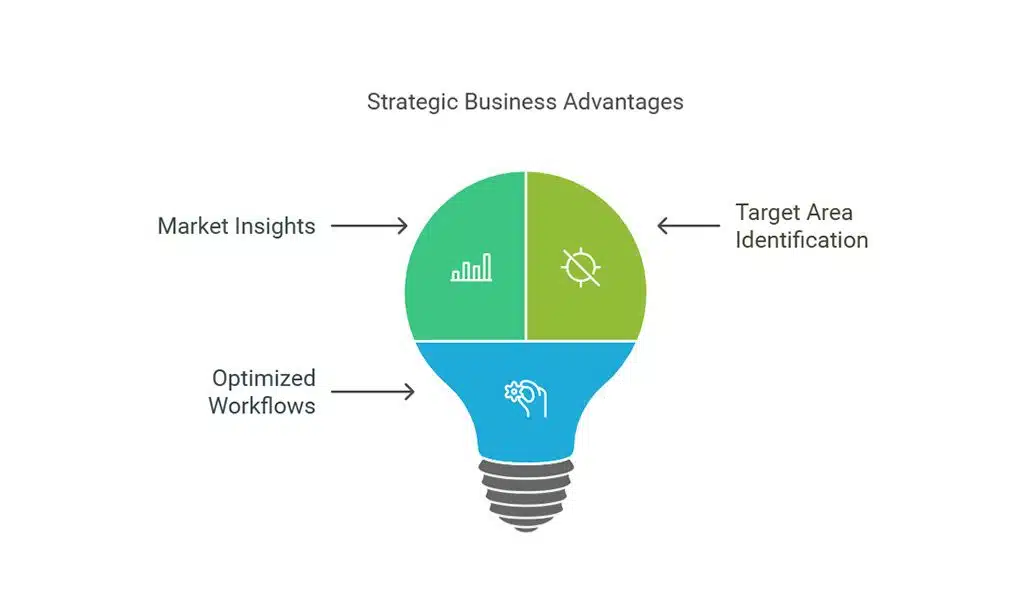
Business mapping provides a clear, visual representation of critical data, enabling small businesses to:
- Identify high-performing areas.
- Spot underperforming locations.
- Plan strategies based on geographic insights.
Practical Tip: Use tools like Tableau to combine geographic and business performance data for better insights.
Real-Life Example: A small chain of grocery stores in Lucerne analyzed sales data through business mapping, which revealed that certain rural areas required product adjustments to increase demand. As a result, sales grew by 15% in those locations.
| Benefit | Outcome |
| Market insights | Better resource allocation |
| Target area identification | Strategic business planning |
| Optimized workflows | Increased efficiency |
Improved Customer Targeting
Understanding where customers are concentrated allows businesses to:
- Customize marketing campaigns for specific regions.
- Allocate resources effectively.
- Meet customer demands more efficiently.
Current Trend: Geo-targeted ads are becoming a cornerstone of digital marketing strategies, allowing businesses to deliver location-based promotions.
Actionable Tip: Use location-based heat maps to segment your customer base and tailor your offerings accordingly.
Optimized Supply Chain Management
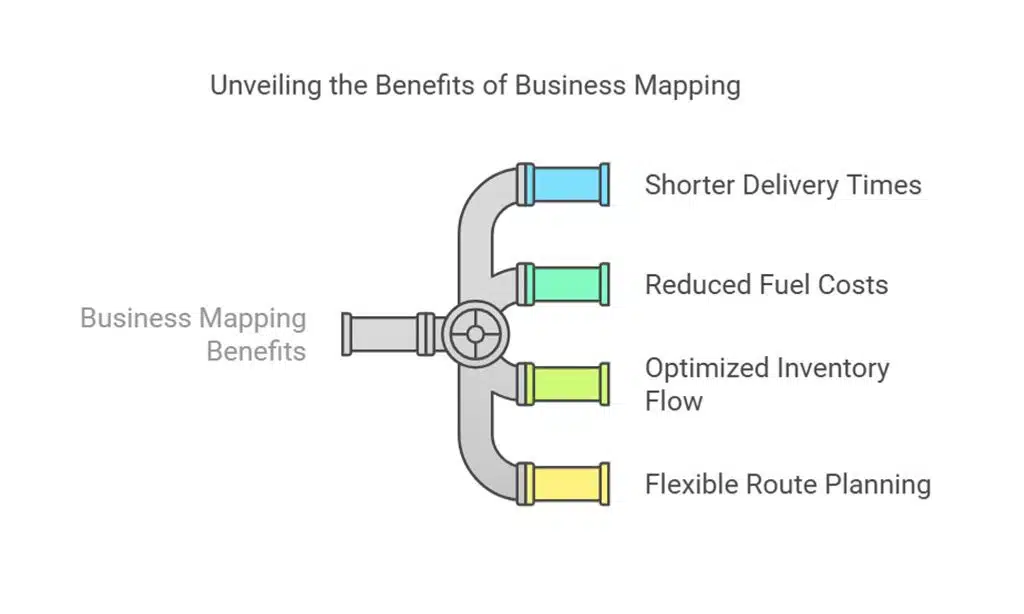
Switzerland’s complex geography makes logistics a challenge. Business mapping:
- Identifies optimal delivery routes.
- Reduces transportation costs.
- Improves overall supply chain efficiency.
Case Study: A local bakery chain in Zurich used business mapping to shorten delivery times by 30%, resulting in happier customers and lower costs.
| Benefit | Impact on Business |
| Shorter delivery times | Improved customer satisfaction |
| Reduced fuel costs | Higher profit margins |
| Optimized inventory flow | Better stock management |
| Flexible route planning | Enhanced adaptability |
10 Ways Business Mapping Can Transform Your Small Business

1. Identify Local Market Opportunities
Small businesses can use business mapping to:
- Locate underserved regions.
- Analyze local demographics for product-market fit.
- Pinpoint high-growth areas.
Example: A boutique in Basel identified neighborhoods with younger demographics and tailored their product offerings, leading to a 20% increase in sales.
| Factor | How Business Mapping Helps |
| Demographics | Identifies target audiences |
| Competitor analysis | Highlights gaps in the market |
| Income distribution | Matches pricing to location |
| Consumer preferences | Aligns offerings with demand |
2. Optimize Delivery Routes
Mapping software helps plan efficient routes, especially in areas with:
- Limited access (e.g., mountain villages).
- Seasonal changes affecting transportation.
Example: A logistics firm in Lausanne reduced fuel costs by 20% using route optimization tools.
| Benefit | Outcome |
| Lower transportation costs | Increased profitability |
| Shorter delivery times | Enhanced customer loyalty |
| Reduced emissions | Eco-friendly operations |
| Real-time updates | Improved adaptability |
3. Enhance Customer Experience
Geospatial data can:
- Identify customer preferences by region.
- Tailor services to local tastes.
- Improve response times for customer inquiries.
Practical Insight: Personalization based on location data fosters stronger customer relationships and loyalty.
Case Study: A food delivery service in Geneva tracked customer satisfaction by area and optimized its menu offerings, increasing repeat orders by 25%.
| Benefit | Outcome |
| Personalized services | Stronger customer loyalty |
| Faster response times | Higher satisfaction levels |
| Better feedback systems | Continuous improvement |
4. Streamline Business Operations
Visualizing workflows geographically helps businesses:
- Spot inefficiencies.
- Plan better resource allocation.
- Enhance team coordination.
Practical Example: A construction company in Bern used mapping tools to monitor site progress and allocate resources, reducing delays by 15%.
Actionable Tip: Use GIS software to track multiple projects simultaneously and allocate resources effectively.
5. Strengthen Marketing Campaigns
Business mapping enables hyper-targeted marketing by:
- Launching campaigns tailored to specific cantons.
- Analyzing competitor presence and market share.
- Optimizing ad spend based on regional demand.
Example: A Swiss cosmetics brand used mapping tools to identify areas with high demand for organic products, doubling their sales in key regions.
| Benefit | Outcome |
| Targeted campaigns | Higher ROI on ad spend |
| Competitor insights | Improved positioning |
| Regional focus | Enhanced customer engagement |
6. Understand Competitor Positioning
Mapping competitors’ locations helps identify:
- Overcrowded markets to avoid.
- Underserved areas for expansion.
Example: A Swiss chocolatier used business mapping to pinpoint regions with minimal competition and successfully opened three new stores.
Actionable Tip: Use competitor heat maps to visualize market saturation and identify strategic growth opportunities.
7. Plan Strategic Business Expansion
Using mapping tools, businesses can:
- Evaluate the potential of new locations.
- Identify high-traffic areas for retail stores.
- Assess regional competition.
Example: A fitness center chain in Zurich analyzed foot traffic data to select optimal locations for new branches, leading to a 30% increase in memberships.
| Step | Description |
| Market analysis | Identify customer demand |
| Competitor mapping | Avoid oversaturated areas |
| Infrastructure assessment | Ensure accessibility |
| Demographic alignment | Match offerings to needs |
8. Enhance Team Collaboration
Business mapping tools foster teamwork by:
- Providing visual data accessible to all departments.
- Aligning marketing, sales, and logistics teams.
- Simplifying communication with remote workers.
Practical Tip: Use shared dashboards on platforms like Maptive for real-time updates and collaboration.
Case Study: A retail chain in Lausanne improved internal communication between departments by visualizing sales data, reducing misunderstandings and increasing efficiency.
9. Manage Risk Effectively
Business mapping helps anticipate risks by:
- Identifying areas prone to natural disasters.
- Highlighting market saturation zones.
- Evaluating transportation challenges.
Example: A supply chain company in Lucerne used mapping to reroute deliveries during winter storms, avoiding delays.
Actionable Insight: Incorporate real-time weather data into mapping tools to adapt to changing conditions.
10. Improve Decision-Making with Real-Time Data
Real-time data integration ensures businesses can:
- React quickly to changing conditions.
- Monitor performance metrics geographically.
- Adjust strategies dynamically.
Current Trend: Real-time traffic updates from mapping tools like Google Maps API are essential for adaptive decision-making.
Example: A logistics firm in Zurich used live traffic data to reroute deliveries, reducing delays by 25% and improving customer satisfaction.
| Benefit | Outcome |
| Faster decision-making | Improved operational efficiency |
| Dynamic strategy updates | Better responsiveness |
| Enhanced data accuracy | Reduced errors |
Practical Tips for Small Businesses Using Business Mapping
Setting Clear Goals for Mapping Projects
Before starting, define what you aim to achieve:
- Expanding market reach.
- Optimizing operations.
- Enhancing customer satisfaction.
Practical Insight: Clearly outlined objectives help measure the success of mapping projects.
Additional Example: A logistics startup in Zurich set measurable KPIs like reducing delivery times by 10% within six months using mapping solutions.
Takeaway
Business Mapping for Small Businesses in Switzerland is a game-changing strategy. By visualizing critical data, small businesses can identify opportunities, streamline operations, and enhance customer satisfaction.
Whether you’re expanding to new markets or optimizing existing processes, business mapping offers the tools needed to thrive in Switzerland’s dynamic economy.
Ready to transform your business? Start integrating business mapping today and unlock your full potential! For more insights, visit Editorialge.
























