

Many artists feel stuck when they try to sell digital art as non-fungible tokens. It can feel like shouting into a void. They worry about gas fees, smart contracts they barely grasp, and if nft collectors will even care.
Only 54% of artists who launched NFTs sold their pieces, a clear sign of a steep learning curve.
In this post, we share five simple tips to guide you. You will learn how to guard your copyright, pick the right nft platform, price your art, grow your nft community on social media platforms, and secure your wallet.
Are you ready?
Key Takeaways
- Only 54% of artists who launch NFTs sell their art, so guard your copyright, use smart contracts for royalties, and host work on Ethereum and IPFS.
- Compare fees on 50+ NFT platforms, check Ethereum gas costs, and test mint tools—try SuperRare for art-only drops, OpenSea for cheap editions, and Nifty Gateway for varied media.
- Engage with 350,000+ active wallets monthly on OpenSea; use Twitter Spaces, Discord, Telegram AMAs, and behind-the-scenes posts to grow your NFT community.
- Secure your wallet with a strong passphrase, private keys, a hardware key, and multi-factor tools like WalletConnect; run ERC721/ERC721A audits to block exploits.
- Price strategically by factoring typical mint fees of 0.05–0.1 ETH or free mints like SMOL BRAINS, and track on-chain data to adjust your listings.
Understand the Importance of Copyright
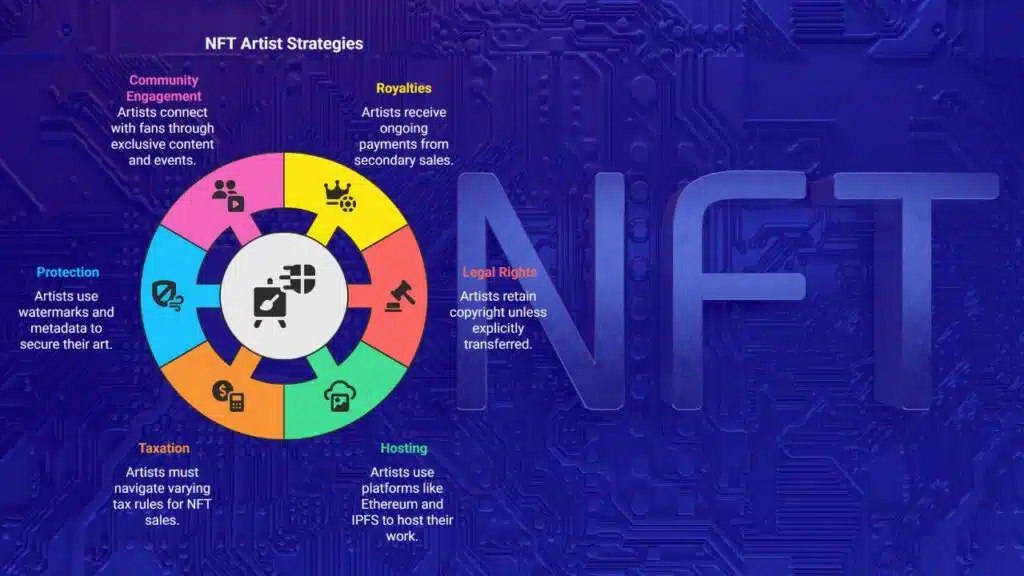
Creators keep copyright even after selling non-fungible tokens on OpenSea. Blockchain logs show who owns an NFT, but they cannot replace an artist’s intellectual property rights.
NFT sales never transfer legal rights over a design unless the artist agrees. Smart contracts can pay out royalties on secondary sales. This feature helps boost reputation among crypto art fans.
Artists can use Ethereum and IPFS to host their work on nft platforms.
Taxation rules vary by state and country. A sale on OpenSea or a live nft auction may trigger a tax event. Artists join online courses to learn gas fees and marketing strategy. Colorful watermarking and strict metadata code in MetaMask can protect art.
Tracking nft transactions helps with compliance and tax returns. Some nft communities reward holders with exclusive content or virtual meetups via augmented reality. Such perks help connect with a loyal nft audience.
Choose the Right NFT Platform for Your Art
Choosing the right nft marketplace can boost sales. Artists must weigh fees, audience, and minting ease.
- Compare fees across more than 50 nft platforms, check gas costs for Ethereum non-fungible tokens drops, and factor in Foundation’s invitation mint fee.
- Match your art to sites that run nft auctions, pick SuperRare for art-only drops, use OpenSea for affordable editions, try Nifty Gateway for diverse media.
- Test each site’s tools, use Rarible’s customizable storefront editor and RARI governance token, or pick OpenSea’s simple interface to cut your nft learning curve.
- Weigh community size and energy, scan NFT community chats on Discord, check social media presence from social media personalities to reach a broader nft audience, and visit art galleries linked in each marketplace.
- Analyze market trends and average sale prices, review smart contracts and wallet integration like MetaMask, and track nft transactions to spot risky scams.
Build and Engage with a Crypto Community
Artists must join the crypto community and NFT community hubs like Twitter and Discord. These chat apps let them trade ideas with NFT collectors and fellow creators. Over 350,000 active wallets buy and sell NFTs each month on platforms such as OpenSea and a digital art market.
Use Twitter Spaces or Clubhouse for live audio chats. Instagram posts and Telegram groups boost visibility and invite feedback from your NFT audience.
Show your real self with behind the scenes sketches, polls, and quick tips on writing simple smart contracts on Ethereum. Host weekly AMAs in a Telegram channel, invite a peer artist, swap drop dates, ask for feedback.
Promote other NFT creators by retweeting their project launches, share their art in a community hub. This gesture wins trust and builds a network in the NFT space, driving more eyes to your digital art.
Prioritize Security for Your Wallet and Transactions
Setting up a crypto wallet feels like climbing a steep hill, but you need it to mint nfts (non-fungible tokens) and get paid in digital art sales. A browser extension wallet works fine for beginners, though you can also use a mobile app.
Securing your passphrase and private keys keeps hackers at bay. You can lock down your smart contracts on Ethereum or Polygon by hiring web3 developers to code with ERC721 or ERC721A standards and by running audits with an audit firm.
A solid audit cuts out exploits, and it gives nft collectors peace of mind.
Protect your nft transactions with multi-factor steps, like WalletConnect and a hardware key. Store personal details off ledgers, keep email and social media presence tidy. Track transfers on a chain explorer, so you spot odd moves fast.
Creative pros must act fast on alerts, post-mint. They write guides on safety for their nft community, helping collectors dodge scams.
Price Your NFTs Strategically
A blue chip collection once sold for $300,000 or more. Many artists chase those headlines, and they feel pressure to match them. They often overlook time spent on digital art, their reputation, or collector demand.
They may ignore typical mint fees of 0.05 or 0.1 ETH, common for emerging works. You raise your social media presence when you poll your followers. Community chats in an NFT community forum help gauge fair cost.
SMOL BRAINS used a free mint, charging only for deployment gas on smart contracts.
Low mint costs send clear signals to new buyers in the non-fungible tokens space, inviting broad participation. You earn ongoing income from secondary sales, thanks to royalty rules in smart contracts.
Track sale numbers on an NFT tracker and an on-chain data platform. Study top drops on NFT marketplaces to view auction bids and average sale prices. Use that insight to tweak your listing on leading NFT platforms, to match your NFT audience and drive more NFT transactions.
Takeaways
Five clear steps can guide new artists into NFTs. They cover smart contracts, auction sites, and secure vaults. You learn to price art, talk with fans, and guard your rights. The browser add-on, a digital vault, cuts errors on NFT transactions.
A growing crypto crowd boosts your sales and powers your art career.
FAQs
1. What should an artist know before entering the NFT space?
You need to know non-fungible tokens, grasp the nft learning curve, and see how digital art moves on blockchains. Think of NFTs as digital trading cards, that never fade.
2. How do smart contracts help artists?
Smart contracts, digital agreements, lock your rules in code, they pay you on each resale. You set it once, then watch the magic unfold.
3. How do I meet NFT collectors and build my nft audience?
Join the nft community on social sites, chat with fans, share your process, and tell your story. Collectors love a peek behind the curtain, so be real, be you.
4. What tips make NFT transactions easy?
Pick a top nft platform, a market site, check fees, read the fine print. Test a small sale first, you dodge a wallet crash and big surprise charges.
























