Many folks want to buy or sell digital paintings but feel lost on NFT marketplaces. They need clear, easy to use Best NFT Marketplaces For Beginners. They hate high transaction charges and confusing crypto wallet steps.
Did you know these platforms use self-executing code for safe trades on a public ledger? This guide picks five top marketplaces, shows how to dodge steep transaction charges, and walks you through a simple crypto wallet setup.
We keep each step plain. Ready to start?
Key Takeaways
- OpenSea launched in 2017 and runs on Ethereum, Polygon, and Base. It hosts 80 million items and charges a 2.5% fee per sale while showing gas fees in your browser.
- Rarible went live in 2020 on Ethereum, Flow, and Tezos. It caps fees under 2.5% per sale, lets RARI token holders govern the platform, and pays up to 50% royalties on resales.
- Binance NFT opened in 2021. It links Ethereum and Binance Smart Chain, charges just 1% per trade, and accepts debit cards, credit cards, or USDT at checkout.
- Nifty Gateway uses Ethereum and hosts over 30,000 digital collectibles. It hides gas fees and lets buyers skip crypto wallets by paying with Visa or Mastercard.
- Foundation runs on the Ethereum public ledger as an invite-only art market. It charges a 5% service fee plus up to 15% in gas fees on first sales and gives artists 10% royalties on resales.
OpenSea
OpenSea launched in 2017. It runs on Ethereum, Polygon, and Base chains. The platform hosts more than 80 million NFT items. Creators list digital art, music nfts, trading cards, and virtual real estate with bulk listing.
It uses smart contracts like ERC-721 to power nft collections. General users love its multichain compatibility and easy sign-up.
Sellers pay up to 2.5 percent per sale. Royalties go to artists on each resale. The site shows gas fees inside the browser. It links to crypto wallets, for instance a browser wallet or a mobile vault.
Beginners find the interface clear and inviting.
Rarible
Rarible went live in 2020. It runs on the ethereum blockchain, FLOW ledger, and XTZ network. Creators tap smart contracts for direct minting and lazy minting to cut gas fees. The marketplace ranks high among nft marketplaces for digital art and gaming tokens.
Service fees stay under 2.5% per sale. RARI token holders guide community governance with votes. Sellers can claim up to 50% royalties on non-fungible tokens. You can trade across chains in one hub.
Many multi-chain creators name Rarible their go to.
Binance NFT
Binance NFT opened in 2021 as a new marketplace for digital art and gaming NFTs. It charges a slim 1 percent fee and slashes creator royalties. This service taps blockchain technology to link Ethereum and Binance Smart Chain under one roof.
U.S. collectors cannot join yet, but fans outside the States enjoy low fees and easy trades.
Collectors get live alerts and rarity rankings, so snagging rare trading cards feels like winning the lottery. Low gas fees and simple smart contracts cut costs on every purchase and sale, and a crypto wallet runs checkouts with debit, credit cards or USDT.
Artists chasing affordable minting find a clear route, traders track fresh drops on a friendly stage.
Nifty Gateway
Nifty Gateway uses Ethereum blockchain to fuel its platform. The site hosts over 30,000 digital collectibles for sale. Buyers skip a crypto wallet and pay with a credit card. Brand backed drops from top artists and sports leagues land here.
Service fees vary per drop and the clean interface hides gas fees. Trading uses ERC-721 tokens and smart contracts secure each sale. Multiple payment methods like Visa and Mastercard make checkout quick.
Mainstream buyers love clear transaction fees and gallery-style browsing.
Foundation
Foundation runs on the Ethereum public ledger, a blockchain technology that uses smart contracts to mint ERC-721 tokens. The invite-only platform hosts top-tier digital art. Curators pick every collection, so artists must seek invites.
It ranks high among NFT marketplaces for curated art.
It charges a 5% service fee on first sales and adds gas fees, which can reach 15%. Creators earn 10% royalties on secondary sales, paid in cryptocurrencies. You pay in ETH via a crypto wallet like Coinbase Wallet.
The model favors digital artists over speculators.
Key Features to Look for in an NFT Marketplace
Pick a marketplace with a simple UI, low gas fees, audited smart contracts on a public ledger, easy crypto wallet links, and clear ERC-721 mint steps – read on.
User-Friendly Interface
OpenSea offers clear steps, so beginners link their cryptocurrency wallet in minutes and browse NFT marketplaces at ease. This marketplace uses blockchain technology and shows smart contracts and non-fungible tokens in plain language, with big buttons for a friendly layout.
Nifty Gateway stays mobile-friendly for on-the-go use, and it lets people buy digital collectibles with a credit card.
Affordable Gas Fees
Trading digital assets costs gas fees. They power smart contracts on blockchain technology. Low fees let beginners nibble at music nfts or gaming nfts with less risk.
Blur cuts fees to zero on each sale. Tensor posts low charges that trim costs on erc-721 tokens. Solanart asks under $0.01 for every swap. Binance NFT keeps fees at 1% per trade.
Strong Community and Support
Rarible stands out among nft marketplaces by letting users shape the platform with RARI tokens, a form of community governance. They cast votes on new features and fee splits, steering growth.
A tight-knit crowd gathers in Discord and on Twitter. They share tips on smart contracts, gas fees and how to list digital art or music nfts. You get quick answers on blockchain issues and best wallets like MetaMask.
Community managers host weekly AMAs and hackathons. Contributors earn RARI tokens by pointing out bugs or making tutorials. No more waiting for support tickets. This lively crowd makes peer help a breeze.
It helps you learn to mint ERC-721 tokens and trade digital collectibles on low-fee chains like Ethereum sidechains.
Tips for Beginners Entering the NFT Space
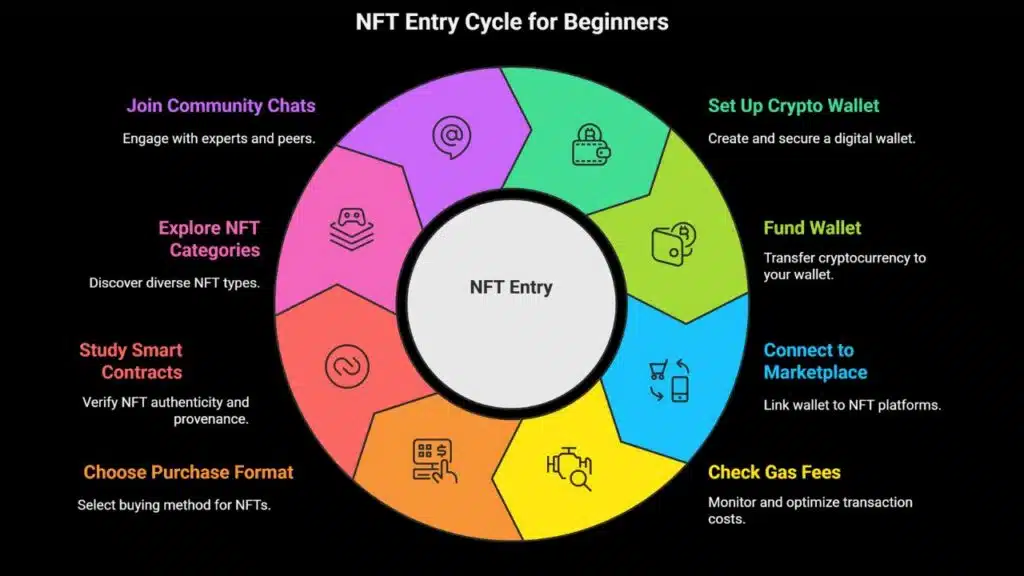
Getting started in nft marketplaces can feel exciting. A clear plan cuts risk.
- Set up a crypto wallet like Metamask or Coinbase Wallet and write down your 12 word recovery phrase on paper.
- Fund your wallet via a cryptocurrency exchange with ETH or SOL on a public blockchain, the core of blockchain technology, before you browse listings.
- Connect the wallet to OpenSea, Rarible or Binance NFT to access digital collectibles and trading cards.
- Check gas fees on each platform and aim for times when transaction fees drop.
- Choose a fixed price or auction format to purchase digital art, video nfts or music nfts.
- Study smart contracts on erc-721 tokens to verify provenance and authenticity.
- Explore different nft categories like gaming nfts, virtual real estate and digital assets.
- Join community chats for support, ask questions and learn from gamefi experts before you buy.
Takeaways
You can find deals on top NFT marketplaces fast. Deal trackers let you follow trading cards, catch pixel art, and claim metaverse land on the Ethereum ledger. Platforms use smart contracts to lock in each trade.
Low gas fees keep costs down. A MetaMask link makes setup quick. New collectors can jump in with a few clicks.
FAQs
1. What is an NFT marketplace and how does it work?
An NFT marketplace is a website to buy and sell non-fungible tokens (nfts). Each NFT lives on a blockchain, a core piece of blockchain technology. Every trade pays gas fees and transaction fees on the mainnet. You need a crypto wallet first. Then you can pick your digital assets and trade.
2. Which platform is easiest to use for beginners?
Pick a site that feels easy, like a coffee shop not a maze. A big exchange’s NFT corner has simple sign up. A famous art gallery site lets you buy with a card. A gas free sidechain hides fees. You just need a password and a browser like Chrome.
3. What types of NFTs can I buy or sell?
You can explore many nft categories. Find digital art, music nfts, gaming nfts, video nfts and trading cards. Hunt digital collectibles or own spots in virtual worlds or virtual real estate. Save and browse NFT collections or view nft art.
4. How can I avoid high gas fees?
Gas fees can hit you hard. Use a zero gas sidechain, like Immutable X. Or wait for low demand on the mainnet. Some platforms offer lazy minting, so you pay fees only after a sale.
5. What token standards do I need to know?
The main standard for NFTs is erc-721 tokens. These rely on smart contracts on a blockchain. You will also see erc-20 tokens for other crypto assets. Uniswap helps you swap erc-20 tokens. NFTs stick to the erc-721 style or newer chains.
6. How can I market and protect my NFTs?
You need a clear marketing strategy and goals for user acquisition. Try targeted advertising on social media. Share your creative process, show your style and creativity. Team up with others for a collaboration. Use strong passwords to protect your crypto assets.