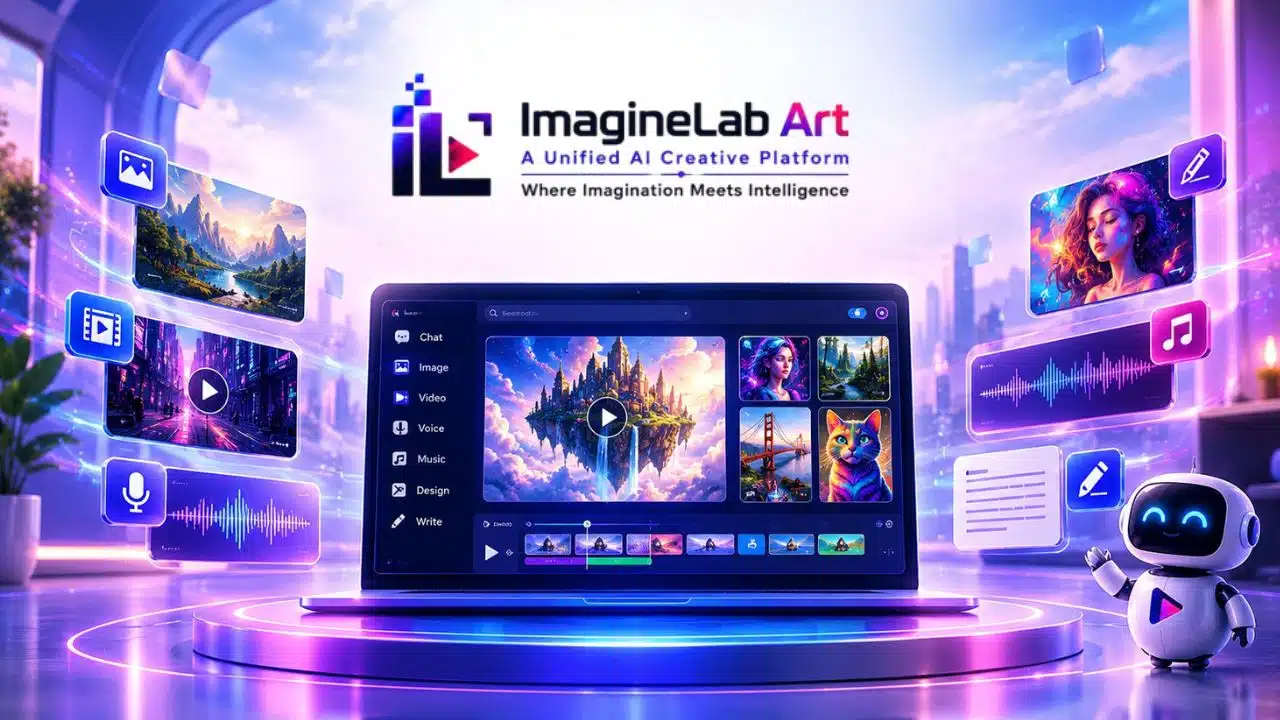
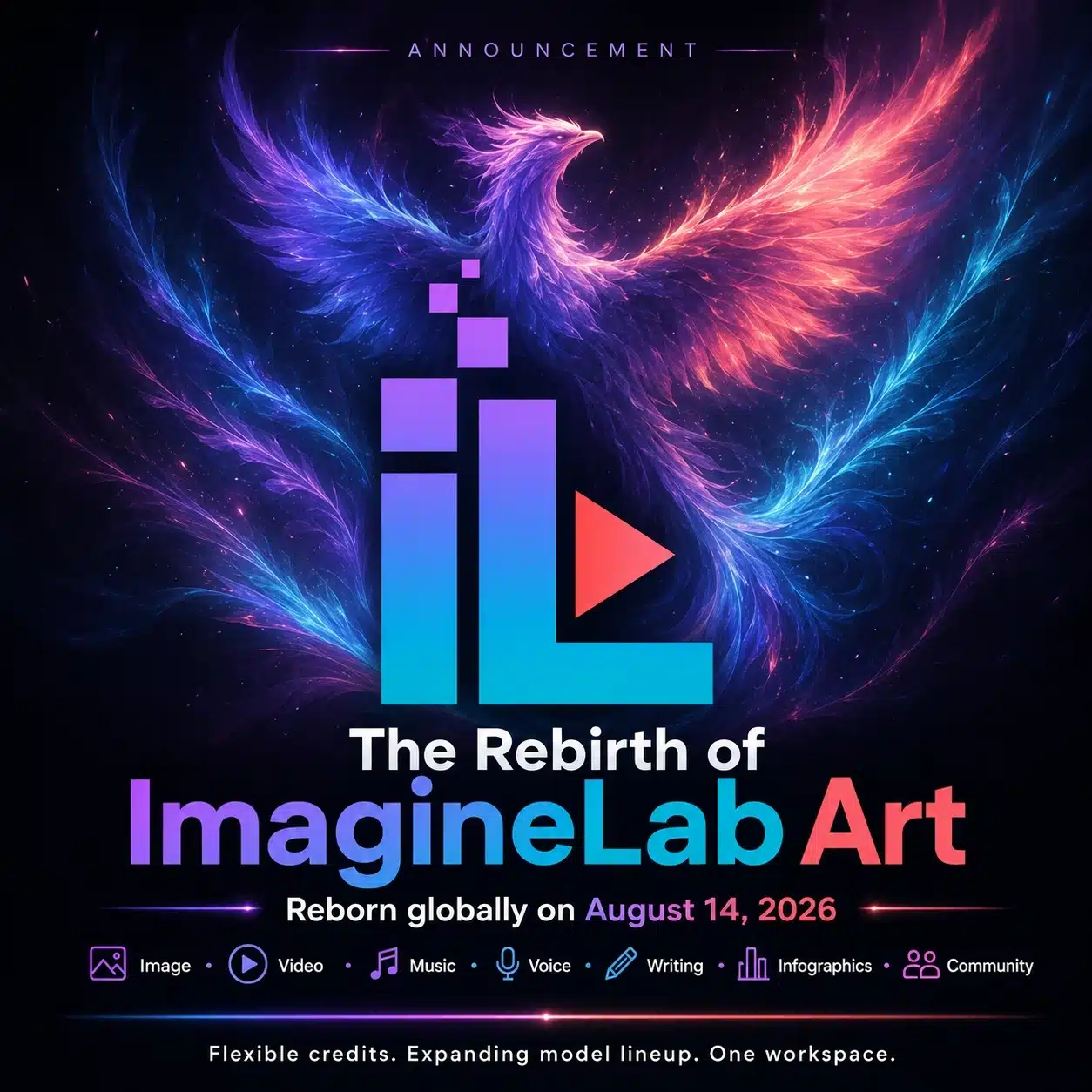
The rebirth of ImagineLab Art happened globally today, on August 14, 2026. Imaginelab Art brings image creation, video, music, voice, writing, infographics, community features, flexible credit pricing, and an expanding model lineup together inside one workspace.
Think about how digital creators usually work. There is one service open for images, another for video, another for voiceovers, and perhaps two more for music and writing. Then come the subscriptions, credit limits, downloads, uploads, file conversions, and the constant switching from one dashboard to another. Eventually, more time starts going into managing the tools than creating the work. ImagineLab Art was rebuilt around a simple idea: bring that fragmented workflow into one place.
The platform entered beta on August 4, 2026. Ten days later, on August 14, the rebuilt version opens globally. During the beta period, thousands of creators joined the platform, with a notable share of users coming from major international markets.
For ImagineLab Art, however, the launch is not simply about attracting early users. It is about testing whether one creative workspace can genuinely replace the collection of separate services that creators, freelancers, marketers, publishers, and small teams have become accustomed to paying for.
The promise is easy to understand: One account. One balance. One connected creative workflow.
One Workspace Instead of an Array of Browser Tabs
ImagineLab Art brings its creative functions together through seven dedicated labs with a future expansion to three more. Image creation, video production, chat, music, voice, writing, infographics, long-form video, music video production, and advertising creative work are all part of the wider product direction.
Imagine Chat is also being introduced as part of the platform experience. Seven labs are available around the global launch, while Music Video Lab, Long Video Lab, and Ad Creative Studio are being prepared for wider availability.
The real difference appears when the labs begin working as parts of the same creative process. A creator may start with an idea, turn it into an image, animate that image, add narration, prepare music, and write the accompanying copy without building the project across several unrelated services.
That may sound like a small convenience until you consider how much time modern creative work loses to downloading files, renaming them, uploading them again, checking format compatibility, moving prompts between platforms, and keeping track of separate credit systems.
ImagineLab Art is trying to remove that layer of friction. The goal is not simply to place many creation options on one dashboard. The goal is to make moving from one stage of an idea to the next feel natural.
A Model Lineup Built Around Choice
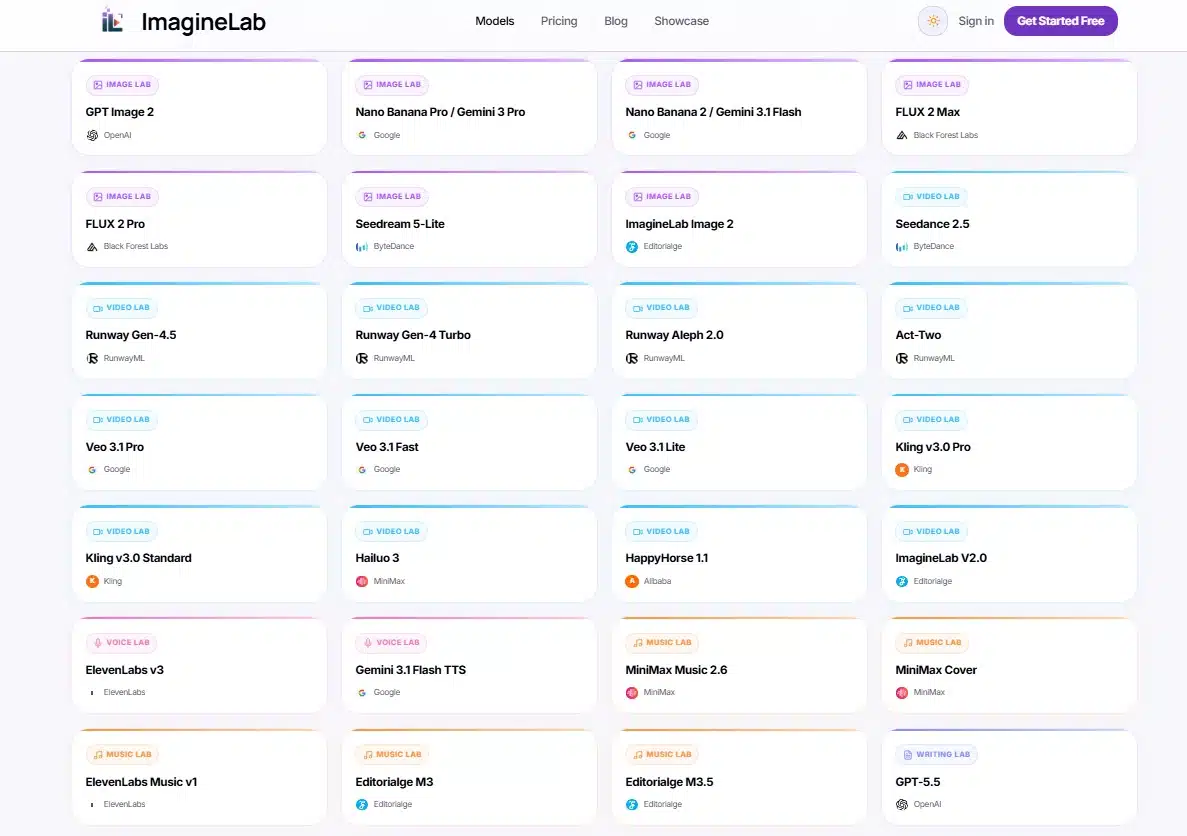
Open the model selection areas, and the scale of the platform becomes clearer. A total of 36 premium AI models are used in seven labs.
Instead of forcing every task through a single engine, ImagineLab Art brings together technology from several of the industry’s best-known providers alongside models developed for the platform itself.
AI Models Used in Image Lab
The Image Lab includes GPT Image 2 from OpenAI, Nano Banana Pro and Nano Banana 2 from Google, FLUX 2 Max and Pro from Black Forest Labs, Seedream 5-Lite from ByteDance, and an in-house ImagineLab Image 2 from Editorialge Media LLC.
That variety matters because no single image model is equally strong at every task.
A creator working on photorealistic visuals may prefer one option, while someone producing advertising graphics, concept art, product imagery, or stylized scenes may get better results from another.
AI Models Used in Video Lab
The Video Lab goes further. Its lineup includes Runway Gen-4.5, Gen-4 Turbo, Aleph 2.0, and Act-Two. Google’s Veo 3.1 is available through Pro, Fast, and Lite options.
Kling v3.0 Standard and Kling v3.0 Pro from Kuaishou, Hailuo 3 from MiniMax, Seedance 2.5 from ByteDance, HappyHorse 1.1 from Alibaba, and an in-house ImagineLab V2.0 from Editorialge add further choices.
Video creation is one of the areas where model selection matters most. Speed, motion quality, character consistency, visual realism, prompt interpretation, input support, and generation cost can vary considerably.
Giving creators a choice inside the same workspace means they can select a model according to the project instead of choosing an entire subscription around one provider.
What AI Models are Included in Voice and Music Lab
Voice Lab currently includes ElevenLabs v3 and Gemini 3.1 Flash TTS. Music Lab brings together the in-house Editorialge M3 and M3.5, MiniMax Music 2.6, MiniMax Cover, and ElevenLabs Music v1.
AI Models Used in the Writing Assistant and Infographic Lab
Writing Assistant includes major language models GPT-5.5, 5.6 Sol, and GPT-40 from OpenAI; Claude Opus 4.8 and Claude Sonnet 4.6 from Anthropic; and Gemini 3.1 Pro from Google, while Infographic Lab uses supported visual generation models for information design, charts, comparisons, explainers, timelines, reports, and other structured visual content. GPT Image 2.0, Nano Banana 2 and Pro, Seedream 5-Lite, and an in-house ImagineLab Image 2 model are used to serve the purpose.
AI Models Used in the Imagine Chat
GPT 5.6 Sol from OpenAI, Claude Sonnet 5 and Claude Opus 5 from Anthropic, and Gemini 3.5 Flash and Gemini 3.1 Pro from Google are used.
Taken together, all the lineup brings technology from companies including OpenAI, Google, Anthropic, Black Forest Labs, Runway, ElevenLabs, MiniMax, ByteDance, Kuaishou, and Alibaba into one environment.
For users, the benefit is less about collecting model names and more about having options.
A model that works well for one project may not be ideal for the next. ImagineLab Art is designed around the idea that creators should be able to choose without leaving their workspace. ImagineLab Art has also introduced four in-house models—ImagineLab Image 2, ImagineLab V2.0, Editorialge M3, and Editorialge M3.5—developed under its parent company, Editorialge Media LLC.
EDT Changes and How Users Pay
ImagineLab Art uses its own credit system called EDT, which means Editorialge Digital Token. Instead of treating every creative function as a separate subscription, users maintain one credit balance and spend from it when they create something.
This creates a different relationship with the platform. A creator may spend heavily during a client project and much less during a quieter period. Additional EDT can be purchased when needed rather than requiring another standalone subscription for each type of work.
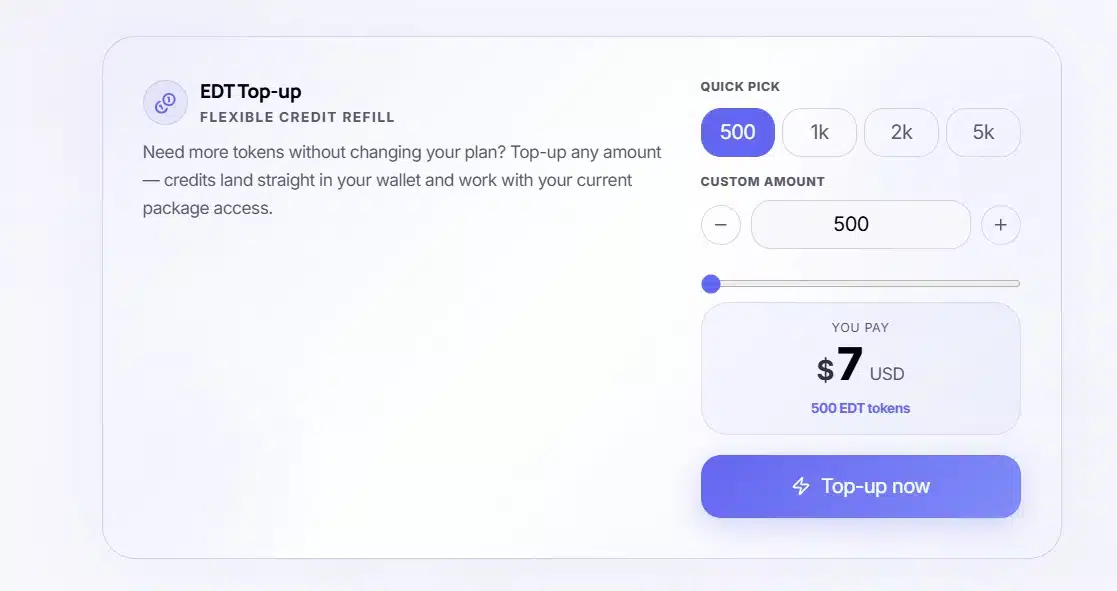
Verified new users receive 50 free EDT. The platform also provides a free preview that allows visitors to create a 1K square image before signing in. Additional credits start at 500 EDT for $7.
For users who want monthly plans, the platform begins with the Starter plan at $10 per month, including 700 EDTs. The company estimates that this can cover roughly 45 1K images or five short videos, depending on the models and settings used.
The Creator plan costs $29 per month and provides 2,000 EDT. It is positioned toward freelancers and regular creators, with commercial usage rights beginning at this level. That balance may cover roughly 125 images, 14 short videos, 57 music tracks, 80 infographics, or 250 writing tasks when used individually under relevant generation conditions.
The Pro plan costs $79, providing 5,500 EDT plus a 100-EDT bonus, along with priority access, faster processing options, and commercial rights. For larger teams, Studio costs $149 with 10,500 EDT, while Business costs $249 with 17,500 EDT and is intended for higher-volume production. Annual billing reduces the effective cost by approximately 17%, and custom arrangements are available for agencies and larger organizations. Check ImagineLab Art pricing plans to know more about the pricing.
Perhaps more useful than the headline prices is the fact that ImagineLab Art publishes estimated output quantities. Credit-based platforms can become difficult to compare when users have no idea how many practical generations a balance represents. Giving an approximate number of images, videos, tracks, infographics, or writing tasks makes the decision easier to understand before paying.
No Watermark, Including Entry-Level Use
One of the smaller product decisions may turn out to be one of the most appreciated. ImagineLab Art does not place its own watermark on generated output, including work produced through free access.
For creators, that matters. A watermark can turn a perfectly usable concept into something that cannot be shown to a client, included in a presentation, added to a portfolio, or published without further editing.
Removing that restriction makes the free access more useful as an actual product trial rather than simply a demonstration. Commercial usage rights begin with the Creator plan.
For freelancers evaluating the platform for professional work, the combination of commercial rights, flexible credits, and watermark-free exports gives the $29 tier particular importance.
Payments Designed for More Than One Part of the World
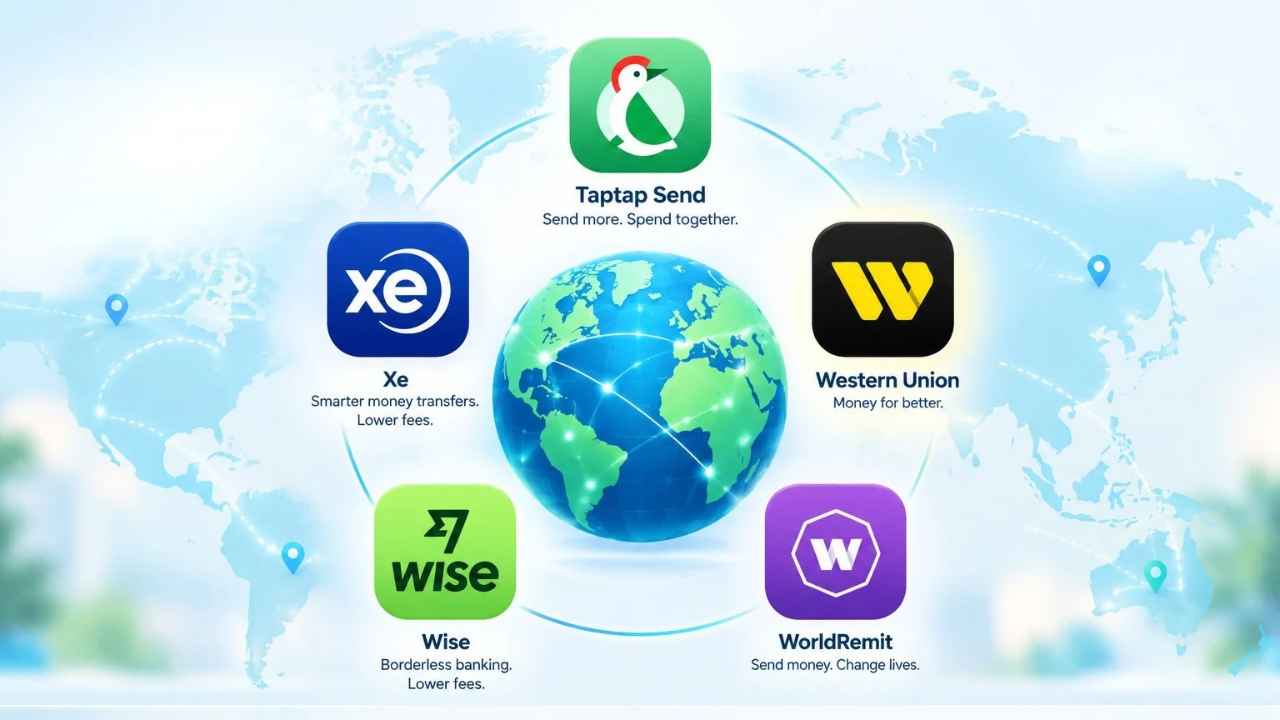
Payment accessibility is another area where ImagineLab Art is taking a different route. ImagineLab Art supports international options such as PayPal, Stripe, Visa, Wise, Mercury and Mastercard while also adding regional payment methods.
UPI is supported for India and other eligible markets, while bKash is available for users in Bangladesh. Wise and Mercury are also part of the wider payment setup.
This may not sound as exciting as a new generation model, but payment access can determine whether a product is usable at all. Many global creative services are built around international cards first. For users in markets where those cards are less common, the product may technically be available while remaining difficult to purchase.
ImagineLab Art is treating regional payments as part of the product rather than an afterthought.
That is particularly relevant in India and Bangladesh, two markets with enormous and rapidly growing communities of designers, marketers, video creators, developers, publishers, freelancers, and small digital businesses.
Local-Language Creation is Part of the Product
The same regional thinking can be seen in the template library. Alongside internationally familiar creative formats, users can find templates designed around English, Bengali, Hindi, and other regional content.
The library includes Bengali music concepts such as “Tumi Acho Dure,” “Tomar Anando Tumi Kore Jao Tai,” and “Tumi Sei Brikkho,” along with Hindi-focused and Bhojpuri-style creative templates.
That distinction matters. Supporting a language technically is not the same thing as designing a product around the people who use it.
Local-language templates indicate that the platform is thinking beyond translation and considering the kinds of content people actually create in different markets. Across image, video, music, and infographic categories, the template library contains more than a hundred entries.
For a creator who does not want to begin every project with an empty prompt box, those starting points can shorten the distance between an idea and a usable result.
Building a Community Hub Around the Workspace
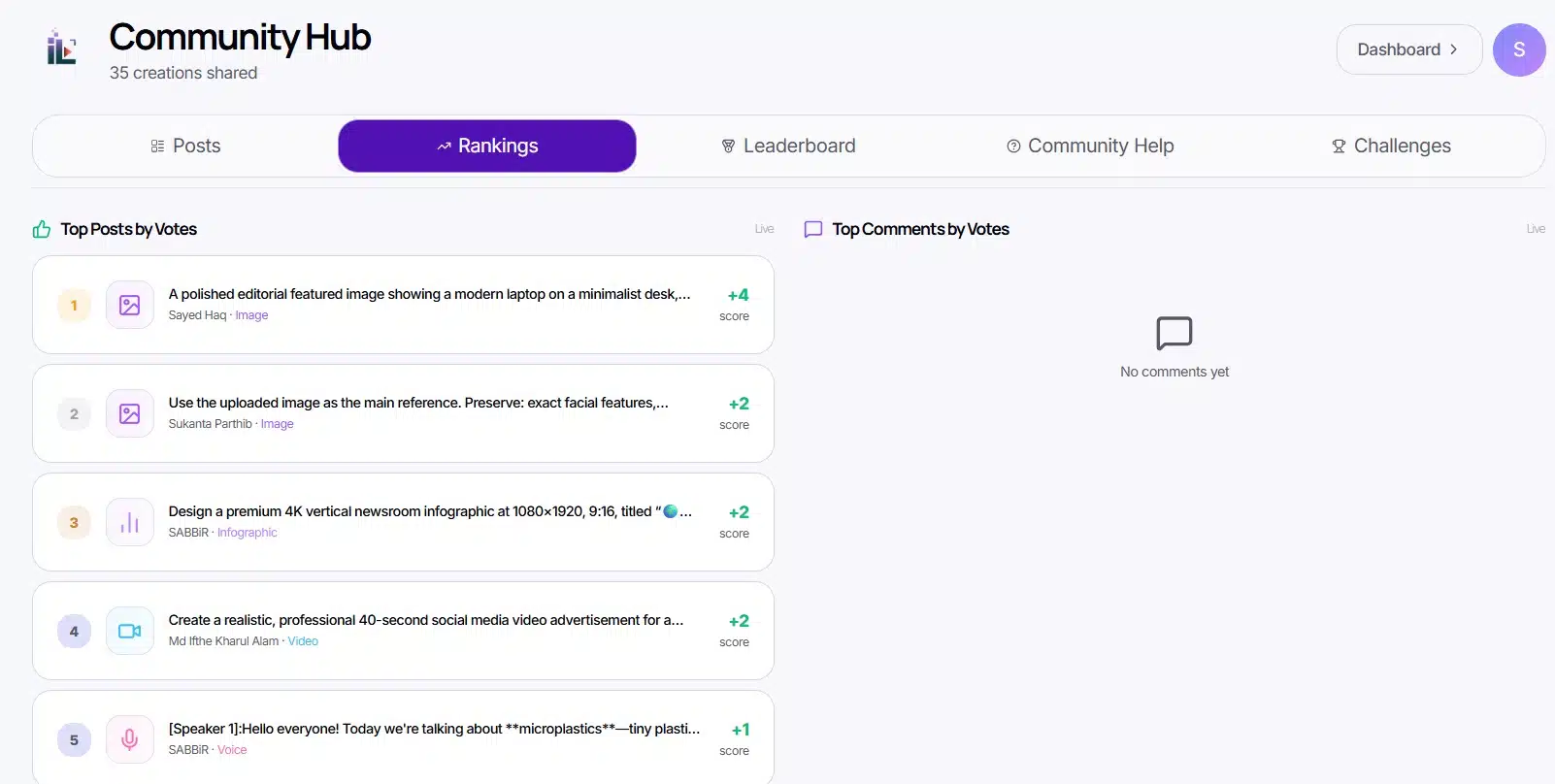
ImagineLab Art is also attempting something many creative platforms largely ignore: giving creators a reason to remain connected after the generation is complete.
Its community hub includes challenges, rewards, and weekly and monthly leaderboards. The idea is simple. Most creation services follow the same rhythm: enter a prompt, wait for the result, download the file, and close the tab.
ImagineLab Art wants its community to work differently. Creators can participate in challenges, discover what others are producing, compete for recognition, earn rewards, and help each other when they run into problems.
The long-term impact of that approach will depend on how active the community becomes, but the reasoning is sound. Creative work is rarely as solitary as software interfaces make it appear. People learn by seeing what others make, comparing approaches, sharing techniques, and discussing what worked.
A strong community could therefore become more than an engagement feature. It could become part of how users learn the platform.
Imagine Chat Brings Conversation Into the Workflow
Imagine Chat is another part of the platform’s broader direction. Rather than treating conversational assistance as a completely separate product, the goal is to make it another entry point into the same creative environment.
A user may begin with an unfinished idea rather than a complete prompt. They may need help shaping a concept, planning a campaign, developing a visual direction, preparing copy, or deciding which creative workflow makes sense.
Imagine Chat is intended to sit closer to those early decisions. That fits naturally with the broader philosophy behind ImagineLab Art: users should be able to describe what they want in ordinary language and then move directly into execution.
Music Video, Long Video, and Ad Creative Studios Are Next
The global launch is not the end of the product roadmap. Music Video Lab, Long Video Lab, and Ad Creative Studio are among the major additions planned around the next stage of the platform.
Music Video Lab is expected to connect music creation with visual production. Long Video Lab will expand the platform beyond short-form generation and toward longer storytelling and production workflows.
Ad Creative Studio is being developed for marketing teams, businesses, agencies, and creators who need campaign-ready advertising material rather than isolated images or pieces of copy.
Together, these additions would move ImagineLab Art closer to its original vision: one workspace capable of supporting an idea from its earliest concept through multiple final formats.
Built for Developers and Businesses Too
ImagineLab Art is not limited to people working directly inside the website. Businesses and developers can connect supported capabilities with their own applications through the platform’s REST API.
The API uses bearer-token authentication and scoped keys, while higher-level plans are designed to support broader integrations and white-label use cases. This gives the platform another possible role. Read the ImagineLab Art Devdocs to know more.
A marketing company could connect generation features to an internal campaign workflow. A publishing company could build creative functions into its content system. A software company could offer selected generation capabilities to its own customers without requiring every task to be completed manually through the ImagineLab Art dashboard.
The website is therefore only one way of accessing the platform. The API creates a path toward becoming part of other products and workflows as well.
The Team Behind ImagineLab Art
ImagineLab.art is a sister concern of Editorialge Media LLC, representing a major step in the company’s expansion from digital publishing into creative technology.
Sukanta Kundu Parthib leads ImagineLab Art and Editorialge Media LLC as Founder and CEO.
Aushnik Das serves as Deputy CEO and COO.
Tapos Kumar serves as Acting CTO and Chief Project Coordinator, while Sayedul Haq Mihir is Chief Technical Advisor.
Md. Ahsanur Rahman serves as Lead Full-Stack Engineer and Head of Research and Development (R&D).
Why this Global Launch Matters
There are already plenty of powerful creative services available. That is exactly why ImagineLab Art exists. The problem is no longer that creators lack tools. The problem is that they often have too many of them.
A designer may need one subscription. A video creator may need another. Voice work creates another monthly charge. Music requires another account. Writing, infographics, and advertising production can add several more.
The costs accumulate, but so does something harder to measure: friction. Every additional login, billing cycle, credit system, prompt format, upload process, and export step interrupts the work.
ImagineLab Art is betting that consolidation itself has value. Instead of trying to convince creators that one model can do everything, the platform takes the opposite approach. It brings different models and different creative functions together, then lets the user decide what fits the task.
That is a more practical way to think about creative technology. The platform does not need every user to prefer the same model. It needs users to find the right one without having to rebuild their workflow every time.
Who Stands to Gain the Most?
Freelancers may be the clearest early audience. Their work rarely stays inside one format. A client may need a campaign image today, a short promotional video tomorrow, a voiceover next week, and social copy alongside all of it.
Small agencies face the same problem at a larger scale. Publishers increasingly need articles, visual explainers, video clips, audio, social media material, and advertising creative around the same story.
Marketing teams routinely move between text, image, video, music, and presentation-style content. For those users, a unified workspace is not simply about having more features.
It is about removing the operational gaps between them. Creators in India and Bangladesh also gain something that is often missing from international platforms: payment methods built around how people in those markets actually pay.
UPI, bKash, local-language templates, international payment options, and global model access combine to make the platform unusually broad in the audiences it can realistically serve.
Final Words
ImagineLab Art now has to demonstrate that bringing a wide creative stack into one workspace actually makes life easier for the people using it.
- Can creators move from image to video without unnecessary friction?
- Can a freelancer manage professional work without maintaining several subscriptions?
- Can regional users pay without finding workarounds?
- Can teams use one credit system without losing flexibility?
- Can developers build the platform’s capabilities into their own products?
Those questions will matter much more than the number of features on a landing page. The encouraging part is that users do not need to make a large commitment to find out. A verified account begins with 50 free EDT, and visitors can try an image preview before signing in.
That makes the first step simple:
- Bring a real project, not a test prompt.
- Try the workflow you already use.
- See how much of it can happen without leaving the platform.