


The perspectives of the crypto industry are plagued by cybersecurity considerations. The mainstream use of the technology depends on the emergence of safer solutions for maintaining custody over assets. Many investors are looking for a secure crypto wallet with a streamlined interface. Such products are designed to store secret keys and prevent unsanctioned access to virtual holdings. In this guide, we will analyze the main features of the existing token storage solutions and demonstrate how they are predicted to change, allowing investors to store and exchange their virtual assets with ease. Read on to discover how decentralized finance (DeFi) and other trends are shaping the future of the industry.
What Is a Digital Wallet?
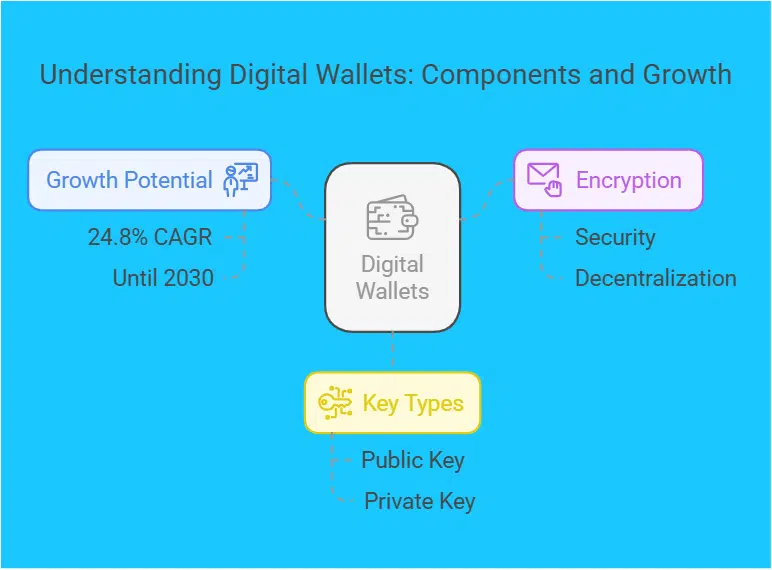
The term refers to digital and physical devices built to ensure the secure storage, sending, and receiving of blockchain-based assets. These devices house private keys that allow users to access their holdings. The market is predicted to grow at a compound annual growth rate of 24.8% until 2030. Unlike regular wallets, such products utilize encryption codes that protect digital assets and allow investors to manage their funds in decentralized ways without using intermediaries.
Whenever a person purchases tokens, they become an owner of a public and private key on blockchain networks. While the former is visible to other participants and can be shared with anyone, the latter is a secure password encrypting user data. There are two main types of such solutions:
- Hot storage: Web-based platforms selling cryptocurrencies typically allow their members to access a safe, integrated wallet designed to hold tokens. It can be accessed via the internet from desktop and mobile devices. Such products are preferred by beginners and more experienced users who value them for their accessibility and intuitive interfaces. However, such wallets are vulnerable to hackers.
- Cold storage: Such hardware devices are not connected to the internet, making them suitable for long-term investors who do not need to access their holdings frequently.
Each option has unique advantages, allowing users to choose the most suitable way to protect their assets.
Types of Cryptocurrency Wallets
Understanding the subtle differences between existing storage options helps investors discover the most suitable solution to safeguard their assets. Below, we have outlined the most popular solutions existing today to demonstrate how they are likely to be transformed in the coming years:
- Software wallets: Serving as a virtual bank account for tokens, they are installed on host devices and can be accessed from anywhere, provided a user has an online connection.
- Hardware wallets: Such cold storage options are somewhat similar to USB drives. Users can access their content using a PIN. Third parties cannot steal assets kept in a hardware device unless they physically access it.
- Paper wallets: Investors may print their public and private keys to access tokens via a QR code. Even though many people use them to store large amounts of tokens, such solutions can be damaged easily.
- Multi-signature storage: Due to their high security, such wallets are deployed by institutional investors, as they require users to utilize several keys to conduct operations with funds.
- Custodial solutions: Reputable third parties hold private keys and offer convenient backups, enabling users to regain access to their tokens.
- Non-custodial services: Seasoned investors opt for such wallets to maintain complete control over their digital passcodes.
Choosing a suitable storage option depends on a person’s preferences and needs.
Trends That Will Change the Market
As investors are looking for innovative ways allowing them to keep their digital holdings protected, wallet developers have started to implement additional measures to add an extra layer of security. They typically include MFA and biometric authentication.
The hardware wallet technology advancements and innovative decentralized identity practices that streamline access to mobile wallets are predicted to change the industry. Here are the main transformations that are expected to enhance the safety of stored crypto assets:
- Increased interoperability: Cross-chain transactions will become easier, allowing investors to manage portfolios and conduct operations across blockchains more effectively.
- DeFi integration: Users will access lending and borrowing tools directly from their wallets without using third-party services. It will streamline access to yield farming and enable investors to enjoy full custody of their tokens. In-app trade features will make transferring holdings to external exchange platforms unnecessary and enable users to freely engage in trading operations to benefit from price fluctuations. Advanced AI-based tools will allow investors to automate operations, get price alerts, create limit orders, and access other pro-level features.
- Upgraded anonymity: Edgy data protection measures will further contribute to improved data protection and allow users to make transactions without disclosing their personal information.
- Integrated blockchain gaming options: Using such modules, users will be able to get rewards and NFTs. It will allow them to discover new earning and token management opportunities.
- Improved staking features: Those willing to support specific projects will be able to lock different kinds of holdings to generate passive income. It will make the industry more appealing to large investors.
- NFT support: Innovative wallets will streamline participation in the NFT ecosystem, allowing traders to manage holdings with little to no effort.
- Cloud synchronization: It will allow users to access their assets from all sorts of devices without creating multiple backups manually.
- Integrated communication tools: Traders will communicate directly with others. They will send transaction requests and share important details with others, knowing their messages are encrypted. It will contribute to building a safer environment for all participants.
Cross-chain bridges, integrated trade tools, staking features, and other innovative options will foster cryptocurrency adoption and encourage engagement in the existing ecosystem.
Final Thoughts
Future cryptocurrency industry expansion rests upon its capacity to attract investors. Focusing on top-grade security, interoperability, and accessibility will allow wallet developers to enhance user experience and get an edge over competitors. Following trends facilitates discovering innovative ways of improving crypto storage functionality and offering users the ability to store their blockchain credentials without any risks. The global market sees an increased demand for solutions that contribute to the safety of a decentralized financial ecosystem. Crypto wallets with cross-platform support and appealing stacking options will incentivize people and organizations to invest in virtual currencies.
























