

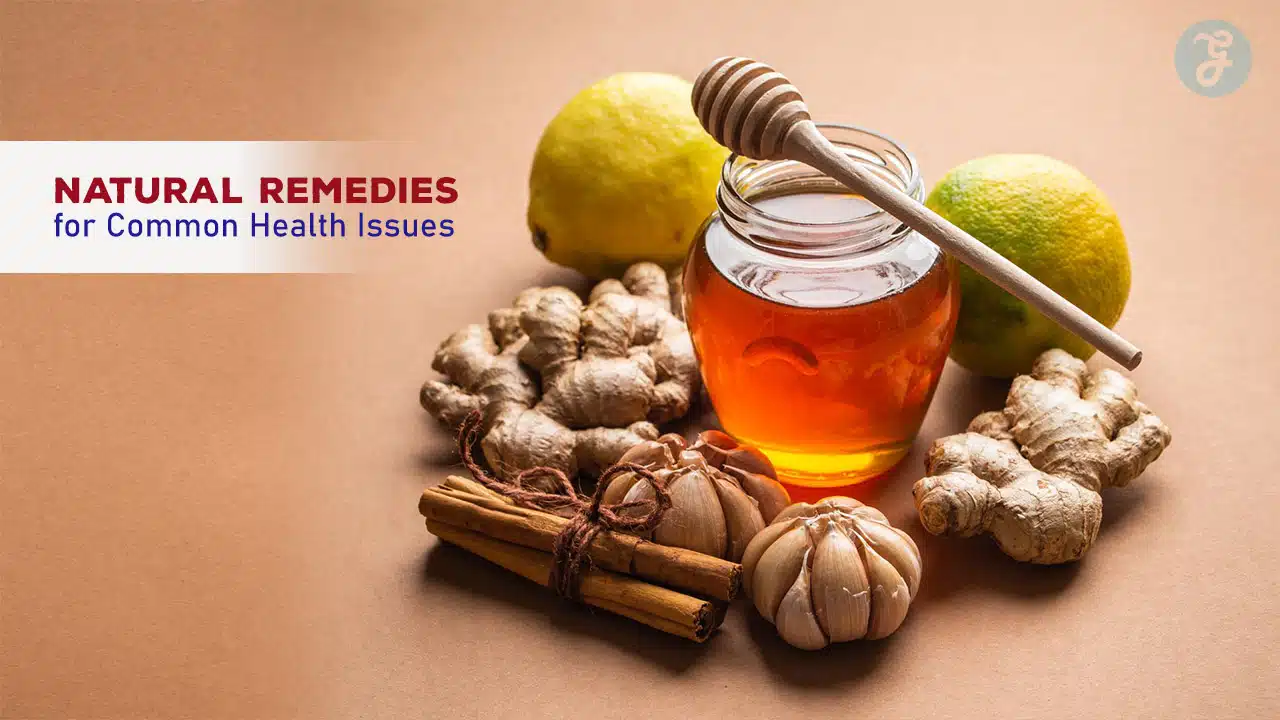
In today’s world, where modern medicine often takes center stage, it’s easy to forget the power of natural remedies.
For centuries, people have relied on nature’s bounty to treat various health issues. These natural solutions often come with fewer side effects and can be gentler on the body compared to pharmaceutical alternatives.
While they shouldn’t replace professional medical advice, natural remedies can be effective for managing many common health problems.
This article explores 15 natural remedies for common health issues, providing you with alternative options to support your well-being.
Remember, it’s always important to consult with a healthcare professional before trying any new treatment, especially if you have ongoing health conditions or are taking medications.
1. Ginger for Nausea and Digestive Issues
Ginger, a root with powerful anti-inflammatory and antioxidant properties, has been used for millennia to treat various ailments. It’s particularly effective for digestive issues and nausea.
Gingerols and shogaols, the active compounds in ginger, help reduce inflammation in the digestive tract and can alleviate symptoms of motion sickness, morning sickness, and chemotherapy-induced nausea.
Ginger can be consumed as tea, added to meals, or taken as a supplement. Studies have shown it to be as effective as some over-the-counter medications for nausea relief.
Benefits:
- Reduces stress and anxiety
- Improves sleep quality
- May help with mild pain relief
How to use:
- Use lavender essential oil in a diffuser
- Add a few drops of lavender oil to your pillow
- Take lavender supplements (under medical supervision)
2. Peppermint for Headaches and Digestive Issues
Peppermint, known for its refreshing flavor, offers more than just a pleasant taste. Its active compound, menthol, provides numerous health benefits.
Peppermint can help relieve tension headaches when applied topically as a diluted essential oil. It’s also effective in easing digestive discomfort, including bloating, gas, and symptoms of irritable bowel syndrome (IBS).
Peppermint can be consumed as tea, applied topically, or taken as oil capsules. Research has shown its effectiveness in reducing IBS symptoms, making it a valuable natural remedy for digestive health.
Benefits:
- It relieves tension and headaches
- Eases digestive discomfort, including bloating and gas
- May help with irritable bowel syndrome (IBS) symptoms
How to use:
- Drink peppermint tea
- Apply diluted peppermint essential oil to your temples for headaches
- Take peppermint oil capsules for digestive issues (under medical supervision)
3. Honey for Coughs and Wound Healing
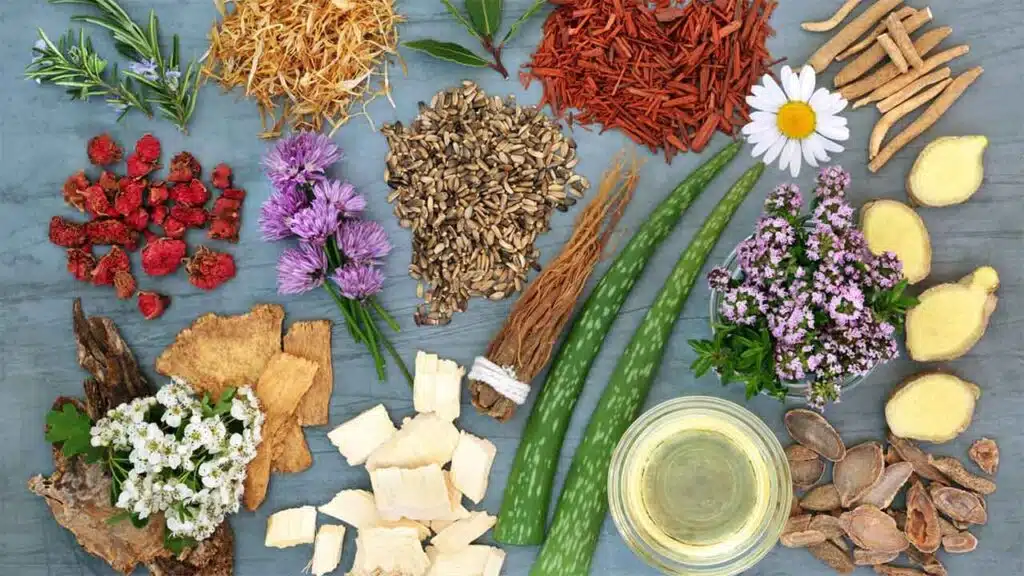
Honey is more than a natural sweetener; it’s a powerful healing agent with antibacterial and anti-inflammatory properties. It’s particularly effective in soothing coughs and sore throats, often outperforming over-the-counter cough suppressants.
Honey also promotes wound healing when applied topically, thanks to its antibacterial properties. It can be consumed directly, mixed with warm drinks, or applied to minor wounds under medical supervision.
Studies have shown honey to be more effective than common cough medicines in reducing nighttime coughing in children.
Benefits:
- Soothes coughs and sore throats
- Promotes wound healing
- Has antibacterial properties
How to use:
- Take a spoonful of raw honey for coughs
- Mix honey with warm water or tea for sore throats
4. Turmeric for Inflammation and Pain
Turmeric, a bright yellow spice common in Indian cuisine, has been used medicinally for thousands of years. Its active compound, curcumin, possesses potent anti-inflammatory and antioxidant properties.
Turmeric can help reduce inflammation throughout the body, potentially alleviating arthritis pain and supporting overall health. It can be added to food, consumed as tea or “golden milk,” or taken as supplements.
Research has demonstrated its effectiveness in reducing pain and improving function in people with osteoarthritis, making it a valuable natural anti-inflammatory.
Benefits:
- Reduces inflammation throughout the body
- May help with arthritis pain
- Has antioxidant properties
How to use:
- Add turmeric to your cooking
- Drink turmeric tea or “golden milk.”
- Take curcumin supplements (under medical supervision)
5. Chamomile for Anxiety and Sleep Issues
Chamomile, a gentle herb known for its calming effects, has been used for centuries to promote relaxation and improve sleep quality.
Its effects are attributed to an antioxidant called apigenin, which binds to specific receptors in the brain. Chamomile can help reduce anxiety and stress, improve sleep quality, and may even aid in digestive issues.
It’s commonly consumed as tea, especially before bedtime, but can also be used in aromatherapy or taken as supplements. Studies have shown its effectiveness in reducing symptoms of generalized anxiety disorder.
Benefits:
- Reduces anxiety and stress
- Improves sleep quality
- May help with digestive issues
How to use:
- Drink chamomile tea, especially before bedtime
- Use chamomile essential oil in aromatherapy
- Take chamomile supplements (under medical supervision)
6. Aloe Vera for Skin Issues
Aloe vera, a succulent plant, is renowned for its soothing properties, particularly for skin health. It contains compounds that can help heal and protect the skin, making it effective for soothing sunburns, moisturizing dry skin, and potentially helping with acne and other skin conditions.
Aloe vera can be applied directly to the skin as a gel, used in skincare products, or consumed as juice for internal benefits. Research has shown its effectiveness in treating various skin conditions, including burns, wounds, and psoriasis, making it a versatile natural remedy for skin health.
Benefits:
- Soothes sunburns and minor burns
- Moisturizes dry skin
- May help with acne and other skin conditions
How to use:
- Apply pure aloe vera gel directly to the skin
- Use aloe vera-based skincare products
- Drink aloe vera juice for internal benefits (under medical supervision)
7. Echinacea for Immune Support

Echinacea, a popular herb, is widely used to boost the immune system and help fight off colds and flu. It’s believed to work by increasing the production of white blood cells, which are crucial for fighting infections.
Echinacea may help prevent colds, reduce their duration, and alleviate symptoms. It can be consumed as tea, taken as supplements, or used in throat sprays.
While research results are mixed, some studies have shown that echinacea can significantly decrease the odds of developing a cold and reduce its duration, making it a potentially valuable natural immune booster.
Benefits:
May help prevent and reduce the duration of colds
It boosts the immune system
Has anti-inflammatory properties
How to use:
Drink echinacea tea
Take echinacea supplements (under medical supervision)
Use echinacea-based throat sprays
8. Lavender for Stress and Sleep Issues
Lavender is renowned for its calming scent and is widely used in aromatherapy. Its relaxing properties can help with stress, anxiety, and sleep problems.
Lavender’s effects are attributed to its impact on the limbic system, the part of the brain involved in emotion and memory. It can be used as an essential oil in a diffuser, added to pillows for better sleep, or taken as a supplement.
Research has shown that lavender aromatherapy can reduce anxiety and improve sleep quality, even in high-stress environments like intensive care units.
Benefits:
Reduces stress and anxiety
Improves sleep quality
May help with mild pain relief
How to use:
Use lavender essential oil in a diffuser
Add a few drops of lavender oil to your pillow
Take lavender supplements (under medical supervision)
9. Apple Cider Vinegar for Digestive Health and Blood Sugar Control
Apple cider vinegar has gained popularity for its potential health benefits. While more research is needed, some studies suggest it may help control blood sugar levels, aid in weight loss, and improve digestive health.
The acetic acid in apple cider vinegar is thought to be responsible for many of its health effects. It can be mixed with water and consumed before meals, used as a salad dressing, or taken as a supplement.
Some studies have shown that consuming apple cider vinegar with high-carb meals can improve insulin sensitivity in people with insulin resistance or type 2 diabetes.
Benefits:
- May help control blood sugar levels
- Can aid in weight loss
- May improve digestive health
How to use:
- Mix 1-2 tablespoons with water and drink before meals
- Use as a salad dressing
- Take apple cider vinegar supplements (under medical supervision)
10. Garlic for Heart Health and Immune Support
Garlic, which has been used medicinally for thousands of years, offers numerous health benefits. Its active compound, allicin, is responsible for many of its effects.
Garlic may help lower blood pressure and cholesterol, boost the immune system, and has antibacterial and antifungal properties. It can be added fresh to cooking, taken as supplements, or used topically as garlic oil for fungal infections.
Research has shown that garlic consumption is associated with a reduction in blood pressure in people with hypertension, making it a valuable natural remedy for heart health.
Benefits:
- May lower blood pressure and cholesterol
- It boosts the immune system
- Has antibacterial and antifungal properties
How to use:
- Add fresh garlic to your cooking
- Take garlic supplements (under medical supervision)
- Use garlic oil topically for fungal infections (under medical supervision)
11. Valerian Root for Sleep and Anxiety
Valerian root has been used since ancient times to promote relaxation and improve sleep quality. It’s believed to work by increasing levels of gamma-aminobutyric acid (GABA) in the brain, which helps regulate nerve cells and has a calming effect.
Valerian root can improve sleep quality, reduce anxiety, and may help with menstrual cramps. It’s typically taken as supplements, consumed as tea, or used in tinctures.
Studies have shown that valerian root can significantly improve sleep quality without causing side effects, making it a natural alternative to sleep medications.
Benefits:
- Improves sleep quality
- Reduces anxiety
- May help with menstrual cramps
How to use:
- Take valerian root supplements (under medical supervision)
- Drink valerian root tea
- Use valerian root tinctures
12. Eucalyptus for Respiratory Issues
Eucalyptus, known for its distinctive scent, is commonly used to relieve respiratory problems. Its main compound, eucalyptol, has expectorant and decongestant properties.
Eucalyptus can help relieve congestion and coughs, has antimicrobial properties, and may help with asthma symptoms. It’s often used as an essential oil in steam inhalers, applied diluted to the chest, or used in chest rubs.
Research has demonstrated eucalyptus oil’s antimicrobial effects against several respiratory pathogens, making it a valuable natural remedy for respiratory health.
Benefits:
- Relieves congestion and coughs
- Has antimicrobial properties
- May help with asthma symptoms
How to use:
- Use eucalyptus essential oil in a steam inhaler
- Apply diluted eucalyptus oil to the chest (under medical supervision)
- Use eucalyptus-based chest rubs
13. Probiotics for Gut Health

Probiotics are live bacteria and yeasts that are beneficial for the digestive system. They help maintain a healthy balance of gut bacteria and support overall health.
Probiotics can improve digestive health, boost the immune system, and may help with certain skin conditions. They can be consumed through probiotic-rich foods like yogurt and kefir, taken as supplements, or used in probiotic-based skincare products.
Studies have shown probiotics to be effective in treating and preventing antibiotic-associated diarrhea and supporting overall gut health.
Benefits:
- Improves digestive health
- It boosts the immune system
- May help with certain skin conditions
How to use:
- Eat probiotic-rich foods like yogurt, kefir, and sauerkraut
- Take probiotic supplements (under medical supervision)
- Use probiotic-based skincare products
14. Green Tea for Overall Health
Green tea, rich in antioxidants called catechins, has been consumed for centuries in Asian cultures for its medicinal properties. It offers numerous health benefits, including boosting metabolism, potentially aiding in weight loss, and improving brain function.
Green tea’s antioxidant and anti-inflammatory properties contribute to its overall health benefits. It can be consumed as a beverage, used in skincare products, or taken as a supplement.
Research has associated green tea consumption with reduced mortality from various causes, including cardiovascular disease, highlighting its potential as a natural health booster.
Benefits:
- It boosts metabolism and may aid in weight loss
- Has antioxidant and anti-inflammatory properties
- May improve brain function
How to use:
- Drink several cups of green tea daily
- Use green tea extract in skincare products
- Take green tea supplements (under medical supervision)
15. Omega-3 Fatty Acids for Heart and Brain Health
Omega-3 fatty acids are essential fats that play crucial roles in brain function and reducing inflammation throughout the body. They support heart health, improve brain function, may reduce the risk of cognitive decline, and have anti-inflammatory properties.
Omega-3s can be obtained by eating fatty fish like salmon and sardines, taking fish oil or algae-based supplements, or consuming omega-3 enriched foods.
Studies have shown that omega-3 fatty acid supplementation is associated with a lower risk of coronary heart disease, making it an important natural remedy for cardiovascular and cognitive health.
Benefits:
- Supports heart health
- Improves brain function and may reduce the risk of cognitive decline
- Has anti-inflammatory properties
How to use:
- Eat fatty fish like salmon, mackerel, and sardines
- Take fish oil or algae-based omega-3 supplements (under medical supervision)
- Use omega-3 enriched foods
Conclusion
Natural remedies offer effective ways to manage common health issues, often with fewer side effects than pharmaceutical alternatives.
However, it’s crucial to consult with a healthcare provider before starting any new treatment, especially if you have ongoing health conditions or are taking medications.
Natural remedies can be a valuable part of a holistic approach to health, supporting our bodies’ natural healing processes and contributing to overall well-being.





















