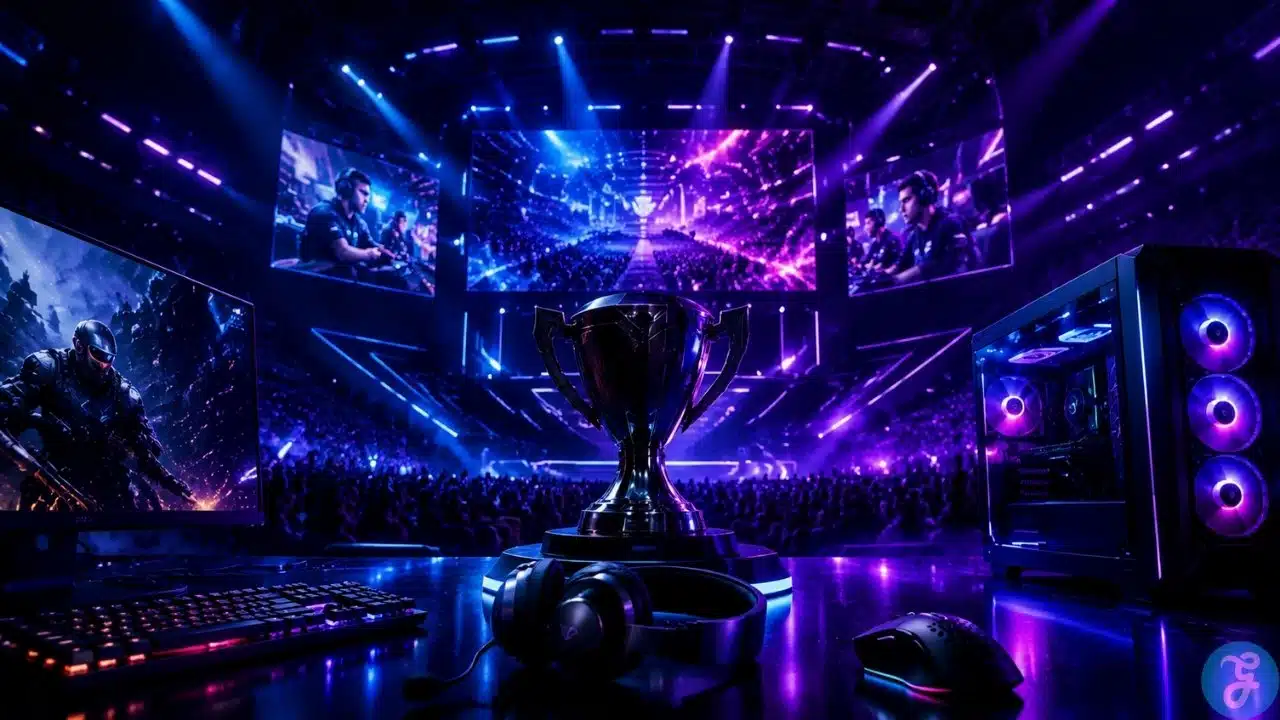
Competitive gaming stops feeling casual the moment small mistakes start costing real progress. A delayed reaction, poor communication, weak mental control, or the wrong setup may not matter much in relaxed matches, but they become obvious once ranked pressure, team play, scrims, and tournaments enter the picture.
That is where esports competitive gaming becomes different from simply playing online games. It requires skill, discipline, structure, mental control, and an understanding of the wider ecosystem around competition. Players need to know how to improve mechanically, how tournaments work, how career paths develop, why coaching matters, how broadcasting supports the industry, and how gear affects consistency.
This guide reflects what I have learned through years of online competitive play, watching tournaments, and grinding ranked seasons. It covers the key areas every player should understand. Most players will not become professionals, but anyone serious can improve, stay structured, and understand the ecosystem realistically.
Improving Reaction and Game Skills
Reaction time is just the baseline. When I climbed ranked in League of Legends, I realized raw speed only helps if I know what to do with it. Hitting a skill shot or dodging a gank without context often backfires. That is why sharpening reflexes and mechanics requires combining fast reflexes with awareness, positioning, and decision-making.
I used mechanical drills, practice custom games, and replay reviews to catch mistakes. The biggest gains came when I tied reflex practice directly to in-game scenarios, like tracking enemy junglers or dodging skill shots in lane.
Practical layering for skill improvement looks like this:
- Mechanical repetition for movement, combos, and ability timing
- Game-specific awareness for cooldowns, vision, and map pressure
- Review and correction using replays or stat tracking
Understanding Competitive Tournaments
Ranked play is useful, but tournaments reveal a different level of pressure. In ranked, one bad game can be replaced by another queue. In tournaments, a single poor rotation or early tilt can affect the entire run. That is why understanding tournament play is critical.
Tournaments have different formats: single elimination, double elimination, round-robin, Swiss, and LAN events. Each format requires its own preparation and mindset. Early tournaments highlight weaknesses that ranked hides, such as communication, mental control, and preparation.
| Format | What It Tests | Experience |
|---|---|---|
| Single elimination | Adaptation under pressure | One loss eliminates the team; each decision matters |
| Double elimination | Recovery and consistency | Losing once teaches resilience and focus |
| Round-robin | Sustained performance | Long sessions test consistency across multiple opponents |
| LAN events | Stage presence and nerves | Stage lighting and audience amplify pressure |
Starting Out in an Esports Career
Most players assume climbing ranked alone is enough to get noticed. It is not. Turning gaming into a career requires visibility, consistency, discipline, and communication. High rank can attract attention, but it does not prove a player is reliable in a team environment.
Focusing on a main game allows refinement of role mechanics and meta understanding. Building a clean competitive profile that shows game, rank, role, clips, and tournament results is more effective than high ranked stats alone. Career paths also include coaching, content creation, analysis, and broadcasting for those who cannot compete professionally.
Learning from Esports Coaches
Coaching is more than feedback. Learning from esports coaches provides perspective players cannot see alone. Coaches highlight positioning errors, timing mistakes, bad habits, and communication gaps. They structure practice efficiently and accelerate improvement.
Coaching is effective when feedback is specific, actionable, and tied to actual in-game situations. Mechanics, strategy, mental resilience, and communication all improve faster under structured guidance.
The Role of Broadcasting and Commentary
Even competitive players benefit from understanding broadcasting and commentary. Observing how matches are explained and highlighted teaches what moments matter most and how to communicate plays effectively. This perspective improves teamwork, strategic awareness, and how you present yourself in tournaments.
Broadcasting also opens career paths in casting, analysis, and content creation for those who want a role outside direct competition.
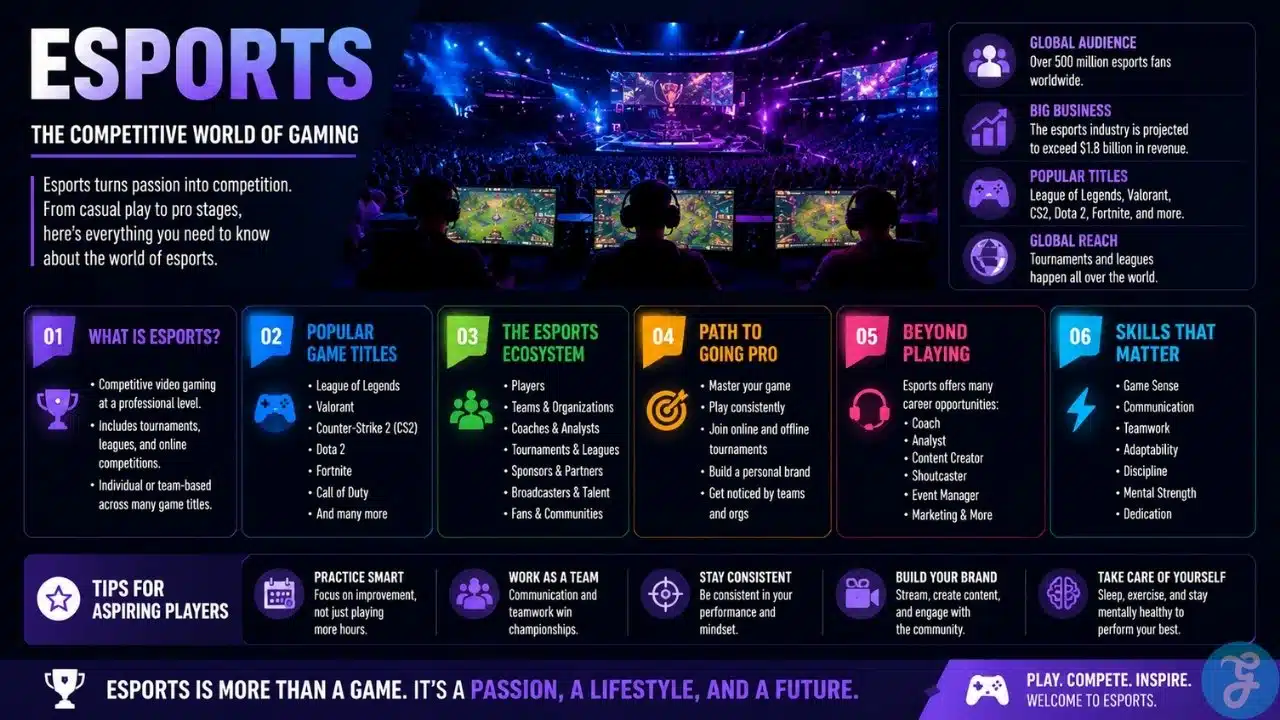
Strengthening the Mental Game
Mechanical skill fails under pressure without a strong mental approach. Strengthening the mental game affects focus, emotional control, decision-making, and communication. Calm players recover faster from mistakes and maintain consistent performance.
Practical mental routines include warm-ups, session goals, scheduled breaks, and replay review with focus on both decisions and emotions. Team games amplify the need for stability because tilt or panic can affect the entire group.
Choosing the Right Equipment
Gear supports skill by reducing friction. Proper Gaming equipment influences precision, speed, comfort, and consistency. Casual gear is sufficient for relaxed play. Professional equipment reduces delays, improves control, and supports long sessions.
From my experience, the most effective upgrades for competitive play were:
- Responsive mouse and mechanical keyboard
- High-refresh-rate monitor
- Low-latency headset
- Ergonomic desk and chair setup
Copying pro setups blindly is rarely efficient. Gear must fit hand size, grip style, and playstyle. Incremental upgrades allow consistent improvement without overspending.
Integrating All Aspects of Competitive Play
One of my biggest lessons in esports competitive gaming is that none of these aspects work in isolation. Skill, mindset, tournaments, career planning, coaching, broadcasting, and equipment all interact.
I found that fixing the weakest link first. Whether it was tilt, poor mechanics, tournament inexperience, or a frustrating setup—produced faster results than improving everything simultaneously. Structured, deliberate improvement beats scattered effort every time.
| Area | Why it Matters | Personal Insight |
|---|---|---|
| Reaction & skill | Mechanics and execution | Drills plus replay review accelerated my improvement |
| Tournament understanding | Pressure management | Early small tournaments exposed gaps ranked did not |
| Career planning | Visibility & opportunity | A clean profile attracted team interest |
| Coaching | Structured feedback | Corrected habits I could not see alone |
| Broadcasting | Audience awareness | Watching casters helped me improve decision communication |
| Mental game | Stability | Tilt management improved team coordination |
| Equipment | Precision & comfort | Mouse, monitor, and chair upgrades removed friction |
This approach turned casual ranked play into structured, measurable progress and helped me see areas that mattered most for competitive advancement.
Final Thoughts
Success in esports competitive gaming comes from combining mechanics, tournaments, career planning, coaching, broadcasting knowledge, mindset, and equipment. Each element reinforces the others. Mechanical skill is amplified by mental resilience, while the right gear ensures skills are executed reliably.
Focus on the weakest link first. Use tournaments and scrims to test performance. Track mechanics, decisions, and emotional control over time. Growth is incremental. Small, consistent improvements compound into measurable competitive advantages.
Approach competitive gaming as a structured craft. Players who balance skill, strategic exposure, mental resilience, and supportive equipment build a foundation that lasts whether climbing ranked ladders, competing in tournaments, or pursuing a long-term career in esports.