Grinding the ranked ladder is great for refining your mechanical aim or mastering an isolated character build, but stepping into a structured competitive event is a completely different beast. You quickly realize that mechanical talent alone will only carry you so far if you don’t actually understand how esports tournaments work. The shift from casual matchmaking to a high-stakes bracket introduces unique rules, severe mental pressure, and hyper-targeted opponent preparation that can catch unseasoned players completely off guard.
To truly scale the competitive ladder, players need a deliberate training framework that separates raw reaction speed from contextual game mechanics, measures performance objectively, and isolates structural errors.
Why Tournament Micro-Environments Shift the Meta
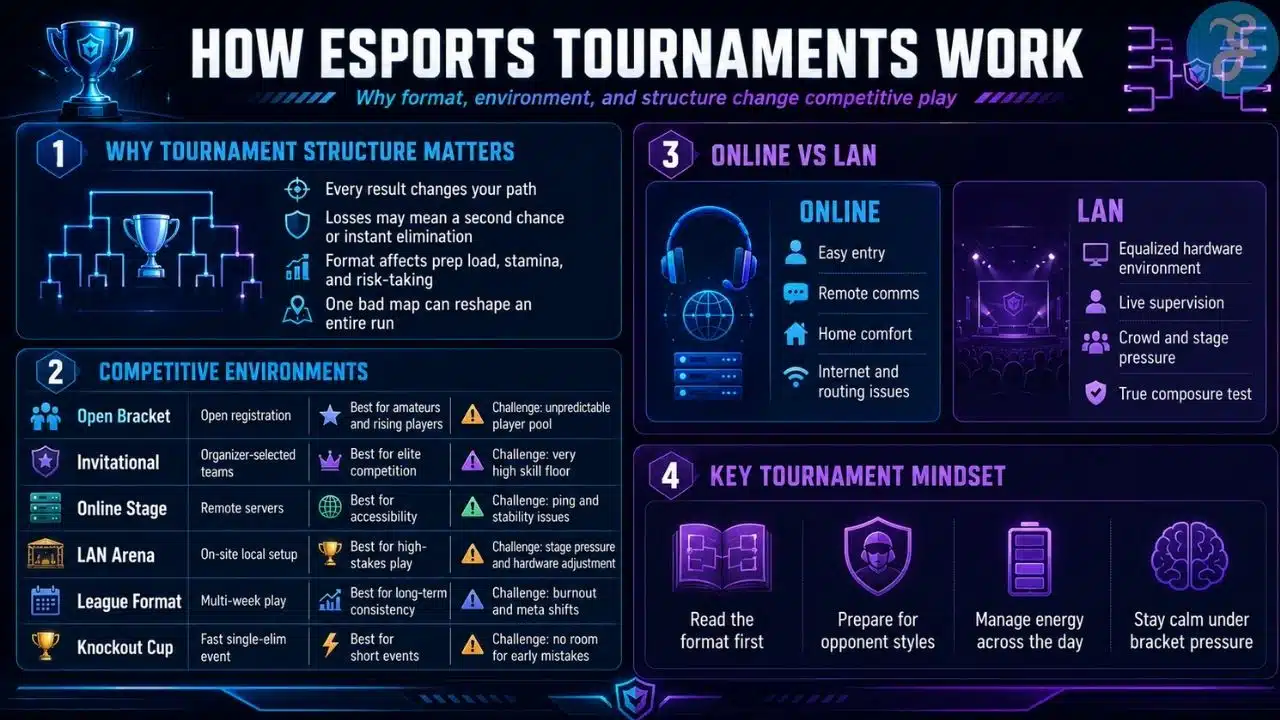
In a standard online queue, a single loss is just a temporary drop in your visual rank rating. You queue up again, forget the bad teammates, and move on. Within a real tournament framework, however, every individual map score alters your path through the competitive grid. The structural format completely shifts how you play.
-
Safety nets vs. instant death: The format dictates whether you get a second chance in a lower bracket or exit the venue immediately after a single mistake.
-
Preparation workload: Knowing your bracket system tells you exactly how many specific opponent VODs you need to analyze before match day.
-
Stamina requirements: Some structures force you to play back-to-back series for eight hours straight, making mental fatigue your biggest enemy.
-
Risk tolerance: A single game drop in a single-elimination bracket can end a multi-month training block, forcing teams to lean into safe, reliable macro plays over risky highlight reels.
A Breakdown of Competitive Environments
Before jumping into the strategic details, it helps to understand the physical and logistical landscape of modern gaming events. The table below breaks down the foundational tournament types that amateur and professional squads navigate.
| Tournament Type | Structural Mechanics | Target Audience | Primary Obstacle |
| Open Bracket | Open registration based on registration deadlines and player caps. | Amateurs, grassroot communities, rising stars. | Massive, unpredictable player pools with unvetted playstyles. |
| Invitational | Curated slot allocation managed directly by organizers or publishers. | Elite tier-1 organizations, franchise partners, top creators. | Exceptionally high, unforgiving competition floors. |
| Online Stage | Remote infrastructure utilizing designated tournament servers. | High accessibility across broad regional sectors. | Netcode instability, ping spikes, and sudden packet loss. |
| LAN Arena | On-site competition utilizing unified local networking rigs. | Top-tier professional circuits and high-stakes finals. | Intense stage fright, crowd noise, and hardware adjustments. |
| League Format | Multi-week round-robin or Swiss stages spanning months. | Franchised ecosystems prioritizing long-term stability. | Severe burnout, roster management, and meta shifts. |
| Knockout Cup | Rapid-fire single-elimination grids optimized for short timelines. | Weekend cups, third-party qualifiers, showdowns. | Zero margin for early-game mechanical or draft errors. |
The Neural Gap: Online Play vs. Live LAN Arenas
The transition from a cozy home bedroom to a roaring live stage flips the psychological script completely. Online events offer immense flexibility and lower entry barriers, but they also bring an element of chaotic technical noise. You are constantly fighting against background internet routing, differing regional server advantages, and the fragmentation of remote team communications over software channels.
LAN (Local Area Network) arenas strip away the excuses. When you are sitting shoulder-to-shoulder with your squad on identical hardware provided by the venue, the playing field is perfectly level. But that pristine environment comes with a heavy mental tax. The blinding stage lights, the rumbling bass of the shoutcasters, and the eyes of an audience watching your hand movements transform basic spray patterns into a test of pure neurological composure. Top players aren’t just mechanically gifted; they are the ones who can keep their heart rates low when the physical room gets loud.
The Mechanics of Brackets: How Esports Tournaments Work
To navigate an event successfully, you must have a flawless grasp of the visual layout of the competitive pipeline. Understanding bracket logic changes when you play aggressively and when you conserve your strategies. Understanding how esports tournaments work structurally allows teams to customize their pick-and-ban phases based on whether they have a safety net.
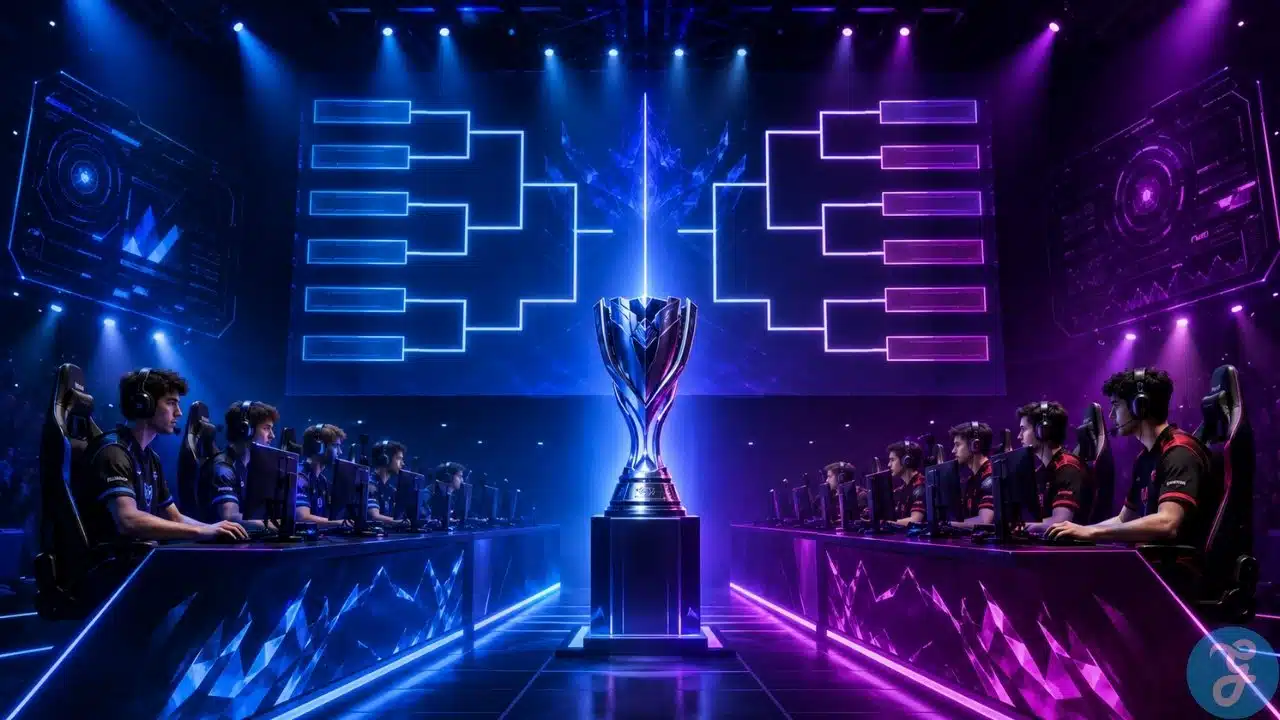
The visual structure above perfectly illustrates the complex choreography of a standard double-elimination event. Let’s break down how this and other common systems control your competitive life.
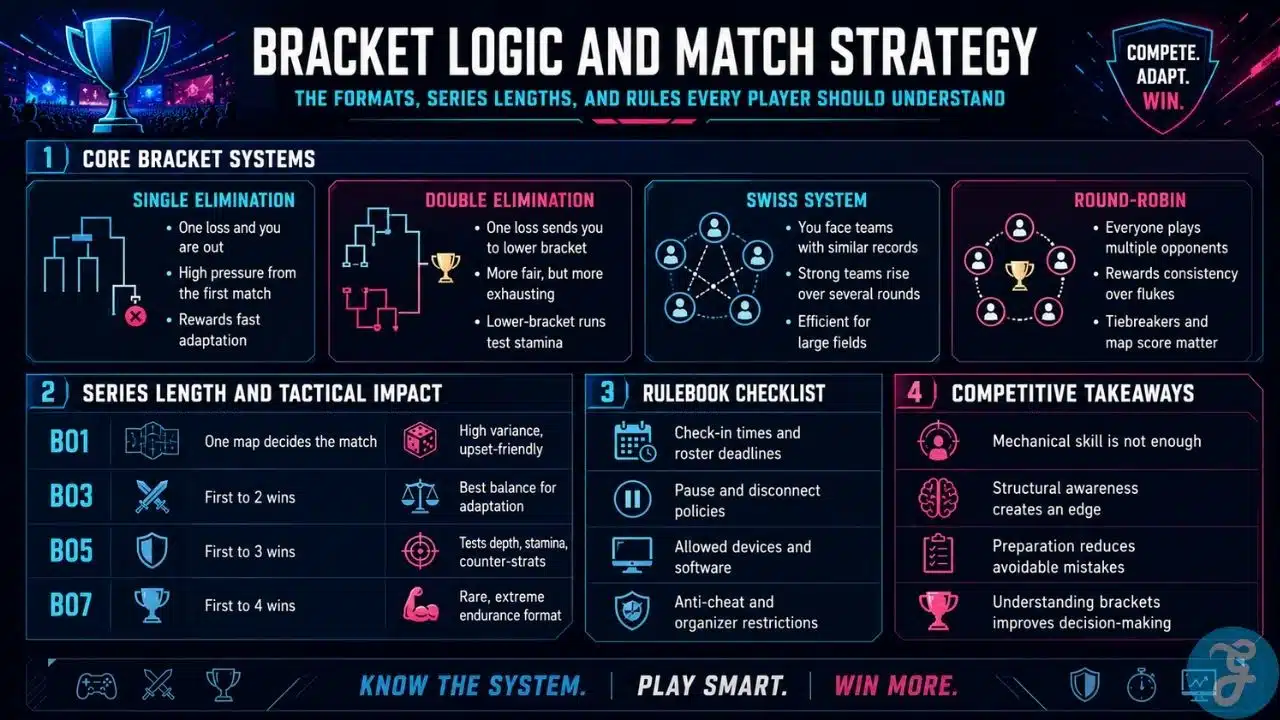
Single Elimination: Ultimate High-Stakes Pressure
Single elimination is the ultimate test of cold execution. You lose a single series, and your tournament run is instantly finished. There are no safety nets, no lower-bracket fairy tales, and no second chances.
-
The Aggressive Window: Slow starts or checking into a match cold will get you knocked out before you even settle into a rhythm.
-
The Draft Trap: A single bad agent pick, hero draft, or map ban can tank your entire tournament run if you fail to adapt mid-game.
-
The Mental Reset: If you drop the first map in a best-of-three, your ability to wipe your mental slate clean in under five minutes dictates your survival.
Double Elimination: The Marathon of the Lower Bracket
As showcased in the bracket diagram, double elimination splits the field into an upper and lower tier. A single series loss drops you down into the survival grid rather than kicking you out of the venue.
-
Strategic Cushion: Teams can afford to drop an early experimental map to test an opponent’s defensive tendencies, knowing they have a structural fallback.
-
The Fatigue Factor: Running the lower-bracket gauntlet is physically exhausting. You have to play twice as many matches to claw your way back to the grand finals, often forcing you to endure back-to-back series without a break.
-
The Bracket Reset: If the lower-bracket champion makes it to the grand final, they usually have to beat the undefeated upper-bracket team in two consecutive series to win the trophy.
The Swiss System: Balanced Performance Scaling
The Swiss format drops the hard-elimination lines early on, choosing instead to pair teams with identical win-loss records across multiple successive rounds. If you are sitting at a 2-1 record, you will play another 2-1 team. If you are struggling at 0-2, you face another squad on the brink of elimination.
-
True Performance Metric: It completely removes the element of bracket luck. You won’t get knocked out early just because you drew the tournament favorite in round one.
-
Constant Calibration: Every match naturally scales to your current performance level, creating highly competitive, neck-and-neck series as the rounds progress.
Round-Robin: The Ultimate Test of Consistency
In a round-robin stage, brackets vanish entirely in favor of a massive league table where everyone plays everyone else in their group.
-
Anti-Cheese Protection: A gimmick strategy or a lucky fluke map victory won’t save a weak team here. True tactical depth and roster consistency over a high volume of games are rewarded.
-
The Metric War: Points, map deltas, and individual round differences become incredibly valuable. Every single round won matters for tiebreaker scenarios, even during a series you are losing.
Series Length and Tactical Adaptation
The number of maps played in a single matchup alters your entire approach to the draft phase. The table below details how distinct series configurations influence tactical depth and execution styles.
| Series Format | Structural Definition | Impact on Competitive Strategy |
| BO1 (Best of One) | A single map decides the entire match outcome. | High variance and chaotic upset potential; favors high-risk, aggressive cheese strategies. |
| BO3 (Best of Three) | The first team to win two maps takes the series. | The global standard for competitive balance, allowing teams to recover from a bad opening map. |
| BO5 (Best of Five) | The first team to secure three map victories wins. | A brutal test of map pool depth, tactical counter-stratting, and mental stamina; usually reserved for grand finals. |
| BO7 (Best of Seven) | The first team to reach four map wins secures the trophy. | Rare format testing extreme physical endurance and complete structural adaptation across an entire game’s catalog. |
The Unwritten Rulebook Crisis
Amateur squads regularly throw away months of hard practice before a match even begins simply because they treated the official tournament rulebook like a boring terms-of-service pop-up. Knowing the strict parameters of your competitive ecosystem prevents heartbreaking technical forfeits.
Before locking in your roster, you must explicitly audit the following logistical points:
-
Deadlines and check-in windows: Missing a roster lock or showing up five minutes late to a server lobby results in an automatic default loss.
-
Pause and disconnect policies: Knowing exactly how many tactical or technical pauses you are allocated per map prevents confusion when a monitor fails or a network line drops.
-
Device restrictions: Ensuring your custom mouse software, macro profiles, or physical audio gear complies with strict anti-cheat and tournament organizer rules.
The Competitive Advantage of Formational Literacy
At the end of the day, elite mechanical execution is just raw engine power, structural awareness is the steering wheel. Investing the time to truly map out how esports tournaments work shifts your perspective from a casual player chasing individual kills to a calculated competitor dominating a system. When you look past the basic game screen and master the operational blueprint of the bracket itself, you gain the ultimate competitive edge: the ability to predict the psychological pressure points of the entire event and execute with absolute clarity when the stakes are real.