

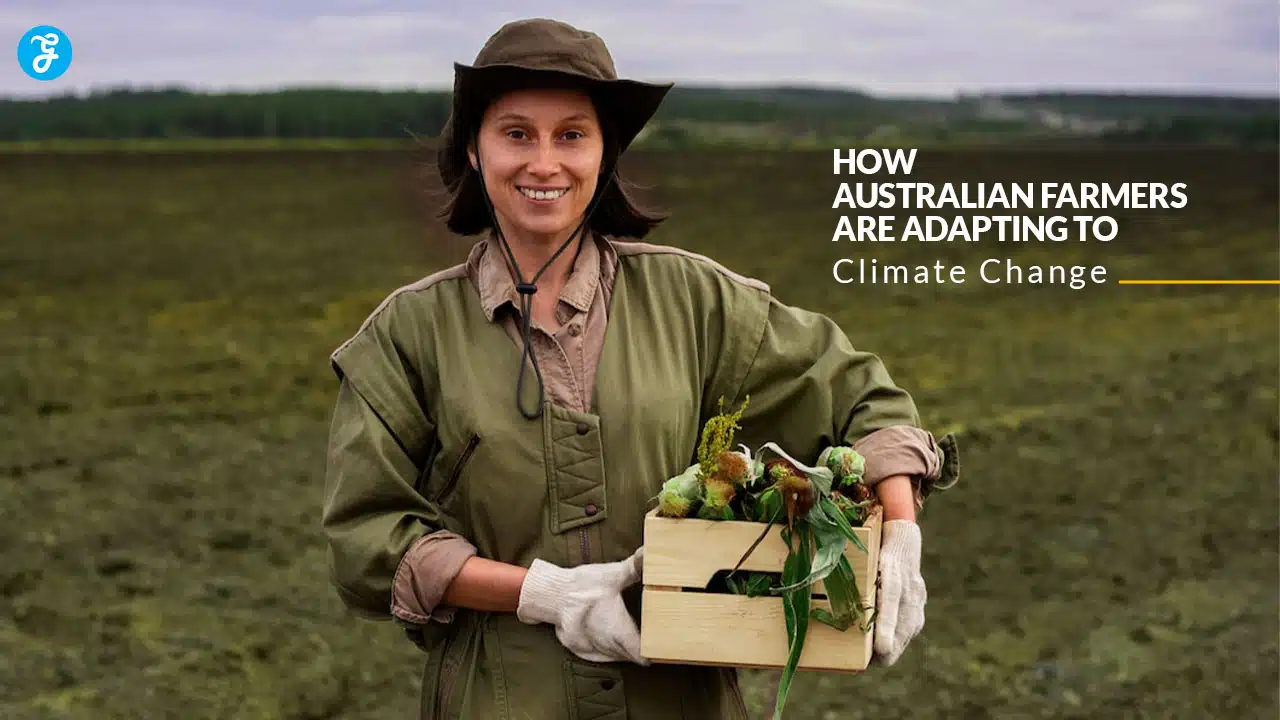
Climate change has become an undeniable force reshaping industries worldwide, and agriculture is no exception. In Australia, where farming plays a crucial role in the economy and national identity, the effects of climate change are particularly pronounced. Australian farmers adapting to climate change have become a testament to human ingenuity and resilience.
From adopting innovative technologies to implementing sustainable practices, farmers are finding ways to overcome rising temperatures, erratic weather patterns, and water shortages.
This article explores how Australian farmers are meeting these challenges head-on. By examining their strategies, leveraging advanced technologies, and sharing real-world examples, we gain a deeper understanding of how they are ensuring the sustainability of their livelihoods and the nation’s food supply.
Understanding the Impact of Climate Change on Australian Farming
Key Challenges Faced by Farmers
Australian farmers are grappling with multiple challenges brought about by climate change.
These include:
- Rising Temperatures: Prolonged heatwaves are causing crop stress, reducing yields, and increasing evaporation rates from soil and water sources.
- Erratic Weather Patterns: Farmers must navigate unpredictable rainfall, with long dry spells punctuated by sudden, intense downpours leading to flooding and soil erosion.
- Droughts: Persistent droughts have made water scarcity a recurring crisis, particularly in regions like the Murray-Darling Basin.
- Livestock Stress: High temperatures and increased disease prevalence are significantly affecting livestock productivity and health.
Economic and Environmental Consequences
The effects of these challenges are widespread and deeply interconnected:
- Reduced Agricultural Productivity: Lower crop yields and livestock losses directly impact the agricultural sector’s contribution to the economy.
- Increased Costs: Rising expenses for irrigation systems, feed, and pest management strain farmers’ finances.
- Food Security Concerns: As production declines, meeting domestic and export food demands becomes increasingly difficult.
- Ecosystem Strain: Degraded soils, reduced biodiversity, and overexploitation of resources worsen environmental sustainability.
| Impact | Description | Example |
| Droughts | Reduced rainfall and water scarcity | Murray-Darling Basin |
| Extreme Heat | Heatwaves affecting crop yields | Wheat and barley farms |
| Pest Outbreaks | Increased pest populations | Locust infestations |
| Flooding | Sudden rainfall leading to soil erosion | Northern Queensland |
Strategies for Adapting to Climate Change in Australian Farming
Advanced Irrigation Techniques
Water management has become critical in adapting to drier conditions:
- Drip Irrigation Systems: These systems deliver water directly to plant roots, reducing evaporation losses and water wastage.
- Rainwater Harvesting: Collecting and storing rainwater during wet periods ensures water availability in dry spells.
- Smart Irrigation Technology: Advanced systems using sensors and automation optimize watering schedules based on soil moisture and weather predictions.
| Technique | Advantages | Example Application |
| Drip Irrigation | Reduces water usage by up to 50% | Cotton farms in NSW |
| Rainwater Harvesting | Ensures water supply during droughts | Vineyards in South Australia |
| Smart Irrigation | Improves efficiency and crop health | Wheat farms in Victoria |
Diversification of Crops and Livestock
Diversifying farming operations offers multiple advantages:
- Drought-Resistant Crops: Crops like sorghum, millet, and chickpeas are being cultivated for their ability to thrive in arid conditions.
- Mixed Farming Systems: Combining crops and livestock diversifies income streams and enhances soil fertility.
- Aquaculture: Expanding into fish farming reduces dependence on traditional agricultural outputs while providing a high-value product.
| Approach | Benefits | Real-Life Example |
| Drought-Resistant Crops | Stable yields in dry conditions | Sorghum in Queensland |
| Mixed Farming Systems | Balances income and improves soil | Sheep and crops in WA |
| Aquaculture | Alternative revenue streams | Barramundi farms in NT |
Soil and Land Management Practices
Sustainable land management practices are critical for long-term resilience:
- Cover Cropping: Protects soil from erosion, retains moisture, and improves organic matter.
- Regenerative Agriculture: Practices like no-till farming, composting, and agroforestry enhance soil health and carbon sequestration.
- Rotational Grazing: Prevents overgrazing, maintains grasslands, and promotes biodiversity.
| Practice | Key Benefits | Example |
| Cover Cropping | Reduces erosion and improves fertility | Grain farms in WA |
| Regenerative Agriculture | Captures carbon and restores ecosystems | Victoria’s dairy farms |
| Rotational Grazing | Maintains pasture quality | Cattle farms in Queensland |
The Role of Technology in Supporting Adaptation

Precision Agriculture
Farmers are leveraging cutting-edge technology to boost efficiency and sustainability:
- GPS and Drones: These tools enable precision planting, targeted irrigation, and crop health monitoring, reducing waste and maximizing productivity.
- AI and Big Data: Advanced algorithms predict weather patterns, optimize planting schedules, and identify pest threats.
Climate-Resilient Seeds
Biotechnology is a game-changer for climate adaptation:
- Genetically Modified (GM) Crops: Engineered for drought resistance and pest tolerance, these crops are helping farmers maintain yields under extreme conditions.
- Examples: Heat-resistant tomatoes, salt-tolerant wheat, and pest-resistant corn varieties are now available to Australian farmers.
Renewable Energy Integration
Incorporating renewable energy into farming reduces costs and environmental impact:
- Solar-Powered Irrigation: Solar panels provide a sustainable energy source for water pumps.
- Wind Turbines: Farms are adopting wind energy to meet operational power needs.
| Technology | Functionality | Adoption Example |
| Drones | Monitor crops and soil health | Cotton farms in NSW |
| Solar-Powered Pumps | Sustainable water management | Queensland farms |
| GM Crops | Resilience to climate stressors | Salt-tolerant wheat |
Case Studies: Australian Farmers Leading the Way
The Success of Regenerative Farming in Victoria
- Approach: Farmers in Victoria have adopted practices like cover cropping, composting, and rotational grazing to restore soil health.
- Outcome: Increased crop yields, better water retention, and reduced dependency on chemical inputs.
Murray-Darling Basin Water Management
- Challenge: Severe water shortages in one of Australia’s key agricultural regions.
- Solution: Farmers implemented water-saving technologies, optimized irrigation schedules, and formed cooperatives for resource sharing.
- Impact: Improved water efficiency and sustained agricultural productivity.
Renewable Energy Adoption in Queensland
- Approach: Farmers integrated solar panels with agricultural operations to reduce reliance on grid electricity.
- Outcome: Significant cost savings, enhanced energy security, and reduced carbon footprint.
Government and Community Support for Adaptation
Government Initiatives
- Future Drought Fund: Provides financial assistance for sustainable farming practices.
- Smart Farms Program: Encourages the adoption of agricultural technology.
- Research and Development Grants: Supports innovation in climate-resilient farming techniques.
Community-Based Solutions
- Farmer Cooperatives: These groups pool resources and share knowledge, making it easier for members to adopt new practices.
- Landcare Australia: A network of community-led programs promoting sustainable land management and biodiversity conservation.
| Program Name | Focus | Region |
| Future Drought Fund | Funding sustainable projects | National |
| Landcare Australia | Promoting sustainable farming | Various states |
| Smart Farms Program | Supporting tech adoption | Regional NSW |
Takeaways
Australian farmers adapting to climate change are demonstrating resilience, innovation, and a commitment to sustainability. By embracing advanced technologies, adopting sustainable practices, and collaborating with governments and communities, they are transforming challenges into opportunities.
Their efforts not only safeguard their livelihoods but also contribute to a more sustainable and food-secure future.
As the world continues to grapple with climate change, the adaptability of Australian farmers serves as a beacon of hope and a model for agricultural resilience globally.





















