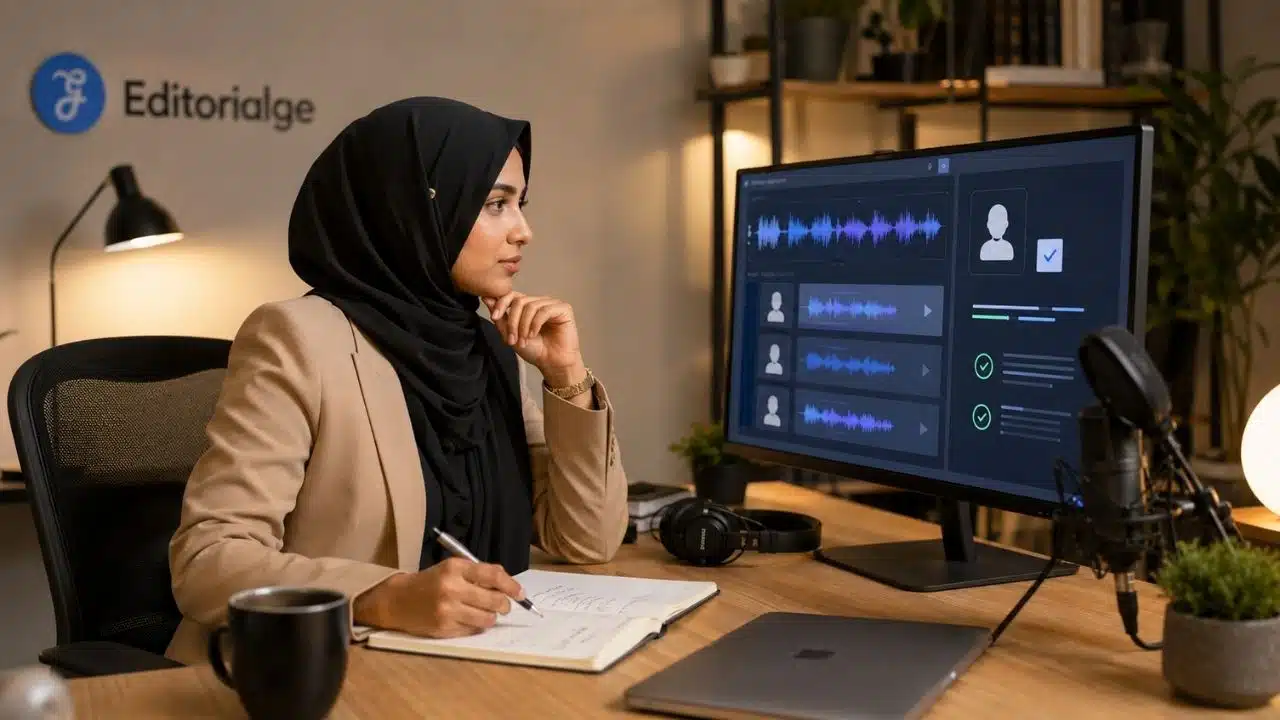
AI voice cloning ethics becomes real the moment a generated voice starts sounding like a person viewers could recognize, trust, or believe. I do not treat it like a normal audio effect anymore. A cloned voice is not just sound. It is identity, reputation, consent, and audience trust compressed into a few seconds of audio.
That is why voice cloning feels different from using a stock AI narrator. If I use a generic AI voice for an explainer, the risk is mostly quality: does it sound clear, natural, and suitable for the video? But if I use a cloned voice, the question changes completely: did the person agree to this, does the script represent them honestly, and could the audience believe they personally said something they did not?
In real AI video production, this matters more than beginners realize. A cloned voice can make a tutorial easier to update, a course easier to localize, or a talking avatar more consistent. But the same technology can also create AI voice impersonation, fake endorsements, deepfake audio, scam calls, and reputational harm.
At Editorialge Media LLC, our work now goes beyond publishing articles. We build and experiment across media, SaaS, e-learning, and AI-powered creative tools, so every new technology has to make sense as part of a real content production system, not just as a flashy feature. That is the mindset I use for voice cloning: useful when it is consented, clear, and controlled; risky when it is casual, hidden, or deceptive.
What AI Voice Cloning Ethics Actually Means
AI voice cloning ethics means using synthetic voice replication in a way that respects the original speaker, the audience, and the context where the audio will be used.
A voice clone is created when AI studies a voice sample and generates new speech that sounds similar to that of the speaker. The technical side is covered in how AI voice cloning works, but the ethical side asks a different question: should this voice be cloned, and under what conditions?
That question matters because voice has social meaning. We recognize people by voice. We trust familiar voices. We respond emotionally to tone, accent, pacing, and expression. So when AI creates an AI voice replica, it is not only generating audio. It is borrowing part of someone’s identity.
The FTC has warned that voice cloning can be used to make requests for money or information more believable, especially when a call sounds like a family member or a boss. The agency also says voice cloning creates risks that cannot be solved by technology alone.
That is why I separate AI voice use into three categories:
| Voice Type | Ethical Risk Level | What I Check First |
| Stock AI voice | Lower | Tool license and commercial usage rights |
| Custom brand voice | Medium | Ownership, usage scope, and disclosure needs |
| Cloned a real person’s voice | High | Consent, identity rights, script accuracy, and possible audience confusion |
A stock AI voice can still be misused, but a cloned voice carries more ethical weight because it points back to a real person.
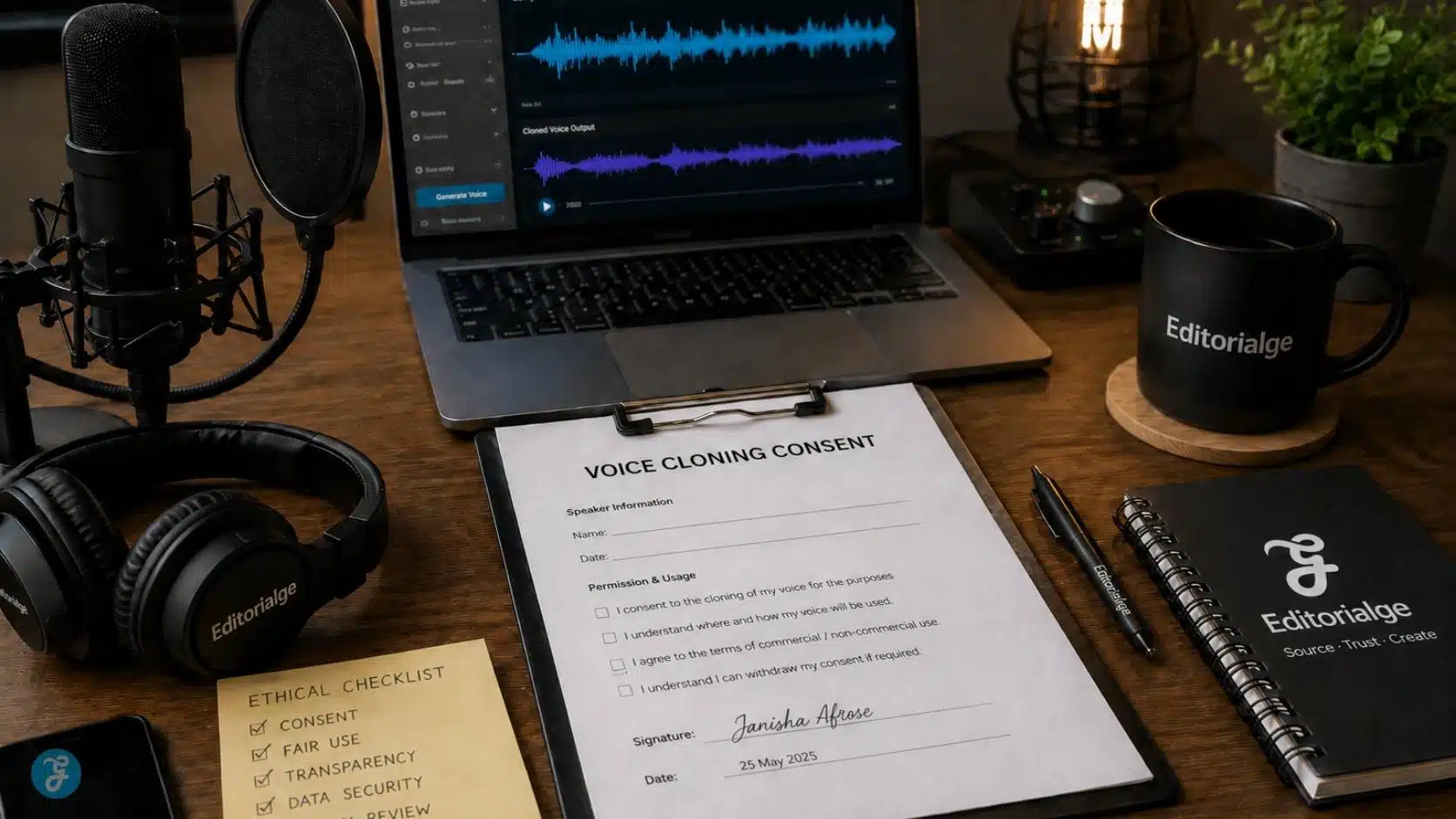
Why Voice Cloning Consent Comes First
Voice cloning consent is not a small permission line hidden in a project folder. It is the foundation of ethical voice cloning. If the voice is not yours, the first question should be simple: Did the speaker clearly allow this voice to be cloned for this exact use?
- Not “they once sent an audio file.”
- Not “their voice is already online.”
- Not “it is only a short clip.”
- Not “the tool allowed me to upload it.”
Consent should be clear, specific, and documented. Descript says its custom AI Speaker creation requires explicit recorded authorization from the person whose voice will be used. ElevenLabs also states that cloning someone else’s voice requires consent or legal right, and its policy prohibits unauthorized, deceptive, or harmful impersonation.
In my workflow, consent should answer these questions:
- Who is giving permission? The speaker must be identifiable, and the permission should come from the actual person or their authorized representative.
- What is the voice being used for? A speaker may agree to an internal training video but not a public ad campaign. The use case matters.
- Where will the voice appear? Website, YouTube, social media, e-learning, ads, internal documentation, podcast, customer support, or product demo.
- How long can the voice be used? A one-time campaign is different from indefinite use across future content.
- Can the speaker withdraw permission? This should be defined before publishing.
- Will the voice be used commercially? Commercial use should be stated clearly, especially for creators, employees, voice artists, actors, educators, and brand representatives.
If those answers are not clear, I would not publish the cloned voice.
Voice Rights AI: Why A Voice Is Not Just Audio
The phrase voice rights AI is becoming more important because synthetic voice technology creates a new kind of identity risk.
A voice is not only a sound file. It can be:
- A personal identifier
- A professional asset
- A creative performance
- A brand signal
- A trust cue
- A biometric-like marker
- A source of emotional recognition
For voice actors, educators, creators, podcast hosts, journalists, and executives, the voice may be part of their livelihood. If AI can reproduce that voice without permission, the harm is not only technical. It can become reputational, financial, and personal.
The FTC’s Voice Cloning Challenge page notes that voice cloning has promise, including medical assistance for people who have lost their voices, but also highlights risks such as fraud, extortion scams, and appropriation of creative professionals’ voices.
That balance is important. Voice cloning is not automatically bad. But it must be governed carefully because the same technology can help one person communicate and help another person impersonate.
This is why I look at cloned voices differently from AI-generated visuals. If I create a supporting scene with ImagineLab for an AI video, I still need to check rights and quality. But if I clone a real person’s voice, I also need to protect that person’s identity and future control over their voice.
Safe Uses Of AI Voice Cloning
There are legitimate and useful reasons to use voice cloning. The problem is not the technology itself. The problem is careless or deceptive use. Here are safer uses when permission, context, and review are handled properly.
Fixing Small Narration Mistakes
This is one of the most practical uses. Suppose a creator records a 10-minute tutorial and later finds that one product name or date is wrong. Instead of rerecording the entire narration, a consented voice clone can fix one line.
I would still review the replacement carefully because even one corrected sentence must match the surrounding tone, speed, and emotion.
Updating E-Learning Lessons
For e-learning, course content changes often. A platform may update a feature, a regulation may change, or a lesson may need a clearer explanation.
Voice cloning can help keep narration consistent across modules when the original speaker has approved the use. This is especially useful for educational brands, but the permission should define how long and where that cloned voice can be used.
Maintaining A Consistent Brand Voice
Some companies want a consistent narrator across explainer videos, product tutorials, onboarding videos, and internal training. A cloned brand voice can help, but only if the person behind the voice has agreed to that role.
This is where production planning matters. A brand should not casually clone an employee’s voice just because they recorded a webinar. The speaker’s permission should be clear.
Accessibility And Voice Preservation
Voice cloning can also support accessibility. For people who may lose or have lost their voice, synthetic voice technology can help preserve a personal voice for communication. The FTC has recognized medical assistance as one of the promising uses of voice cloning technology.
This is one of the strongest examples of why the technology should not be dismissed. Used responsibly, it can genuinely help people.
Localized Content With Permission
Voice cloning may support multilingual videos when a speaker wants their approved voice identity to carry across languages. But localization adds another ethical layer. The translated script must still reflect what the speaker agrees to say.
If a cloned voice is used in a translated AI voiceover video guide style workflow, the translation should be reviewed for meaning, not just fluency.
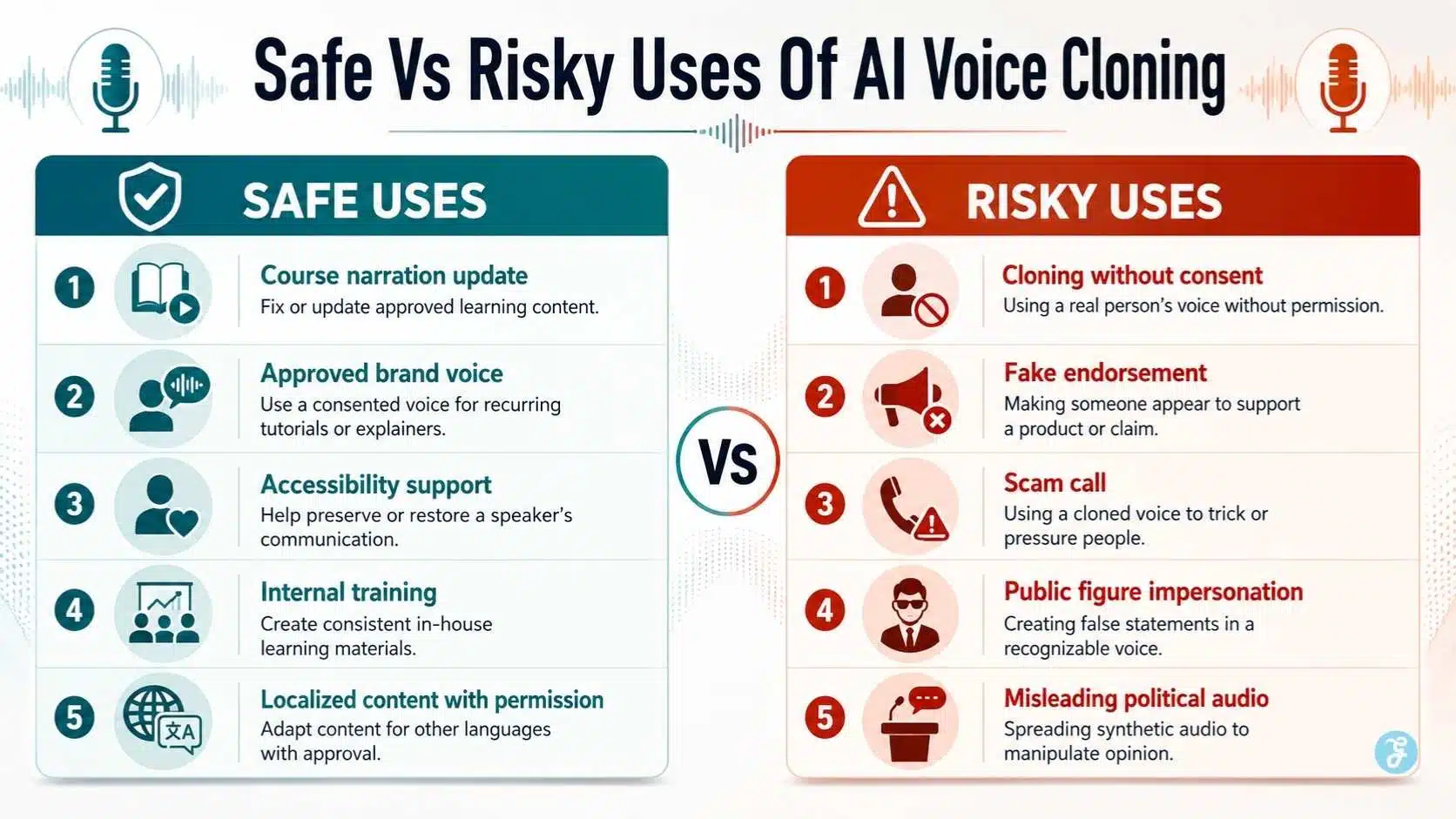
Risky Uses Of AI Voice Cloning
The risky side of voice cloning starts when the audio makes people believe something false.
Cloning A Voice Without Consent
This is the clearest red line. If the speaker did not approve of cloning, the creator should not use the voice. Public availability is not permission. A podcast clip, YouTube interview, webinar, Instagram Reel, or conference recording may be accessible, but that does not mean the speaker agreed to voice cloning.
Fake Endorsements
A cloned voice can make it sound like a person supports a product, service, candidate, company, investment, or public claim. That can mislead audiences and damage the person being cloned. For creators and brands, fake endorsement risk is especially dangerous because it can turn a marketing asset into an impersonation problem.
Executive Or Employee Impersonation
The FTC has warned that scammers can clone the voice of a CEO or company executive to trick employees into transferring money or paying fake invoices.
This is not just a consumer issue. It is a business security issue. Any organization using AI audio should train teams not to trust voice alone for high-risk requests.
Political Or Public Figure Manipulation
Cloned voices can be used to spread false statements or influence public opinion. This is one reason platforms and regulators are paying closer attention to synthetic media.
The FCC ruled in 2024 that AI-generated voices in robocalls are “artificial” under the Telephone Consumer Protection Act, giving authorities more tools against AI voice robocall scams.
Family Emergency Scams
The FTC warns that scammers can use a short audio clip from online content to clone a loved one’s voice and make a fake emergency call sound real. Its advice is simple: do not trust the voice alone; contact the person through a known number or another trusted channel.
That advice applies to creators, too. The more realistic the synthetic voice becomes, the more important verification becomes.
Safe Vs Risky Uses At A Glance
This comparison is useful because not every voice cloning use case belongs in the same risk bucket.
| Use Case | Safer When | Risk Increases When |
| Course narration update | Speaker consent is documented, and the script is accurate | The voice is reused beyond the approved course |
| Product explainer | The speaker agreed to commercial use | The voice implies personal endorsement without approval |
| Internal training | Access is limited, and context is clear | The cloned voice is reused publicly later |
| Talking avatar | Viewers understand the avatar is synthetic or assisted | The avatar makes a real person appear to say new claims |
| Translation/localization | Meaning is reviewed, and speaker approval is clear | Translation changes the speaker’s message |
| Social media clip | It is transparent and low-risk | It imitates a real person for attention or deception |
| Public statement | The speaker directly approves the script | The voice is used to create fake authority |
The safe side usually has three things: consent, context, and control. The risky side usually removes at least one of those.
AI Voice Impersonation And Platform Rules
AI voice impersonation becomes a serious problem when a cloned voice is used to create a false impression of identity, approval, or presence.
Platforms are already responding to this risk. YouTube requires creators to disclose meaningfully altered or synthetically generated content when it seems realistic, and viewers could mistake it for a real person, place, scene, or event. YouTube also says disclosure is not required for clearly unrealistic content, animation, special effects, or ordinary production assistance.
For voice cloning, I use this practical rule:
If the audience could reasonably believe a real person personally said the words in the video, disclosure should be considered.
That does not mean every AI-assisted workflow needs a giant warning label. If AI is used only to clean audio, draft a script, or generate non-realistic background narration, the risk is different. But when a real person’s voice identity is involved, transparency becomes much more important.
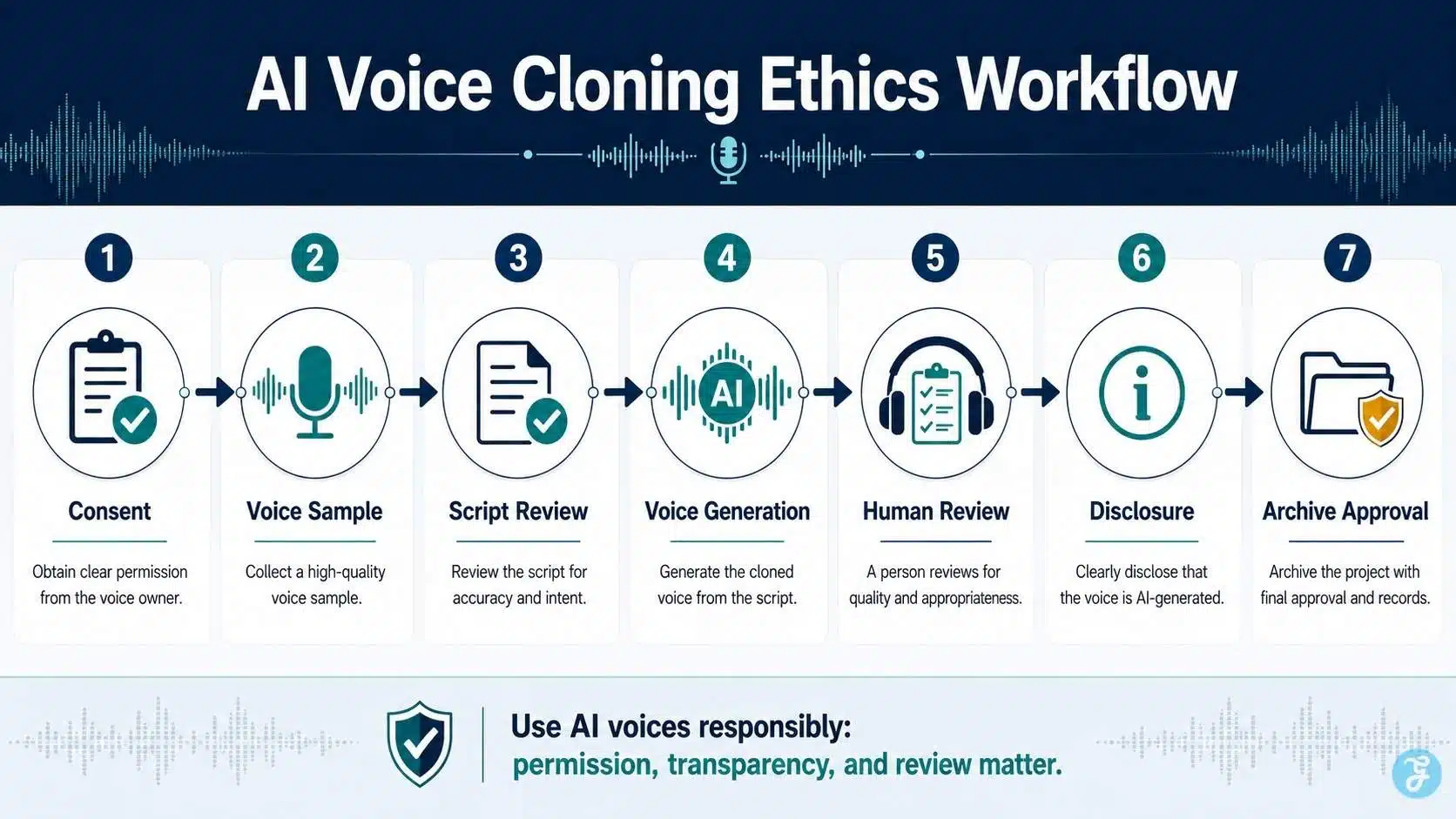
My Ethical Voice Cloning Workflow
I do not treat ethics as a final review step. I place it at the beginning of the workflow.
1. Define The Use Case Before Cloning
Before touching any tool, I ask why a cloned voice is needed. If a licensed stock voice or real recording can do the job, cloning may not be necessary. Voice cloning should solve a specific problem, not just make the content feel more realistic.
2. Confirm Consent And Usage Scope
This is where I would document the speaker’s approval. The consent should cover the project type, distribution channels, duration, commercial use, and whether the voice can be reused in future projects. For a serious brand or publisher, “verbal okay” is not enough.
3. Record Clean Voice Samples
The cleaner the audio sample, the better the output. I would avoid echo, background music, low-quality phone audio, and overlapping voices. Bad source audio creates bad synthetic output, and poor output creates more editing problems later.
4. Test Before Producing Final Audio
I generate a short test first. This usually includes names, brand terms, emotional lines, and technical phrases.
For this topic, I would test words like “Editorialge,” “ImagineLab,” “voice cloning consent,” “AI lip sync,” and “AI voice impersonation” before generating long narration.
5. Review Meaning, Not Just Sound
A cloned voice may sound accurate while the message is still ethically wrong. I check whether the script makes the speaker appear to claim, endorse, promise, or confess to anything they did not approve. This is where human editorial judgment matters.
6. Add Disclosure When Needed
If the final content is realistic synthetic media, and viewers may misunderstand it, I add a disclosure note in the video, description, or supporting context. The format depends on the platform and content type.
7. Keep Records
I would store consent, usage scope, script approval, generated audio versions, and final publication details. If questions arise later, the production record matters. This is not bureaucracy. It is protection.
Where Ethics Fits Into AI Video Production
Voice cloning rarely works alone. It usually sits inside a larger AI video workflow. When building a full AI video creation guide, voice cloning should appear as an advanced audio layer, not a beginner shortcut. New creators should first understand scripting, narration, editing, disclosure, and platform formatting before cloning a real voice.
In an AI lip sync workflow, the cloned voice affects mouth timing, emotional believability, and viewer trust. If the voice sounds like a real person, and the mouth animation makes it look like they are speaking, the ethical risk becomes higher.
For AI talking head videos, the combination of face and voice is especially sensitive. A synthetic avatar with a generic voice is one thing. A realistic avatar using a cloned real person’s voice is much closer to identity replication.
In AI video editing comparison, this is where human editors still matter. AI can generate the audio, but a human should decide whether the clip is accurate, fair, transparent, and safe to publish.
Common Mistakes Beginners Make With AI Voice Cloning Ethics
1. Treating Consent As A Formally Nice But Optional Step
This is the most dangerous beginner mistake. Consent is not a courtesy. It is the ethical foundation of voice cloning. If someone’s voice is cloned without approval, the content may become impersonation, even if the script feels harmless to the creator.
2. Assuming Public Audio Means Free Training Audio
Just because someone has a podcast, interview, livestream, or social video online does not mean their voice is free to clone. I would treat public audio as viewable content, not reusable biometric or identity material.
3. Writing Scripts The Speaker Would Never Actually Say
A cloned voice should not be used to put unnatural, exaggerated, misleading, or reputationally risky words into someone’s mouth. In my workflow, I ask: Would this person reasonably approve this wording if they read the script themselves?
4. Ignoring Tone And Emotional Mismatch
A cloned voice can sound close to the speaker but still feel emotionally wrong. For example, it may sound cheerful during serious content or flat during a sincere message. That mismatch can feel creepy to viewers and unfair to the speaker.
5. Skipping Disclosure Because The Video “Looks Fine”
The more realistic the voice sounds, the more disclosure matters. If the audience might believe the real speaker recorded the line, transparency should be considered.
This is especially true for public-facing video, advertising, news-like content, financial topics, political content, and testimonials.
6. Using Voice Cloning In High-Stakes Topics Too Casually
Medical, legal, financial, political, emergency, or personal content deserves extra caution. A cloned voice in these areas can create harm faster because people may act on the information. For high-stakes content, I would rather use a real recording, a clearly synthetic narrator, or stronger disclosure.
7. Forgetting Internal Security Risks
Voice cloning is not only a publishing issue. Companies should also think about internal fraud. If employees trust voice requests too easily, cloned executive audio could become a security risk.
A safe internal policy should require secondary verification for payment requests, password resets, vendor changes, or confidential information requests.
Ethical Voice Cloning Checklist Before Publishing
Use this before approving any cloned voice content:
| Checkpoint | What To Confirm |
| Consent | The speaker clearly approved voice cloning |
| Scope | The project, channel, duration, and commercial use are defined |
| Script | The speaker is not misrepresented |
| Audio quality | Output is clear, natural, and reviewed |
| Pronunciation | Names, brands, and technical terms are correct |
| Disclosure | Synthetic voice use is labeled when needed |
| Security | Voice files and access are protected |
| Records | Consent and approvals are archived |
| Platform rules | YouTube or other disclosure requirements are checked |
| Final judgment | A human editor approves the content |
This checklist is simple, but it forces the right questions before the content goes public.
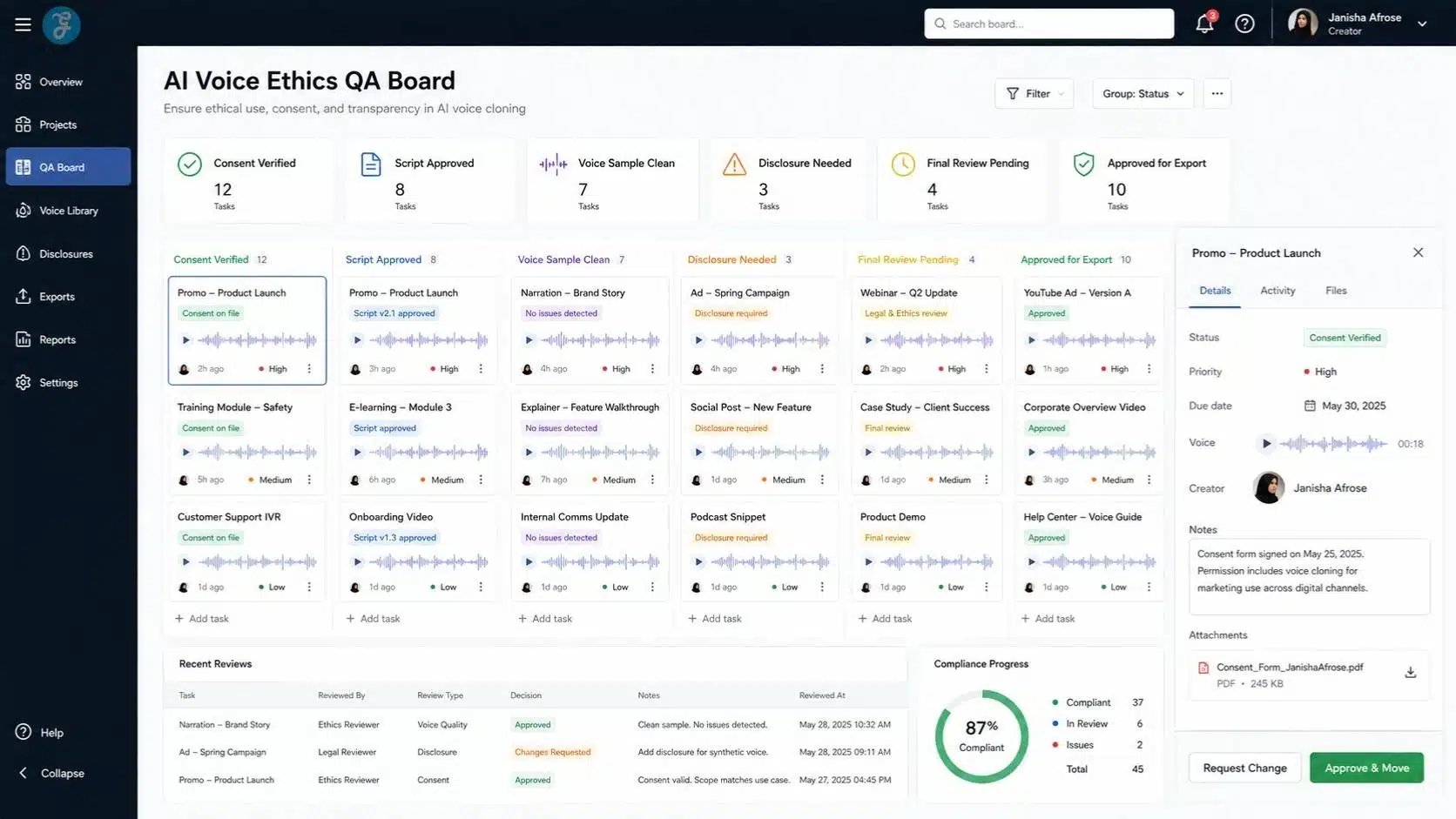
A Practical Example: Ethical Vs Unethical Voice Cloning
Let’s say a creator has a five-minute training video narrated by a real instructor. Later, a software feature changed. They need to update one sentence.
Ethical version:
The instructor has previously approved voice cloning for course corrections. The team generates the updated sentence, checks the pronunciation, confirms the new line is accurate, and stores the edit note with the consent record.
Unethical version:
The team pulls the instructor’s old webinar audio, clones the voice without asking, and creates new promotional lines that make the instructor sound like they endorse a paid product.
The technology may be the same. The ethics are completely different. That is why intent, permission, and context matter.
Final Thoughts: AI Voice Cloning Needs Trust Before It Needs Realism
The biggest lesson from AI voice cloning ethics is simple: realism is not the goal if trust is missing. A cloned voice can help creators work faster, update lessons, localize content, support accessibility, and improve video workflows. But it can also be used for impersonation, scams, fake authority, and audience manipulation.
So the creator’s job is not only to ask, “Does this sound real?” The better question is, “Is this voice being used fairly, clearly, and with permission?”
AI can clone a voice. Human judgment has to protect the person behind it.
Frequently Asked Questions About AI Voice Cloning Ethics
1. What Is AI Voice Cloning Ethics?
AI voice cloning ethics means using cloned or synthetic voices in a way that respects consent, identity, audience trust, and legal boundaries. It asks whether the speaker approved the use, whether the audience could be misled, and whether the cloned voice is being used fairly.
2. Do I Need Consent To Clone Someone’s Voice?
Yes. If the voice is not yours, you should get clear permission before cloning it. Consent should also explain where the voice will be used, whether the use is commercial, how long the permission lasts, and whether the speaker can withdraw it.
3. Is AI Voice Cloning Illegal?
It depends on the location, use case, consent, and whether the cloned voice misleads or harms someone. Some uses may be lawful with permission, while impersonation, fraud, unauthorized commercial use, or deceptive robocalls can create serious legal risk. The FCC has ruled that AI-generated voices in robocalls are artificial under the TCPA.
4. What Is AI Voice Impersonation?
AI voice impersonation happens when a synthetic or cloned voice makes it sound like a real person said something they did not say. It becomes especially risky when used for fake endorsements, scams, political messaging, financial requests, or public statements.
5. Can I Use My Own Cloned Voice For Videos?
Yes, using your own cloned voice is usually simpler because you control the identity. Still, you should review quality, protect access to the voice model, and disclose synthetic use when the context could confuse viewers.
6. What Are The Biggest Risks Of AI Voice Cloning?
The biggest risks are unauthorized cloning, fake statements, scams, public figure impersonation, fake endorsements, and loss of trust. Voice cloning is powerful because people respond strongly to familiar voices, which is exactly why misuse can be so harmful.