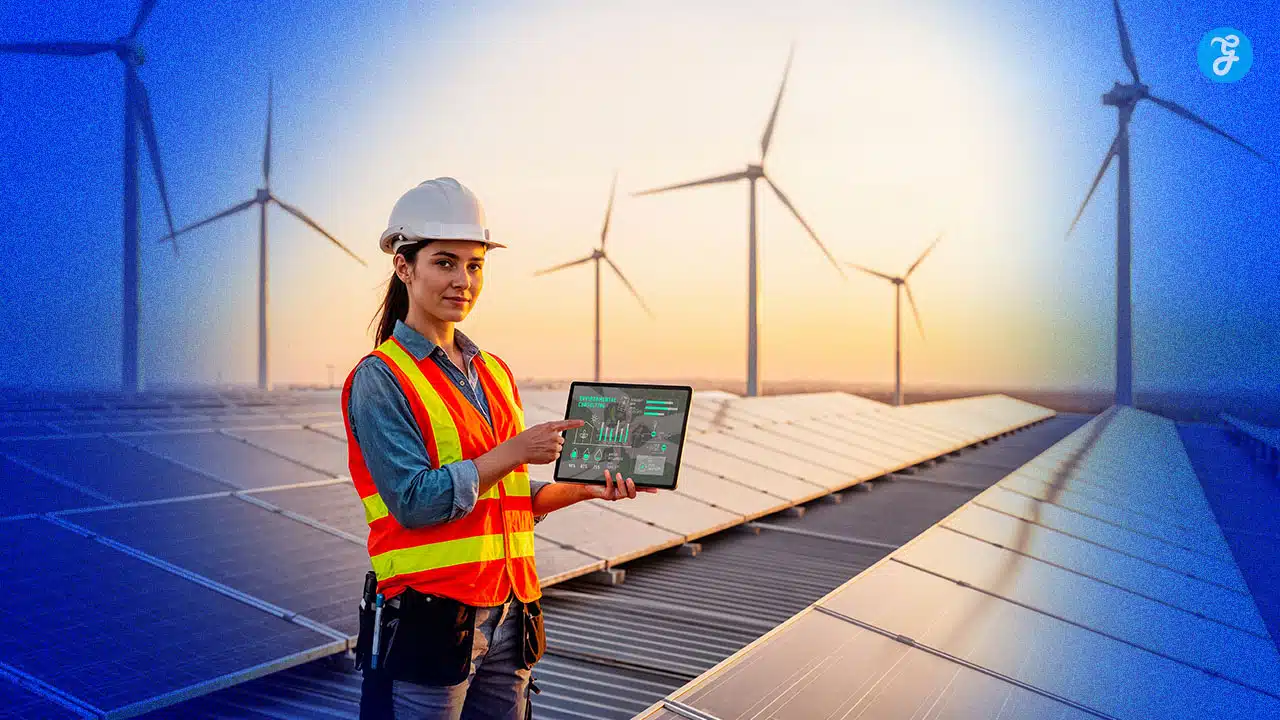
Facing rising electric bills, blackout warnings, and ambitious clean power goals? The pressure on today’s power infrastructure is undeniable. Successfully merging Smart Grids and Renewable Energy is the ultimate key to keeping the lights on while building a sustainable future.
In 2025, wind and solar accounted for 19% of total U.S. net generation, pushing the traditional system to manage unprecedented levels of variable power. Fortunately, modernized networks offer a practical solution for utilities, businesses, and communities.
These intelligent systems monitor demand in real time, seamlessly shift loads, and efficiently store surplus electricity. By upgrading the infrastructure, it becomes entirely possible to integrate massive amounts of clean power onto the network without ever sacrificing everyday stability or reliability.
What Is a Smart Grid?
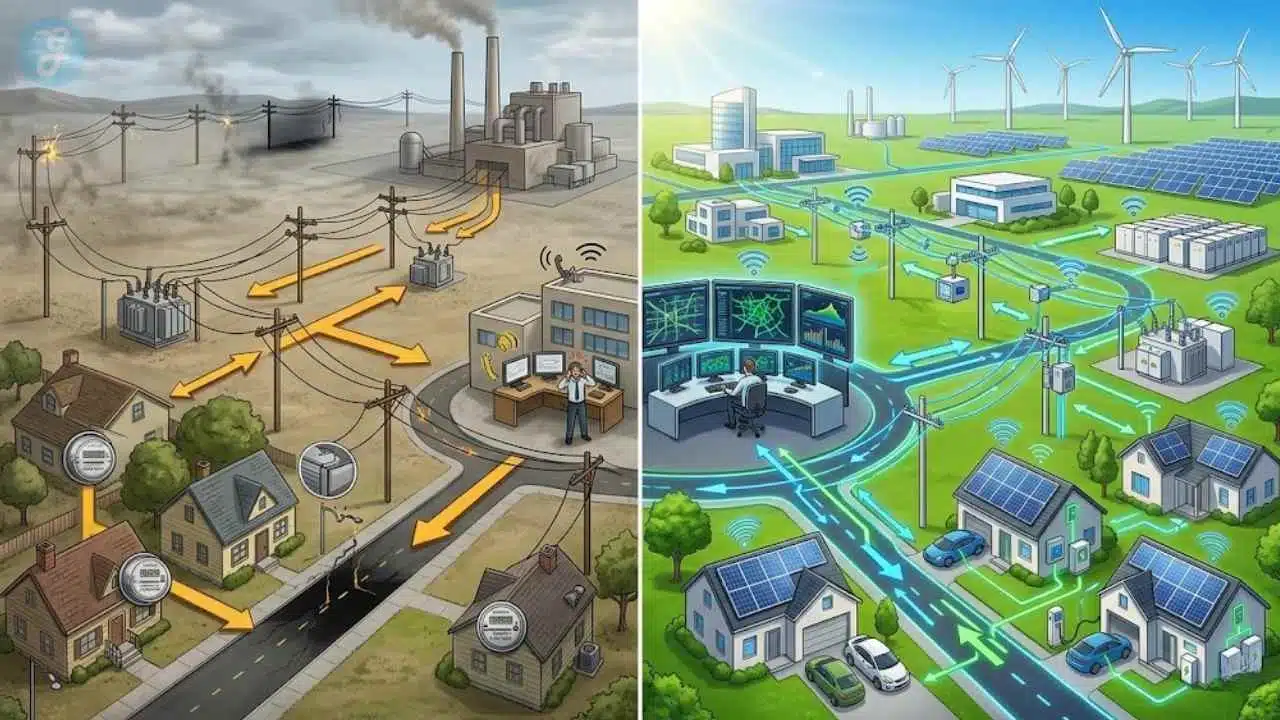
A smart grid is a power grid that uses digital technology, two-way communications, automation, and data analytics to manage electricity in real time. The Office of Electricity describes it as a modern system built around advanced meters, sensors, batteries, automated controls, and software that help the grid respond faster and run more efficiently.
Definition and key features
In plain English, a smart grid turns the old electricity distribution network into a system that can see what is happening and act on it. Instead of waiting for a customer call or a field crew to confirm a fault, utilities can use smart meters, intelligent electronic devices (IEDs), phasor measurement units, and automated feeder switches to detect trouble, isolate it, and reroute power.
That visibility is already widespread in the United States. In its 2025 assessment, FERC reported that utilities had 128.4 million advanced meters in service at the end of 2023, equal to 76.8% of all electric meters. For readers, that is a big deal because smart meters are the foundation for faster outage detection, more accurate billing, time-based rates, and better energy management.
Modern utilities also use a digital twin of the distribution grid before they spend money in the field. Platforms such as Oracle Utilities DERMS, Siemens Gridscale X, and the Envelio Intelligent Grid Platform help with interconnection studies, grid planning, and flexibility management as more distributed energy resources, EV chargers, and energy storage systems connect to local circuits.
Differences between traditional and smart grids
The clearest way to see the shift is to compare how each grid behaves on a busy, weather-stressed day.
| Topic | Traditional Grid | Smart Grid |
|---|---|---|
| Power flow | Mostly one-way, from large plants to customers. | Two-way, with rooftop solar, batteries, EVs, and other prosumers feeding power back to the grid. |
| Monitoring | Limited sensors and slower fault detection. | Real-time monitoring through smart meters, IEDs, PMUs, and feeder sensors. |
| Control model | Manual or delayed operator actions. | Automation and software can react in seconds. |
| Renewable energy | Harder to absorb large swings from solar and wind. | Built to balance renewable energy, demand response, and energy storage together. |
| Outage response | Utilities often learn about outages after customers report them. | Devices can report outages automatically and help reroute electricity around the problem. |
| Customer role | Mostly passive energy consumption. | Active participation through smart meter data, flexible rates, home batteries, and EV charging programs. |
| Planning | Upgrade first, analyze later. | Use digital twins, hosting capacity maps, and data-driven modeling to target the right upgrades. |
| Long-term value | Struggles with electrification and climate change pressure. | Supports grid modernization, grid resilience, and a faster energy transition. |
The Need for Smart Grids in a Renewable Energy Future
Smart grids matter now because the grid is being asked to do three hard things at once: carry more electricity, cut greenhouse gas emissions, and stay reliable during extreme weather. As of March 2026, the United States Department of Energy says the grid is under pressure from aging infrastructure, cyber threats, load growth, and stronger weather events.
Addressing climate change and increasing electrification
Clean power is no longer a side story. Recent EIA data show renewables supplied about 24% of U.S. utility-scale electricity generation in 2025, while wind power and solar power together reached 19% of total net generation when small-scale solar is included.
That progress is good for climate change goals, but it changes how the grid must operate. Solar output rises and falls with daylight, wind output shifts with weather, and new loads from EVs, buildings, and data centers do not politely wait for perfect conditions.
NERC’s 2025 long-term reliability assessment says new data centers and other large commercial and industrial loads account for most projected electricity demand growth over the next decade. That means smart grid investment is no longer just about cleaner power. It is about keeping enough capacity available when demand surges.
Smart grids let the grid absorb more renewable energy without treating reliability like a sacrifice.
Integrating renewable energy sources effectively
Renewable energy projects often hit a wall long before construction. The problem is usually interconnection, local feeder limits, or slow studies, not a lack of solar panels or wind turbines.
Berkeley Lab’s 2025 queue snapshot showed about 10,300 projects were still actively seeking U.S. grid interconnection at the end of 2024, representing roughly 1,400 gigawatts of generation and 890 gigawatts of storage. That backlog tells you something important: smarter planning and faster interconnection rules matter almost as much as new generation.
- Use hosting capacity analysis on the distribution grid to see where new solar power or batteries can connect with fewer upgrades.
- Coordinate grid planning and interconnection studies so utilities do not keep solving the same bottleneck one project at a time.
- Adopt flexible interconnection and smart inverter settings so distributed energy resources can join the grid without triggering oversized construction.
- Move faster on demand response and storage, because those tools can relieve congestion while longer transmission projects work through planning.
The Department of Energy’s latest DER interconnection roadmap also puts hard targets around speed. By 2030, it aims for large distributed energy projects over 5 megawatts to move from interconnection request to agreement in less than 140 days, which is a strong reminder that process reform is part of the clean energy buildout.
Core Technologies Powering Smart Grids
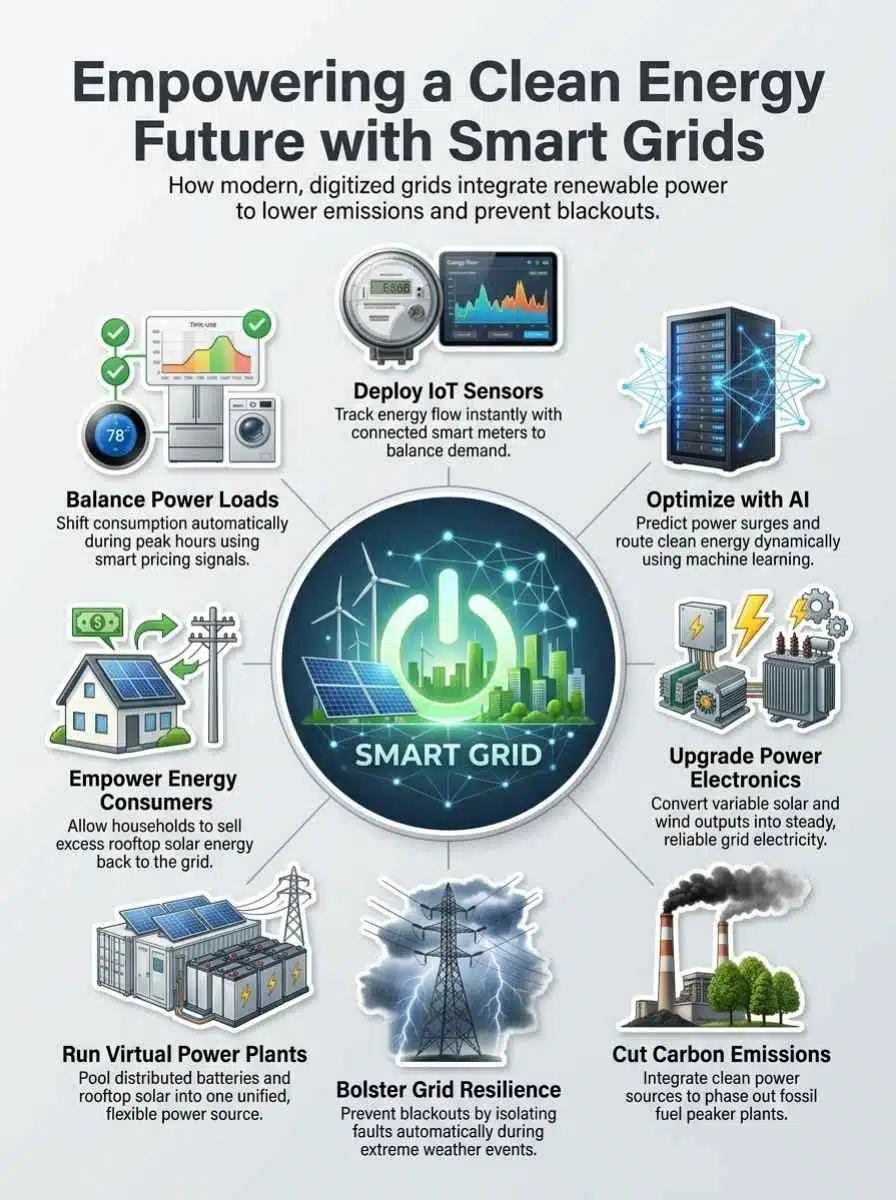
A smart grid is really a stack of technologies working together. Some devices collect data, some analyze it, and some act on it.
The best results show up when utilities connect these tools instead of buying them as isolated upgrades.
| Technology | What it does | Why it matters |
|---|---|---|
| Smart meters and sensors | Track voltage, outages, and energy consumption in near real time. | Give utilities the visibility needed for faster restoration and better rate design. |
| DERMS and digital twin software | Model, forecast, and manage distributed energy resources across the grid. | Help grid operators connect more rooftop solar, batteries, and EVs without guessing. |
| Smart inverters and converters | Manage voltage, frequency, and power quality while moving power between direct current and alternating current. | Make solar panels, batteries, and EV charging equipment far easier to integrate safely. |
| Energy storage | Stores extra electricity and releases it later. | Shifts midday solar into evening demand and supports grid resilience. |
| Automation and AI | Forecast demand, detect anomalies, and trigger faster control actions. | Reduce losses, cut manual work, and improve reliability during fast-changing conditions. |
Internet of Things (IoT) for real-time monitoring
The IoT layer is the grid’s nervous system. Smart meters, substation relays, PMUs, line sensors, and SCADA-connected devices keep sending data so utilities can see what is happening across the network instead of working from delayed snapshots.
That matters during outages and heavy renewable production. The Department of Energy notes that advanced digital meters can automatically report outages, while PMUs help operators assess grid stability. For a distribution system operator, that means fewer blind spots and much faster decisions during storms, heat waves, or sudden load spikes.
Artificial intelligence (AI) for energy optimization
Artificial intelligence turns all that raw data into something useful. AI models can forecast demand, predict feeder congestion, flag unusual behavior, and recommend control actions before a minor voltage issue becomes a customer complaint or a forced upgrade.
This is where named tools start to matter. Oracle Utilities DERMS is built to model, monitor, optimize, and dispatch distributed energy resources. Siemens Gridscale X uses a shared digital twin to support planning and operations, and Envelio focuses on grid planning, interconnection, and network model management. If a utility expects fast EV or rooftop solar growth, software like this can prevent blanket export limits and target upgrades only where they are needed.
Advanced power electronics
Advanced power electronics do the physical work that makes smart control possible. Smart inverters convert direct current from solar panels and batteries into the alternating current used on most power systems, while advanced power flow controllers and solid-state equipment help utilities manage voltage, frequency, and congestion more precisely.
These tools are becoming more important because the grid is carrying more inverter-based resources and more flexible loads. In 2024, FERC’s Order 1920 required transmission owners to consider grid-enhancing technologies such as dynamic line ratings and advanced power flow control devices, which is a practical sign that smarter hardware is moving from nice-to-have to expected planning practice.
Key Benefits of Smart Grids
Smart grids do more than make the grid look modern. They change what utilities can do with the same wires, the same substations, and the same customer devices.
- They improve energy efficiency by reducing waste and smoothing demand spikes.
- They support renewable energy by coordinating solar, wind, and energy storage.
- They improve reliability by finding faults faster and restoring service more quickly.
- They give customers better information so they can manage energy consumption with less guesswork.
Enhanced efficiency and reliability of energy distribution
The first win is better electricity distribution. With more sensors and automation, grid operators can reroute power, balance loads, and catch equipment stress earlier, which cuts losses and keeps more electricity moving to the right place.
Demand response adds a second layer of efficiency. FERC’s 2025 assessment found 33,272 megawatts of demand response resources participating across U.S. wholesale markets in 2024, equal to about 6.5% of non-coincident peak demand in those markets. That is real capacity that can help avoid emergency actions and delay expensive peak-only infrastructure.
Reduction of carbon emissions
Smart grids cut emissions by giving renewable energy a better chance to stay on the system. Instead of curtailing solar at midday and ramping fossil generation at sunset, utilities can use batteries, flexible loads, and managed charging to move clean electricity into the hours when people actually need it.
EIA reported that U.S. utility-scale battery storage capacity topped 26 gigawatts in 2024 after a 66% jump in one year. That growth matters because batteries are one of the simplest ways to turn variable renewable energy into dispatchable support for the evening peak.
Improved grid resilience and security
Grid resilience is where smart grids become easy to appreciate. A grid that can detect faults, isolate damaged sections, and keep critical loads supplied during disruption will always outperform one that waits for manual troubleshooting.
Cybersecurity has to grow at the same time. The DOE’s Office of Cybersecurity, Energy Security, and Emergency Response released a 2026 to 2030 strategic plan focused on stronger incident readiness and recovery, which is exactly what a more connected grid needs.
Interoperability matters too. NIST’s smart grid framework and the newer DOE interconnection roadmap both push utilities toward consistent standards, better data exchange, and secure device behavior. That makes the system more reliable and reduces the chance that a fast renewable rollout creates new operational weak points.
Challenges in Implementing Smart Grids
Smart grids are a strong answer, but they are not a quick install. Utilities still have to deal with cost, legacy equipment, workforce limits, and a policy environment that can move slower than the technology.
High initial costs
The first challenge is money. Replacing meters, hardening substations, deploying communications gear, adding software platforms, and upgrading cybersecurity can require a very large upfront investment.
You can see the scale of that challenge in federal policy. The DOE’s Office of Electricity is administering a $10.5 billion GRIP program to improve grid flexibility and resilience, which tells you these upgrades are now viewed as national infrastructure, not small pilot work. For utilities and large energy users, the smart move is to phase projects by the circuits with the highest outage risk, the worst congestion, or the fastest load growth.
Integration with existing infrastructure
Most utilities do not get to start fresh. They have to layer new digital technology onto decades of existing equipment, operating practices, and electricity distribution rules.
That is why digital twin models, feeder hosting capacity maps, and interconnection automation matter so much. They help utilities see which transformers, feeders, and substations are close to their limits before new solar power, EV charging, or battery projects land on top of them.
Regulatory and policy hurdles
Rules can slow everything down if they assume the grid is still built around a few large central plants. Slow interconnection timelines, unclear cost allocation, and outdated device requirements can block distributed energy resources even when the technology is ready.
There is movement on this front. FERC Order 2023 reformed generator interconnection procedures, and Order 1920 set new expectations for long-term transmission planning. The DOE’s DER interconnection roadmap also pushes for broader use of hosting capacity analysis, automation, and the Institute of Electrical and Electronics Engineers 1547 interconnection standard so new devices connect more smoothly.
| Challenge | What it slows down | Best practical response |
|---|---|---|
| High capital cost | Meter rollouts, communications upgrades, storage, and software deployment. | Stage upgrades around the highest-value feeders first and pair them with resilience funding where possible. |
| Legacy infrastructure | Fast interconnection and flexible operations. | Use digital modeling and targeted retrofit plans instead of replacing whole systems at once. |
| Queue backlogs | Solar, storage, and hybrid project timelines. | Adopt group studies, hosting capacity maps, and automation in interconnection studies. |
| Policy misalignment | Demand response, VPPs, and distributed generation participation. | Update tariffs, interconnection standards, and planning rules to reflect two-way power flow. |
The Role of Smart Grids in Enabling Distributed Energy
Distributed energy only becomes truly useful at scale when the grid can coordinate it. That is the job smart grids are built for.
Virtual power plants
Virtual power plants combine many smaller assets, such as rooftop solar, home batteries, EV chargers, smart thermostats, and controllable commercial loads, into one coordinated resource. To the grid operator, that bundle can behave a lot like a power plant, except it is spread across neighborhoods and buildings.
The DOE’s 2025 virtual power plant update estimates that scaling VPPs to 80 to 160 gigawatts by 2030 could cover 10% to 20% of U.S. peak load and save about $10 billion a year in grid costs. That is why VPPs matter so much in the energy transition. They can turn customer devices into grid assets instead of treating them as unmanaged demand.
State policy is starting to catch up. Virginia law now requires a virtual power plant pilot program for a Phase II utility with aggregations totaling up to 450 megawatts. Moves like that give prosumers a clearer path to sell flexibility back to the grid instead of simply consuming energy.
Load balancing and demand response systems
Load balancing keeps electricity demand from crashing into supply limits. Demand response makes that possible by paying or guiding customers to shift usage away from stressed hours.
This is already happening at scale. FERC reported 10.6 million customers enrolled in retail demand response programs in 2023, and 18.24 million enrolled in retail dynamic pricing programs. Those numbers matter because customer participation is no longer niche. It is becoming a standard grid tool.
- If you have a smart thermostat, ask your utility whether it supports demand response events during the hottest or coldest hours.
- If you drive an EV, managed charging can move energy consumption out of the evening peak and into lower-cost hours.
- If you own solar plus batteries, look for programs that aggregate your system into a virtual power plant instead of leaving that flexibility unused.
- If you manage a business, review interval data from your smart meter before you add electrified equipment, because peak timing often matters more than total monthly use.
Future Trends in Smart Grid Technology
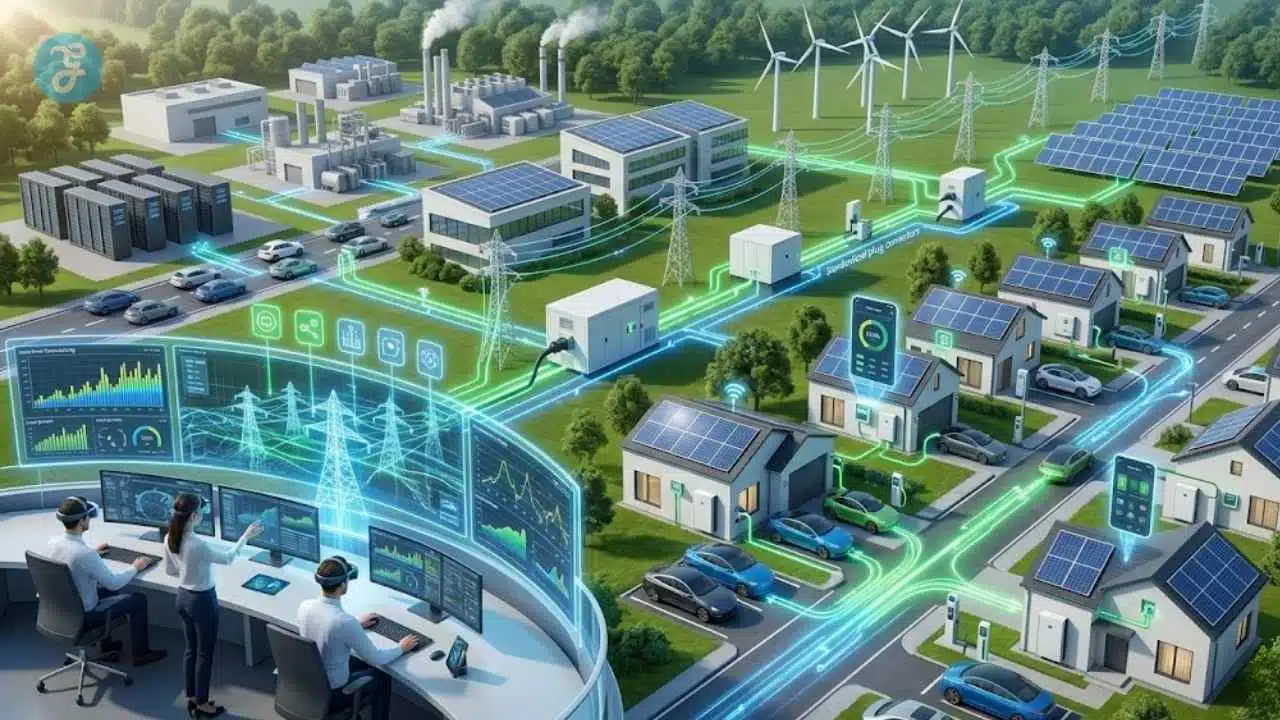
The next phase of smart grids will be less about proving the idea and more about scaling what already works. The trend lines are clear: more software, more flexible loads, more storage, and more active customers.
Increasing use of AI and machine learning
AI and machine learning will keep moving deeper into operations, planning, and maintenance. Utilities need stronger forecasting because load growth is becoming less predictable, especially near data centers, new industrial sites, and fast-growing EV corridors.
Expect to see more digital twin modeling, feeder-level forecasting, and automated control recommendations inside utility control rooms. That will help grid operators decide where to reinforce the grid, where to allow more interconnection, and where demand response or storage can delay a major upgrade.
Expansion of renewable integration capabilities
The next big improvement will be faster, cleaner interconnection. The DOE interconnection roadmap pushes for better queue data, wider use of hosting capacity analysis, clearer commercial readiness rules, and more secure, standardized device behavior across the distribution grid.
Standards will matter more here than flashy marketing. IEEE 1547 is already central to distributed energy interconnection, and DOE specifically calls for broader adoption of that standard while also developing guidance for grid-forming inverters and vehicle-to-grid systems. That is how you make renewable energy easier to plug in without creating reliability headaches later.
Greater focus on consumer participation
Consumers are becoming part of the grid itself. Smart meters, batteries, connected appliances, EVs, and home energy apps let households and businesses respond to prices and grid conditions in ways that were impossible on a one-way power system.
NREL and DOE recently reviewed more than 100 managed charging programs nationwide, which tells you this shift is moving beyond isolated pilots. The practical lesson for readers is simple: the more flexible your devices are, the more value you can get from lower-cost charging, demand response incentives, and future VPP programs.
That does not mean every customer needs a full home energy system tomorrow. It means the smart grid is increasingly built around participation, not passive energy consumption.
Final Thoughts
A modern smart grid is what makes a bigger renewable energy future workable. It links smart meters, automation, AI, advanced power electronics, and energy storage so utilities can move electricity more efficiently and respond faster when conditions change.
That is why smart grids sit at the center of grid modernization. They help cut losses, support prosumers, improve grid resilience, and give solar power, wind power, and distributed energy resources a better chance to grow.
If you want cleaner power and a more reliable system, this is the piece that connects those goals. The renewable energy future depends on better generation, yes, but it also depends on a smarter power grid to carry it.
Frequently Asked Questions (FAQs) About Smart Grids and Renewable Energy
1. What are smart grids?
Smart grids are modern electric networks that use sensors, smart meters, and data tools to run power systems better, they act like the brain of the grid.
2. How do smart grids help renewable energy?
They let utilities mix solar arrays and wind generators with batteries, they balance supply and demand in real time, and they use demand response to match use with clean power.
3. Can smart grids make power more reliable?
Yes, sensors and real-time monitoring spot trouble fast, microgrids can isolate problems and keep power flowing, it is like traffic control for electricity.
4. Do smart grids save money and cut emissions?
They cut waste, by shifting use to cheap, clean power, they lower peak costs for consumers and utilities, and they help hit climate goals without a magic wand, but close.