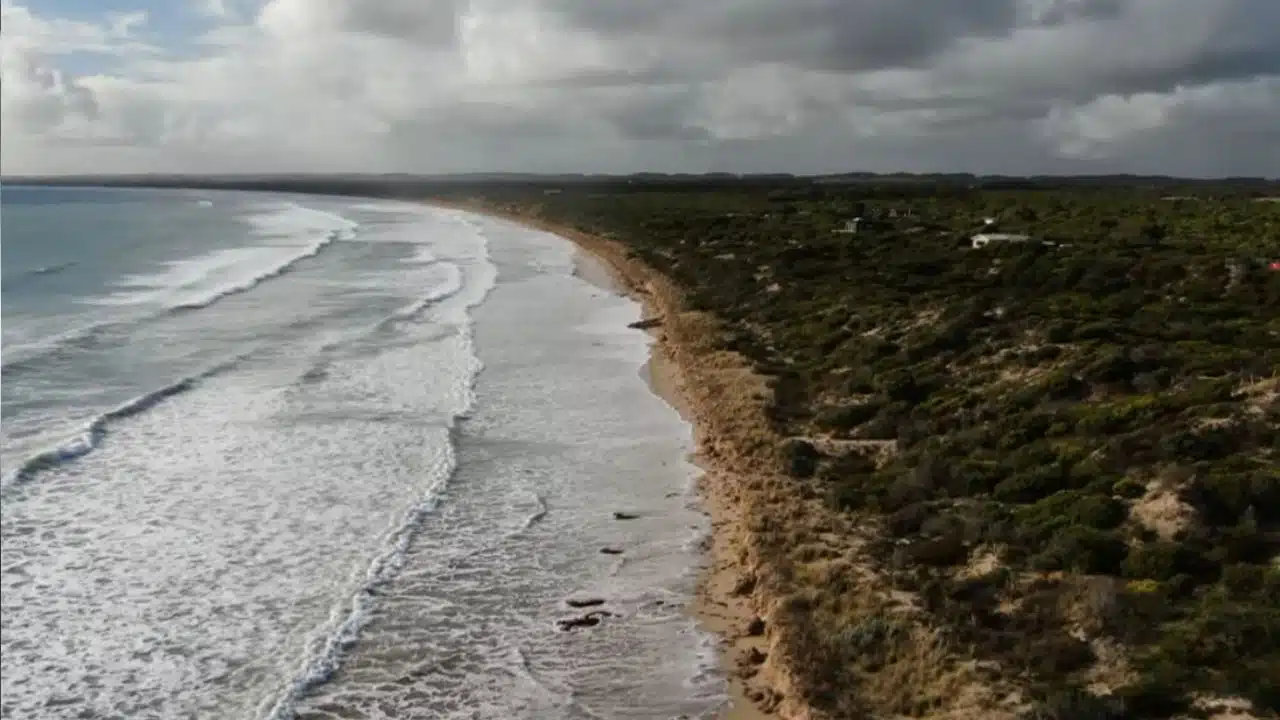
Australia has released its first National Climate Risk Assessment (NCRA), a 72-page document that paints a stark picture of the nation’s future under climate change. The findings suggest that more than 1.5 million Australians living in coastal areas could face significant risks from rising sea levels by 2050 if global warming is not slowed.
The report is part of a long-term national strategy to understand and respond to climate hazards. It comes just days before the federal government is expected to reveal new emissions reduction targets for 2035, setting the stage for one of the most consequential climate debates in years.
Multiple Hazards, Not Just Rising Seas
While the headline figure of 1.5 million at-risk coastal residents is alarming, the report underscores that the dangers extend far beyond flooding. Australians should expect:
- More frequent and intense heatwaves, with higher rates of heat-related illnesses and deaths.
- Worsening bushfire seasons, fueled by hotter, drier conditions.
- Stronger and more destructive cyclones in northern Australia.
- Greater flood damage, as extreme rainfall becomes more common.
- Droughts affecting food and water security, particularly in rural areas.
The report warns that these risks will not occur in isolation but will often be “cascading, compounding and concurrent” — meaning disasters may overlap, strain emergency services, and magnify social and economic losses.
Warming Already Beyond 1.5 °C
Australia has already surpassed 1.5 °C of warming above pre-industrial levels, according to the assessment. This places the country in a high-risk category even if further global emissions are cut.
The NCRA considered three scenarios of future warming:
- 1.5 °C (the threshold of the Paris Agreement’s most ambitious goal)
- 2 °C (a level seen as increasingly likely under current global pledges)
- 3 °C (a “high emissions” pathway if stronger action is not taken)
Under the 3 °C scenario, the report projects catastrophic outcomes. For example:
- Heat-related deaths in Sydney could rise by more than 400%.
- In Melbourne, deaths from extreme heat could nearly triple.
- Coastal infrastructure, including roads, ports, and homes, could become unusable or too costly to maintain.
Property, Economy and Livelihoods on the Line
The economic toll of unchecked climate change will be staggering. The report estimates:
- A$611 billion (US$406 billion; £300 billion) in property value losses by 2050, primarily from flooding, coastal erosion, and fire damage.
- Increased costs for healthcare, emergency response, and insurance, as disasters intensify.
- A possible A$40 billion annual bill for disaster recovery by mid-century.
Farmers, miners, and fishers — industries central to Australia’s economy — will also face mounting pressures. Water scarcity, degraded soil, biodiversity loss, and ocean acidification threaten long-term productivity.
Communities at the Frontline
The report highlights that risks are not evenly distributed. Some communities will feel the brunt of climate change far more than others:
- Northern Australia faces more severe cyclones and sea-level rise.
- Remote and Indigenous communities often lack resources for recovery, making them disproportionately vulnerable.
- Outer suburbs of major cities may struggle with heatwaves, flooding, and infrastructure failure.
- Coastal tourist hubs such as Queensland’s Great Barrier Reef region and Western Australia’s Ningaloo Reef are already experiencing coral bleaching and biodiversity loss — conditions expected to worsen as oceans warm.
National Adaptation Plan and Policy Direction
In response to the findings, the federal government has announced a National Adaptation Plan to coordinate climate responses across federal, state, and local levels.
Climate Change Minister Chris Bowen said the report proves that “every degree of warming we prevent now will help future generations avoid the worst impacts.” He added that the government will soon set an “ambitious and achievable” 2035 target, informed by independent advice from the Climate Change Authority.
Australia has pledged to cut emissions by 43% by 2030, but critics say this is insufficient given the scale of risk outlined. Environmental groups argue that stronger commitments are needed for 2035 and beyond.
Climate Council: Warning Against Timidity
The Climate Council, an independent non-profit, described the report’s findings as “terrifying.” Its chief executive, Amanda McKenzie, warned that a weak 2035 target would undermine national safety:
“The longer we delay the deep and sustained cuts to climate pollution we need, the harder it becomes to protect communities from escalating heatwaves, floods and bushfire weather.”
She and other experts emphasized that adaptation alone is not enough — without bold emissions cuts, Australia will be locked into dangerous levels of climate disruption.
What Is at Stake
The NCRA concludes that no part of Australia will escape the consequences of climate change. Key risks include:
- Human health: More heat stress, disease spread, and pressure on hospitals.
- Critical infrastructure: Transport, power grids, and water systems vulnerable to failure.
- Natural ecosystems: Coral reefs, rainforests, and species habitats pushed to breaking points.
- Primary industries: Agriculture, fisheries, and tourism hit by droughts, ocean warming, and natural disasters.
The report’s message is blunt: the cost of inaction will always outweigh the cost of action.
A Turning Point for Policy
Australia is among the world’s highest per-capita emitters and continues to rely heavily on coal and gas exports. The new climate risk assessment raises difficult questions about whether current policies are enough.
With the 2035 target announcement pending, the government now faces a choice:
- Double down on fossil fuel reliance and risk mounting losses, or
- Commit to deeper emissions cuts and accelerate investment in renewable energy and adaptation strategies.
The Bottom Line
Australia’s first National Climate Risk Assessment makes clear that climate change is not a distant problem. Its effects are already visible — from bushfire smoke choking cities to coral reefs bleaching under record heat.
By 2050, millions of Australians could find their homes, livelihoods, and health at risk. The report insists that the time for action is now, and every fraction of warming avoided can help safeguard future generations.
The Information is Collected from BBC and India Today.