

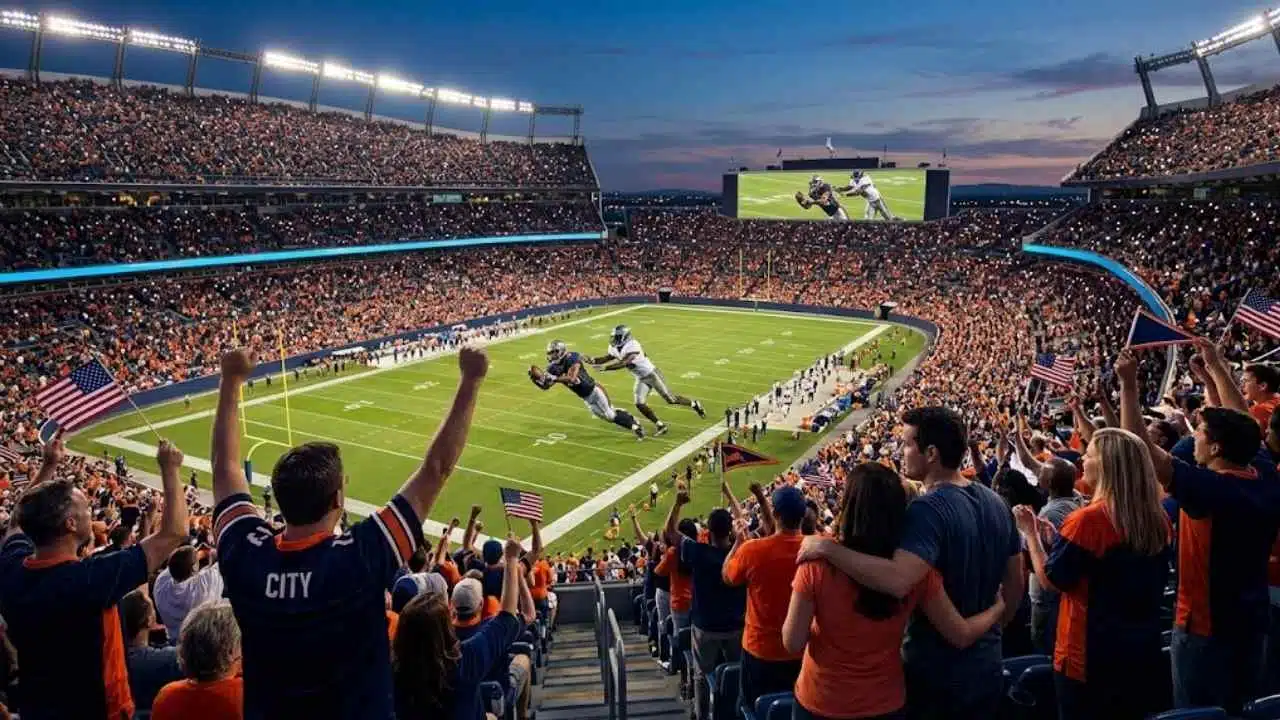
American football has a grip on the American psyche that goes well beyond the field. It is not just about touchdowns or rivalries, it is about ritual. Friday night lights in small towns, packed college stadiums on Saturdays, and the steady drumbeat of Sunday games create a rhythm that people build their weeks around. Even those who do not follow every stat tend to know the big names, the playoff stakes, and the emotional swings that come with a close game. The sport has managed to hold attention across generations, adapting without losing its core identity.
Built On Impact
At its core, football is about controlled collisions. Every play carries a level of physical intensity that sets it apart from most other sports. That physicality has shaped how the game is played, coached, and even watched. Equipment evolved alongside that intensity, especially football pads, which became more advanced as the speed and strength of players increased. Early versions were basic and offered minimal protection, but modern designs focus on both safety and mobility. Players rely on them not just to absorb hits, but to move freely enough to execute complex plays at high speed.
That balance between protection and performance mirrors the sport itself. Coaches design plays that demand precision, but they also prepare players for the reality that contact is inevitable. Fans understand this, even if they are not thinking about equipment during a game. There is an unspoken appreciation for what it takes to step onto that field, knowing what is coming.
Strategy And Structure
Football rewards patience and planning in a way that few sports do. A single drive can feel like a slow burn, with each play building toward something larger. Coaches spend hours dissecting film, looking for small tendencies that can be exploited. Quarterbacks act as extensions of that planning, reading defenses in real time and adjusting on the fly.
What makes the game compelling is how quickly plans can fall apart. A missed assignment or a moment of hesitation can shift momentum in an instant. That unpredictability keeps viewers engaged, even during games that seem lopsided on paper. There is always the sense that something could change, that one play could flip the outcome.
At the same time, the structure of the game provides a clear framework. Downs, yardage, and time create boundaries that everyone understands. Even casual viewers can follow the stakes of a third down conversion or a two minute drill. That clarity makes the game accessible without stripping away its depth.
Global Pressure Rising
For decades, American football existed largely within the United States, with only modest international reach. That has started to shift, driven in part by broader changes in how sports are consumed. Streaming platforms, international games, and cross promotion with other major events have expanded its visibility.
The timing is notable, especially with events like the World Cup 2026 bringing global attention to North America. While soccer will dominate that stage, the presence of millions of international visitors and viewers creates an opportunity for football to showcase itself to a wider audience. The league has already experimented with games in London and Germany, testing how the sport translates in different cultural contexts.
There is no guarantee that football will ever match the global footprint of soccer, but it does not need to. Even incremental growth abroad adds another layer to its already strong domestic base. For a sport rooted so deeply in American culture, even a modest international foothold represents a meaningful shift.
Money And Media
The financial side of football is impossible to ignore. Broadcasting rights, sponsorship deals, and merchandising have turned the sport into a massive industry. Television networks build entire schedules around games, and advertisers pay a premium to reach those audiences. The Super Bowl stands as the most visible example, but the economic engine runs throughout the season.
That level of investment influences how the game is presented. Camera angles, commentary, and in game graphics are all designed to keep viewers engaged. The experience at home has become as polished as the one in the stadium, if not more so. High definition replays and real time analysis give fans a level of insight that was not possible a generation ago.
At the same time, the business side can create tension. Decisions about scheduling, rule changes, and player safety often intersect with financial considerations. Fans may not always agree with those decisions, but they remain invested because the product on the field continues to deliver.
Culture And Identity
Football has a way of reflecting the communities that support it. High school teams often serve as focal points in smaller towns, bringing people together in a shared experience. College programs build traditions that stretch back decades, with alumni returning year after year to relive familiar moments. Professional teams carry the weight of entire cities, shaping how those places see themselves.
That connection can be intense. Wins and losses are not just numbers, they carry emotional weight. People celebrate together, argue about decisions, and build routines around game days. It becomes part of how they mark time and connect with others.
The sport also sparks ongoing conversations about its future. Questions about player health, rule changes, and the balance between tradition and innovation continue to surface. Those discussions do not weaken the game, they show how deeply people care about it.
Why It Endures
American football persists because it offers a combination that is hard to replicate. It delivers physical drama, strategic depth, and a sense of shared experience that extends beyond the field. The sport has adapted where it needed to, whether through changes in equipment, rules, or presentation, but it has not lost the elements that made it compelling in the first place.
It remains a fixture not because it stands still, but because it evolves without losing its edge. That tension between tradition and change keeps it relevant, even as the broader sports landscape continues to shift.
Football holds its ground by giving people something to invest in, emotionally and culturally, and it shows no real signs of letting go.





















