
Ever wondered why some mobile games are so hard to put down, even when it’s time to eat or sleep? Many players stay hooked, pushing through levels late into the night in pursuit of the next win.
This pull isn’t accidental. Mobile game developers rely on Mobile Game Psychology to keep players engaged, turning simple actions into long, repeat sessions. Carefully designed mechanics act like subtle triggers, encouraging “just one more try.”
Techniques such as variable rewards create unpredictable outcomes that stimulate dopamine and reinforce habit formation. Games like Candy Crush Saga use this approach effectively, delivering surprise wins that keep players returning.
Explores key concepts behind Mobile Game Psychology, including reward systems and self-determination theory. It also highlights how autonomy, competence, and relatedness—along with progression systems and social features in games like Fortnite—drive motivation and long-term retention.
The Role of Psychology in Mobile Game Design
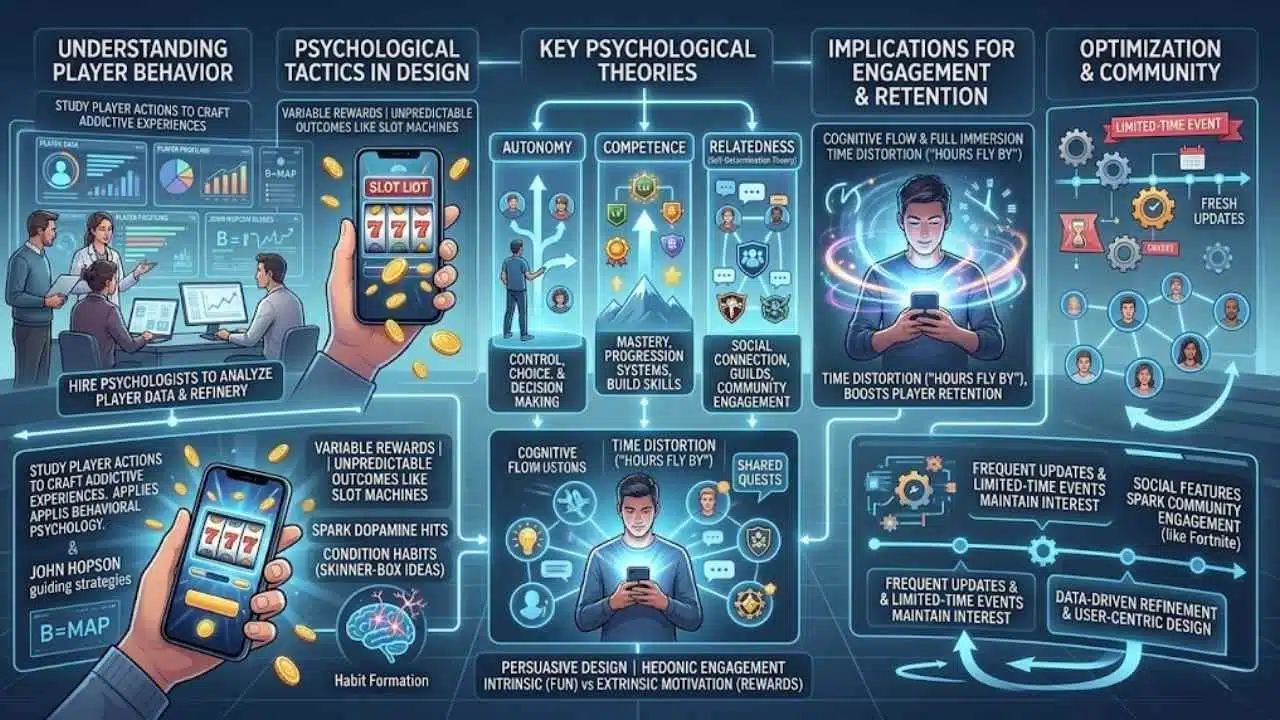
Game makers tap into player psychology to grasp what keeps folks coming back, like spotting patterns in how people chase wins or dodge losses. This grasp boosts player retention and sparks real engagement, turning casual taps into daily habits that feel rewarding.
Understanding Player Behavior
Mobile game developers study player actions to craft addictive experiences. They apply basic human psychology principles, like those from behavioral psychology, to boost immersion and revenue.
Video game companies hire psychologists to dig into player data and refine products. These experts spot patterns in what drives people, such as the thrill of unpredictable rewards that mimic slot machines.
Take variable rewards; they keep you guessing and hooked, much like a gambler’s rush. Skinner-box ideas condition habits through positive reinforcement, turning casual play into daily routines.
Developers focus on player motivation, figuring out why enthusiasts return again and again. This knowledge shapes game mechanics that trigger dopamine hits and foster habit formation.
Players crave challenge and reward, so designers use tricks to create that sense of accomplishment. They draw from self-determination theory, emphasizing autonomy, competence, and relatedness in gameplay.
For instance, progression systems build competence, while social features spark community engagement. Data analytics help profile players, revealing what boosts retention and engagement.
Unpredictable systems work like other dependency creators, pulling you back for more. Gaming psychology blends motivation insights with tech to maximize time spent in apps. Experts like B.J.
Fogg and John Hopson guide these strategies, ensuring games tap into fundamental behaviors.
The Importance of Engagement and Retention
Game designers know engagement keeps players hooked. They apply simple human psychology principles to boost immersion and revenue. Think about it, you pick up your phone for a quick game session, and suddenly hours fly by.
Video game companies hire psychologists to study player data. These experts optimize what makes games addictive. Skinner-box principles condition behavior through rewards. That keeps usage high.
Player motivation sits at the heart of game design psychology. Developers focus on what draws enthusiasts back. They create challenging tasks that feel rewarding. You get that rush of accomplishment, right? Intrinsic motivation drives you to play for fun.
Extrinsic motivation comes from in-app purchases or microtransactions. Both trigger hedonic engagement. Persuasive design pulls you in deeper. Immersive experiences build habits.
Retention means players stick around long-term. Fundamental human patterns spark this. Game developers use behavioral design to form habits. Variable rewards keep you guessing, like a slot machine.
Positive reinforcement strengthens those loops. Cognitive flow happens when you’re fully immersed. Self-determination theory explains it: autonomy, competence, and relatedness matter.
You feel in control, skilled, and connected. Social features enhance that. Frequent updates and limited-time events maintain interest. The gaming industry thrives on this. Entities like Epic Games nail it with Fortnite’s social connections.
Stanford University Behavioral Design Lab studies these tactics. World Health Organization notes games’ impact on well-being. Still, player feedback guides improvements. User-centric design ensures games evolve.
Psychological Tactics Used by Developers
Game makers tap into your brain’s wiring, like how slot machines pull you in with quick wins and that rush of dopamine. Dropping into a session of Clash Royale, where every battle feels like a clever trap to keep you swiping, and suddenly hours fly by without you noticing.
Reward Systems and the Dopamine Effect
Mobile game developers apply simple human psychology principles to drive immersion, engagement, and revenue, as seen in titles like Candy Crush Saga and Clash Royale. They draw on Skinner-box principles to boost game usage through behavioral conditioning techniques.
Variable rewards create unpredictable outcomes that keep players guessing, much like a thrilling gamble. This tactic triggers the dopamine effect, flooding your brain with feel-good chemicals that crave more.
Developers make games challenging and rewarding, sparking a sense of accomplishment that motivates continued play. Player motivation stays at the core of this design, with experts studying what keeps enthusiasts hooked.
These principles stem from fundamental human psychology and behavioral patterns that spark engagement. Unpredictable reward systems mirror mechanisms that build habitual behavior and dependency.
Game design psychology blends player motivation with technical development to maximize retention. Video game companies hire psychologists to analyze player data and optimize product effectiveness, according to sources like the American Psychological Association and Psychology Today.
Games have a powerful effect on how people think and can influence both positive and negative development, especially in children, notes Jean Twenge from Pew Research Center studies.
Developers use these tactics in mobile games on the App Store, from Summoners War to Marvel Contest of Champions. Think about how Fortnite or Overwatch pulls you in with rewards. Social features mix with progression systems, tying into self-determination theory for autonomy, competence, and relatedness.
Tristan Harris and Ramsay Brown from Center for Humane Technology warn about these hooks, comparing them to social media tricks on Facebook or Google. UX researchers apply simplicity theory and player profiling, even drawing from Bartle test by Richard Bartle.
Tools like in-game economy and microtransactions leverage this, as Braavo Capital, Inc. notes in economic research from National Bureau of Economic Research. Nintendo and other giants use frequent updates to keep the dopamine flowing, avoiding high cortisol from frustration.
Progression Systems and Goal Setting
Game developers craft progression systems to tap into basic human drives. They set clear goals that push players forward, step by step. Think of it like climbing a ladder, where each rung feels like a win.
Developers apply psychology principles to build these systems. They create a sense of accomplishment that keeps you hooked. In mobile game development, this boosts player engagement big time.
Video games like Angry Birds use simple levels to make progress addictive. Goal setting triggers serotonin releases, rewarding your brain for each milestone. Game makers study player motivation to refine these tactics.
They draw from behavioral patterns that spark habit formation. Travis Tae Oh notes how such systems mimic real-life achievements, pulling players back for more.
Developers mix challenges with rewards to fuel ongoing play. They design systems that grow tougher, yet achievable, fostering competence. This mirrors self-determination theory, feeding your need for mastery.
In games like Slotomania, progression ties into variable rewards, keeping things unpredictable. Psychologists help analyze data for better retention. They spot what drives enthusiasts to return.
Game design psychology blends motivation insights with tech. It maximizes immersion and revenue. Entities like Boundless Mind consult on these strategies. Pac-Man shows early examples, with levels building endless pursuit.
Developers avoid flat designs; instead, they layer goals to create flow. This keeps you engaged, chasing that next level up.
Social Features and Community Building
Mobile game developers tap into human psychology to build strong communities, much like a neighborhood barbecue that draws folks back week after week. They use social features, such as chat rooms and team battles in games like World of Warcraft or Fortnite, to foster relatedness from self-determination theory.
This theory highlights autonomy, competence, and relatedness as key drivers. Players feel connected, you know, like part of a big family on quests in The Elder Scrolls V: Skyrim or raids in Call of Duty.
Developers hire psychologists to study player data, optimizing these bonds for retention. Think about it, variable rewards pop up in group events, keeping you hooked through unpredictable fun with friends.
Skinner-box principles condition behaviors here too, with social hooks that mirror real-life habits. Games influence positive development by encouraging teamwork, yet they risk negative effects, especially on kids, if overdone.
Developers create immersion through shared stories, like epic tales in The Legend of Zelda: Breath of the Wild or chaotic fun in Grand Theft Auto. They focus on motivation, using community events to drive engagement and revenue.
Centers like the Center for Humane Technology warn about exploitive sides, but smart designs build healthy habits. You join guilds in Dynasty Warriors or chat on Meegle-inspired forums, feeling that dopamine rush from group wins.
Genieee-like magic happens when players bond over challenges, turning solo play into a social feast.
Escape and Immersion Through Storytelling
Game developers craft stories that pull players into another world, offering a quick escape from daily stress. They build tales with heroes and quests, much like in Donkey Kong, where you jump barrels to save the day.
This immersion taps fundamental human psychology, triggering deep engagement and a sense of accomplishment that keeps you playing. Psychologists note how these narratives influence thoughts, sparking positive growth or sometimes negative habits, especially in kids.
Video game companies hire experts to study player data, optimizing stories for better retention.
Think of it as stepping into a cozy book that comes alive on your screen. Developers use behavioral patterns to make challenges rewarding, fostering habits through clever plots. Groups like the Center for Humane Technology highlight how such immersion can build community, yet warn against overdoing it.
These tricks drive motivation, blending player needs with tech to hook you in fun ways. Stories create that “just one more level” pull, turning playtime into a habit-forming adventure.
Key Psychological Theories in Game Design
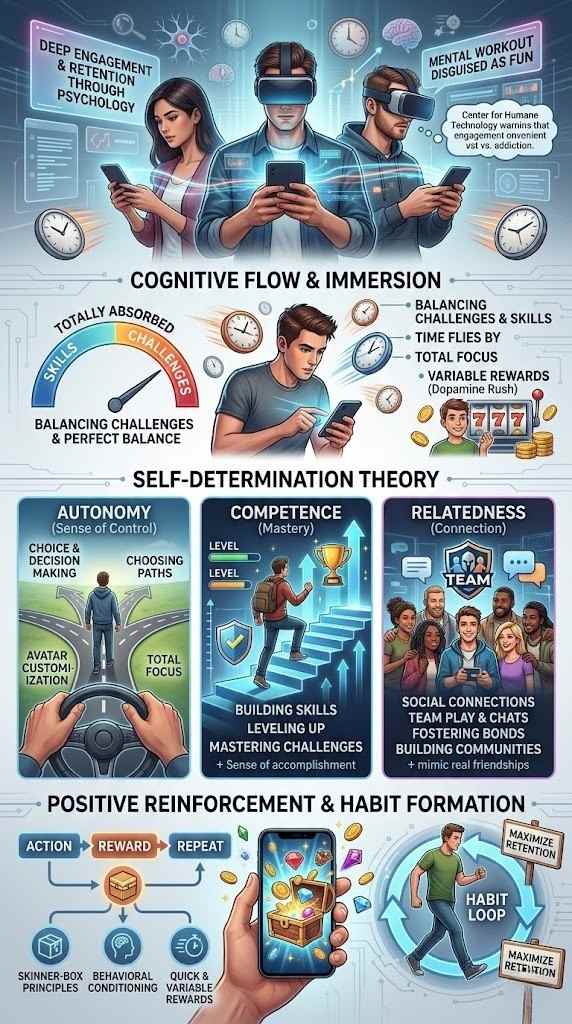
Ever wonder why you can’t put down that mobile game, like it’s glued to your fingers? Developers tap into ideas like cognitive flow, where you lose track of time in total immersion, or self-determination theory, boosting your sense of control, skill, and connection with others, plus positive reinforcement that keeps habits strong through quick rewards.
It’s like a mental workout disguised as fun, and groups like the Center for Humane Technology warn about the fine line between engagement and addiction. Stick around to see how these theories power your favorite apps!
Cognitive Flow and Player Immersion
Mobile game designers tap into cognitive flow to pull players deep into the action. This state happens when a game’s challenges match your skills just right, making time fly by. Developers study player behavior, as the Center for Humane Technology points out, to craft these perfect moments.
They apply simple psychology principles, like variable rewards, to spark that dopamine rush and keep you hooked. Think of it as a mental sweet spot, where you lose yourself in the fun.
Game companies hire psychologists to analyze data and boost this immersion. These experts use behavioral conditioning techniques, similar to Skinner-box principles, to drive engagement.
Unpredictable outcomes create habitual play, much like other addictive patterns in life. Players feel a sense of accomplishment that motivates them to return.
Such flow builds on self-determination theory too, fueling autonomy and competence in games. Developers focus on what keeps enthusiasts coming back, blending motivation with technical design.
They create challenging yet rewarding experiences that influence how people think, especially in kids. Positive reinforcement forms habits, turning casual play into daily routines.
Game design psychology, as a growing field, maximizes retention through these tactics. Immersion offers escape, like entering a story that feels real. Yet, this power can shape development in good or bad ways.
Developers use gamification elements to heighten the pull, making every session feel vital.
Self-Determination Theory: Autonomy, Competence, and Relatedness
Game developers tap into Self-Determination Theory to boost player motivation. This idea focuses on three core needs that drive people. Autonomy gives players a sense of control, like choosing their own paths in a game.
Competence builds skills and mastery, making folks feel capable as they level up. Relatedness connects players with others, fostering bonds through team play or chats. Developers study these elements to keep enthusiasts coming back for more.
They hire psychologists to analyze data and refine games. Think of it as planting seeds in a garden; each need nurtures engagement, much like how basic human patterns trigger habitual play.
Groups like the Center for Humane Technology highlight how these tactics can shape thoughts, for good or bad, especially in kids.
Players crave that sense of accomplishment from challenging yet rewarding tasks. Games apply these principles to create immersion and retention. Autonomy shines when you pick your avatar or strategy, sparking inner drive.
Competence grows as you conquer levels, releasing dopamine hits similar to variable rewards in slots. Relatedness thrives in social features, building communities that mimic real friendships.
Developers use behavioral patterns to form habits, blending psychology with tech for maximum stickiness. They craft economies and updates that feed these needs, turning casual play into daily routines.
One developer quipped, “It’s like training a puppy with treats, but way more fun.” This approach maximizes revenue while influencing positive development, if done right.
Positive Reinforcement and Habit Formation
Developers tap into positive reinforcement to build habits in mobile games. They use Skinner-box principles, like those in behavioral conditioning, to boost game usage. Variable rewards keep you guessing with unpredictable outcomes, hooking you just like a slot machine.
This creates habitual behavior and dependency, much as other psychological mechanisms do. Game companies hire psychologists to study player data and tweak games for better results.
These experts focus on what drives motivation, making sure you feel a sense of accomplishment that pulls you back.
Player motivation sits at the heart of game design psychology. Developers study enthusiasts to learn what keeps them returning. They apply fundamental human psychology and behavioral patterns that spark engagement.
Tricks make games challenging yet rewarding, fueling continued play. Groups like the Center for Humane Technology highlight how these methods blend motivation with tech to max out retention.
Think of it as planting seeds of habit; one win leads to another, and soon you’re hooked without realizing.
Tools and Strategies Leveraging Psychology
Game makers craft virtual economies that tempt players to buy extras, sparking that thrill of quick wins like finding treasure in a chest. They mix in badges and levels to fire up drive, while flash sales and events create a buzz that pulls folks back, day after day.
In-Game Economy and Microtransactions
Mobile game developers craft in-game economies that mimic real money systems, pulling players deeper into the fun. They apply simple human psychology principles to boost immersion, engagement, and revenue, just like fact one points out.
Think of it as a clever trap, where you chase virtual coins or gems, feeling that rush of progress. Variable rewards play a big role here; those unpredictable outcomes keep you guessing and hooked, as fact three explains.
Developers use Skinner-box principles to condition your behavior, increasing game usage through smart techniques, per fact two. Companies even hire psychologists to study player data and tweak these systems for max effect, according to fact five.
This setup creates a sense of accomplishment that motivates you to keep playing, much like fact six describes. Player motivation sits at the heart of it all, with experts figuring out what brings enthusiasts back time and again, as fact seven notes.
Unpredictable reward systems work like other habits that build dependency, fact nine adds. The Center for Humane Technology warns about these tactics, highlighting how they can push too far.
Microtransactions fit right into this economy, tempting you with quick buys for faster wins. Developers leverage psychological tricks to make games challenging yet rewarding, driving that urge to spend, fact six confirms.
These principles stem from basic human behavior patterns that spark engagement, as fact eight states. Game design psychology blends player motivation insights with tech skills to lock in retention, fact ten reveals.
You might buy a power-up during a limited-time event, chasing that dopamine hit from variable rewards. Social features amplify this, making you feel part of a community while eyeing those in-app purchases.
Habit formation kicks in through positive reinforcement, turning casual play into daily routines. Critics point out the risks, especially for kids, since games influence thinking and development in powerful ways, both good and bad, like fact four says.
Gamification Elements to Drive Motivation
Game developers tap into basic human psychology to make mobile games addictive and fun. They use tricks like variable rewards to keep you coming back, much like a slot machine that surprises you every time.
- Developers apply Skinner-box principles in games to boost usage through behavioral conditioning, creating loops where you chase rewards and feel that rush of accomplishment. Think of it as training a pet with treats, but here it’s you getting hooked on unpredictable outcomes that mirror real-life habits. Groups like the Center for Humane Technology warn about how this can lead to dependency, yet it drives motivation by making every play session feel fresh and exciting.
- Variable rewards stand out as a top tactic, with unpredictable results that keep players guessing and engaged, similar to checking social media for likes. This hooks you because your brain craves the dopamine hit from surprises, turning casual play into a daily ritual. Facts show video game companies hire psychologists to study player data and refine these elements for better retention.
- Progression systems build on self-determination theory, giving you autonomy, competence, and relatedness to fuel motivation. You set goals, level up, and connect with others, which creates a sense of achievement that motivates more play. It’s like climbing a ladder where each rung feels rewarding, and developers optimize this to influence positive development, though it can swing negative for kids if overdone.
- Social features leverage community building to drive motivation, pulling from how humans seek connection. Games like these foster habits through positive reinforcement, where sharing wins with friends keeps you in the loop. Telling your buddy about a big score; that shared joy, backed by psychological studies, makes you return for more, as companies analyze data to enhance these bonds.
- In-game economies and microtransactions use gamification to spark motivation, tying into fundamental behavioral patterns that trigger engagement. You spend a little to progress faster, feeling that sense of control and reward, which psychologists say mimics habit formation in other areas. The Center for Humane Technology highlights ethical concerns here, but developers craft these to make challenges rewarding and keep enthusiasts motivated.
- Frequent updates and limited-time events employ psychological tricks to maintain motivation, studying what keeps players coming back. These create urgency, like a flash sale that gets your heart racing, and combine with storytelling for immersion. Data shows this boosts revenue, as it taps into human patterns for habitual play, though it raises questions about well-being.
- Reward systems harness the dopamine effect and positive reinforcement to form habits, making games a powerful tool for influencing thought and behavior. Developers design these based on key theories, hiring experts to maximize retention through motivation. It’s akin to a carrot on a stick, where each win pushes you forward, and facts reveal how this discipline blends psychology with tech for standout results.
Frequent Updates and Limited-Time Events
Mobile game developers use frequent updates to keep you coming back, freshening the experience with new content. Limited-time events add urgency, making you feel like you can’t miss out, and they tap into basic human psychology to boost engagement.
- Developers roll out frequent updates to apply Skinner-box principles, conditioning your behavior through variable rewards that keep you guessing and hooked, much like a slot machine that pays off unpredictably.
- These updates often include new challenges and rewards, drawing on positive reinforcement to form habits, so you feel that rush of accomplishment and keep playing to chase more wins.
- Limited-time events create a sense of scarcity, triggering your motivation to act fast, as game companies hire psychologists to study player data and optimize these tactics for maximum retention.
- By introducing exclusive items or levels only available for a short period, developers leverage self-determination theory, giving you autonomy in choosing to participate while building competence through quick goals.
- Frequent updates incorporate gamification elements, like daily quests, that drive your motivation and make the game feel alive, encouraging you to log in regularly for that dopamine hit.
- Events often tie into social features, fostering relatedness as you team up with friends during a limited window, which strengthens community bonds and keeps enthusiasts returning for more.
- Developers use these strategies to influence positive development in players, but groups like the Center for Humane Technology warn about potential dependency, urging a balance to avoid negative effects, especially in kids.
- Unpredictable outcomes in limited-time events mirror other psychological mechanisms that build habitual behavior, similar to how variable rewards in games create that addictive pull.
- Game design psychology combines player motivation insights with technical updates, ensuring games stay challenging and rewarding, so you experience immersion and a constant sense of progression.
- Through these tools, developers focus on fundamental human patterns that trigger engagement, turning simple updates into powerful hooks that blend storytelling with real-time excitement.
Challenges and Ethical Considerations
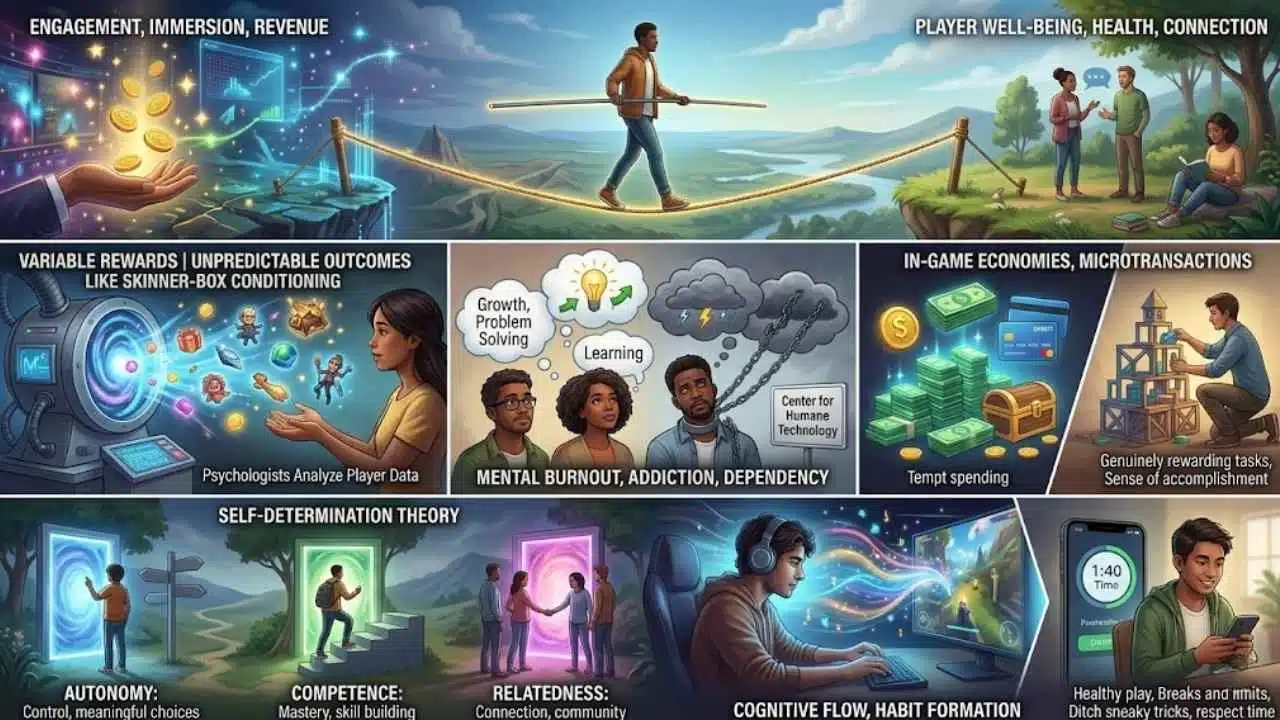
Game developers walk a tightrope, keeping players glued to screens while guarding against burnout and addiction. Think about it, outfits like the Center for Humane Technology urge creators to ditch sneaky tricks, like endless loot boxes, and focus on fair play that respects everyone’s time and mind.
Balancing Engagement With Player Well-being
Mobile game developers apply human psychology principles to boost immersion, engagement, and revenue, yet they must watch out for player health. Think of it like a tightrope walk, fun on one side, burnout on the other.
Variable rewards hook players with unpredictable outcomes, much like Skinner-box principles that condition behavior and build habits. Companies hire psychologists to study player data and refine games, aiming for that sense of accomplishment that keeps folks playing.
Still, games pack a punch on thinking patterns, sparking positive growth or negative issues, especially for kids. The Center for Humane Technology pushes for designs that prioritize well-being over endless play.
Developers use progression systems and goal setting to motivate, but they need to dial back exploitive tricks that create dependency.
Players crave autonomy, competence, and relatedness from self-determination theory, which fuels motivation and retention in mobile games. A friend who can’t put down their phone, chasing that next level.
Positive reinforcement shapes habits, drawing on fundamental behavioral patterns to trigger engagement. Frequent updates and limited-time events drive excitement, while in-game economies with microtransactions tempt spending.
Ethical devs balance this with breaks and limits to avoid harm. Cognitive flow pulls players into immersion, blending challenge and reward for habit formation. Game design psychology merges player motivation insights with tech to maximize retention, yet it calls for care to foster healthy play.
Final Thoughts
Mobile Game Psychology sits at the core of modern game design, shaping how players engage, return, and stay invested over time. From variable rewards and progression systems to social features and immersive storytelling, every element is carefully crafted to tap into fundamental human behavior. These psychological strategies are powerful. They can create enjoyable, motivating experiences that foster skill-building, connection, and entertainment. At the same time, they can blur the line between healthy engagement and overuse if not designed responsibly.
Understanding these tactics gives players more awareness and control over their habits. For developers, it highlights the importance of balancing engagement with ethical design. When used thoughtfully, Mobile Game Psychology can create experiences that are both engaging and respectful of player well-being.
Frequently Asked Questions (FAQs) About Mobile Game Psychology
1. What is mobile game psychology?
Mobile game psychology refers to the use of behavioral science and cognitive principles to influence how players interact with games, boosting engagement, retention, and motivation.
2. Why are mobile games so addictive?
Mobile games use techniques like variable rewards, dopamine triggers, and habit loops to keep players engaged. These systems create excitement and anticipation, encouraging repeated play.
3. What are variable rewards in mobile games?
Variable rewards are unpredictable outcomes—such as random prizes or bonuses—that keep players guessing. This uncertainty increases excitement and strengthens habit formation.
4. How does self-determination theory apply to mobile games?
Self-determination theory focuses on autonomy, competence, and relatedness. Games support these by offering player choices, skill progression, and social interactions, which boost motivation.
5. Do mobile games affect mental health?
Mobile games can have both positive and negative effects. They can improve problem-solving and relaxation, but excessive play may lead to addiction, stress, or reduced productivity.
Features like multiplayer modes, leaderboards, and communities create a sense of connection. This social engagement encourages players to return and stay active longer.
7. Are microtransactions part of mobile game psychology?
Yes, microtransactions use psychological triggers like urgency, rewards, and convenience to encourage spending within the game.
8. How can players avoid overplaying mobile games?
Players can set time limits, disable notifications, and stay mindful of in-game triggers. Awareness of mobile game psychology helps maintain healthy gaming habits.