


In these ever-changing times, every smart homeowner is consistently on the lookout for ways to increase the overall serviceability and longevity of critical household systems. A hot water system is one of these vital systems that form the backbone of a home’s functionality. However, the obligation to upgrade these systems goes beyond simply enhancing the level of comfort and convenience within the home.
It is a strategic move towards optimal energy efficiency and cost-effectiveness and playing a part towards environmental responsibility. As we continue to witness increasing energy prices and the global focus leans considerably towards reducing our carbon footprint, ensuring the efficiency of our domestic utilities, including hot water systems, has become a paramount concern.
This comprehensive guide presents an in-depth exploration of the subject, delving into the dynamics involved in the smart timing of the upgrade of hot water systems to ensure maximum savings and minimal inconvenience. Going beyond just reducing the running costs of the home, these upgrades also have a role to play in cutting down excessive energy consumption and the subsequent impact on the environment.
Understanding Your Current Hot Water System
The first and foremost step towards upgrading your hot water system is to thoroughly understand your existing system’s performance parameters. Depending on the quality of the system and the level of regular maintenance, the average lifespan of a typical hot water system may range between 10 to 15 years.
However, as this lifecycle progresses and the system ages, its operating efficiency naturally tends to decline. Consequently, it becomes imperative to monitor the warning signs and determine when to consider an upgrade of the system.
Telltale signals that possibly indicate an aging hot water system on the brink of failure include escalating energy bills, an inconsistent and unpredictable hot water supply, the requirement of repetitive repairs and increased inefficiency. By properly assessing these signs, homeowners can proactively prevent a potential system breakdown, thus allowing for a well-timed upgrade.
In addition to this, a close and analytical evaluation of your home’s energy consumption patterns can also aid in determining whether an upgrade is due. Recognising the peak demand periods for hot water usage in your household, gauging the volume of hot water utilised on average – understanding these consumption rhythms can provide significant insights into whether the current system is catering to your needs efficiently.
A well-rounded knowledge about the limitations of your existing hot water system can help you make well-informed decisions before investing in a new system and identify the improvements available with newer models.
Benefits of Upgrading to Modern Hot Water Systems
The shift to contemporary hot water systems comes laden with numerous benefits, particularly in the sphere of energy efficiency. The primary focus of modern designs rests on minimising energy consumption levels while not compromising comfort derived from efficient hot water systems. Consequently, transitioning to a modernised system can pave the way for long-term savings on utility bills through a considerable decrease in energy use.
The blossoming influence of smart technology is evident in modern hot water systems with features such as energy usage monitoring and optimised heating schedules becoming the norm. This gives homeowners flexibility to customise their usage patterns further leading to decreased utility costs.
Additionally, an upgraded and efficient hot water system can significantly contribute to enhancing the overall market value of a home. Potential home buyers often prefer residences equipped with modern, efficient home utilities, meaning an upgraded hot water system can act as an attractive selling point for your property.
Identifying the Best Time to Upgrade
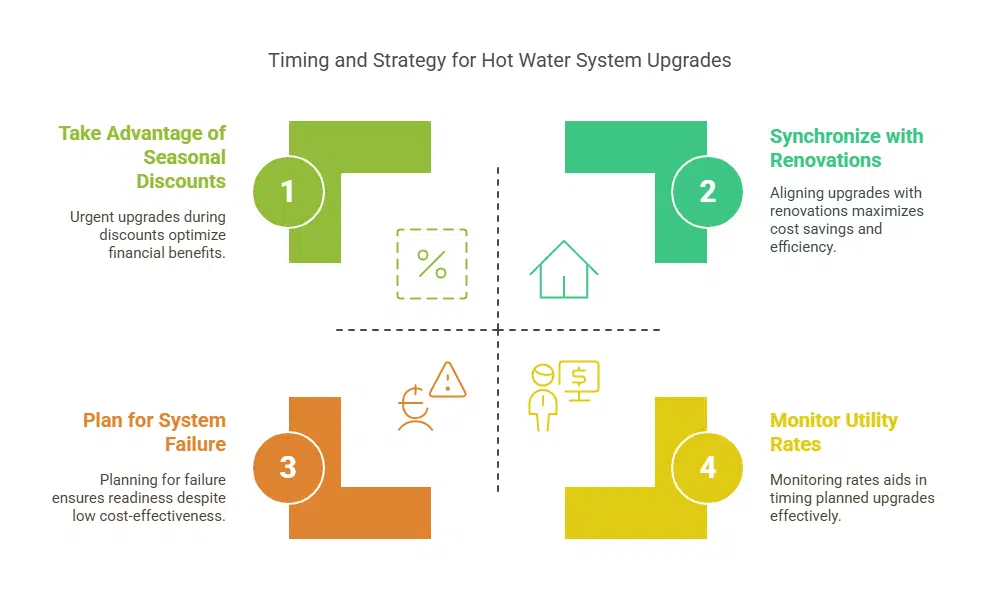
The timing of upgrading your hot water system can have a notable impact on the overall process. There are several seasonal factors that can influence the availability of services and can add up to the total cost involved. As a consequence, a sound understanding of the market trends can play a massive role in deciding when to undertake an upgrade.
Furthermore, being vigilant of the trends in utility rates and potential incentives such as rebates or discounts for energy-efficient models can significantly influence the financial feasibility of the timing of your upgrade. Additionally, synchronising the upgrade with other home renovation projects can help ensure that your daily lifestyle is least disrupted while also possibly leading to greater cost-effectiveness, as such projects often attract discounts from contractors.
While some homeowners may be faced with system failures requiring an urgent upgrade, others might plan an upgrade as part of their long-term home improvement strategies. Both scenarios need careful consideration of timing for optimal results.
Exploring Financing Options and Incentives
It is undeniable that the financial aspect is one of the fundamental determining factors when deciding to upgrade a hot water system. However, many financial solutions like personal loans or specific manufacturer payment plans are available to homeowners undertaking an upgrade.
Different governments, including Australia, offer incentives, rebates and tax credits for homeowners choosing energy-efficient installation. Such initiatives can significantly reduce the financial burden of initial upgrade costs, making the projects more affordable.
Moreover, comparing the pricing structures and various incentives offered by different brands can be immensely helpful in making an affordable yet high-quality choice. A significant step towards scaling down costs lies in negotiation and open communication with suppliers about installation expenses. With many of them open to negotiation on terms and conditions, discussing openly and assertively can lead to competitive pricing and an array of value-added services.
Choosing the Right Hot Water System for Your Needs
Choosing the right replacement for your hot water system depends on various factors specific to your usage needs. Factors such as the size of your household, your preferred energy sources and usage patterns are primary considerations. With available systems ranging from traditional tank models, tankless options, solar-powered systems, heat pump models, understanding their functionalities can guide you to the system that best accommodates your needs.
Professional consultation proves vital in this decision-making process. Experts with knowledge and experience offer sound advice regarding a suitable and efficient system choice. Such consultations also make sure your choice aligns with continuous technological advancements and changes in energy policies.
Conclusion
To conclude, careful planning and intelligent timing are key when upgrading a hot water system. A well-timed and carefully-planned upgrade can open doors to a myriad of financial and environmental benefits, minimising the financial strain while improving overall house energy efficiency.
Therefore, homeowners should make a practice map their hot water consumption, understand their current hot water systems, explore upgrade options and understand how such improvements can revolutionise their household’s energy consumption. These sustainable choices provide homes with effective and efficient heating and reduce global carbon emissions, hence benefiting both individual households and the entire planet.
When homeowners seriously consider investing in an upgraded hot water system, they serve their homes and contribute significantly to environmental preservation. The hot water system upgrade costs, though a significant initial investment, lead to long-term efficiencies and savings.





















