Have you ever dreaded conducting a performance review? You sit across from an employee, shuffle through papers, and watch their shoulders tense up. The conversation feels stiff and awkward. You want to help them grow. Sadly, the meeting leaves them feeling deflated and you feeling completely exhausted.
Here is the good news. Research shows that employees who receive regular, meaningful feedback perform better and stay with their companies longer. That means your effort to improve how you conduct performance reviews pays off in real ways. I am going to walk you through the exact steps I use.
You will learn how to prepare, how to ask the right questions, and how to turn feedback into action. Grab a cup of coffee, and let’s go through it together.
Why Performance Reviews Matter
Performance reviews build real connections between managers and employees. They spark growth, boost morale, and keep teams moving in the same direction.
Building trust and engagement
Trust forms the foundation of any strong workplace relationship. A 2026 Gallup report found that only 31% of employees in the United States feel truly engaged at work. That is a massive missed opportunity for connection. Gallup also noted that low engagement costs the global economy an astonishing $10 trillion a year. Managers who conduct thoughtful performance reviews show employees they care about their success. Employees feel valued when leaders listen to their concerns and treat them as partners.
Here are a few ways trust naturally builds during a great review:
- Active listening: You hear their actual concerns without interrupting.
- Shared problem-solving: You tackle roadblocks as a united front.
- Follow-through: You actually provide the resources you promised them.
This collaborative approach transforms the review from a one-way judgment into a genuine dialogue. Workers who experience this kind of respect become more engaged and loyal. Strong motivation follows naturally when people trust that their manager invests in helping them reach their potential.
Driving employee growth and development
Once you build trust with your team, growth naturally follows. Employees who feel valued want to improve themselves and take on new challenges. Performance reviews become the perfect moment to fuel this growth. We have to talk about the financial side of this, too.
A 2026 report from the Society for Human Resource Management (SHRM) reveals that replacing an employee costs between 50% and 200% of their annual salary. Keeping your people happy and growing saves your company a massive amount of money.
You shape careers during these conversations. Development happens when you focus on what your employees can become. Strong performance assessment talks open doors for continuous improvement. You help employees see their potential and chart a path forward. Goal setting during reviews gives employees clear targets to chase. They leave the room energized and ready to climb.
Enhancing team performance and alignment

A team that moves together achieves more than individuals working alone.
Growing your employees creates a ripple effect across your whole team. When people develop new skills, they bring that fresh energy to their daily work. They collaborate better, share ideas freely, and push each other to succeed. Performance reviews that focus on development help everyone row in the same direction.
Strong alignment happens when your feedback connects individual progress to team wins. During your performance assessment, talk about how each person’s growth helps the group. Show them the link between their accomplishments and team results. This approach builds engagement because people feel their efforts actually matter.
Common Challenges in Performance Reviews
Many managers struggle with performance reviews because they lack clear goals. Mixed messages confuse employees instead of helping them grow.
Lack of clarity and objectives
Fuzzy objectives tank performance reviews before they even start. Managers often skip the prep work and show up without clear goals. Employees walk in confused about what they are being evaluated on. The whole thing feels like a waste of time.
A recent 2026 study by Workhuman found that a staggering 95% of managers are unhappy with their company’s performance review system. In fact, 90% of HR leaders feel these annual reviews completely fail to reflect real contributions.
Vague expectations breed frustration on both sides. You cannot give solid feedback without knowing exactly what you are measuring. Setting specific, measurable goals up front changes everything. Clear objectives give employees a roadmap for the year ahead. They know exactly what matters and where they need to push harder.
Feedback that demotivates
Vague feedback creates a huge wall between managers and employees. Unclear constructive criticism leaves workers confused about what they did wrong. Managers often deliver feedback without giving any specific examples. They say things like “you need to improve your communication,” but skip the details. Employees then feel attacked instead of supported.
This approach kills motivation fast. The person sits in the review feeling defensive. One major trap I see managers fall into is the feedback sandwich. This is where you hide a piece of negative feedback between two compliments. Many experienced managers on the human resources subreddit warn that this confuses employees and waters down your actual message. Just be direct and kind.
Ineffective communication during reviews
Poor feedback can crush motivation. Ineffective communication during the review itself creates an even bigger problem. Managers often rush through conversations and fail to listen. They deliver messages in ways that employees simply cannot understand. This breakdown leaves workers confused about where they stand with leadership. When managers talk to employees instead of talking with them, the evaluation loses its power.
To fix this, you must change your delivery method. Try implementing these three communication habits:
- Pause after asking a question: Give them at least five seconds to formulate a real answer.
- Ask clarifying questions: Say, “Tell me more about how you approached that issue.”
- Summarize their points: Repeat back what you heard to ensure complete understanding.
Strong communication requires managers to speak plainly. You must invite employees to participate fully in the discussion about their future growth.
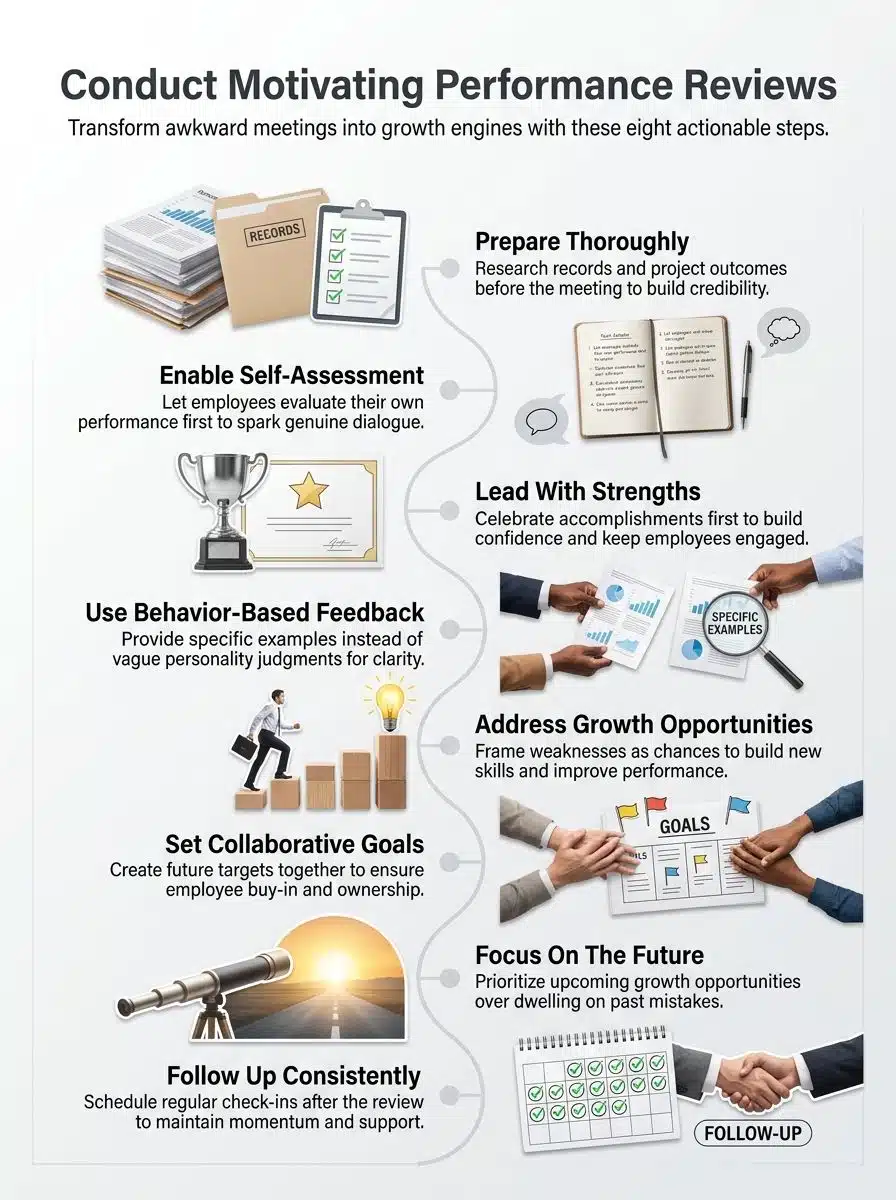
Steps to Conduct Motivating Performance Reviews
You can turn performance reviews into powerful moments. They can spark growth, build confidence, and keep your team fired up.
Prepare thoroughly before the review
Preparation makes or breaks a performance review. You need to dig into employee records and project outcomes weeks before the meeting. Pull together specific examples of strong work, missed deadlines, or big growth moments. This groundwork lets you speak with facts. Managers who prepare thoroughly build instant credibility with their staff.
To prepare effectively, I recommend pulling data from your specific project management tools. If your team uses Asana or Jira, review their completed task history for the last two quarters. This gives you hard data on their delivery times and project scope. Set clear goals for the conversation before you sit down.
Jot down questions that spark a two-way dialogue. Employees feel respected when they sense you invested real time in their assessment.
Encourage self-assessment by employees
You laid the groundwork with solid preparation. Now it is time to shift the focus to your employees. Self-assessment flips the script because it puts employees in the driver’s seat. Your team members know their own work better than anyone else does.
They understand what they accomplished and where they struggled. When you ask employees to evaluate themselves first, you gather honest insights. This approach builds engagement because people feel heard and valued. Give your employees a simple framework to work with before the review happens.
Ask them to identify their top accomplishments and rate their goal progress. Self-assessment transforms the review from a one-way evaluation into a genuine dialogue.
Focus on strengths and accomplishments
Most managers fall into a trap during performance reviews. They spend the entire time talking about what went wrong and where employees fell short. This approach backfires fast. Employees leave the meeting feeling beaten down. Flipping the script works much better. Start by celebrating what your team members did well this year.
A 2026 Workhuman analysis highlights that teams receiving frequent recognition experience 20% lower turnover. Highlighting wins keeps people around.
When you lead with strengths, employees feel valued and heard. They become much more open to feedback because they know you see the good stuff too. Recognition matters more than most managers realize. Frame constructive feedback around their potential, not their failure. This approach shifts the performance assessment into a real conversation about possibility.
Address areas for improvement constructively

Now that you have celebrated what your team members do well, shift your focus to growth opportunities. Constructive criticism points toward solutions instead of just highlighting problems. Frame improvement areas as chances to build new skills.
A great technique here is using Feedforward, a concept popularized by executive coach Marshall Goldsmith. Instead of dwelling on past mistakes, you focus entirely on offering suggestions for the future.
Deliver feedback about weaknesses with absolute care and specificity. Avoid vague comments such as “You need to be more organized.” Point to concrete examples and explain exactly what needs to change. Ask them what obstacles block their progress.
Collaborate on solutions that remove these barriers immediately. Your employee leaves the conversation feeling supported, which fuels their motivation.
Collaborate on setting future goals
Once you tackle improvement areas with honesty, shift your focus to what comes next. Your employee now knows exactly where they stand. Channel that clarity into building their future. Goal setting works best when you work together. Ask your team member what they want to achieve in the coming months. Listen closely to their career dreams and their development goals.
This shared approach transforms the performance review into a real partnership. Work side by side to create targets that stretch your employees without breaking them.
Make sure goals connect to your organization’s needs. We recommend using the SMART goal framework:
- Specific: Clearly define the exact outcome.
- Measurable: Assign a number or metric to track progress.
- Achievable: Ensure they have the resources to hit the target.
When employees help build their own goals, they take complete ownership of them.
Best Practices for Effective Performance Reviews
You will get better results when you make performance reviews a two-way conversation. Share feedback that points to real actions.
Make the process collaborative
Collaboration transforms performance reviews from one-way lectures into real conversations. Invite your team members to bring their own thoughts about their work. Ask them what they need from you to do their best work. This shift in approach builds deep trust.
When people have a voice in the process, they own the outcomes rather than resenting them. Data backs this up completely. Recent 2026 Workhuman statistics show that continuous, collaborative feedback loops can reduce turnover by up to 28% compared to traditional annual reviews.
Start by asking your employee to assess their own performance first. Discuss goals together and let them help shape what comes next. Working side by side on development plans creates incredible buy-in from your staff.
Use clear, behavior-based feedback
Behavior-based feedback cuts through the noise and hits the target every time. Instead of making personality judgments, tell your employee exactly what you saw. This removes all the guesswork from the performance assessment. Specific feedback sticks with people far more than vague comments ever will.
To make this easy, use the Situation-Behavior-Impact (SBI) model. You describe the specific situation, note the observable behavior, and explain the impact it had on the team.
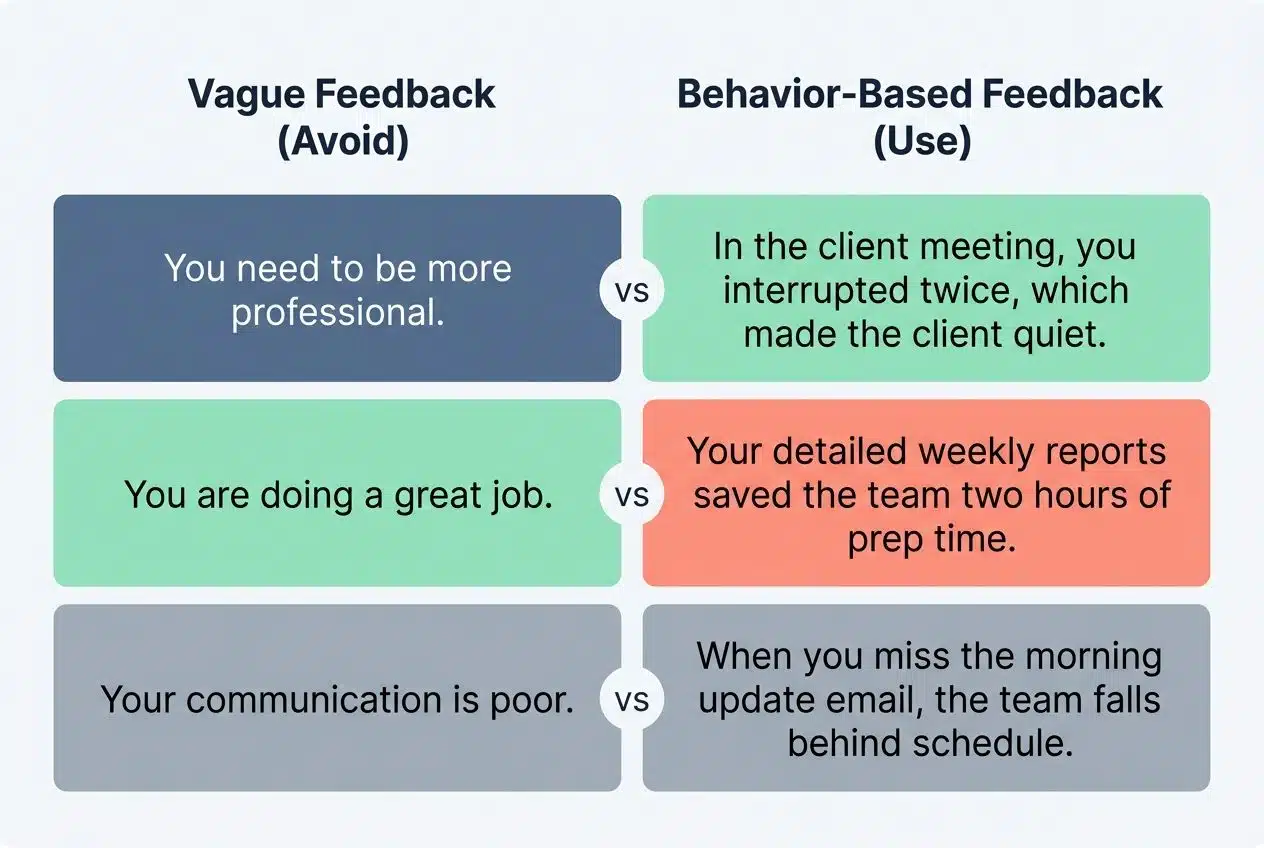
Here is a simple comparison of how to frame your phrasing:
| Vague Feedback (Avoid) | Behavior-Based Feedback (Use) |
|---|---|
| “You need to be more professional.” | “In the client meeting, you interrupted twice, which made the client quiet.” |
| “You are doing a great job.” | “Your detailed weekly reports saved the team two hours of prep time.” |
| “Your communication is poor.” | “When you miss the morning update email, the team falls behind schedule.” |
Clear feedback builds trust between you and your staff. The conversation becomes a partnership focused on continuous improvement.
Keep the conversation forward-looking
Shift your focus toward the future during performance reviews. Talk about what comes next, not just what happened last year. Your employee desperately wants to know what growth opportunities await them. Frame feedback as a stepping stone.
This approach transforms the review into a massive motivation booster. You build momentum by discussing new skills to learn and projects that excite them.
Forward-looking conversations create incredible energy. Goals become the centerpiece of this forward-thinking strategy. Ask them what they want to accomplish. This collaborative review process shows you invest deeply in their success.
Follow up consistently after the review
Performance reviews do not end when you leave the meeting room. You must follow up consistently with your employees to keep the momentum going. Schedule a check-in two weeks after the review to see how they are doing. Ask them what support they need from you right now.
This ongoing communication shows you actually care about their progress. I recommend establishing a simple follow-up rhythm:
- Weekly: A quick 15-minute chat about immediate roadblocks.
- Monthly: A deeper dive into goal progress and skill development.
- Quarterly: A mini-review to adjust targets if company priorities change.
According to 2026 Gallup workplace data, 80% of employees feel more engaged when they have a weekly check-in with their manager. Continuous follow-up helps you catch small problems early. Your team will truly appreciate the consistent engagement.
Structuring the Performance Review Conversation
You shape the conversation by asking the right questions at the right time. Smart managers guide employees through reflection and future possibilities smoothly.
What went well this year?
Starting your review by asking what went well sets a positive tone. Employees light up when they talk about their big wins. This approach builds trust and engagement right from the start. You get to hear about real progress from their perspective.
Celebrating their strengths creates a foundation where people feel valued. Dig into specific examples of their absolute best work. Ask them to walk you through a project they completely crushed. Listen for the tiny details and the tough obstacles they overcame.
This recognition fuels motivation and shows them that their hard work matters. Your employee leaves this part of the discussion feeling seen and highly appreciated.
What challenges did you face?
Asking your employee what challenges they faced gives you real insight. This question opens the door to honest conversation about massive roadblocks. Your team member might mention resource shortages, tight deadlines, or skill gaps. By asking this, you show genuine interest in their daily experience.
This approach builds trust because employees feel heard, not judged. Listen carefully to their answers without interrupting them. Many managers jump straight to solutions, but that is not your job here. Your role is to understand exactly what held them back.
Consider categorizing their challenges into three buckets:
- Process issues: Broken systems or inefficient software are slowing them down.
- People issues: Communication breakdowns with other departments.
- Personal issues: A need for more training or a better work-life balance.
Validate their struggles and explore how you can support them moving forward. You will discover helpful patterns that let you improve systems for everyone.
What are your goals for the next period?
This question opens the door to forward-looking conversations that truly matter. Your employee shares their aspirations, and you learn what drives them. Goals give people clear direction and serious purpose. They transform vague hopes into very concrete targets. Strong goal setting keeps your whole team aligned with company objectives. Collaboration on goals makes all the difference in employee motivation.
You work together to craft objectives that stretch their abilities safely. Goals should always connect to the bigger picture of your organization’s mission. Your employee feels respected when you shape goals together. The conversation naturally shifts from judgment to an exciting planning session.
How can I support your growth?
Your role as a manager goes beyond just rating performance. It involves actively removing roadblocks that stand in your employee’s way. Ask your team members what exact resources they need to thrive. You might offer advanced training programs, mentorship from senior staff, or new stretch assignments.
Listen carefully to their answers, then immediately follow through on your commitments. To get the best answers, try asking these specific variations:
- “Is there any software or tool that would make your job easier?”
- “Which skill do you feel you need more training on right now?”
- “Am I communicating clearly enough with you on a daily basis?”
Support grows stronger when you create a clear path forward together. Your engagement in their growth sends a very powerful message.
Tools and Resources to Improve Performance Reviews
Technology can completely transform how you run performance reviews. Smart tools help you track feedback and keep conversations perfectly on track.
Performance review templates
Performance review templates save you immense time and keep your feedback consistent. These forms guide you through each conversation step by step. You start by asking what went well, then move to challenges. Next, you explore specific goals for the next period.
The template keeps you on track, so nothing gets skipped. Good templates include space for self-assessment. Your team member shares their own thoughts first. You then add your observations about their strengths.
The form lets you write down specific examples of behavior. Using a standard template heavily reduces bias in performance assessment. Your conversations become much more focused and fair for everyone.
Feedback and goal-setting tools
Feedback and goal-setting tools make performance conversations much easier to handle. Software platforms let managers track employee progress throughout the entire year. These tools store feedback, goals, and accomplishments in one secure place. Managers can pull real examples from their records instantly.
Employees see their feedback right away, which keeps them engaged. When looking at options for 2026, two of the most popular platforms are Lattice and 15Five.
Here is a quick comparison of their base plans and features to help you choose:
| Software Platform | Starting Price (2026) | Best Use Case |
|---|---|---|
| 15Five | Starts around $4/user/month | Best for quick weekly check-ins and agile teams focused on fast manager adoption. |
| Lattice | Starts around $10/user/month | Best for mid-to-large teams needing deep HRIS analytics and structured goal tracking. |
Digital platforms help collaboration happen naturally. Real-time dashboards show progress toward goals, so issues can be addressed early.
Performance management software
Performance management software takes the guesswork out of tracking employee progress. These tools let you store feedback, set goals, and measure performance all in one place. You can pull reports that show major trends over time. Platforms like BambooHR or Paylocity offer integrated performance modules.
Most software lets managers and employees collaborate on goals together easily. This builds critical buy-in from the very start. The best platforms make the entire evaluation process less painful. Software solutions also cut down on annoying paperwork and confusion.
Your team can access their personal reviews from anywhere. Many systems send automatic reminders so nothing falls through the cracks. They help you stay incredibly consistent with how you give feedback.
Wrapping Up
Conducting motivating performance reviews takes some real work, but the payoff is huge. Your team members will feel valued, completely heard, and ready to tackle new challenges. They will know exactly where they stand today.
Managers who focus on clear feedback and collaboration see amazing results. The conversation does not end when the review meeting wraps up. It continues through consistent support throughout the entire year. Your organization gains stronger communication and a much better alignment.
Employees will actually want to show up and do their best work. Start small if you need to. Test different approaches, gather input, and refine your process as you go. Invest in your people through honest dialogue, and watch your workplace transform entirely.
Frequently Asked Questions (FAQs) on Performance Reviews Strategy
1. How can I make performance reviews actually motivate my team?
Start with honest feedback covering both wins and areas for growth, using real examples from their daily work. According to a 2024 Gallup study, employees who receive meaningful feedback are 3.6 times more likely to be engaged at work. Ask questions like “What’s working for you?” to show you care about their goals too.
2. What should I avoid during a review if I want it to inspire change?
Skip the lecture and avoid focusing only on mistakes, as Harvard Business Review research suggests a 5:1 ratio of positive to constructive feedback works best. Give clear, actionable steps for improvement so they know what success looks like.
3. How often should I hold these reviews for the best results?
Check in quarterly rather than waiting until year-end, as Adobe’s 2025 research found that companies with quarterly reviews see 30% higher employee satisfaction.
4. What are some easy ways to personalize each review session?
Bring up recent projects unique to their role, like how they handled a tough client call last week. Tools like 15Five can help you track these moments throughout the quarter so you remember the wins.