It starts before you even finish your morning coffee. The screen glare floods your eyes. Your smart device buzzes to remind you to stand up. A notification chimes and demands an instant reply. The modern workday delivers endless sensory overload. We spend our hours jumping from one glowing monitor to another. We stay connected but feel perpetually drained. Mindful handwriting offers a quiet escape route. It provides a simple reset button for your brain.
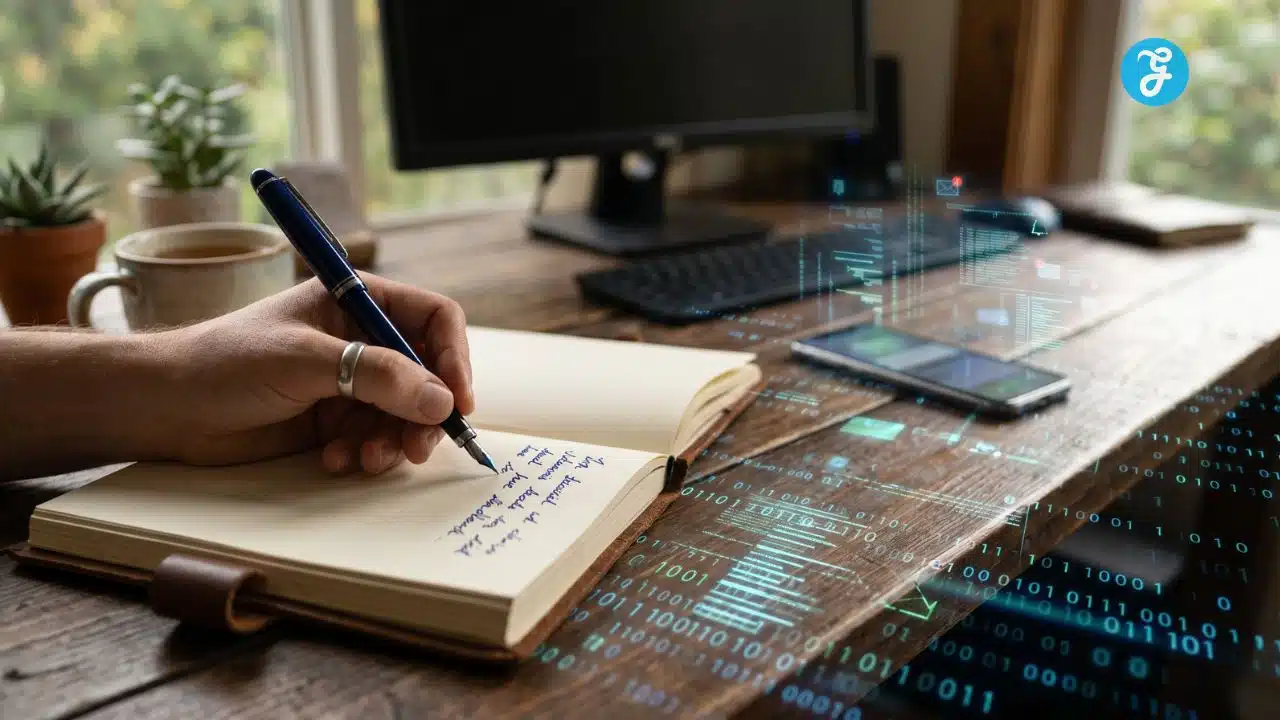
Now imagine a completely different moment. You open a paper journal. You slowly unscrew the cap of a fountain pen. You catch the faint earthy scent of liquid ink. The metal nib touches the textured page. The rushing world suddenly slows down. This physical reality creates a sharp contrast to daily digital noise.

Technology companies built apps to fix our stress. Yet those very programs often make us more anxious. We track our sleep patterns and log our daily heart rates. We measure every single step we take. Wellness has turned into just another performance metric to manage. If your phone says your stress level is peaking, you instantly feel worse. We chase algorithmic optimization but end up completely exhausted. Our devices promise peace but deliver constant pressure.
People are finally finding a better way. They are turning away from the screen and reaching for paper. This shift goes far beyond simple nostalgia or a passing hobby. The physical act of forming letters serves as a strong barrier against total digital burnout. Picking up a pen becomes a quiet act of rebellion in a world ruled by algorithms. It forces you to slow down and reclaim your attention. Writing by hand is the real new wellness tech.
The Neural Architecture of the Hand
Writing by hand forces your motor cortex to communicate with your visual system. This physical loop creates a stronger neural imprint than any keyboard can provide. You are effectively carving thoughts into your memory through tactile friction.
Beyond the Button: Why Typing is Not Writing
Our brains do not perceive all movement as equal. When you type on a keyboard, your fingers perform a repetitive task. Each letter requires the same simple press of a button. The brain treats this as a mechanical motor pattern. It is fast for production but empty for the mind. Handwriting demands a much higher level of craftsmanship from your nervous system. Every letter has a unique shape that requires precise control. This physical variety forces the brain to engage more deeply with the task at hand.
The 2024 NTNU Findings: High-Density Insights
Recent research from the Norwegian University of Science and Technology reveals a massive difference in brain activity. In 2024, scientists used high-density EEGs to track brain waves during writing and typing. They found that handwriting triggers complex connectivity across large neural networks. When the pen moves, it syncs the visual, motor, and cognitive centers. These electrical patterns form the foundation for learning and memory. Typing creates almost none of this internal dialogue. Using a pen is like a full orchestral performance for your gray matter. Typing is more like tapping a single drum.
Sensory Loops and the Mindful Handwriting Reset
This complexity explains why mindful handwriting feels so grounding. The specific effort needed to curve an “s” or cross a “t” forces the brain to stay present. These fine motor skills engage the parietal and central regions of the brain. It is a sensory loop that digital tools cannot mimic. You feel the drag of the nib and the texture of the paper. This physical feedback tells your brain that the information matters. It transforms a simple note into a physical experience that the brain can better retain.
Creating a Spatial Map for Memory
The way we store this information is also physical. Our minds act like mapmakers. When you write on a stationary sheet of paper, your brain creates a spatial map of your thoughts. You might remember a specific idea because it sat in the top left corner next to a coffee stain. This mental filing system relies on fixed locations. Digital screens erase this sense of place. On a scrolling monitor, words are fluid and unstable. They slide up and down and lose their relationship to the space around them. This lack of a spatial anchor is why it is harder to remember what you read on a phone. By choosing paper, you give your memory a landscape to inhabit. You are not just recording data. You are building a lasting home for your ideas.
The Voice of the Revival
Chawm Ganguly, a prominent Handwriting Revivalist, is very positive about the scale of this cultural shift. He confirms that the return to paper is not a niche hobby for a few collectors. It is a massive movement that is picking up speed worldwide.
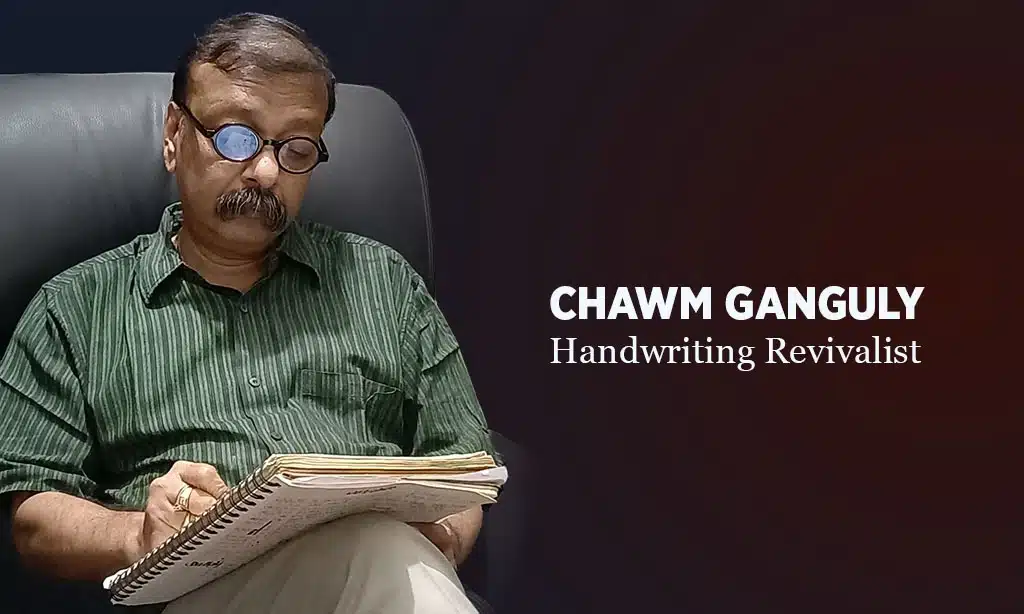
“This is a global trend. Everywhere, Gen Z and people in general are returning to the pen to reclaim their focus from the screen.” ~ Chawm Ganguly
He notes that this younger generation is often the most exhausted by the digital grind. They are searching for a sense of permanence that a disappearing social media post cannot provide. By choosing ink, they are choosing to leave a physical mark on a world that feels increasingly virtual. Using a pen becomes a way to slow down and find mental clarity in a fast-paced world. It allows them to create something tangible that lasts far beyond a digital notification.
The Productive Friction of the Pen
Speed is often the enemy of deep thought. Digital tools allow us to record words without actually processing them. The physical resistance of paper changes how we handle information. We must slow down to keep up with the movement of the pen.
Why Slower Writing Leads to Sharper Thinking
We think and speak much faster than we can write by hand. This physical limitation is actually a mental advantage. Since you cannot capture every word, your brain must perform a quick triage. You naturally summarize and prioritize ideas as they arrive. Experts call this generative-note taking. It forces your mind to work harder. This extra effort leads to better long-term memory. You are not just capturing data. You are teaching your brain how to think.
Moving Beyond Mindless Transcription
Digital devices often turn us into passive recorders. Typing is so fast that many people simply transcribe what they hear word for word. This creates a massive amount of data but very little real comprehension. A famous 2014 study by Mueller and Oppenheimer proved this point. Students who typed their notes performed worse on conceptual questions than those who wrote by hand. Handwriting limits your volume but increases your focus. It shifts your role from a human copy machine to an active participant. This mental effort is what builds true understanding of complex topics.
The Power of the Permanent Mark
Digital communication is built on the ability to delete and redo instantly. We often spend more time editing our thoughts than actually having them. Ink requires a different level of commitment. When you use a pen, you must be deliberate and present. There is no backspace key on a piece of paper. This permanence creates an intentional pause that anchors your attention. It keeps you in a state of flow without the distraction of constant correction. Mindful handwriting becomes a way to trust your first instincts. It turns a simple note into a lasting physical record of your mind at work.
The Psychological Anchor of Ink
Mental health often feels like an invisible weight. Our digital lives pull us into a cloud of notifications and endless scrolling. A pen acts as a physical anchor for a racing mind. It provides a sense of presence that a glass screen cannot offer.
Grounding Through Physical Sensation
Psychologists often recommend grounding to handle anxiety. This involves focusing on physical sensations to stop mental loops. Mindful handwriting is a natural grounding tool. You feel the weight of the pen and the texture of the paper. You hear the soft scratch of the nib as it moves. These sensory cues pull you out of your head and back into the room. They provide a tangible connection to the here and now.
A Private Sanctuary Without Data Mining
Your phone is a public space. Every app has terms and conditions and every click is tracked. Data mining is the hidden price of digital convenience. A paper notebook is the ultimate private sanctuary. It has no software updates or tracking pixels. It is a place where you can be messy and imperfect without any digital record. This total privacy fosters a deep level of honesty. You are finally free to think without an audience or an algorithm watching you.
Clinical Benefits of Expressive Writing
Clinical research supports the power of the pen. Dr. James Pennebaker pioneered the study of expressive writing. He found that writing about emotional struggles can boost the immune system and lower stress.
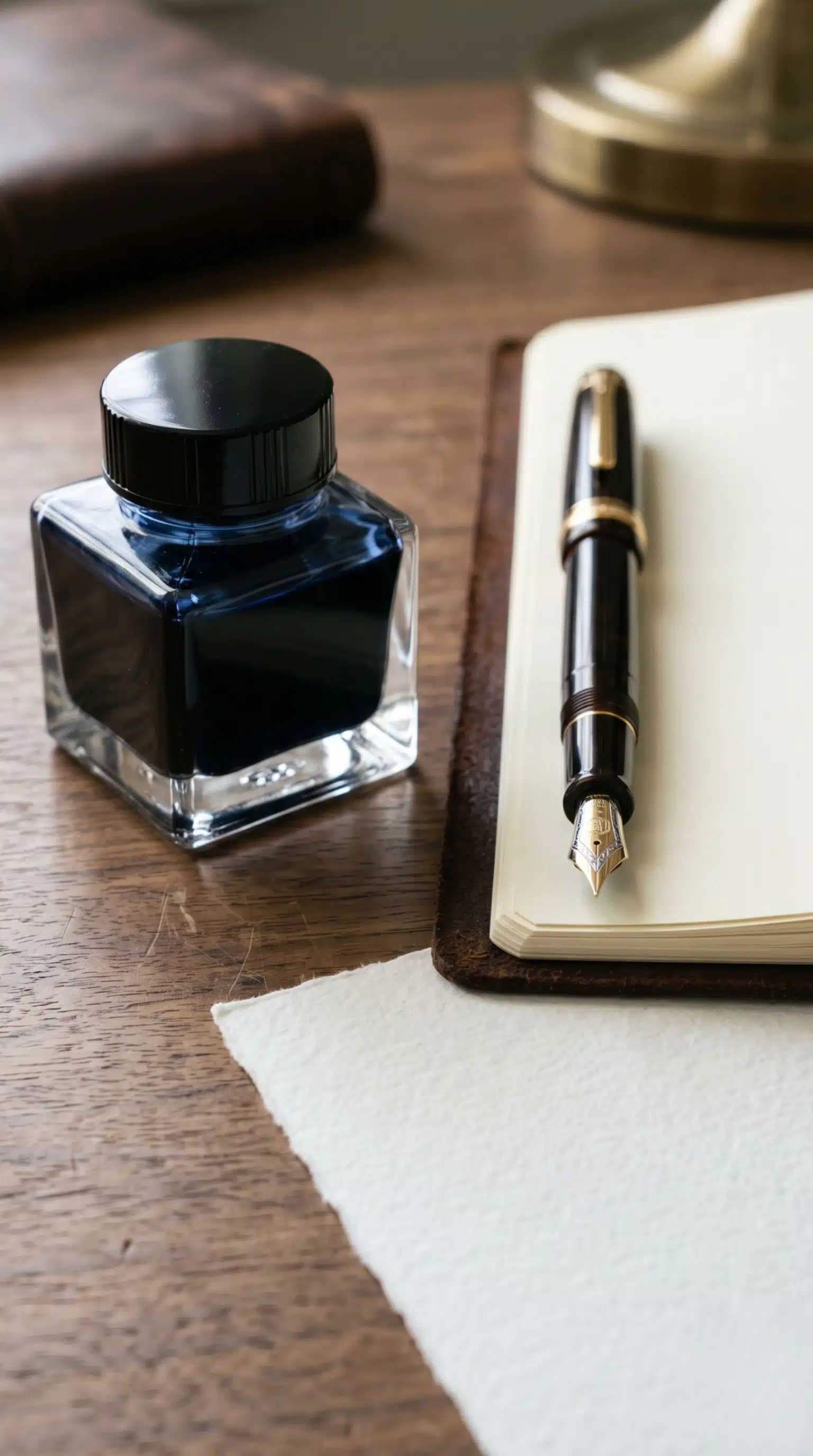
The act of forming letters by hand helps the brain process trauma. It forces you to organize a swirl of feelings into a linear story. A digital note feels fleeting and easy to delete. Physical ink makes your thoughts feel concrete and manageable. It gives you the power to face your stress and move past it.
The Global Analog Rollback
A major shift is happening in how we learn and work. After years of total digital immersion, societies are rediscovering the limits of screens. The move back to paper is a strategic choice for better results. It marks a clear departure from the belief that more tech is always better.
Classrooms Returning to Paper
Northern Europe is leading the charge away from tablets. Sweden recently paused its national strategy for digital learning. Education officials noticed a decline in basic reading and writing skills. Schools are now reintroducing physical books and paper tests. They found that students comprehend text better when they can flip a physical page. Mindful handwriting is becoming a foundational skill once again. Research shows that children learn to read faster when they first learn to form letters by hand.
Executives Escaping Digital Fatigue
High-level leaders are also abandoning their tablets. In 2026, digital fatigue is a recognized professional risk. Many creative directors now use paper for their initial planning sessions. They find that notebooks spark more original ideas. A physical planner does not send notifications or distract the eye. It allows for deep work that digital platforms often disrupt. This paper-first approach helps professionals stay focused on long term goals. It creates a mental space that is free from the noise of the internet.
The Rise of Slow Stationery
Stationery has transformed from a simple commodity into a ritual. People are investing in high-quality fountain pens and artisanal paper. This is the heart of the slow stationery movement. It treats writing as a form of professional mindfulness. Using a heavy pen or luxury ink makes the act of working feel more intentional. It turns a mundane task into a moment of focus and calm. This trend proves that we crave tactile experiences in an increasingly virtual world. Quality paper provides a sensory satisfaction that a glass screen cannot replicate.
Securing Your Story from the Machine
Automation promises to save time by thinking for us. We let algorithms draft our emails and suggest our replies. This convenience comes with a hidden cost to our individual voice. Choosing a pen is a way to put a human back in charge.
The Beauty of the Imperfect Page
AI generates polished and predictable text. It lacks the messiness of real human thought. Handwriting is an honest record of your personal process. A crossed-out word shows a change of heart. An ink blot marks a moment of hesitation. These imperfections are not errors. They are the fingerprints of your own mind. They capture the raw reality of how you actually think. You see the evolution of an idea instead of just a final result.
Data Sovereignty in a Paper Notebook
Every digital word you type is potential data. Large language models use your digital footprints to learn and predict. Your private reflections on a screen are often used to train the next algorithm. A physical notebook offers total autonomy. No server can read your handwritten pages. No company can use your journal to target you with ads. This is the ultimate private wellness tech. It creates a firewall around your most personal thoughts. You own your words completely.
Reclaiming Your Analog Hours
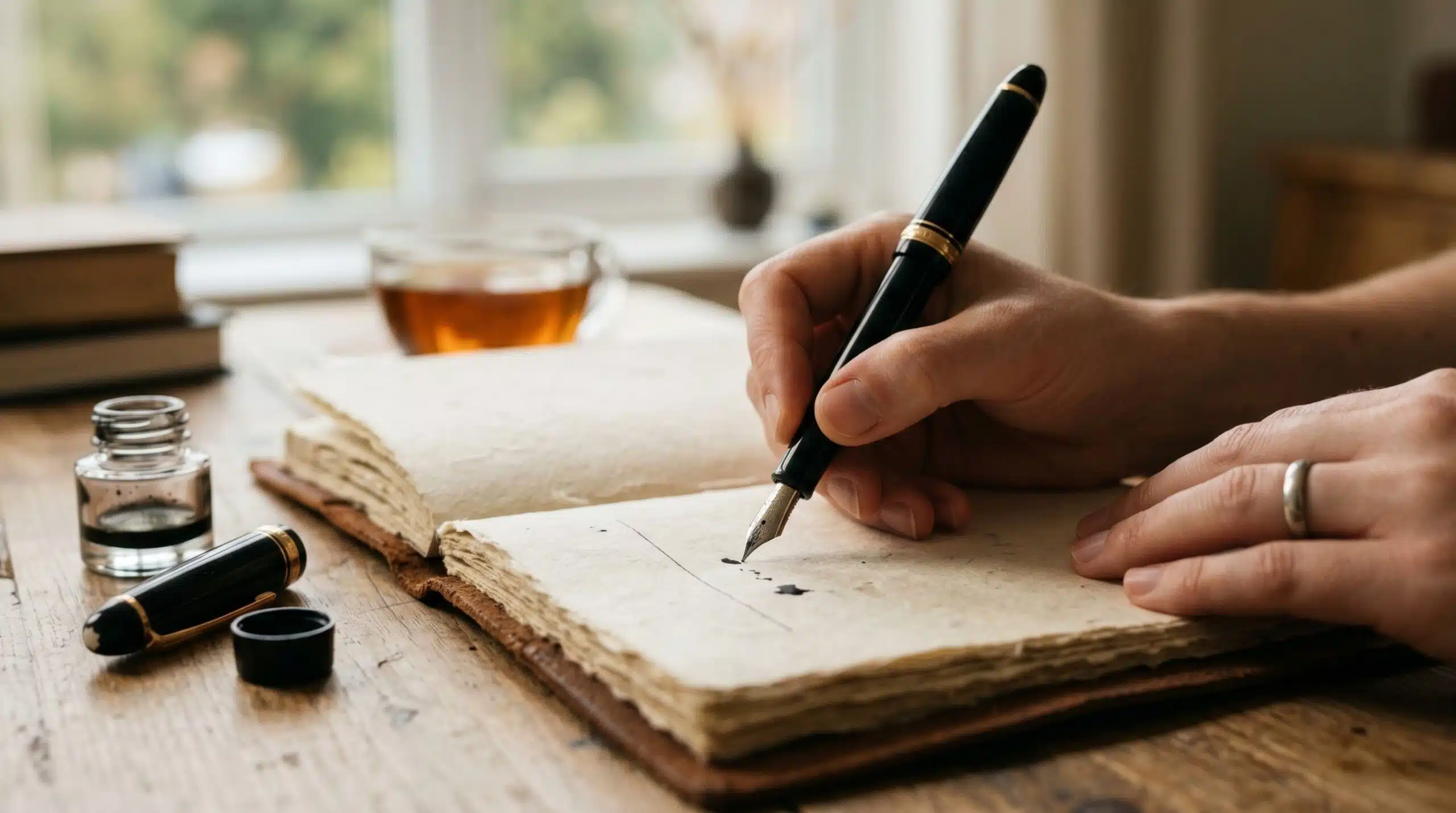
We do not have to live in the woods to find peace. The goal is not to delete our digital lives or throw away our laptops. It is about finding a balance that keeps us human. We must protect our time away from the screen to stay sharp and grounded.
A Hard Drive for the Soul
A paper notebook is a physical record of your life. It does not require a password or a monthly subscription. It will not disappear if a company goes bankrupt or a cloud server crashes. Years from now you can hold your old thoughts in your own hands. This is a hard drive for the soul. It captures the weight of your presence in a way a digital file never can. It is a lasting artifact of your time on earth.
Your First Ten Minutes
The path to digital wellness starts with a single blank page. Put your phone in another room for a moment. Find a pen that feels good in your hand. Use mindful handwriting to write anything at all without worrying about how it looks. Reclaim the next ten minutes of your life from the algorithm. You might find that the best way to move forward is to pick up a pen and slow down. Your brain will thank you for the friction.
Frequently Asked Questions (FAQs) on Mindful Handwriting
Does the color of ink change how my brain processes information?
Research in color psychology suggests that blue ink can boost creative thinking and calm the mind. Red ink often helps people focus on specific details or technical corrections. Choosing a color you enjoy makes the sensory experience more effective for your mood. It adds another layer of sensory input to the writing process.
Do I get the same benefits if my handwriting is messy or hard to read?
The cognitive benefits come from the physical movement of your hand and not the beauty of the letters. Your brain still performs the same complex motor tasks even if the result looks unpolished. The process of forming the unique shapes is what triggers the neural connectivity. Focus on the feeling of the pen rather than the appearance of the page.
How much time should I spend writing to feel a real mental shift?
You do not need to write for hours to see a difference in your stress levels. Most experts suggest that fifteen to twenty minutes of focused writing can lower your heart rate. This short window is enough to move your brain from a state of distraction to a state of deep focus. Consistency matters more than the total number of pages you fill.
Is cursive better for the brain than printing each letter separately?
Cursive writing involves more continuous movement which can help with the flow of thoughts. It requires more coordination than printing separate letters because the pen rarely leaves the paper. However both methods provide significantly more brain activity than typing on a keyboard. The best style is the one that feels most comfortable for your hand.
Can this practice help people who struggle with digital screen addiction?
It serves as a powerful form of monotasking which is the direct opposite of digital multitasking. By focusing on one physical task you train your brain to resist the urge to check notifications. Over time this builds your mental stamina and helps you stay present in other parts of your life. It acts as a natural detox from the constant pull of the internet.