

Have you ever wondered how some companies last for a thousand years, beating time and trends? Many readers chase new start-ups, and they miss time-tested giants. They scroll past family-run businesses that span centuries.
They seek quick wins, not deep roots.
Japan hosts 56 percent of companies older than 200 years. Even the bank of korea is young by comparison. We look at 10 oldest companies still going, and we start with Kongo Gumi, a temple construction business from AD 578.
We note Nishiyama Onsen Keiunkan, a hot spring resort in Yamanashi Prefecture, and Ichimonjiya Wasuke, maker of tsuen tea since 1000. We include Hoshi Ryokan, famed for hot spring baths in Ishikawa Prefecture.
We show how these family-owned businesses mix tradition and change. Read on.
Key Takeaways
- Japan has 56 percent of firms over 200 years old.
- Most firms over 100 years old have under 300 workers (89 percent).
- The 10 oldest firms run from AD 578 (Kongo Gumi) to AD 1184 (Hotel Sakan).
- Key firms: Kongo Gumi (578), Nishiyama Onsen Keiunkan (705), Ichimonjiya Wasuke (1000), Sudo Honke (1141), Hotel Sakan (1184).
- They use family apprenticeships, omotenashi, local ties and tools like CAD and online booking.
What Makes Japanese Companies Endure for Centuries?
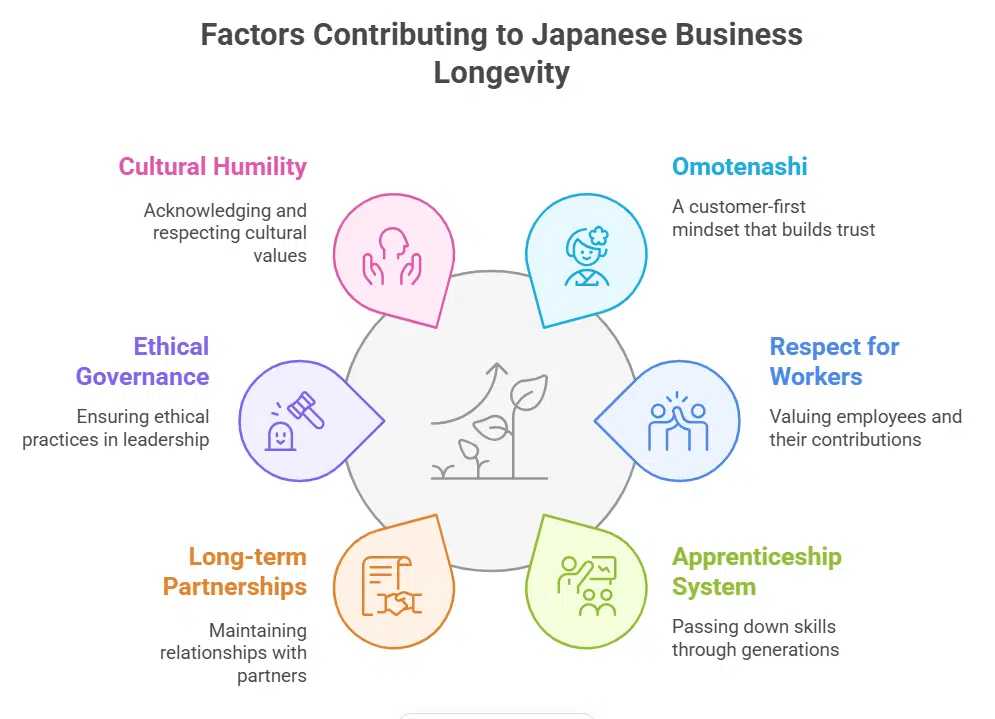
Owners build trust with Omotenashi, a strong customer-first mindset. Teams respect workers, local towns. They pass skills in an apprenticeship system. Kongō Gumi has used it since 578.
Nishiyama Onsen Keiunkan has served guests in its hot springs since 705. Most old firms stay small. Some 89% of companies older than 100 years have fewer than 300 people.
Firms keep ties with long-time partners. They sell temple construction, Buddhist goods, family teas like Tsuen tea, or spa stays. Leaders train boards in ethical governance and cultural humility.
This blend of respect and steady growth feels like a slow-cooked stew. Small family-run businesses, such as Houshi Ryokan and Ichimonjiya Wasuke, show its power. Such loyalty helps them thrive for centuries.
The 10 Oldest Japanese Companies Still Operating Today
These oldest companies trace back over a thousand years. They still lead in their fields today.
- Kongo Gumi began in 578. This family-run construction company built Buddhist temples for emperors and local daimyo. It set a high bar for Japanese temple construction.
- Nishiyama Onsen Keiunkan began in 705 in Yamanashi Prefecture. This family-owned hotel holds a Guinness record as the world’s oldest hotel. It served guests for fifty-two generations until 2017.
- Koman, founded in 707 in Ishikawa Prefecture, makes Buddhist goods. It ships prayer beads and incense to shrines across Japan. The shop pairs age-old craft with modern ecommerce.
- Houshi Ryokan dates back to 718. It greets travelers in Ishikawa Prefecture with hot springs and tatami rooms. The inn added solar panels and uses online booking tools.
- Tanaka-Iga started in 885 as a salt maker on the Pacific coast. They harvest sea salt by hand and pack it with care. The company supports community events as part of its social efforts.
- Nakamura Shaji opened in 970. This shrine carpentry firm carves wooden altars and gates in Kyoto. It tracks orders with ERP software and works with local artisans.
- Ichimonjiya Wasuke opened in 1000 near Kyoto. This shop paints karuta playing cards by hand. It blends classic scenes with anime designs to attract new fans.
- Shumiya Shinbutsuguten began in 1024 in Nara. It sells robes, ritual fans, and other priest supplies. The store uses online tools to deliver goods before festival dates.
- Sudo Honke started in 1141 as a sake brewer in Gifu Prefecture. It grows its own rice and taps mountain water for jōmai sake. The family-owned firm drives Japan’s sake heritage.
- Hotel Sakan opened in 1184 at the foot of a volcano in Shizuoka. It welcomes guests to hot springs with a view of the crater. The inn blends traditional service with digital check-in tools.
- Kongo Gumi (Founded 578)
Kongo Gumi opened its doors in 578. It ranks among the oldest companies in Japan. A family runs this temple construction company for over 1,400 years and forty generations have led it.
It restores ancient shrines and crafts Buddhist goods with care. It uses CAD tools like AutoCAD to blend concrete and wood for modern strength. One manager says, “We treat each beam as sacred.”.
Financial trouble led it to join Takamatsu Construction Group in 2006. It shows corporate social responsibility by preserving craft and community ties. Storms, recessions, and market shifts test its grit.
Many call it proof that family-owned businesses can stand the test of time.
- Nishiyama Onsen Keiunkan (Founded 705)
Nishiyama Onsen Keiunkan began in 705 AD in Yamanashi Prefecture. It ranks among the oldest hotels still running. Guests soak in volcanic springs inside old timber halls. The place blends history and new comforts to draw travelers.
A single family has led operations for more than 50 generations. The spa uses natural onsen water to ease aches and calm minds. The mix of wooden beams and modern rooms shows respect for roots and resilience.
This model proves how family-run businesses and Japanese companies rooted in tradition can thrive in tourism.
- Koman (Founded 707)
Koman opened its doors in 717 AD near steaming springs in Kinosaki. The inn sits beside bubbling water and mountain pines, a scenic backdrop for travelers. A family-run business passed its hearth through 46 generations, a rare feat among oldest companies.
Guests slip into cotton robes, sip green tea, and chat by lantern light.
Its team blends ancient tea ceremonies with online bookings and solar lights. Staff serve meals on lacquer trays, greet visitors with omotenashi and warm smiles. This Japanese company greets each dawn with fresh ideas, while honor guides every step.
The inn still thrives, a living tale of resilience.
- Houshi Ryokan (Founded 718)
Houshi Ryokan opened in 718 AD. It sits in Fukui Prefecture. The Hoshi family has led it for 46 generations. Guests soak in hot spring baths and taste authentic Japanese hospitality.
This lodging fuels the tourism industry and uplifts family-run businesses.
Wars, earthquakes and floods did not shut down this lodging. It stands strong through thick and thin. Japanese companies praise its age as proof of staying power and tradition. The site uses wood-fired boilers and tatami guest rooms.
- Tanaka-Iga (Founded 885)
Tanaka-Iga opened its doors in 885 AD. It crafts Buddhist goods, such as butsudan shrines, from its base in Kyoto. Masakazu Tanaka heads the seventieth generation and guides family values.
That history makes it one of the oldest companies still thriving among Japanese companies.
Modern teams use digital mockups to refine each shrine design. The tool, a form of 3D modeling software, cuts waste and sparks fresh ideas. A family-owned business treats every buyer as a VIP; it maps a smooth Customer Journey by gathering feedback at each stop.
That mix of old craft and new tech helps family-run businesses thrive in today’s market.
- Nakamura Shaji (Founded 970)
Nakamura Shaji dates back to 970 AD. It ranks among the oldest companies in Japan. The family-owned business makes paper lanterns, a traditional craft. They supply buddhist goods, lighting shrines and temple gates across Japan.
Its construction company branch handles temple construction and shrine halls, using wooden beams and joinery tools. Workers drive chisels and saws with precise skill, honed over ten centuries.
That kind of craftsmanship shows the resilience of Japanese companies. This firm adapts to new markets, yet keeps cultural roots bright.
- Ichimonjiya Wasuke (Founded 1000)
A family-owned business, Ichimonjiya Wasuke, started in 1000. It earns a spot among the oldest companies still in business. It makes traditional paper lanterns that link to Japan’s rich cultural heritage.
Craftsmen pass their skills by hand. The firm marks over a thousand years of history.
Leaders adapt their supply chain to modern markets, while they keep age-old methods. They mix traditional craftsmanship with modern business practices and drive local economies. Small Japanese companies study its model to grow.
This case inspires other family-run businesses across regions.
- Shumiya Shinbutsuguten (Founded 1024)
Shumiya Shinbutsuguten opened in 1024, in Kyoto, during the Heian period. The firm crafts paper lanterns for temples and festivals. Craftspeople fold and dye rice paper by hand. It ranks among Japan’s oldest companies, alongside Kongo Gumi.
Visitors buy its Buddhist goods and use them in temple construction and home shrines.
Leaders passed down skills for nearly 1000 years. The store changed its designs to meet modern tastes. It sells online and in retail outlets near shrines. Orders pour in from family-run businesses and art schools.
It still uses wooden tools and hand molds for each light.
- Sudo Honke (Founded 1141)

Sudo Honke, one of the oldest companies in Japan, stands out. That family-run brewery began in 1141. It still uses clay-lined vats and modern fermentation tanks to brew sake. Heian period roots shine in each bottle.
Customers enjoy its smooth flavor. This craft blends tradition, heritage management concepts, and tools like temperature control.
Kongō Gumi and Nishiyama Onsen Keiunkan set similar records. Other Japanese companies like tsuen tea and hoshi ryokan still thrill fans. Some rely on temple construction and family-run businesses to last.
Modern fermenters help Sudo Honke ship sake abroad.
- Hotel Sakan (Founded 1184)
Hotel Sakan began in 1184. This traditional inn ranks among the oldest Japanese companies. A family-owned business still greets guests on tatami mats. Hosts mix shoji screens with modern bedding.
Hot spring baths warm travelers. Early wood beams hold rustic charm. Staff pour local sake under lantern light. The place draws on centuries of hospitality skill.
Common Themes: Adaptability and Tradition
Japanese companies mix craft with cutting edge tools like 3D design software for temple construction. Kongō Gumi, a construction company, updates shrine models on screens to plan repairs.
They weathered wars, quakes and floods and still stand. Nishiyama Onsen Keiunkan in Yamanashi Prefecture adds smart controls to hot spring baths, while it keeps centuries of woodwork alive.
Family-run businesses blend culture with fresh markets. Ichimonjiya Wasuke, maker of playing cards, launched an online shop during economic crises. Tsuen Tea in Ishikawa Prefecture funds schools and local festivals, while Shumiya Shinbutsuguten sells buddhist goods online.
Strong leadership and community giving help these enterprises outlast S&P 500 peers, which now last under 18 years, down from 61 in 1958.
Takeaways: Lessons from Japan’s Oldest Companies
Time can test even the toughest family-run businesses. A hot spring lodge, a temple builder, a matcha shop, a sake brewer, and more thrive on craft and care. Each firm blends old skills with today’s needs to stand tall.
Families pass down blueprints and recipes to spark fresh ideas. History and hustle meet in their stories and teach us to bend like bamboo when winds blow.
FAQs on Oldest Japanese Companies
1. What is Kongō Gumi?
Kongō Gumi is the oldest construction company in the world. It sprang to life in 578 AD. They build temples and craft Buddhist goods, as they have for over fourteen hundred years.
2. Which hotel holds the crown for age in Japan?
Nishiyama Onsen Keiunkan sits in Yamanashi Prefecture. This inn opened in 705 AD. A family-owned business still welcomes guests with steaming baths and warm smiles.
3. What kinds of family-owned businesses still run today?
You’ll find Tsuen Tea pouring green leaves since 1160, in Uji near Kyoto. Hoshi Ryokan in Ishikawa Prefecture greets travelers at a cozy inn. Some shops even sell handcrafted playing cards, passed down through generations.
4. How do construction groups like Takamatsu Construction Group survive so long?
They focus on temple construction and careful restoration. They respect old methods but use modern tools. It’s like tending a bonsai tree—you prune, you nurture, you never rush.
5. How do these Japanese companies stand beside global peers?
Bank of Korea dates to 1909, while Japan’s oldest firms go back centuries. In Europe, Fonderia Marinelli, also called Marinelli Foundry, cast bells in the 700s. The Royal Mint in Britain began in 886. Monnaie de Paris opened in 864. Still, Japan’s Kongō Gumi and Nishiyama Onsen Keiunkan shine in the world of oldest companies.





















