

Supply chains today face big challenges. From the COVID-19 pandemic to natural disasters, disruptions happen fast and often. Companies struggle to keep goods moving while avoiding stockouts and delays.
To stay strong in tough times, resilient supply chains are a must. Businesses need clear strategies for building systems that can adapt and recover quickly. This guide shares 10 simple steps to help you strengthen your supply chain for the future.
Keep reading—your roadmap to stronger supply chains starts here!
Enhance Supply Chain Visibility
Track goods at every step using advanced technologies like IoT and blockchain. IoT sensors provide real-time updates on shipments, while blockchain ensures reliable data sharing. These tools reduce delays by improving traceability across the supply chain network.
Use predictive analytics for better planning during disruptions like natural disasters or economic downturns. High-quality master data enables quick decisions to avoid bottlenecks in warehouses or ports.
Integrating AI simplifies scenario analysis, helping businesses prevent costly inventory issues and maintain business continuity.
Diversify Suppliers and Partners
Relying on one supplier or region creates risks. Many companies learned this in 2023 due to supply chain disruptions. U.S. trade with Canada and Mexico made up 30.8% of international trade that year, showing the value of nearby options.
Use multiple suppliers from different areas to reduce dependence. This protects against natural disasters, economic sanctions, or political issues in one location. Partnering with diverse businesses ensures steady access to goods even during challenges like rising inflation or pandemics.
Build Strategic Inventory Buffers
Holding extra inventory can reduce supply chain disruptions. Businesses are moving from Just in Time (JIT) to Just in Case (JIC). This shift helps prepare for problems like natural disasters or pandemics.
Companies increase safety stocks of raw materials, goods in progress, and finished products. For example, Target’s excess inventory led to markdowns but avoided severe shortages.
Missing a disruption can cost businesses 30%-50% of potential earnings. Strategic buffer inventories protect against these losses while keeping operations steady.
Prioritize Flexibility in Transportation and Logistics
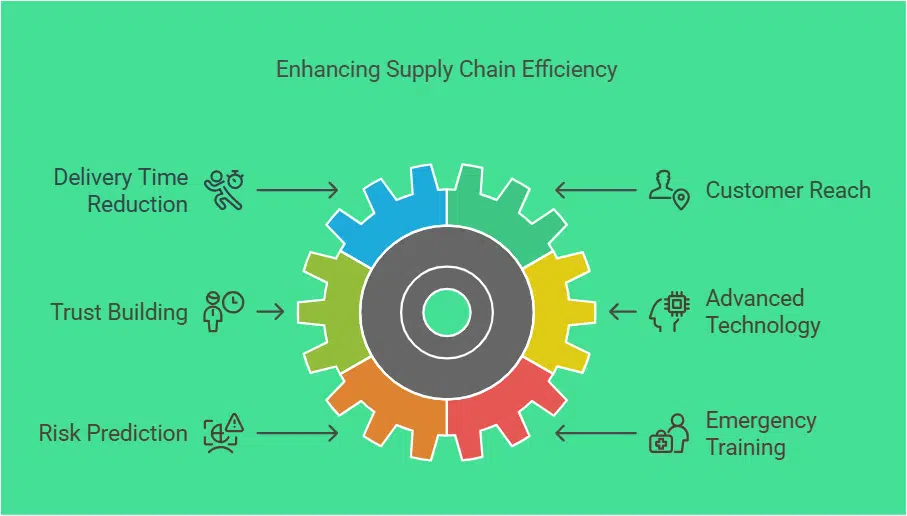
Flexible transportation helps supply chains handle challenges fast. LS2 Helmets used this strategy to cut delivery times by 60%. They now reach 70% of U.S. customers in just two days.
Quick delivery builds trust with buyers and boosts sales.
Advanced technology improves decision-making for logistics teams. Tools like cloud computing and artificial intelligence (AI) predict delays or risks early. Training workers for emergencies also speeds up recovery during transport issues, such as natural disasters or pandemics.
Leverage Advanced Technology and Analytics
AI tools can predict demand in real-time. This helps businesses handle supply-and-demand better. Predictive analytics gives early warnings for disruptions, such as natural disasters or trade route issues like the Suez Canal blockage.
IoT boosts supply chain visibility by tracking shipments and inventory status. Cloud technology supports faster data sharing across supplier networks. Ware2Go used smart systems to hit 99.5% delivery rate within 12 days for O2 drink brand—proving tech-driven reliability works well!
Implement Nearshoring and Friend-Shoring Strategies
Nearshoring cuts lead times and saves on shipping costs. Mexico became the U.S.’s top trading partner by 2023, showing its value for nearshoring. Canada and Mexico together accounted for 30.8% of all U.S. international trade.
Trucks moved $996.4 billion worth of goods between these countries and the U.S., making this approach practical.
Friend-shoring strengthens ties with trusted nations to reduce supply chain disruptions caused by conflicts or risks like the invasion of Ukraine or rising cyberthreats. This strategy helps businesses avoid major setbacks in global operations while boosting trade routes with allies who share common values or goals in supply chain management efforts.
Invest in Workforce Development and Training
Train workers to handle supply chain disruptions. Offer continuous education and certifications, like those from ASCM, to improve skills. This reduces supply chain vulnerabilities during events like natural disasters or pandemics.
Membership programs, such as ASCM, help companies access discounts on training packages. Focused workforce development builds job creation while boosting efficiency in supply chain management.
Strengthen Risk Management and Contingency Plans
Identify risks early to avoid big issues. Use proactive risk management tools, like scenario analysis, to spot supply chain vulnerabilities. Assess points of failure in supplier networks and logistics systems.
Businesses faced massive planning challenges during 2023 due to unexpected events like natural disasters or sudden supply chain disruptions. Contingency plans must include buffer inventory and surge capacity for emergencies.
Rehearse these plans regularly to ensure readiness. For example, simulate situations like food shortages or transportation delays caused by epidemics or environmental factors. Invest time in research through platforms such as ResearchGate for updated strategies on handling supply chain issues effectively.
Strong risk management reduces both financial losses and downtime during crises while increasing safety stock availability across distribution centers and ecommerce operations alike.
Foster Collaboration Across the Supply Chain Network

Strong partnerships strengthen the supply chain. SecureAmerica Institute works with about 100 partners, showing how teamwork boosts manufacturing and supply chain management. Public-private programs, like Manufacturing USA, help connect businesses and governments to share resources.
Clear communication improves efficiency across the network. Sharing data through tools like blockchain technology enhances trust. Using systems such as digital twins allows companies to predict risks together.
These steps build resilient supply chains and reduce disruptions from events like natural disasters or high interest rates.
Embrace Sustainability to Mitigate Long-Term Risks
Sustainability strengthens supply chain resilience. Companies must cut dependence on single suppliers or regions to avoid risks. Using circular economy principles helps reduce waste and reuse materials in the supply chain.
This lowers costs while protecting resources for the future.
Aligning sustainability with crisis preparedness creates a stable system. Businesses can face fewer disruptions during natural disasters or economic shifts by adopting green processes.
Sustainable strategies also meet growing demand from customers who care about environmental impact, boosting brand value and long-term success.
Takeaways
Strong supply chains keep businesses ready for surprises. These strategies help tackle risks like supply chain disruptions or natural disasters. Focus on visibility, flexibility, and partnerships to stay prepared.
Use technology and smart planning to meet future challenges. A resilient supply chain protects your business and ensures long-term success.
FAQs on Strategies For Building Resilient Supply Chains
1. What is supply chain resilience, and why is it important?
Supply chain resilience means building systems that can handle disruptions like natural disasters or the ongoing pandemic. It helps businesses stay strong during challenges and ensures smooth operations.
2. How did the COVID-19 pandemic impact supply chains?
The pandemic caused major supply chain disruptions by exposing vulnerabilities in supplier networks, inventory buffers, and global transportation systems like rail and less-than-truckload (LTL) shipping.
3. What strategies can improve resilient supply chains in 2025?
Key strategies include using safety stocks, capacity buffers, surge capacity planning, digital transformation with tools like the Internet of Things (IoT), and improving situational awareness through scenario analysis.
4. How does supply chain visibility help reduce risks?
Supply chain visibility allows businesses to track goods in real-time using IoT devices or virtual inventory systems. This reduces vulnerabilities by spotting issues early and improving decision-making.
5. Can subsidies support a resilient supply chain strategy?
Yes, subsidies can lower barriers to entry for new suppliers or fund research and development efforts that strengthen supplier networks while supporting environmental sustainability goals.
6. Why is socioeconomic awareness critical for managing modern supply chains?
Socioeconomic factors affect retail sales, contracts, marketing expenses, and even international initiatives like the Belt and Road Initiative (BRI). Understanding these factors helps companies adapt their business models to fit a changing global economy effectively.
























