

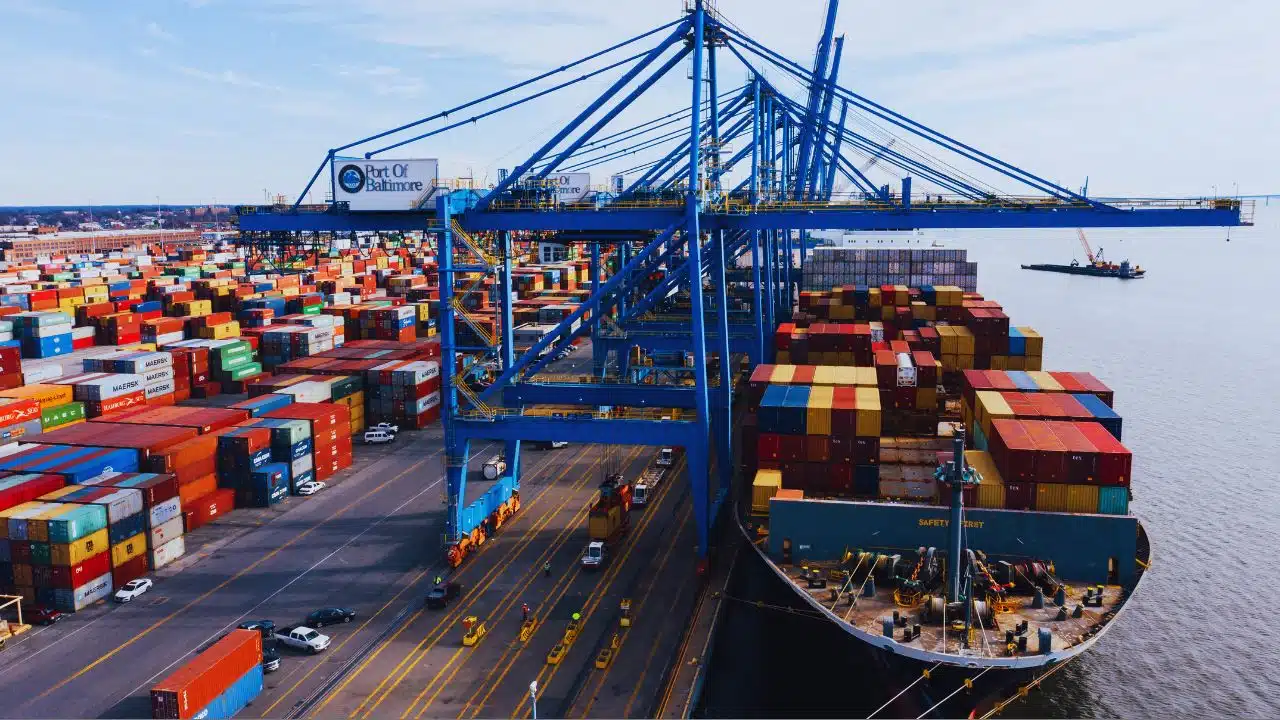
In a bold and controversial move that has reignited global trade tensions, President Donald Trump on Saturday, July 12, 2025, announced that his administration will impose 30% tariffs on all imported goods from Mexico and the European Union (EU).
This announcement marks a significant escalation in the U.S.’s shifting trade policy and has already triggered alarm among world leaders, economists, and multinational corporations.
The tariffs are set to go into effect on August 1, 2025, unless last-minute negotiations yield a compromise.
Tariff Letters: Trump’s Public Warning to Global Partners
Trump, who returned to office earlier this year, issued formal letters addressed to Ursula von der Leyen, President of the European Commission, and Claudia Sheinbaum, President of Mexico. These letters were publicly shared on Truth Social, Trump’s preferred communication platform.
In the letter to von der Leyen, Trump emphasized that the United States has “one of our largest trade deficits” with the European Union, and accused the EU of failing to negotiate trade deals in good faith. He justified the 30% tariff by calling for “more balanced and fair TRADE.”
To Mexico, the letter included a different justification: border security and the ongoing fentanyl crisis. Trump claimed that while Mexico has taken some steps to control drug trafficking, “what Mexico has done is not enough.”
Global Trade Disrupted: Who’s Affected and How
A Broad Application of New Tariffs
According to Trump’s statements, the 30% tariffs will apply to all imports from both regions, excluding sector-specific tariffs such as the 25% duty on automobiles and related parts. The scope of these new tariffs is unprecedented—affecting thousands of product categories across agriculture, consumer electronics, apparel, machinery, and more.
The U.S. Trade Representative’s Office reports that:
- The European Union is the U.S.’s largest trading bloc, with nearly $976 billion in two-way goods traded in 2024.
- Mexico follows closely behind, with $840 billion in goods exchanged between the two nations last year.
With such significant trade volumes, a 30% tariff could trigger cost increases for American consumers, job losses in export sectors, and supply chain disruptions across North America and Europe.
EU Pushes Back: Leaders Unite Against “Unfair” U.S. Tariffs
Von der Leyen and Macron Respond Swiftly
The European Commission did not remain silent. President Ursula von der Leyen responded that the European Union remains “ready to continue working toward an agreement,” but she warned that these new tariffs would damage businesses, consumers, and supply chains on both sides of the Atlantic.
French President Emmanuel Macron echoed the Commission’s concern in a statement on X (formerly Twitter), urging the EU to “defend European interests resolutely.” Macron proposed that the EU speed up preparations for countermeasures, including anti-coercion measures that could be deployed under EU regulations if the United States proceeds with the tariffs.
Threat of Countermeasures Intensifies
In line with Macron’s warning, EU officials are already drawing up retaliatory tariffs, particularly targeting U.S. tech giants, agriculture, and industrial goods. These could range from digital service taxes to retaliatory duties on U.S. automobiles, aircraft, and soybeans—areas that have been targeted in previous trade disputes.
According to the EU’s internal estimates, a prolonged tariff war could cost the bloc over €100 billion in trade volume and result in the loss of tens of thousands of jobs, particularly in export-heavy countries like Germany, France, and the Netherlands.
Mexico’s Reaction: Calm but Firm
Claudia Sheinbaum Stresses Diplomacy
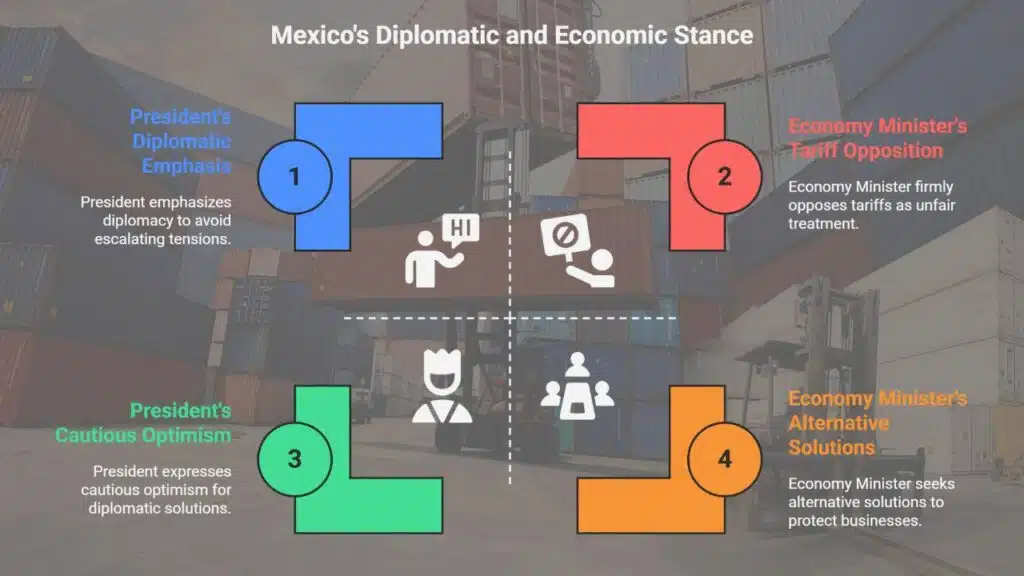
Mexican President Claudia Sheinbaum, who recently took office, responded with cautious optimism. In a speech delivered in Guaymas, Sonora, she confirmed that she had received Trump’s letter and acknowledged its contents. Sheinbaum stated that Mexico is actively negotiating with U.S. officials and is confident an agreement can be reached to avoid economic harm to both nations.
She emphasized that Mexico has no intention of escalating tensions, and instead is pursuing a diplomatic solution that supports workers and businesses on both sides of the border.
Economy Minister Calls Tariffs “Unfair Treatment”
Marcelo Ebrard, Mexico’s Economy Minister, was more direct. Speaking after a high-level meeting with U.S. officials, he declared that Mexico considers the proposed tariffs “unfair treatment” and that the government “does not agree” with the decision. Ebrard added that the U.S. and Mexico are working on “an alternative that would protect businesses and jobs.”
Trump’s Trade Doctrine: Chaos or Strategy?
A History of Tariff Volatility
This latest move is part of a broader tariff campaign that has defined Trump’s second term so far. Since returning to office in January 2025, Trump has announced a series of tariff hikes on multiple countries, often through sudden posts on Truth Social. These have included:
- A threat of 50% tariffs on EU goods in May (later delayed).
- A 35% tariff threat on Canadian lumber and dairy products.
- Renewed investigations into Chinese subsidies.
The pattern of abrupt policy shifts has created uncertainty for businesses and investors. Analysts note that tariff announcements often follow stalled negotiations or are used as leverage to extract concessions from trade partners.
Digital Services & VAT: Key Points of Contention
Trump’s administration has also expressed long-standing frustration with digital services taxes (DSTs) and value-added taxes (VATs) imposed by many EU countries. DSTs are levied on tech firms like Google, Amazon, and Meta based on revenue generated within EU jurisdictions—even if those companies are not profitable there.
According to Trump’s officials, these taxes represent discriminatory trade practices that unfairly target U.S.-based firms. In the tariff letter, Trump cited these non-tariff barriers as additional reasons for the EU tariff increase.
U.S. Position: Take It or Leave It
A Warning Against Retaliation
In both letters, Trump warned that any retaliatory tariffs imposed on U.S. goods would be met with even higher U.S. tariffs. Specifically, he wrote that if the EU or Mexico were to raise duties in response, their percentage would be added on top of the new 30% rate.
For example, if the EU responded with a 20% counter-tariff, U.S. tariffs on EU goods would jump to 50%.
Treasury Comments and the UK Exception
Treasury Secretary Scott Bessent, a key member of Trump’s economic team, defended the tariff policy during an interview on Fox News. He noted that the EU’s recent trade proposals had “not been of the same quality” as those received from other nations.
In a social media post, Bessent praised the United Kingdom for “smartly securing an early deal,” thereby avoiding the new 30% tariff. This highlights a divided trade landscape in Europe, where countries like the UK may enjoy preferential terms if they act quickly.
What’s at Stake: Jobs, Prices, and Global Stability
U.S. Businesses and Consumers Face Higher Costs
Industry groups across the United States—from retail and agriculture to tech and automotive—warn that tariffs will translate into higher prices for consumers, reduced profits, and potential job losses.
According to a report from the National Retail Federation, tariffs of 30% on EU and Mexican goods could cost the average American household an additional $1,200 annually, driven by increases in food, electronics, clothing, and vehicle prices.
Global Investors on Edge
Financial markets have already started to react. Following the tariff announcement, the Dow Jones Industrial Average fell 400 points in early trading Monday, while the euro and Mexican peso dipped against the dollar.
Multinational companies—particularly automakers and technology firms—are recalculating supply chains, contract negotiations, and investment timelines in light of Trump’s unpredictable trade strategy.
The Clock Ticks Toward August 1
With just a few weeks until the tariffs take effect, the global trade community is holding its breath. Will diplomacy prevail, or are we heading toward a new era of protectionism and retaliatory economic warfare?
August 1, 2025, could mark a turning point for U.S.–EU and U.S.–Mexico relations, as the world watches whether Trump’s tariff threats result in major deals—or economic conflict.
The Information is Collected from CNN and NPR.





















