


OpenAI has introduced a new feature called Pulse for its ChatGPT platform, signaling a major step toward making AI tools more proactive and personalized. Unlike the traditional model of ChatGPT where users initiate every interaction, Pulse works overnight in the background. By the next morning, it delivers curated, personalized updates that are designed to match a user’s individual interests, daily needs, and feedback.
The feature is currently available in preview mode for ChatGPT Pro subscribers on mobile devices, with OpenAI confirming plans to roll it out to Plus users in the near future before expanding further. Pulse is accessible on both iOS and Android apps, but is not yet available on desktop or web versions.
How Pulse Changes the ChatGPT Experience
From Reactive to Proactive AI
ChatGPT was originally built as a conversational model that required users to ask questions, provide prompts, or initiate tasks. Pulse flips this model by giving the AI a degree of agency. Instead of waiting for input, Pulse actively prepares personalized updates while the user is offline.
This means a ChatGPT user can wake up to a dashboard of visual cards, each card representing a different piece of research or recommendation. The cards can be skimmed quickly for an overview or expanded for in-depth detail. Users can save certain updates, act on them, or ignore them, effectively shaping the assistant’s learning process for future cycles.
One Cycle Per Day
Pulse is designed to be efficient, not overwhelming. It performs one research cycle every 24 hours, making it more of a curated daily digest than a continuous information feed. OpenAI has emphasized that this structure is intentional: it’s meant to help users start their day with clarity, not trap them in endless scrolling.
Now in preview: ChatGPT Pulse
This is a new experience where ChatGPT can proactively deliver personalized daily updates from your chats, feedback, and connected apps like your calendar.
Rolling out to Pro users on mobile today. pic.twitter.com/tWqdUIjNn3
— OpenAI (@OpenAI) September 25, 2025
What Information Pulse Provides
Integration With Chat History and Memory
Pulse uses existing chat history and memory features to determine what matters to each user. If a user has previously asked for travel suggestions, fitness routines, or language learning resources, Pulse can surface fresh updates in those areas. For example, it might highlight new Italian practice tips, local hiking trail recommendations, or the latest regional news.
Optional App Integrations
Pulse also has the ability to connect with external apps, particularly Google services like Gmail and Google Calendar. With these integrations enabled, the assistant can generate daily agendas, suggest tasks based on upcoming events, or recommend restaurants and activities if the user is traveling.
These integrations are off by default, ensuring that users maintain full control. Pulse will only use this data if the user explicitly allows it.
Personalization Through Feedback
Each Pulse card can be rated with a thumbs-up or thumbs-down. These signals fine-tune what appears in future updates. Over time, this feedback loop is expected to make Pulse more accurate and relevant to individual users.
Impact on Financial Users and Traders
Growing Use of AI in Trading
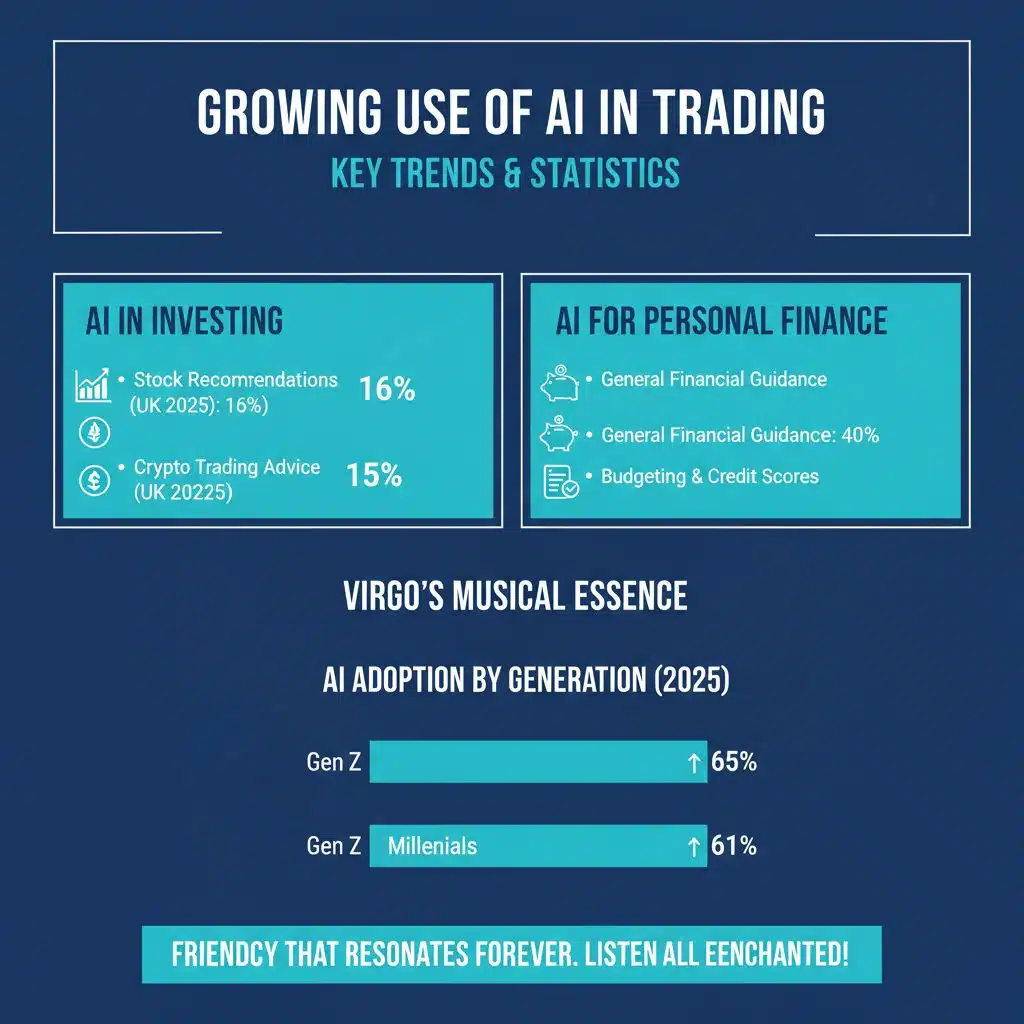
The launch of Pulse arrives at a time when retail investors are increasingly relying on AI tools to help guide their financial decisions. A survey by Finder in August 2025 found that 16% of British investors had used AI to assist with stock recommendations, while 15% reported using AI specifically for crypto trading advice.
Even more notable was the broader adoption of AI for personal finance. Around 40% of survey respondents said they used AI for financial guidance such as budgeting tips or understanding their credit scores. Adoption rates were even higher among younger generations: 65% of Gen Z and 61% of Millennials said they had used AI in some aspect of financial planning.
A Word of Caution
Despite the growing reliance on AI, results can vary widely. Back in March 2023, Cointelegraph tested ChatGPT’s ability to allocate a $100 crypto portfolio. At that time, the tool suggested a diversified strategy focused on Bitcoin, Ether, Cosmos, and Web3 projects. When the same experiment was repeated in 2025, ChatGPT offered a drastically different portfolio that included major assets such as Solana and XRP but also suggested investing in a failed meme token with negligible market value.
This inconsistency underscores the limitations of AI for financial advice. Even though Pulse may provide daily crypto or market updates, experts caution that such recommendations should not be treated as professional financial advice. OpenAI itself has acknowledged this and advises against relying solely on ChatGPT for investment decisions.
Expansion of the Robo-Advisory Market
The interest in AI-powered investment tools is part of a broader financial trend known as the robo-advisory market. According to a report by Research and Markets, this sector is expected to surge from $61.75 billion in 2024 to nearly $471 billion by 2029. The growth highlights how automated, algorithm-driven investment tools are rapidly gaining traction among both retail and institutional investors.
Pulse does not market itself as a robo-advisor, but its ability to deliver daily, customizable updates positions it within the same ecosystem of AI-driven financial assistants.
Privacy, Control, and Limitations
Memory and User Control
Pulse depends on ChatGPT’s memory feature to function effectively. This means users must enable memory for Pulse to generate updates based on past chats and personal preferences. However, OpenAI has emphasized that memory can be turned off at any time. Users can also pause or disable Pulse entirely if they prefer not to receive proactive updates.
Privacy Safeguards
OpenAI has assured users that while Pulse personalizes content, the data it processes is covered under existing privacy frameworks. Pulse does not use individual data to retrain its models in ways that benefit other users. Additionally, safety filters are applied to prevent Pulse from reinforcing unhealthy behaviors or producing harmful recommendations.
Current Limitations
At present, Pulse is limited to mobile Pro subscribers only and can generate just one batch of updates daily. It is not yet available on web browsers or desktop applications, though OpenAI has hinted at wider availability as the system matures.
The Bigger Picture: A Step Toward AI Agents
Pulse is more than a convenience feature. It represents a significant milestone in OpenAI’s broader push to move ChatGPT from being a purely reactive tool to functioning as an autonomous AI agent.
By automatically conducting research, integrating with calendars and emails, and surfacing relevant recommendations, Pulse showcases what the future of AI personal assistants may look like. It aligns with OpenAI’s goal of providing proactive, continuous support rather than just one-off answers.
This shift could also reshape how people interact with technology. Instead of opening apps to find news, market updates, or daily tasks, users may increasingly rely on AI assistants to anticipate their needs and deliver information directly.
The release of Pulse is an early but meaningful step toward transforming ChatGPT into a proactive digital assistant capable of organizing daily life. By combining memory, customization, app integration, and a feedback loop, Pulse aims to deliver more value without overwhelming users.
Its timing is also notable. With AI adoption rising among investors, students, and everyday consumers, the demand for proactive, personalized tools is at an all-time high. However, Pulse’s financial recommendations should be approached with caution, as AI models remain imperfect in predicting markets.
For now, Pulse is best viewed as an information companion—a system that gathers relevant updates overnight and helps you start the day with clarity. As OpenAI refines the feature and rolls it out to more users, it may become one of the most transformative elements of ChatGPT’s evolution.





















