

Plumbing in rural homes often presents unique challenges due to limited access to municipal water systems, unreliable electricity, and environmental concerns. Unlike urban homes, which benefit from established infrastructure, rural households must rely on alternative solutions that provide clean water, efficient waste management, and energy savings.
Traditional plumbing solutions may not always be viable, making it crucial to explore innovative and sustainable alternatives.
The 10 Most Innovative Plumbing Solutions for Rural Homes address these issues by offering cost-effective, eco-friendly, and efficient systems tailored for rural living. Whether you’re looking for water conservation techniques, renewable energy-powered systems, or durable piping materials, these solutions provide practical and sustainable alternatives that ensure long-term functionality and resilience.
Key Considerations for Rural Plumbing Solutions
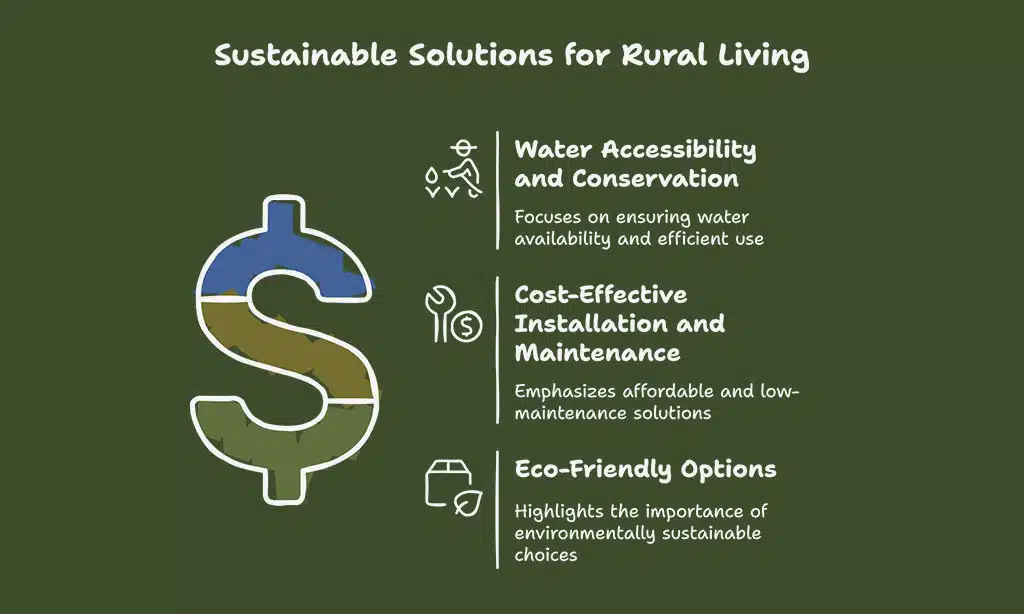
Before implementing any plumbing solution, rural homeowners must consider key factors to ensure efficiency and sustainability.
Water Accessibility and Conservation
- Many rural homes rely on well water, rainwater, or nearby streams.
- Sustainable solutions should prioritize water conservation and accessibility.
- Systems that recycle water or reduce waste can significantly improve efficiency.
Cost-Effective Installation and Maintenance
- Rural homeowners often face budget constraints, making affordability a critical factor.
- Solutions should be easy to install, require minimal maintenance, and have a long lifespan.
Eco-Friendly and Sustainable Options
- Environmental impact is a major concern in rural areas.
- Sustainable plumbing solutions should reduce water wastage, minimize pollution, and use renewable energy sources.
The 10 Most Innovative Plumbing Solutions for Rural Homes
Innovative plumbing technologies have become increasingly important for rural communities, where access to clean water and reliable sanitation can be a challenge. With the rise of sustainable solutions, homeowners in rural areas now have several options to enhance their water supply and waste management systems.
These solutions not only improve water efficiency but also reduce long-term costs, ensuring a better quality of life for rural families. By leveraging modern advancements such as smart meters, rainwater harvesting, and energy-efficient pumps, rural homeowners can create sustainable, cost-effective, and eco-friendly plumbing systems.
The following are the most innovative plumbing solutions designed to address rural challenges efficiently and effectively.
1. Rainwater Harvesting Systems
Rainwater harvesting is an efficient way to collect and store rainwater for household use. This method is especially useful in rural areas where municipal water supply is unavailable or unreliable. Harvested rainwater can supplement potable water needs and serve as a backup during dry seasons, significantly reducing dependency on wells or other external sources.
With proper filtration and purification, rainwater can be safely used for drinking, bathing, and irrigation. Additionally, rainwater harvesting can help reduce soil erosion and provide an eco-friendly solution for agricultural irrigation. Many rural homeowners have successfully integrated this system to meet their water needs sustainably.
How It Works:
- Rainwater is collected from rooftops and directed into storage tanks.
- Filtration systems remove contaminants before use.
- Water can be used for drinking, irrigation, and household needs.
Benefits:
| Feature | Details |
| Cost Savings | Reduces water bills by using free rainwater |
| Environmental Impact | Lowers demand on groundwater and public supply |
| Low Maintenance | Requires periodic cleaning of gutters and filters |
| Emergency Backup | Reliable water source in times of drought |
2. Solar-Powered Water Pumps
Solar-powered pumps provide an energy-efficient solution for rural homes that lack a reliable electricity supply. These pumps harness solar energy to move water from underground wells, ponds, or rivers, making them an excellent option for remote locations. Compared to diesel or electric pumps, solar-powered pumps offer significant cost savings over time with minimal environmental impact.
The initial installation cost may be high, but the long-term benefits in terms of savings and sustainability make them an attractive option. Some models now come with battery backup systems to ensure water pumping even on cloudy days.
How It Works:
- Solar panels generate electricity to power a water pump.
- The pump moves water from a well or storage tank to the house.
Benefits:
| Feature | Details |
| Energy Efficiency | Reduces dependence on non-renewable energy sources |
| Cost Savings | No fuel or electricity expenses |
| Low Maintenance | Fewer moving parts reduce breakdowns |
| Scalability | Suitable for small homes and large agricultural setups |
3. Gravity-Fed Water Supply Systems
Gravity-fed systems provide a simple yet effective way to distribute water without using electricity. These systems rely on elevation to generate water pressure, ensuring consistent flow without pumps.
Many rural homes and farms use this method to deliver water efficiently while keeping operational costs low. Since gravity does all the work, these systems require minimal maintenance and are highly reliable in hilly or elevated areas. Proper piping design and storage tank placement can significantly improve system efficiency, making this an ideal choice for long-term sustainability.
How It Works:
- Water is stored at an elevated position [e.g., a water tower or hilltop tank].
- Gravity pulls water down through pipes to supply the home.
Benefits:
| Feature | Details |
| Energy-Free Operation | No need for electricity or fuel |
| Cost-Effective | Low installation and maintenance costs |
| Reliable | Works continuously without external power |
| Ideal for Hilly Areas | Uses natural elevation to enhance efficiency |
4. Smart Water Meters for Conservation
Smart water meters help rural homeowners track their water usage, detect leaks, and manage water consumption efficiently. These devices offer real-time monitoring, helping users understand their usage patterns and take steps to reduce wastage. By providing instant alerts for leaks and excessive usage, smart meters help save water and reduce monthly bills.
With technological advancements, newer smart meters can be integrated with mobile apps, allowing remote monitoring and control. Many municipalities and rural communities are adopting smart meters to promote sustainable water use.
Features:
- Real-time monitoring via mobile apps
- Automated leak detection alerts
- Data-driven water conservation tips
Benefits:
| Feature | Details |
| Leak Detection | Prevents costly water loss |
| Remote Monitoring | Access data from anywhere |
| Water Conservation | Encourages mindful usage |
| Custom Alerts | Notifies users of unusual consumption patterns |
5. Biodegradable Septic Systems
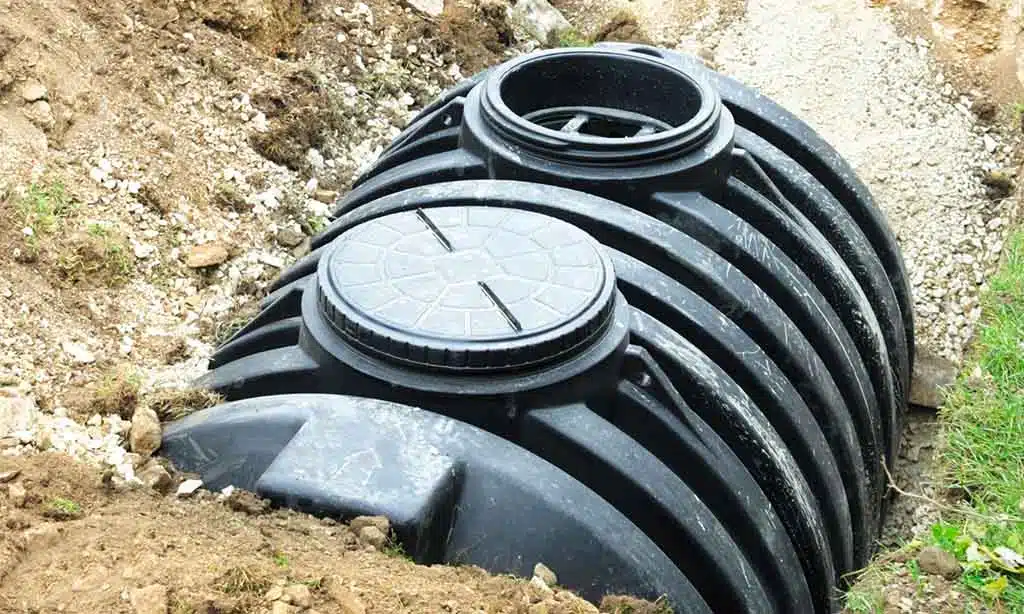
Septic systems are essential for rural homes without municipal sewage connections. Biodegradable systems use natural processes to break down waste more efficiently, reducing environmental impact and minimizing maintenance requirements.
Unlike traditional septic tanks, biodegradable systems accelerate the decomposition process, reducing sludge buildup and extending the system’s lifespan.
These systems also eliminate the need for chemical treatments, making them safer for the environment. Some advanced models incorporate wetland ecosystems or biofilters to further improve wastewater treatment efficiency.
How It Works:
- Bacteria and microorganisms break down waste in the septic tank.
- Treated water is safely discharged into the ground.
Benefits:
| Feature | Details |
| Eco-Friendly | Reduces soil and water pollution |
| Low Maintenance | Requires fewer clean-outs |
| Cost-Effective | Saves on treatment expenses |
| Long Lifespan | Can last decades with proper care |
6. Greywater Recycling Systems
Greywater recycling systems reuse water from sinks, showers, and laundry for non-potable applications such as irrigation and toilet flushing. Instead of allowing lightly used water to go to waste, these systems repurpose it for other household needs, reducing total water consumption.
With the growing emphasis on sustainable living, greywater recycling has gained popularity as a cost-effective solution for water conservation. Proper filtration and treatment ensure the safety of reused water, preventing contamination risks. Some homeowners combine greywater systems with rainwater harvesting for maximum efficiency.
Benefits:
| Feature | Details |
| Water Savings | Reduces overall household consumption |
| Eco-Friendly | Limits strain on water sources |
| Easy Installation | Can be added to existing plumbing |
| Cost-Effective | Lowers utility bills over time |
7. Composting Toilets
Composting toilets offer an alternative to conventional flush toilets, especially in remote areas where septic systems are impractical. These waterless systems turn human waste into compost through natural aerobic decomposition, reducing pollution and conserving water. With proper ventilation and management, composting toilets are odor-free and easy to maintain.
Many modern models come with advanced features such as electric fans and automated waste mixing, improving efficiency. They are a great choice for off-grid living, eco-conscious homeowners, and locations with limited water access.
How It Works:
- Waste is collected in a chamber and mixed with carbon-rich materials like sawdust or coconut husks.
- Aerobic bacteria break down waste into compost over time.
- The resulting material can be safely used as fertilizer in non-edible gardens.
Benefits:
| Feature | Details |
| Water Conservation | Uses no water, reducing strain on supply |
| Eco-Friendly | Converts waste into usable compost |
| Low Maintenance | Requires occasional emptying and aeration |
| Odor-Free | Proper ventilation eliminates bad smells |
8. High-Efficiency Hand Pumps
Hand pumps provide an affordable and reliable way to access groundwater without electricity. These manually operated pumps are ideal for deep and shallow wells, ensuring a steady water supply in rural homes.
Unlike electric pumps, they function independently of power sources, making them an essential tool in off-grid locations. High-efficiency models require less effort to operate and can draw water from deeper depths compared to traditional hand pumps.
They are widely used in developing regions and are known for their durability and ease of maintenance.
How It Works:
- The user operates a lever to draw water from underground sources.
- Valves and suction mechanisms help bring water to the surface.
- Water is directed through a spout for collection.
Benefits:
| Feature | Details |
| No Power Required | Operates manually without electricity |
| Durable | Made from long-lasting, rust-resistant materials |
| Affordable | Low-cost installation and maintenance |
| Versatile | Suitable for various well depths |
9. Tankless Water Heaters
Tankless water heaters provide hot water on demand without the need for bulky storage tanks. This energy-efficient system is ideal for rural homes looking to reduce energy consumption while ensuring a steady supply of hot water. Unlike traditional water heaters that continuously heat water, tankless units activate only when hot water is needed, reducing energy waste.
The latest models feature smart temperature controls and improved efficiency ratings, making them an attractive investment for homeowners. Installation costs are higher upfront, but the long-term energy savings make them a worthwhile choice.
How It Works:
- Cold water passes through a heat exchanger when a hot water tap is turned on.
- A gas burner or electric element heats the water instantly.
- Hot water is delivered directly to faucets without delay.
Benefits:
| Feature | Details |
| Energy Savings | Heats water only when needed |
| Space-Saving | No bulky storage tank required |
| Endless Hot Water | Continuous supply without running out |
| Low Maintenance | Fewer components than traditional water heaters |
10. PVC and PEX Piping for Durability
PVC and PEX pipes are highly durable, corrosion-resistant, and easy to install, making them ideal for rural plumbing systems. Compared to traditional metal pipes, they are more flexible, cost-effective, and long-lasting.
PEX pipes, in particular, offer superior resistance to freezing temperatures and expansion, reducing the risk of bursts in colder climates. Additionally, PVC piping is widely used for drainage and water supply due to its affordability and ease of installation. Many modern rural plumbing systems incorporate a combination of both materials to optimize performance and cost-efficiency.
How It Works:
- Pipes transport water through a network of durable plastic tubing.
- PEX pipes expand and contract with temperature changes, reducing leaks.
- PVC pipes are used for cold water supply and drainage systems.
Benefits:
| Feature | Details |
| Corrosion Resistant | No rusting or degradation over time |
| Easy Installation | Requires minimal tools and fittings |
| Cost-Effective | More affordable than copper or steel pipes |
| Freeze Resistant | PEX pipes expand in cold conditions, preventing bursts |
Takeaways
The 10 Most Innovative Plumbing Solutions for Rural Homes offer sustainable, cost-effective, and practical alternatives to traditional plumbing. By implementing these solutions, rural homeowners can improve water accessibility, conserve resources, and enhance overall efficiency.
Whether you need a reliable water source, eco-friendly waste management, or durable piping, these innovative options ensure a seamless plumbing experience.
Investing in these modern plumbing techniques not only enhances daily convenience but also contributes to long-term environmental sustainability. Moreover, implementing these solutions can increase property value, making rural homes more appealing and resilient. By staying informed about the latest advancements in plumbing technology, homeowners can make educated choices that align with both their needs and budget.
As climate change and water scarcity become global concerns, adopting innovative plumbing solutions becomes an essential step toward sustainability. Explore these cutting-edge plumbing innovations today and take a proactive step toward a more efficient and eco-friendly rural home!























