

Disabled individuals face unique challenges in society, but there are legal frameworks designed to protect their rights and ensure equality in various areas of life, including education, employment, healthcare, and accessibility.
These laws aim to reduce discrimination, promote inclusivity, and offer disabled individuals the necessary support to lead fulfilling lives.
Understanding these legal rights is crucial for both disabled individuals and society as a whole to foster an inclusive environment.
This comprehensive guide explores 15 key legal rights of disabled individuals, offering a detailed understanding of the protections they are entitled to and how they can exercise those rights.
1. Right to Non-Discrimination: Ensuring Equal Opportunities
What It Means
Disabled individuals have the right to live free from discrimination.
Various international laws, including the Americans with Disabilities Act (ADA) in the United States and comparable legislation in other nations, protect this right.
These laws make it illegal to discriminate against disabled people in areas such as employment, housing, education, and public services.
How It Applies
Employers, schools, and service providers cannot deny opportunities or impose different conditions on disabled individuals because of their disability.
For example, a job applicant cannot be rejected solely based on their disability if they are otherwise qualified for the role.
Practical Applications:
- Employers must provide reasonable accommodations to enable disabled individuals to perform their jobs unless it causes undue hardship.
- Schools must offer equal access to educational programs and activities for disabled students.
2. Right to Reasonable Accommodations: Adapting Environments to Support Inclusion
What It Means
Disabled individuals have the right to reasonable accommodations in various settings, including the workplace, schools, and public spaces.
Reasonable accommodations refer to adjustments or modifications that enable disabled individuals to participate fully in activities or access services.
How It Applies
In the workplace, reasonable accommodations might include providing assistive technology, modifying work schedules, or adjusting physical environments to make them accessible.
In schools, this could mean offering alternative testing arrangements or providing educational materials in accessible formats.
Practical Applications:
- An employee with a mobility impairment might be provided with an accessible desk or ergonomic chair.
- A student with a learning disability could be given additional time to complete exams.
3. Right to Accessible Education: Inclusive Learning Environments
What It Means
All individuals, regardless of disability, have the right to access education.
This right ensures that disabled students receive an education that meets their specific needs and prepares them for independent living and employment.
How It Applies
In many countries, laws like the Individuals with Disabilities Education Act (IDEA) in the U.S. ensure that schools provide special education services and accommodate students with disabilities.
These services include individualized education plans (IEPs) that are tailored to meet each student’s unique needs.
Practical Applications:
- Schools are required to provide special education services such as speech therapy, physical therapy, and adaptive physical education.
- Disabled students should have access to the same extracurricular activities as their non-disabled peers, with necessary accommodations.
4. Right to Equal Employment Opportunities: Access to the Workforce
What It Means
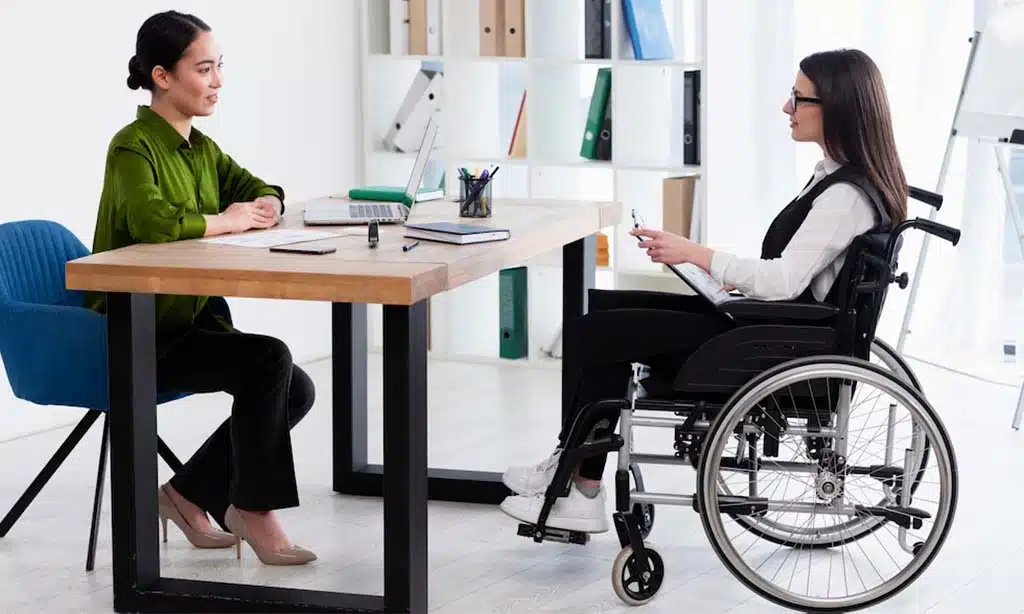
Disabled individuals have the right to equal employment opportunities, meaning they cannot be discriminated against in hiring, promotion, or employment practices based on their disability.
Employers must evaluate disabled candidates based on their skills and qualifications rather than their disabilities.
How It Applies
Employers are required to provide reasonable accommodations that enable disabled employees to perform essential job functions.
This may include modifying job responsibilities, providing assistive technology, or making the workplace more accessible.
Practical Applications:
- An employer cannot ask about a candidate’s disability during the hiring process unless it directly affects their ability to perform essential job functions.
- Employees with disabilities must be given the same opportunities for advancement and professional development as their non-disabled colleagues.
5. Right to Healthcare: Equal Access to Medical Services
What It Means
Disabled individuals have the right to access healthcare services that meet their specific needs.
Healthcare providers are required to make reasonable accommodations to ensure disabled individuals receive the same quality of care as others.
How It Applies
Healthcare facilities must be physically accessible, and healthcare providers must offer services in a manner that accommodates disabilities.
For example, medical offices should have accessible examination tables and provide sign language interpreters for patients who are deaf.
Practical Applications:
- Hospitals and clinics should ensure that their facilities are accessible to people with mobility impairments, including ramps and elevators.
- Healthcare providers must offer information in accessible formats, such as braille or large print, for individuals with visual impairments.
6. Right to Live Independently: Access to Independent Living Services
What It Means
Disabled individuals have the right to live independently and make their own choices about their lives.
Access to independent living services, which offer the tools, resources, and support required for self-sufficiency, supports this right.
How It Applies
Independent living services may include personal care assistance, assistive technology, and transportation services that allow disabled individuals to manage their daily lives independently.
Governmental or non-profit organizations frequently offer these services.
Practical Applications:
- A disabled individual may receive funding for home modifications, such as wheelchair ramps or accessible bathrooms.
- Personal care assistants may help with tasks such as cooking, dressing, and transportation, enabling disabled individuals to live independently.
7. Right to Accessible Public Spaces: Equal Participation in Society
What It Means
Disabled individuals have the right to access public spaces, including government buildings, parks, transportation, and commercial establishments.
Laws such as the ADA in the U.S. mandate that public spaces must be accessible to everyone, regardless of ability.
How It Applies
Public spaces must provide accommodations such as ramps, elevators, accessible restrooms, and parking spots.
Public transportation systems are also required to offer accessible services, including vehicles equipped with wheelchair lifts and stations with tactile paving for individuals with visual impairments.
Practical Applications:
- Shopping malls, restaurants, and theaters must be wheelchair accessible, including providing ramps and accessible restrooms.
- Public transportation systems must ensure that buses, subways, and trains are equipped with accessibility features like ramps or lifts.
8. Right to Privacy and Confidentiality: Protecting Personal Information
What It Means
Disabled individuals have the right to privacy, including the protection of their personal information.
This right ensures that their medical, educational, and employment-related information is kept confidential and only shared with authorized personnel.
How It Applies
Healthcare providers, employers, and educational institutions are required to safeguard sensitive information related to a person’s disability.
This includes medical records, disability accommodations, and any other personal data that could affect an individual’s privacy.
Practical Applications:
- Employers cannot disclose an employee’s disability without their consent, except as required to provide reasonable accommodations.
- Medical professionals must ensure that a patient’s disability-related information is shared only with authorized healthcare providers.
9. Right to Accessible Voting: Participation in the Democratic Process
What It Means
Disabled individuals have the right to participate in the democratic process, including voting in elections.
Governments must ensure that polling places are accessible, and alternative voting methods are available for those who cannot vote in person due to a disability.
How It Applies
Polling places must provide accommodations such as ramps, accessible voting machines, and assistance for voters who need help casting their ballots.
In some cases, governments offer absentee or mail-in voting for individuals who cannot physically reach a polling station.
Practical Applications:
- Polling stations should be fully accessible, with ramps, wheelchair access, and voting machines that accommodate individuals with visual or physical impairments.
- Disabled individuals may request assistance from poll workers or bring someone to help them vote privately and securely.
10. Right to Access Government Benefits and Services
What It Means
Disabled individuals have the right to access government benefits and services, including social security, disability benefits, healthcare, housing assistance, and vocational rehabilitation programs.
These services are designed to provide financial and social support to individuals with disabilities.
How It Applies
Governments must ensure that disabled individuals have access to benefits without discrimination or undue delay.
Applications for benefits must be available in accessible formats, and service providers must make accommodations to assist individuals in navigating the application process.
Practical Applications:
- Individuals with disabilities can apply for social security disability benefits if they are unable to work due to their condition.
- Vocational rehabilitation programs offer job training and support services to help disabled individuals enter or re-enter the workforce.
11. Right to Family Life: Protection of Parental Rights
What It Means
Disabled individuals have the right to marry, start a family, and maintain relationships without discrimination.
Laws protect the rights of disabled individuals to raise children and participate in family life, including the right to adopt or foster children.
How It Applies
Disability alone cannot be used as a reason to deny someone the right to become a parent.
Social services and legal systems must provide support to disabled parents to ensure they can care for their children, including offering accommodations or services when necessary.
Practical Applications:
- Courts must consider a disabled parent’s ability to care for a child without discrimination based solely on their disability.
- Disabled individuals can request support services such as in-home assistance or parenting classes to help them fulfill their parental responsibilities.
12. Right to Accessible Communication: Overcoming Barriers
What It Means
Disabled individuals have the right to access information and communication in accessible formats.
This includes providing sign language interpreters, closed captioning, braille, and other accommodations to ensure that communication is not a barrier to participation in society.
How It Applies
Public and private organizations must ensure that disabled individuals have access to the information they need in formats they can understand.
This applies to healthcare, education, legal services, and other essential areas of life.
Practical Applications:
- Hospitals and courts must provide sign language interpreters for deaf individuals.
- Websites and digital services must be designed to be accessible to individuals with visual or cognitive impairments.
13. Right to Fair Treatment in the Criminal Justice System
What It Means
Disabled individuals have the right to fair treatment in the criminal justice system, whether they are victims, witnesses, or defendants.
Law enforcement and legal systems must provide accommodations to ensure disabled individuals can fully participate in legal proceedings.
How It Applies
Police officers, lawyers, and judges must be trained to recognize and accommodate disabilities during legal proceedings.
This includes providing interpreters, ensuring accessibility in courtrooms, and adapting communication methods to meet the needs of disabled individuals.
Practical Applications:
- Police departments may need to provide accessible holding cells or ensure that disabled individuals are not denied necessary medical care while in custody.
- Courts must provide accommodations such as interpreters or alternative communication methods for disabled individuals who are involved in legal cases.
14. Right to Accessible Housing: Inclusive Living Spaces
What It Means
Disabled individuals have the right to live in accessible housing that meets their needs.
Housing providers, both public and private, must make reasonable accommodations to ensure that disabled individuals can access and enjoy their homes just as non-disabled individuals do.
How It Applies
This right includes ensuring that homes are physically accessible with features like ramps, wide doorways, and accessible bathrooms.
In some cases, governments provide financial assistance or incentives to help individuals modify their homes to meet accessibility needs.
Practical Applications:
- Landlords must allow tenants with disabilities to make necessary modifications to their rental units, such as installing grab bars or ramps.
- Government housing assistance programs may provide funding for home modifications or offer accessible housing options.
15. Right to Participate in Cultural and Recreational Activities

What It Means
Disabled individuals have the right to participate in cultural, recreational, and leisure activities, including sports, the arts, and community events.
Public and private organizations must make reasonable accommodations to ensure that these activities are accessible.
How It Applies
Sports facilities, theaters, museums, and parks must provide accommodations such as accessible seating, ramps, and assistive technology.
Additionally, organizations must ensure that disabled individuals are not excluded from participating in events or activities due to their disabilities.
Practical Applications:
- Sports leagues must offer adaptive equipment or modified rules to allow disabled individuals to participate.
- Theaters and cinemas must provide accessible seating and offer services like audio descriptions or captioning for disabled patrons.
Conclusion: Advocating for the Rights of Disabled Individuals
The legal rights of disabled individuals are essential for ensuring equality, dignity, and participation in all aspects of life.
These rights, protected by national and international laws, empower disabled individuals to live independently, pursue education and employment, and participate in society fully.
However, while laws are in place, it’s crucial for society to remain vigilant in advocating for these rights and ensuring that they are upheld.
By understanding and supporting the legal rights of disabled individuals, we can create a more inclusive, accessible world for everyone.






















