


When most law firms think about branding, they think about the basics: the logo, the colors, the firm name, maybe a catchy tagline. While those elements are important, they only scratch the surface of what truly makes a law firm’s brand impactful and memorable.
In reality, your brand is a promise—a consistent message that tells potential clients what they can expect from you at every touchpoint, from your website to the way your staff answers the phone. And in a highly competitive legal market, especially in areas like personal injury or criminal defense, a clearly defined brand can be the difference between a potential client choosing your firm or scrolling past to the next.
Let’s explore what branding really means for law firms, why it matters, and how you can build a brand that builds trust—and ultimately—drives more qualified leads. An experienced law firm marketing agency can help build your brand to help you sign more cases.
What Is a Law Firm’s Brand, Really?
Your brand is the emotional and practical impression people have about your firm. It’s shaped by:
- The tone of your website content
- Your practice areas and how you present them
- Your reviews and testimonials
- Your office design and how your staff interacts with clients
- The clarity and consistency of your messaging
A brand answers two core questions:
- What do you stand for?
- Why should someone trust you with their legal matter?
That’s a far cry from just a sleek logo. If your visual identity looks polished but your messaging is generic or inconsistent, you’re not building a brand—you’re decorating a business.
Why Your Brand Needs to Be a Promise
Law is one of the few professions where people hire you during the most stressful times of their lives. They’re not just looking for a lawyer—they’re looking for reassurance, credibility, and confidence that they’re making the right choice.
Your brand should deliver that reassurance by communicating a promise—something clients can believe in.
For example:
- A personal injury firm might promise: “We fight hard so you can focus on healing.”
- A criminal defense attorney could convey: “Tough defense when everything’s on the line.”
- A family law firm may center its brand on: “Guiding you through life’s most difficult transitions.”
Each promise sets the tone for every client interaction. If your messaging, website, and intake process support that promise, you’ll build a brand clients trust.
Why So Many Law Firms Sound the Same
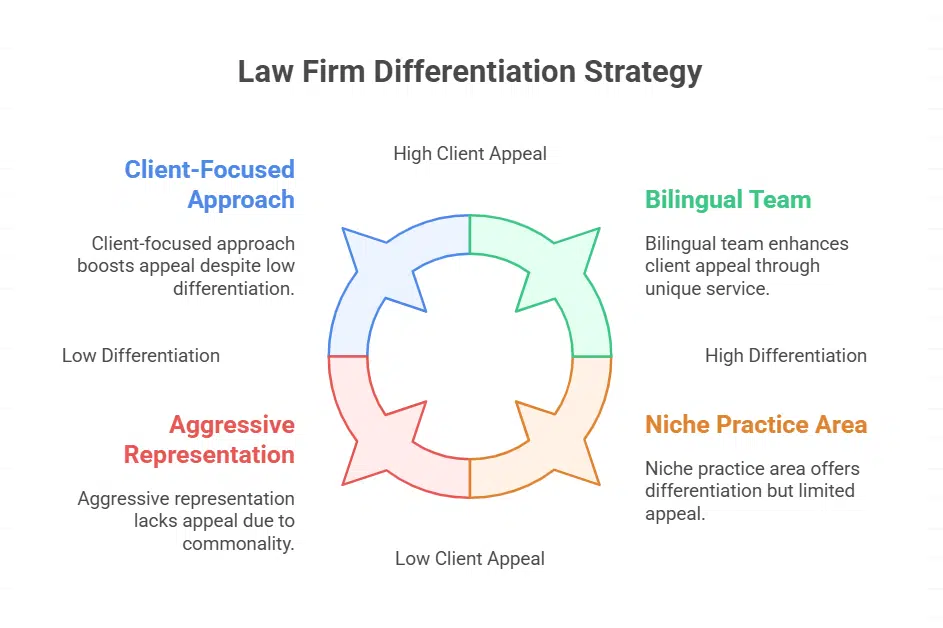
Let’s be honest: most law firm websites use the same recycled language—“aggressive,” “experienced,” “client-focused,” “fighting for justice.” The result? Everyone starts to blend together.
If your brand doesn’t differentiate you from your competitors, potential clients won’t see a reason to choose you. Worse, they might assume you’re just another firm saying the same things everyone else does.
Fix it:
Find your angle. Do you treat clients like family? Do you take on cases that other firms turn away? Do you offer fast communication or a bilingual team? Lean into the things that make your firm different—not just in practice areas, but in experience and values.
How to Define and Communicate Your Brand Promise
Here’s a simple framework for crafting a law firm brand that resonates:
1. Clarify Your Audience
- Who are your ideal clients?
- What are they going through emotionally and legally?
- What are they afraid of? Hoping for?
When you understand your audience, you can tailor your messaging to speak directly to their concerns.
2. Define What You Stand For
- What makes your firm different?
- Why did you start practicing law in the first place?
- What values drive your client relationships?
Your brand promise should emerge naturally from these answers.
3. Simplify Your Message
Once you know your promise, express it in plain language across your marketing:
- Homepage headline
- Tagline under your logo
- Google Business Profile description
- Email signature
- Intake scripts used by staff
Consistency is key. Don’t make your brand vague—make it unmistakable.
Real-World Branding in Action
Let’s say two personal injury firms are competing for attention in the same city.
- Firm A’s website says: “We are experienced trial lawyers who fight for maximum compensation.”
- Firm B’s website says: “You don’t just need a lawyer. You need a team that treats you like family—and doesn’t back down from insurance companies.”
Firm A might be technically accurate, but Firm B makes a human connection and communicates a clear promise. Clients know exactly what they’re signing up for—and they feel something when they read it.
Branding Touchpoints You Can’t Ignore
Once you define your brand promise, you need to reinforce it at every client touchpoint:
- Website design and content – Does your site reflect your tone and values? Or does it look like a legal template?
- Google reviews – Do they support your brand narrative (e.g., “responsive,” “caring,” “fierce advocate”)?
- Intake process – Does your team answer the phone in a way that aligns with your promise?
- Attorney bios – Do your bios feel human and trustworthy, or are they filled with jargon?
The Long-Term Value of Branding
Strong branding not only builds trust with clients—it builds value for your business. It:
- Encourages referrals, because people remember how you made them feel
- Increases conversion rates, since clients already feel aligned with your values
- Supports SEO, when your messaging is consistent across directories and content
- Builds loyalty, so clients return when they need help again
Branding isn’t just marketing fluff—it’s strategic positioning. And for law firms that want to grow in a crowded market, it’s essential.
Your law firm’s brand is more than a logo or a tagline—it’s a promise. A clear, consistent, and emotionally resonant brand helps potential clients trust you before they even pick up the phone. And that trust is what turns visitors into leads, and leads into long-term clients.
So the next time you update your website or rewrite your bio, ask yourself:
Are we just saying who we are? Or are we showing what we promise?





















