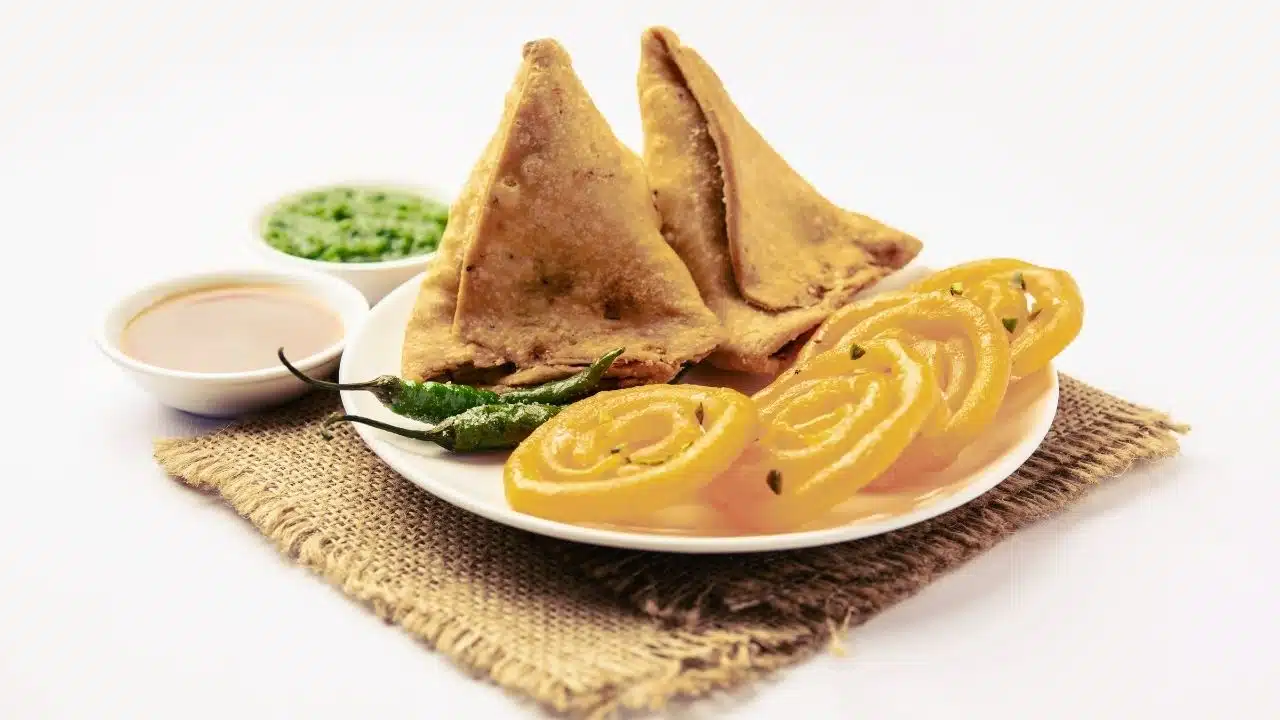
In recent days, a wave of confusion and outrage swept across India after media outlets reported that traditional street foods like samosas, jalebis, and vada pav were allegedly under government scrutiny for health-related warnings. The backlash was immediate and emotional, especially on social media, where people expressed frustration over what they perceived as an unfair crackdown on India’s beloved snacks.
However, the Union Ministry of Health and Family Welfare stepped in promptly to clarify the situation and dispel misinformation. Contrary to popular belief, the government has not issued any directive banning, restricting, or labeling samosas and jalebis. Instead, the ministry explained that it had initiated a public health awareness campaign designed to encourage healthier dietary choices by displaying educational signage about hidden sugars and oils in various food products—not just Indian snacks.
What Sparked the Controversy?
On Monday, several media reports surfaced claiming that the food Safety and Standards Authority of India (FSSAI) had identified 14 popular food items that were to be subjected to cautionary warnings. Among these were iconic Indian treats such as:
- Samosas
- Jalebis
- Kachoris
- Pakodas
- Vada Pav
Western items like burgers, soft drinks, cakes, and chocolates were also mentioned in the list.
The reports indicated that public venues such as office canteens, cafeterias, and hospitals might soon display warning labels alongside these food items—similar to tobacco warnings—raising concerns that these snacks would be stigmatized or even banned.
The Government’s Clarification: Not About Banning, But About Educating
The next day, the Ministry of Health and Family Welfare issued an official clarification. The ministry emphasized that the advisory from FSSAI, dated 21 June 2025, did not single out specific food items. Instead, it encouraged the display of “Sugar and Oil Boards” in public settings such as lobbies, meeting rooms, canteens, and cafeterias.
These boards are part of a “behavioral nudge” strategy, aimed at making people more aware of the health risks associated with excessive consumption of sugar, salt, and oil. The intent, the ministry said, is to inform—not alarm—the public, and no directive has been issued to place warning labels on individual items like samosas or jalebis.
The campaign has already begun rolling out in some public institutions, including AIIMS Nagpur, where these boards are being displayed near food stalls and dining areas to raise awareness, especially among working professionals and students who frequently rely on outside food.
📢Advisory issued by Union Health Ministry to display Oil and Sugar Boards in workplaces is an initiative to promote healthier dietary habits
These Boards serve as behavioural nudges regarding hidden fats and excess sugar in various food products
The Advisory does not direct…
— PIB India (@PIB_India) July 15, 2025
What Did the Health Advisory Actually Say?
The internal advisory, signed by Health Secretary Punya Salila Srivastava, was part of a broader strategy to promote healthier food choices in workplaces. The letter recommended the display of sample boards that highlight the sugar and oil content in commonly consumed items—especially ultra-processed snacks.
The foods listed were merely examples, not targets. Alongside samosas and jalebis, the list also included:
- Refined biscuits
- Cakes
- Carbonated beverages
- Western fast food (pizzas, burgers, fries)
The advisory aligns with India’s growing concern about the epidemic of lifestyle-related diseases, which have become one of the top causes of mortality in the country.
India’s Health Crisis: Why This Awareness Push Matters
India is facing a severe health crisis due to non-communicable diseases (NCDs). These include type 2 diabetes, hypertension, cardiovascular diseases, and obesity, many of which are fueled by poor diet and lack of awareness.
Thanks to Hon’ble @PMOIndia @narendramodi ji’s push for healthier workplaces, @MoHFW_INDIA has urged all govt offices to prominently display Sugar Boards. Sharing model Sugar Boards to display in offices. Tag us in your stories/posts
Download: https://t.co/jNDDpe1TIX @ICMRDELHI pic.twitter.com/dAbATBF2ra— ICMR – National Institute of Nutrition (@ICMRNIN) July 8, 2025
Some alarming facts:
- According to the International Diabetes Federation, more than 77 million Indians currently live with type 2 diabetes—accounting for around 9% of the adult population.
- Diabetes and related complications contribute to nearly 2% of all annual deaths in India.
- The World Health Organization (WHO) estimates that trans fats—commonly found in deep-fried foods like samosas and poor-quality street snacks—cause more than 77,000 premature cardiovascular deaths in India every year.
- A study published in the American Journal of Clinical Nutrition found that people who consume high amounts of refined grains (like maida used in samosas and jalebis) are eight times more likely to develop metabolic syndrome, a cluster of conditions that include insulin resistance, high blood pressure, and obesity.
What Experts Are Saying
Dr. Amar Amale
Cardiologist and head of the Nagpur chapter of the Cardiological Society of India
“Sugar and trans fats are the new tobacco. Just as cigarette packets carry warnings, it’s time we help people recognize the dangers hidden in their food.”
Dr. Rajiv Kovil
Diabetologist, Zandra Healthcare
“These snacks are calorie-dense and nutrient-poor. They contribute to obesity, insulin resistance, fatty liver, and even cognitive issues over time.”
Health experts broadly agree that public awareness is essential, especially in urban India where fast food and fried snacks are consumed frequently.
Critics Say the Campaign Unfairly Targets Indian Street Food
While health experts are largely supportive, criticism has emerged from several quarters. Many nutritionists, celebrities, and public figures believe that the government’s messaging unfairly vilifies traditional Indian foods, while giving Western processed foods a free pass.
Rujuta Diwekar
Celebrity nutritionist and public health advocate
“Tobacco is proven to harm regardless of context. But samosas and jalebis? They’re part of our culture. If we’re really serious about public health, let’s start with colas, cookies, and industrial chips. Tax big food corporations that sell ultra-processed garbage.”
She added that there’s ample scientific evidence showing that ultra-processed foods—typically sold by multinational corporations—pose a far bigger health threat than homemade or traditional snacks.
Political Voices Join the Debate
Milind Deora, former Member of Parliament, expressed concern that the FSSAI’s initiative might lack uniformity. In a public post on X (formerly Twitter), he warned against discriminatory regulation, noting:
In light of @MoHFW_INDIA’s move to inform consumers about ingredients in samosas & jalebis, the Parliamentary Subordinate Legislation Committee, which I chair, is currently reviewing @fssaiindia’s plans to tackle India’s growing #Obesity crisis, in line with PM @narendramodi ji’s… pic.twitter.com/nfx185hmR0
— Milind Deora | मिलिंद देवरा (@milinddeora) July 14, 2025
“Indian food shouldn’t be unfairly targeted while multinational companies continue to flood the market with Western junk food.”
Deora added that the Parliamentary Subordinate Legislation Committee is reviewing the FSSAI’s regulatory approach to ensure it applies fairly across all food sectors—including alcohol and imported processed food.
Public Reaction: Mixed but Passionate
The topic struck a chord with many Indians. On social media, reactions were split between support for health awareness and concern over cultural insensitivity.
Voices from X (formerly Twitter):
- Kiran Manral, writer:
“Let’s have these warnings on colas, chips, pizzas, and packaged meat too—not just on our comfort food.”
- A user argued:
“Jalebis and samosas are not health food—but they’re not tobacco either. You eat them for joy, not addiction.”
Others suggested placing calorie information or sugar/fat content charts instead of warnings, allowing people to make informed choices without feeling guilt or shame about eating their favorite foods.
The Bigger Picture: Education, Not Elimination
To summarize, samosas and jalebis are not being banned or labeled as dangerous by the Indian government. The current initiative is part of a long-term push to address India’s growing health crisis, with a focus on:
- Raising awareness
- Reducing sugar and trans fat consumption
- Nudging people toward informed food choices
The FSSAI and health ministry are working toward a nutrition-literate India, where people understand the health implications of both traditional and modern food habits.
The initiative also lays the groundwork for future food labeling regulations, similar to successful models used in countries like Chile, Mexico, and the UK, where “high sugar” or “high fat” symbols on packaged food have helped reduce public consumption of unhealthy items.
The bridges fall with unprecedented frequency, people die but the regime worried about health risks of samosa-jalebi-pakora.
What a cruel joke it has become.— Urvish Kothari ~ उर्वीश कोठारी (@urvish2020) July 15, 2025
I support a statutory warning on samosa-jalebi. It should say in bold letters: It’s criminal to have just one.https://t.co/rnLEwfWwNH pic.twitter.com/gfNdXeEC8C
— ᴋᴀᴍʟᴇsʜ sɪɴɢʜ / tau (@kamleshksingh) July 14, 2025