

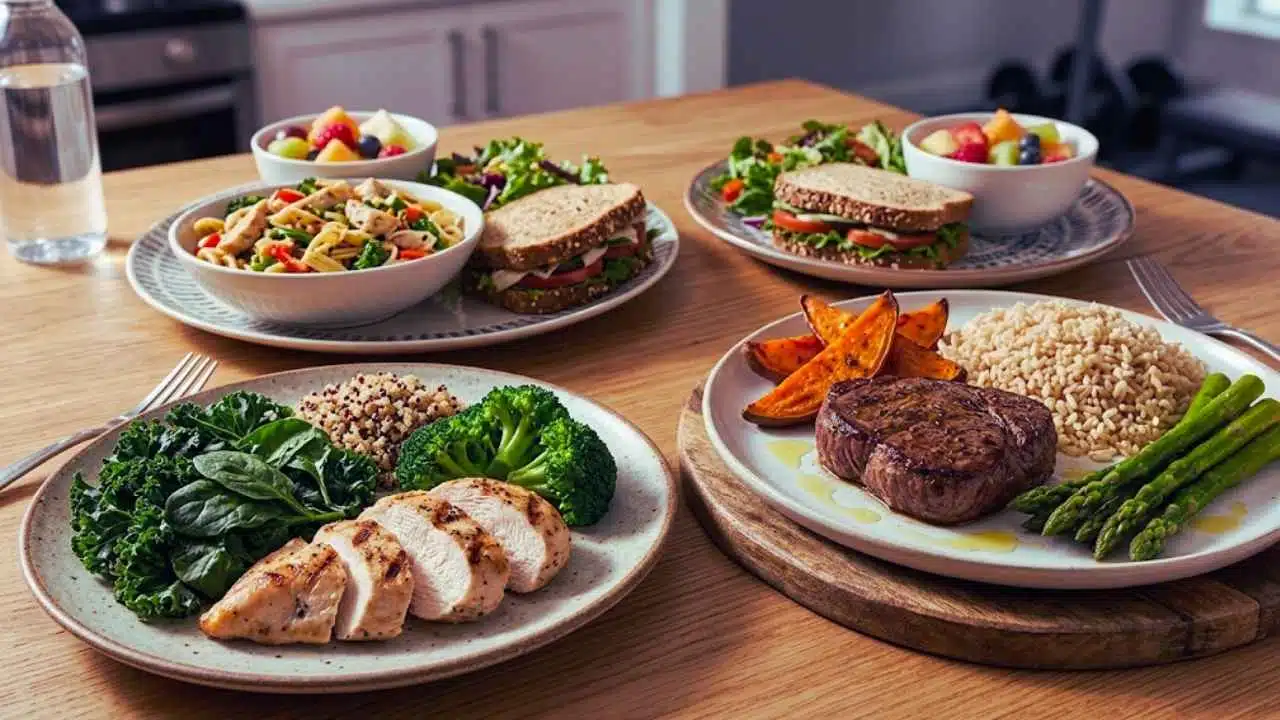
Eating for fitness goals is not about finding one perfect diet that works for everyone. It is about matching food to the goal, the training, the body, and the schedule. That sounds simple, but this is where many active people get stuck. They use a fat loss diet while trying to gain muscle.
They copy a bodybuilder meal plan while only training three days a week. They cut carbs before hard workouts and then wonder why performance drops. They eat more protein but forget total calories. They chase supplements before fixing lunch, hydration, and sleep.
I have seen this pattern often with busy professionals. The goal is clear, but the food system does not match it. A person wants fat loss, but they snack randomly at night because they under-eat during the day. Another wants muscle gain, but their meals are too small to support hard training. Someone else wants better performance, but they train after work with coffee, low water, and no real fuel.
Most desk professionals are not training like elite athletes, but they still ask a lot from their bodies. They sit for long hours, work under stress, train in limited time, and expect steady energy. Eating for fitness goals can help connect the goal with real life.
This article is educational: It is not medical advice. People with diabetes, kidney disease, heart disease, gastrointestinal conditions, eating disorders, pregnancy-related nutrition needs, medication concerns, or special medical diets should get personalized guidance from a qualified professional.
Why Eating for Fitness Goals Matters?
Eating for fitness goals matters because different goals create different demands.
Muscle gain needs enough food, enough protein, enough carbohydrates, and progressive training. Fat loss nutrition needs a sustainable calorie deficit, but still enough protein, fiber, fluids, and energy to train. Performance nutrition needs fuel before training, recovery after training, hydration, and enough total intake to support repeated effort.
The mistake is treating all goals the same. A person trying to lose fat may need smaller portions and better meal structure. A person trying to gain muscle may need larger meals and more planned snacks. A person training for endurance may need more carbohydrates than someone doing light mobility work.
Food is not only about body weight. It affects training quality, focus, recovery, soreness, hunger, mood, sleep, and consistency. If the diet does not match the goal, the workout plan becomes harder to follow.
This does not mean every meal needs to be calculated. Most people do not need an advanced athlete plan. They need a clear food direction that matches their current goal.
| Fitness Goal | Main Nutrition Need | What It Helps | Common Mistake |
| Fat loss | Sustainable calorie deficit | Fat reduction | Cutting too hard |
| Muscle gain | Calorie surplus and protein | Growth and recovery | Eating too little |
| Strength | Protein and workout fuel | Training quality | Lifting under-fueled |
| Endurance | Carbs, fluids, sodium | Energy and stamina | Fearing carbs |
| General fitness | Balanced meals | Consistency | Overcomplicating |
| Body recomposition | Protein, training, patience | Muscle retention and fat loss | Expecting fast change |
| Busy professional wellness | Meal timing and hydration | Energy stability | Skipping meals |
| Athletic performance | Fuel and recovery rhythm | Repeated output | Random eating |
Eating for fitness goals is not about discipline only. It is about using the right nutrition fundamentals strategy for the right outcome.
The Foundation: One Goal at a Time Works Better

The first practical rule is simple: choose the main goal.
Many people want fat loss, muscle gain, better running, more energy, visible abs, better sleep, and stronger lifts all at once. That is understandable, but food planning becomes messy when every goal competes.
A fat loss plan usually needs a calorie deficit. A muscle gain plan usually needs a calorie surplus. Performance training often needs enough food to handle higher workload. These goals can overlap, but they do not always ask for the same eating pattern.
This is why beginners often feel confused. They eat low calories during the week, then try to lift heavy. They increase cardio, but also want bigger muscles. They cut carbs, then feel weak during training. The issue is not effort. The issue is mixed signals.
A better approach is to pick a primary goal and a secondary support goal. For example, the primary goal may be fat loss. The support goal may be keeping strength. Or the primary goal may be muscle gain. The support goal may be limiting unnecessary fat gain. Or the primary goal may be performance. The support goal may be stable body weight.
For the corporate athlete, this matters because time and recovery are limited. A clear goal makes food decisions easier. Lunch, snacks, dinner, pre-workout food, and post-workout meals all become more practical.
| Goal Setup | What It Means | Food Direction | Better Than |
| Fat loss first | Reduce body fat | Moderate deficit, high protein | Starving all day |
| Muscle gain first | Add lean mass | Small surplus, enough carbs | Protein only |
| Performance first | Train harder and recover | Carbs, fluids, calories | Under-fueling |
| Strength first | Lift better | Protein, carbs, recovery meals | Low-energy lifting |
| Recomposition | Build slowly while losing fat | Protein, strength training, patience | Scale obsession |
| General health | Feel and move better | Balanced meals and routine | Extreme rules |
| Maintenance | Keep results | Stable portions and habits | Diet cycling |
| Energy stability | Avoid crashes | Meal timing and hydration | Coffee-only fuel |
A clear goal does not limit progress. It protects the plan from becoming chaotic.
Calories: The Quiet Driver Behind Most Fitness Goals
Calories are not the whole story, but they are hard to ignore. They help explain why one person loses weight, another maintains, and another gains.
If you consistently eat less energy than your body uses, weight usually trends down. If you consistently eat more, weight usually trends up. If intake and output are close, weight tends to stay more stable. This is simple in theory, but real life adds stress, sleep, appetite, movement, food quality, hormones, medications, and training changes.
For fat loss nutrition, calories matter because a deficit is needed. But the deficit should not be so aggressive that training, mood, sleep, and recovery fall apart. A plan that creates constant hunger often fails because the body pushes back through cravings, fatigue, and lower daily movement.
For muscle gain, calories matter because growth needs resources. Many beginners train hard but eat like they are dieting. They expect muscle gain from protein alone, but the body also needs enough total energy.
For performance nutrition, calories matter because hard training is expensive. Running, cycling, sports, heavy lifting, and repeated sessions create energy demand. If the body does not get enough, performance may drop even if food quality looks “clean.”
A practical approach is to watch the trend. Body weight, training performance, hunger, energy, recovery, and measurements tell you whether the current intake fits the goal.
| Calorie Pattern | Likely Result | Best Use | Warning Sign |
| Moderate deficit | Gradual fat loss | Fat loss phase | Hunger is manageable |
| Aggressive deficit | Faster scale drop | Rare short-term use | Poor sleep, cravings, weakness |
| Maintenance | Stable weight | General fitness, performance base | No body composition change |
| Small surplus | Muscle gain support | Lean gain phase | Weight rises too fast |
| Large surplus | Faster weight gain | Rarely needed for beginners | Excess fat gain |
| Random weekdays and weekends | Unclear progress | Common real-life pattern | Scale swings and frustration |
| Under-eating with hard training | Low energy | Not ideal | Soreness and poor recovery |
| Adequate intake with training | Better adaptation | Performance and consistency | Needs planning |
Calories set the direction, but food quality decides how sustainable that direction feels.
Protein: The Anchor for Muscle, Fat Loss, and Recovery
Protein is the anchor nutrient for most fitness goals. It supports muscle repair, helps preserve lean mass during fat loss, improves fullness, and supports recovery from training.
For muscle gain, protein helps provide the building blocks for growth. But protein alone does not build muscle. It works best with progressive strength training, enough total calories, sleep, and recovery.
For fat loss nutrition, protein becomes even more important. A calorie deficit can reduce body weight, but the goal is not just to lose weight. The goal is to lose fat while keeping as much muscle as possible. Protein helps with that, especially when paired with resistance training.
For performance nutrition, protein supports repair between sessions. It may not provide the same quick fuel as carbohydrates, but it helps the body adapt to training.
The practical mistake is saving most protein for dinner. Many busy people eat low-protein breakfasts, light lunches, and then try to fix everything at night. A better approach is to spread protein through the day.
Good protein sources include eggs, Greek yogurt, cottage cheese, fish, chicken, lean meat, tofu, tempeh, lentils, beans, soy milk, edamame, seitan, and protein powder when needed.
| Goal | Protein Role | Practical Food Move | Common Mistake |
| Fat loss | Fullness and muscle retention | Protein at each meal | Eating tiny protein portions |
| Muscle gain | Growth support | Larger protein meals and snacks | Protein without enough calories |
| Strength | Repair support | Protein after lifting | Skipping dinner |
| Endurance | Recovery support | Protein with carbs after long sessions | Only focusing on carbs |
| Recomposition | Muscle support | Consistent protein daily | Weekend inconsistency |
| Busy schedule | Prevents random snacking | Quick protein options | Coffee-only breakfast |
| Plant-based fitness | Needs planning | Tofu, tempeh, lentils, soy foods | Salad-only meals |
| Older active adults | Muscle maintenance support | Protein spread across meals | Too little at breakfast |
Protein should not become a fear-based obsession. It should become a steady habit.
Carbohydrates: The Fuel Most Active People Misunderstand
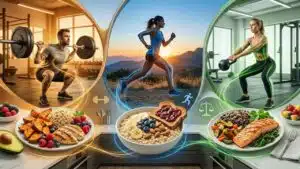
Carbohydrates are often blamed when people want fat loss. But for active people, carbs are also workout fuel.
Carbs support higher-intensity training, lifting volume, running, cycling, sports, HIIT, and long sessions. They help refill glycogen, which is stored carbohydrate in muscles and the liver. When carbs are too low for the training demand, workouts may feel flat.
This does not mean everyone needs a high-carb diet. A light walking routine does not need the same carbohydrate intake as marathon training. But active people should avoid treating carbs as the enemy.
For fat loss nutrition, carbs can still fit. The issue is portion, food quality, and total intake. Rice, oats, potatoes, fruit, beans, whole grains, pasta, and bread can all fit into a fat loss plan when portions match the goal.
For muscle gain, carbs help training quality. Stronger sessions often create a better growth signal. If someone only increases protein but keeps carbs very low, they may struggle to train hard enough.
For performance nutrition, carbs become central. Endurance athletes, field sport players, and people doing long or repeated workouts often need more carbohydrates around training.
| Training Type | Carb Need | Good Options | Practical Note |
| Light walking | Low to moderate | Normal meals | No special fueling needed |
| Strength training | Moderate | Rice, potatoes, oats, fruit | Helps volume and intensity |
| HIIT | Moderate to high | Banana, toast, sports drink if needed | Avoid heavy meals close |
| Endurance | Higher | Oats, pasta, rice, fruit, potatoes | Plan before long sessions |
| Team sports | Moderate to high | Sandwich, fruit, rice bowl | Fuel repeated bursts |
| Fat loss phase | Controlled | Fiber-rich carbs | Do not remove all carbs |
| Muscle gain phase | Higher | Larger carb portions | Supports hard training |
| Desk-to-gym evening | Strategic | Afternoon snack | Prevents low-energy workouts |
Carbs are not magic. They are not poison. They are a tool.
Fats: Important, but Timing Matters
Dietary fat supports hormones, cell health, nutrient absorption, and overall food satisfaction. Fat is not bad for fitness. But timing and portion size matter.
High-fat meals digest slowly. That can be useful for fullness during the day, but uncomfortable before intense workouts. A heavy fried meal, creamy dish, large nut-butter snack, or very oily food close to training can make movement feel sluggish.
For fat loss nutrition, fats need attention because they are calorie-dense. Healthy fats from olive oil, nuts, seeds, avocado, eggs, fatty fish, and dairy can fit well. But portions can climb quickly. A little extra oil here, a handful of nuts there, and a large dressing can quietly erase a calorie deficit.
For muscle gain, fats can help increase calories when appetite is low. Adding olive oil, nuts, nut butter, avocado, or whole eggs can help someone eat enough without feeling stuffed all day.
For performance nutrition, fats are part of the daily diet but usually not the main fuel right before high-intensity training.
| Goal | Fat Strategy | Good Options | Common Mistake |
| Fat loss | Controlled portions | Olive oil, eggs, nuts, fish | “Healthy” fats with no portion control |
| Muscle gain | Helpful calorie boost | Nut butter, avocado, olive oil | Eating too clean and too low-calorie |
| Strength | Balanced intake | Eggs, dairy, fish, seeds | Heavy fat meal before lifting |
| Endurance | Daily support | Nuts, fish, olive oil | Too much fat before running |
| General health | Consistency | Mixed whole foods | Avoiding fat completely |
| Busy schedule | Add satisfaction | Yogurt, eggs, nuts | Random high-fat snacks |
| Plant-based eating | Use planned sources | Seeds, tahini, avocado | Low protein with high fat |
| Pre-workout meals | Keep moderate | Small amount if time allows | Greasy meal too close |
Fats belong in a fitness diet. They just need the right place and portion.
Diet for Muscle Gain: Eating Enough Without Eating Randomly
A good diet for muscle gain starts with a clear reality: muscle growth needs training stimulus and enough resources.
Many beginners think they are eating a lot, but they are only eating a lot on some days. They train hard on Monday, eat well on Tuesday, skip breakfast on Wednesday, and then wonder why strength stalls. Muscle gain responds better to consistency.
A small calorie surplus usually works better than a reckless bulk. The goal is to gain muscle while limiting unnecessary fat gain. This means eating enough, not eating everything.
Protein should be steady. Carbohydrates should support training. Fats can help with calories. Meals should be repeatable. The person should be able to train hard, recover well, and gain weight slowly.
One practical sign of under-eating is stalled performance. If lifts are not improving, body weight is not moving, hunger is high, and recovery feels poor, the diet may not be enough. Another sign is relying on only protein shakes while meals remain small.
For the corporate athlete, muscle gain often requires planning snacks. A busy professional may need breakfast, lunch, an afternoon snack, dinner, and maybe a simple evening protein option. Without this structure, the day ends too low in calories.
| Muscle Gain Need | Why It Matters | Practical Move |
| Small calorie surplus | Supports growth | Add one planned snack or larger carb portion |
| Enough protein | Supports repair | Include protein at each meal |
| Training fuel | Improves workout quality | Add carbs before lifting |
| Post-workout meal | Supports recovery | Eat protein and carbs after training |
| Sleep | Supports adaptation | Avoid late caffeine |
| Progressive training | Creates growth signal | Track lifts and effort |
| Meal consistency | Prevents under-eating | Repeat reliable meals |
| Patience | Muscle gain is slow | Watch monthly trends |
Simple Muscle Gain Meal Pattern
A practical muscle gain day does not need to be complicated.
Breakfast can include eggs or yogurt with oats and fruit. Lunch can include rice, chicken or tofu, vegetables, and olive oil. A pre-workout snack can include banana and yogurt or toast with eggs. Dinner can include potatoes, fish, vegetables, and a sauce. A final snack can include cottage cheese, soy milk, or a smoothie if needed.
The goal is not to eat perfectly. The goal is to stop accidentally under-eating.
| Meal Timing | Muscle Gain Example | Why It Works |
| Breakfast | Oats, Greek yogurt, banana | Protein and carbs early |
| Lunch | Rice, chicken, vegetables, olive oil | Strong base meal |
| Afternoon snack | Toast, eggs, fruit | Workout support |
| Post-workout dinner | Potatoes, fish, vegetables | Recovery meal |
| Evening option | Cottage cheese or soy milk | Extra protein |
| Busy backup | Smoothie with protein, oats, banana | Fast calories |
| Plant-based option | Tofu rice bowl with edamame | Protein and carbs |
| Low appetite option | Liquid smoothie | Easier to finish |
A diet for muscle gain should feel structured, not chaotic.
Fat Loss Nutrition: Losing Fat Without Breaking Training
Fat loss nutrition is not about eating as little as possible. It is about creating a sustainable deficit while keeping protein, fiber, hydration, training quality, and recovery in place.
The hardest part is not knowing what to do. Most people know they should eat more whole foods, reduce random snacks, and control portions. The hard part is doing it while working, training, sleeping poorly, managing stress, and dealing with hunger.
A good fat loss plan starts with meals that are filling. Protein helps. Fiber helps. Water helps. Vegetables, fruits, beans, oats, potatoes, yogurt, eggs, lean proteins, tofu, and soups can all make the plan easier.
The mistake is cutting too hard early. This can create fast scale movement, but it often leads to low energy, poor workouts, cravings, and rebound eating. For active people, the diet should still support training.
Carbs do not need to disappear. They may need better placement. For example, someone may keep carbs around workouts and reduce random evening snacks. That works better than removing all carbs and then feeling weak during training.
| Fat Loss Nutrition Need | Why It Matters | Practical Move |
| Moderate deficit | Supports steady loss | Reduce portions gradually |
| Protein | Helps fullness and muscle retention | Include in every meal |
| Fiber | Helps appetite | Add vegetables, fruit, beans, oats |
| Hydration | Reduces false hunger and fatigue | Drink during workday |
| Strength training | Helps preserve muscle | Lift consistently |
| Sleep | Supports appetite control | Protect bedtime routine |
| Carb timing | Supports workouts | Use carbs around training |
| Food awareness | Reduces hidden calories | Track patterns, not perfection |
Simple Fat Loss Meal Pattern
A realistic fat loss day should not feel like punishment.
Breakfast may be eggs with fruit, yogurt with oats, or tofu scramble. Lunch may be a rice bowl with lean protein and vegetables, but with controlled oil and portions. A pre-workout snack may be fruit and yogurt. Dinner may be fish, tofu, chicken, lentils, vegetables, and potatoes. Snacks can be planned instead of random.
The biggest win is reducing food chaos. When meals are predictable, hunger is easier to manage.
| Meal Timing | Fat Loss Example | Why It Works |
| Breakfast | Eggs, toast, fruit | Protein and structure |
| Lunch | Chicken or tofu bowl with vegetables | Filling and balanced |
| Snack | Greek yogurt and berries | Protein and sweetness |
| Pre-workout | Banana if needed | Fuel without excess |
| Dinner | Fish, potatoes, vegetables | Recovery and fullness |
| Night option | Herbal tea or planned snack | Prevents grazing |
| Plant-based option | Lentil soup and salad | Fiber and protein |
| Busy backup | Protein smoothie and fruit | Better than skipping |
Fat loss nutrition should reduce body fat, not reduce your life to hunger.
Performance Nutrition: Eating to Train Better
Performance nutrition is about supporting output. The goal may be better running, stronger lifting, faster recovery, improved endurance, better sports performance, or simply more energy in training.
The key difference is that performance nutrition does not start from restriction. It starts from demand. What does the training require?
If the session is long, hard, hot, or repeated, the body needs fuel and fluids. If the training week is heavy, daily intake matters. If recovery is poor, food may need to increase. If performance is the goal, under-eating is a serious problem.
Carbohydrates are usually more important here. Protein still matters, but carbs often decide whether hard sessions feel possible. Hydration and sodium also matter, especially in hot weather or long sessions.
For corporate athletes, performance nutrition is often about solving the after-work crash. A person may not need a perfect sports diet. They may need lunch, water, an afternoon snack, and a real dinner after training.
| Performance Goal | Nutrition Priority | Practical Move |
| Better lifting | Carbs and protein | Eat before and after training |
| Better running | Carbs and hydration | Fuel longer sessions |
| Better endurance | Carbs during long work | Practice fueling |
| Better HIIT | Quick energy | Use easy carbs before |
| Better recovery | Protein, carbs, fluids | Do not delay meals for hours |
| Better energy | Stable daily meals | Avoid long food gaps |
| Better heat tolerance | Fluids and sodium | Plan hydration |
| Better consistency | Repeatable meals | Keep backup foods ready |
Performance nutrition is not only for athletes. It is for anyone who wants their body to show up when asked.
Eating for Body Recomposition
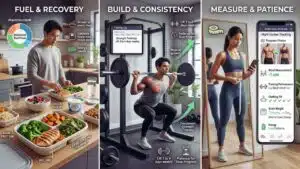
Body recomposition means losing fat and gaining or maintaining muscle at the same time. It is possible, but it is slower and less dramatic than most people expect.
This goal works best for beginners, people returning to training, people with higher body fat, or people who were not eating enough protein before. It can also work for some experienced lifters, but progress is usually slower.
The nutrition approach is balanced. Protein should be high enough. Strength training should be consistent. Calories may sit near maintenance or in a small deficit. Carbs should support training. Sleep should be protected.
The hard part is measurement. The scale may not change much because fat loss and muscle gain can happen together. This is where progress photos, waist measurement, training performance, clothing fit, and energy levels matter.
A recomposition plan is not a crash diet. It is a slow body-quality plan.
| Recomposition Need | Why It Matters | Practical Move |
| Protein consistency | Supports muscle | Protein at every meal |
| Strength training | Creates growth signal | Lift 3 to 4 days weekly if possible |
| Small deficit or maintenance | Allows fat loss without collapse | Avoid extreme cuts |
| Carbs around training | Supports performance | Use fruit, rice, oats, potatoes |
| Sleep | Supports recovery | Reduce late caffeine |
| Patience | Scale may move slowly | Track multiple markers |
| Meal routine | Reduces inconsistency | Repeat simple meals |
| Recovery | Prevents burnout | Use rest days well |
Body recomposition rewards consistency more than excitement.
Eating for Strength Goals
Strength goals need fuel, not just protein.
Heavy lifting asks for nervous system output, muscle repair, joint support, and recovery. If someone trains heavy while under-eating, they may still make progress for a short time, especially as a beginner. But eventually, the body asks for more support.
A strength-focused diet should include protein, enough carbohydrates, fluids, and total calories that match training volume. The closer someone gets to advanced training, the more recovery matters.
Pre-workout food is important. A strength session after a long workday and no snack can feel heavy before it starts. A banana, yogurt, toast, rice meal, oats, or a small wrap can make a real difference.
Post-workout food should not be ignored. Protein and carbs help recovery. A full meal after training is often better than only a shake, especially if the session was demanding.
| Strength Nutrition Area | What It Supports | Practical Example |
| Protein | Repair | Chicken, eggs, tofu, yogurt |
| Carbs | Training quality | Rice, oats, potatoes, fruit |
| Calories | Recovery and progress | Add portions when lifts stall |
| Hydration | Focus and comfort | Drink before training |
| Sodium | Sweat replacement | Salted meal after heavy sweat |
| Meal timing | Energy | Snack before evening lifts |
| Sleep support | Adaptation | Avoid late stimulants |
| Consistency | Long-term progress | Repeat reliable meals |
Strength training is hard enough. Do not make it harder by showing up under-fueled every time.
Eating for Endurance Goals
Endurance nutrition is different because duration matters.
Long runs, cycling, hiking, rowing, and extended sports sessions use energy over time. Carbohydrates become more important. Hydration becomes more important. Sodium may become more important when sweating is high.
The common mistake is waiting until race day or event day to test fuel. That creates stomach problems, energy crashes, or panic decisions. Fueling should be practiced during normal training.
Before longer sessions, a carb-focused meal can help. During long sessions, some people need carbohydrates and fluids. After training, carbs, protein, fluids, and sodium help recovery.
For everyday active people, this does not need to become complicated. If the session is short and easy, normal meals may be enough. If the session is long, hot, or intense, plan fuel.
| Endurance Situation | Nutrition Need | Practical Move |
| Short easy run | Basic hydration | Normal meal rhythm |
| Long run | Carbs and fluids | Eat before, fuel during if needed |
| Hot cycling | Fluids and sodium | Electrolytes may help |
| Long hike | Portable carbs and salt | Pack fruit, sandwiches, snacks |
| Race preparation | Practice gut tolerance | Test foods in training |
| Post-session | Recovery meal | Carbs, protein, fluids |
| Fat loss plus endurance | Careful deficit | Avoid under-fueling long days |
| Busy schedule | Prepare fuel | Do not rely on shops |
Endurance performance is often won before the session starts.
Eating for General Fitness and Energy
Not everyone needs an advanced goal. Many people simply want to feel better, train regularly, stay active, and avoid energy crashes.
For this goal, the best nutrition plan is usually simple. Eat enough protein. Include carbohydrates that match activity. Add vegetables and fruit. Drink water. Keep meals regular. Avoid long gaps that lead to random eating.
This is where many corporate athletes live. They may not need bodybuilding macros or race-day fueling. They need breakfast that is not only coffee, lunch that is not tiny, a snack before training, and a dinner that supports recovery.
General fitness nutrition should be flexible. A perfect plan that fails every busy week is not useful. A repeatable plan that works 80 percent of the time is better.
| General Fitness Need | Practical Habit | Why It Helps |
| Stable breakfast | Protein plus carbs | Prevents early crash |
| Real lunch | Protein, carbs, vegetables | Supports afternoon energy |
| Planned snack | Fruit, yogurt, eggs, wrap | Helps evening training |
| Simple dinner | Protein, carbs, vegetables | Recovery and routine |
| Hydration | Water during work | Reduces fatigue |
| Flexible treats | Planned enjoyment | Prevents all-or-nothing dieting |
| Sleep rhythm | Earlier caffeine cutoff | Better recovery |
| Movement support | Enough food | Keeps training sustainable |
General fitness improves when food becomes boring in the best way: reliable, repeatable, and supportive.
Goal-Based Meal Timing
Meal timing is not more important than total intake, but it can make the plan easier.
For fat loss, meal timing helps control hunger. Some people do better with three meals. Some need planned snacks. The best pattern is the one that prevents overeating later.
For muscle gain, meal timing helps people eat enough. Waiting until dinner to eat most calories often fails. Spreading meals across the day works better.
For performance nutrition, meal timing supports training quality. Eating too close to training can cause discomfort. Eating too far away can leave you weak. The timing should match the session.
A full meal usually works better a few hours before training. A smaller snack works better closer to training. After training, a normal meal within a reasonable time is enough for most people.
| Timing Situation | Best Approach | Example |
| Training in the morning | Light fuel if needed | Banana, toast, smoothie |
| Training at lunch | Breakfast plus snack | Yogurt and fruit |
| Training after work | Strong lunch and afternoon snack | Rice bowl, banana |
| Training at night | Easy dinner planned | Leftovers or smoothie plus meal |
| Fat loss hunger | Use structured meals | Protein breakfast |
| Muscle gain appetite | Add meal frequency | Extra snack |
| Endurance session | Fuel earlier | Oats or toast |
| Rest day | Keep rhythm | Normal balanced meals |
Timing should reduce friction, not create food anxiety.
Corporate Athlete Eating for Fitness Goals

The corporate athlete has a different challenge from the full-time athlete.
The day starts with work, not training. Meetings interrupt meals. Stress affects appetite. Water is forgotten. Lunch is rushed. Training happens when energy is already low. Then dinner becomes a decision made while tired.
This is why eating for fitness goals must be built around the workday.
The biggest wins are usually not advanced. Eat a better breakfast. Build a real lunch. Drink water before 5 p.m. Keep a pre-workout snack ready. Prepare dinner before the workout starts. Avoid late caffeine if sleep matters.
For fat loss, the corporate athlete needs structure. Skipping meals during work often leads to night eating. For muscle gain, the corporate athlete needs enough total food despite a busy schedule. For performance, the corporate athlete needs carbs and fluids before training.
| Workday Moment | Common Problem | Better Nutrition Move |
| Morning | Coffee only | Add protein and carbs |
| Midday | Small rushed lunch | Build a complete meal |
| Afternoon | Energy crash | Use planned snack |
| Pre-workout | Caffeine without food | Add carbs and water first |
| Workout | Low energy | Match fuel to session |
| Post-workout | No dinner ready | Use leftovers |
| Late night | Random snacking | Plan recovery meal |
| Next day | Tired and hungry | Improve sleep and breakfast |
Corporate Athlete nutrition is not about eating perfectly. It is about removing predictable problems.
Tools and Tracking Without Becoming Obsessed
Tracking can help, but it can also become too much.
Food tracking apps, body-weight logs, progress photos, performance notes, hunger scores, and meal plans can all be useful. The question is whether the tool improves behavior or creates stress.
For fat loss, tracking can show hidden calories and portion patterns. For muscle gain, tracking can show whether someone is eating enough. For performance, tracking can show whether food changes improve training.
But not everyone needs to track every gram. Some people do better with plate methods, portion guides, repeat meals, or weekly check-ins.
A practical system is to track the least amount needed to make better decisions.
| Tool | Best Use | Caution |
| Food tracking app | Learning portions | Can become obsessive |
| Body-weight trend | Seeing direction | Daily scale swings are normal |
| Progress photos | Body composition changes | Lighting can mislead |
| Waist measurement | Fat loss tracking | Measure consistently |
| Training log | Performance feedback | Food is one factor only |
| Hunger rating | Adjusting meals | Hunger is not failure |
| Meal prep list | Reducing decisions | Keep it simple |
| Sleep tracking | Recovery awareness | Do not chase perfect scores |
Tracking should serve the goal. The goal should not become serving the tracker.
How to Adjust When Progress Stalls?
Progress stalls are normal. They do not always mean the plan has failed.
For fat loss, a stall may mean calorie intake has crept up, activity has dropped, water weight is masking progress, or the body has adapted to a lower weight. The first step is not panic. Review meals, snacks, weekends, steps, training, sleep, and stress.
For muscle gain, a stall may mean calories are too low, training is not progressive, protein is inconsistent, or recovery is poor. If body weight and strength are both stuck, food may need to increase.
For performance, a stall may mean under-fueling, poor hydration, too much training stress, or not enough recovery. More discipline is not always the answer. Sometimes the answer is more food, more sleep, or a lighter training week.
Adjust one thing at a time. If you change calories, carbs, training, sleep, supplements, and cardio all at once, you will not know what worked.
| Goal | Stall Sign | First Check | Possible Adjustment |
| Fat loss | Weight trend flat | Snacks, weekends, portions | Small calorie reduction |
| Muscle gain | Weight and lifts flat | Total food intake | Add calories |
| Strength | Lifts feel heavy | Carbs and sleep | Add pre-workout fuel |
| Endurance | Energy drops | Carbs and hydration | Fuel longer sessions |
| Recomposition | Scale unchanged | Measurements and photos | Be patient |
| General energy | Afternoon crash | Lunch and hydration | Add balanced snack |
| Recovery | Soreness stays high | Protein, calories, sleep | Improve recovery meals |
| Hunger | Diet feels hard | Fiber and protein | Add filling foods |
A stall is feedback. It is not a personal failure.
Common Mistakes When Eating for Fitness Goals
The first mistake is copying someone else’s diet. A professional athlete, influencer, or bodybuilder may have a different body, schedule, goal, training load, and support system. Their plan may not fit your life.
The second mistake is changing goals every week. One week is fat loss. The next week is muscle gain. Then low-carb. Then fasting. Then high-volume training. The body needs consistency before it can show results.
The third mistake is under-eating protein. This hurts fat loss, muscle gain, and recovery. Protein does not need to be extreme, but it should be consistent.
The fourth mistake is fearing carbs. Carbs are often the first thing people remove, but they may be exactly what training quality needs.
The fifth mistake is using supplements to cover poor basics. Protein powder, creatine, electrolytes, and caffeine can help in the right context. But they cannot fix chaotic meals, low sleep, and poor hydration.
| Mistake | Why It Hurts | Better Practice |
| Copying influencer diets | Not matched to your life | Build around your schedule |
| Changing goals too often | No clear direction | Choose one main goal |
| Cutting calories too hard | Poor energy and cravings | Use moderate deficit |
| Eating too little for muscle gain | No growth support | Add planned calories |
| Fearing carbs | Weak workouts | Use carbs around training |
| Protein only mindset | Misses total nutrition | Build balanced meals |
| Random weekends | Erases weekday progress | Plan flexible meals |
| Supplement-first thinking | Ignores basics | Food, sleep, hydration first |
Most fitness nutrition mistakes are not dramatic. They are repeated small mismatches.
A Practical 7-Day Eating for Fitness Goals Reset
A 7-day reset helps you understand what your current eating pattern is doing. The goal is not perfection. The goal is awareness and small corrections.
Day one is goal clarity. Choose one main goal: fat loss, muscle gain, performance, recomposition, strength, endurance, or general fitness.
Day two is meal rhythm. Look at breakfast, lunch, dinner, snacks, and training time. Notice long gaps.
Day three is protein. Add a clear protein source to each main meal.
Day four is workout fuel. Add carbs and fluids before harder training.
Day five is recovery. Eat protein, carbs, and fluids after training.
Day six is hydration and sleep. Review water, caffeine timing, and bedtime.
Day seven is adjustment. Keep what helped and remove what made the plan harder.
| Day | Focus | What to Do |
| Day 1 | Goal clarity | Choose one main goal |
| Day 2 | Meal rhythm | Find long food gaps |
| Day 3 | Protein | Add protein to main meals |
| Day 4 | Workout fuel | Add carbs before hard training |
| Day 5 | Recovery | Eat after training |
| Day 6 | Hydration and sleep | Review water and caffeine |
| Day 7 | Review | Keep what worked |
Your best diet is not found in one perfect plan. It is built by observing what your body does with the plan.
Final Thoughts
Eating for fitness goals should make your training and daily life easier, not more confusing.
If your goal is fat loss, build a sustainable deficit without destroying energy. If your goal is muscle gain, eat enough to support training and recovery. If your goal is performance, fuel the work you expect your body to do. If your goal is general fitness, build meals you can repeat on busy days.
You do not need a perfect diet. You need a food system that matches your goal, schedule, digestion, training, and recovery.
For the Corporate Athlete, the biggest wins are often simple: eat a real breakfast, build a stronger lunch, drink water during work, use a planned pre-workout snack, and prepare dinner before hunger makes the decision.
Choose the goal. Match the food. Track the response. Then adjust with patience.
Frequently Asked Questions (FAQs) About Eating for Fitness Goals
What does eating for fitness goals mean?
Eating for fitness goals means matching your food intake to a specific outcome such as fat loss, muscle gain, performance, strength, endurance, body recomposition, or general wellness. The plan should consider calories, protein, carbohydrates, fats, meal timing, hydration, training type, recovery, sleep, and schedule. A fat loss plan will not look exactly like a muscle gain plan.
What is the best diet for muscle gain?
The best diet for muscle gain includes enough total calories, enough protein, enough carbohydrates to train hard, and consistent meals across the day. A small calorie surplus usually works better than uncontrolled overeating. Good foods include eggs, yogurt, chicken, fish, tofu, lentils, rice, potatoes, oats, fruit, vegetables, olive oil, nuts, and smoothies when appetite is low.
What is the best fat loss nutrition strategy?
The best fat loss nutrition strategy is a sustainable calorie deficit with enough protein, fiber, fluids, and training support. Avoid cutting too aggressively. Build meals around protein, vegetables, fruit, beans, oats, potatoes, yogurt, eggs, lean proteins, tofu, and controlled portions of fats and carbs. Strength training helps protect muscle during fat loss.
Should I eat more carbs for performance nutrition?
Many active people perform better with enough carbohydrates, especially for running, cycling, HIIT, sports, heavy lifting volume, and long workouts. Carbs provide accessible fuel for harder training. The amount depends on workout intensity, duration, body size, and goal. Light activity may not need special carb planning, but hard sessions often do.
Can I lose fat and gain muscle at the same time?
Yes, some people can lose fat and gain muscle at the same time, especially beginners, people returning to training, people with higher body fat, or people who were previously under-eating protein. This is called body recomposition. It usually requires strength training, consistent protein, controlled calories, good sleep, and patience.
Is calorie tracking required for fitness goals?
Calorie tracking is not required, but it can help some people learn portions and patterns. Others do better with plate methods, repeat meals, hunger awareness, and weekly progress checks. Tracking should make decisions easier. If it creates stress or obsessive behavior, use a simpler system or seek professional support.
How much protein do I need for fitness goals?
Protein needs depend on body size, goal, training load, age, and diet pattern. Active people usually need more than sedentary people. For practical use, include a quality protein source at each main meal and adjust based on progress, fullness, recovery, and professional guidance when needed. People with kidney disease or medical diets should get personalized advice.





















