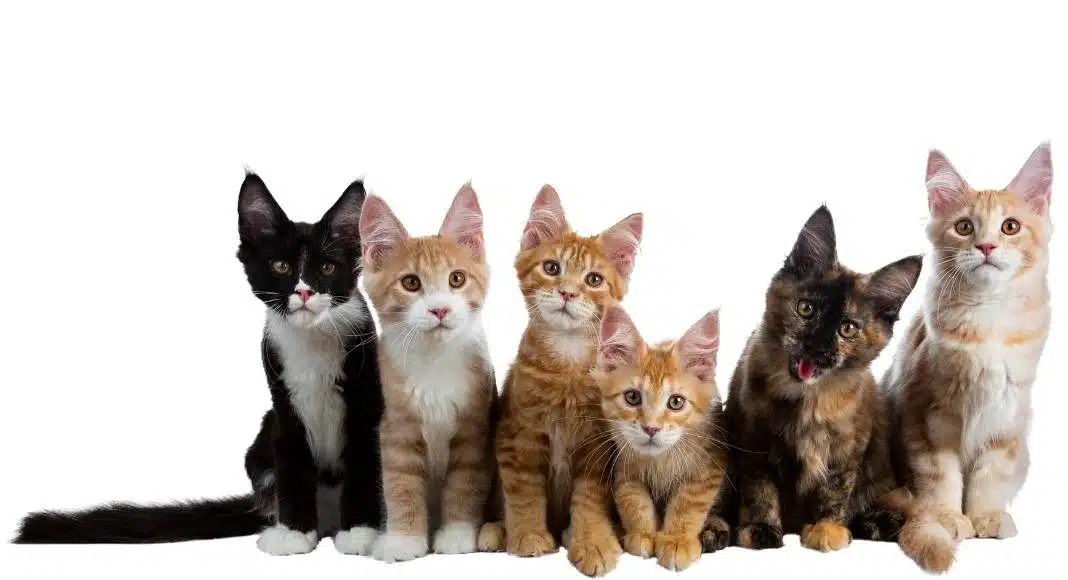
Do you ever wonder what your furry buddy is trying to communicate to you when he or she does something specific? For example, raising the tail in the air, arching the back with a yawn, standing motionless, swiveling the ears, and so on. Is there a rationale for all these body motions, or have cats just been interacting with humans for centuries? Cats, like humans, use their body language to communicate their inner feelings. They want to be seen, but they don’t want to be suffocated. They will entice you to play, yet they may surprise you by scratching you. It all comes down to how well you know your cat.
When it comes to body language, cats can be incredibly nuanced. In other words, you’ll never be able to accurately deduce your cat’s body language. If you’re trying to figure out how to comprehend cats, paying attention to their eyes, tails, ears, and bodies will help you learn more about their psychology.
If you’ve been under the impression that all of these signals of a cat’s body language don’t imply anything, you’re mistaken. Cats communicate with other animals and people via a variety of methods, the most prominent of which are body signals. You must decipher and comprehend your cat’s strange body language, vocalizations, and behavior. This may appear intimidating at first, but after giving your cat some quality time and attention, you will be able to decipher what your cat is attempting to say about his or her wants and moods at different times.
Is it necessary to be able to read a cat’s body language?
Keeping a cat as a pet and caring for it appears to be rather straightforward. Give your cat food if he or she makes a noise. Pet your cat if she rubs her head on your leg or exposes her tummy, and if nothing else appears to work, simply offer your cat some toys; it’ll be OK. Unfortunately, it isn’t as simple as that. It’s not difficult either, but you’ll need to devote some time to your cat in order to comprehend his or her behavior.
Cats make a variety of bodily motions in an attempt to communicate with humans about their health, mood, or hunger, among other things. But why is it crucial to understand your cat’s body language? It’s simple: talk with your cat and deepen your relationship with him. Because cats and humans do not speak the same language, they communicate through vocalizations and body language. But why should we pay attention to our cat’s body language in particular?
If you have a shy cat, it’s critical that you learn to read his or her body language. You may completely transform the way you connect with your cat if you can determine what he or she wants just by studying how he or she walks or sits in a corner. When it comes to deciphering a cat’s sign language, body orientations are critical. People frequently engage with cats and become scratched, after which they blame the cat for their bad conduct. You must, however, consider the viewpoint of the cat. You should think about how the cat interpreted the gesture. When it comes to cats, your intentions may not always matter. It’s not their fault that they’re largely evaluating you based on your conduct.
Before we get into distinct cat body languages, it’s crucial to remember the context in which your cat is responding for a certain circumstance. It is essential to consider your cat’s circumstances in order to ensure their comfort. A gloomy, confining setting may irritate them and exacerbate their anxiety. Cats love broad, open places to keep an eye on what’s going on around them. That is why cats prefer to hang out in a high open area. You can presume your cat is comfortable if it is accustomed with its surroundings and the presence of people.
Taking in the larger picture is crucial while engaging or dealing with a cat. Look around, recall how your cat spent the previous hour, and then assess the circumstances in the room from your cat’s perspective. You won’t always be correct in your analysis, but you won’t repeat the same errors. If you’re not sure if your cat is comfortable, paying attention to the different components of his or her body language will help you figure it out. Simply put the pieces together and choose the best course of action to take in specific scenarios; in some cases, doing nothing is the best option for your cat.
“Always factoring in context when assessing a cat’s behavior,” says Dr. Marci Koski, a trained feline behavior and training specialist. Where your cat is, who else is there, when your cat last ate, and what activities are happening in close vicinity are all examples of context.” “Understanding the context is the first step in comprehending your cat’s body language,” says Dr. Marci Koski.
Everything You Should Know About Cat Sign Language
Physicalizations
When cats want to play, they display a lot of enthusiasm. It may be with you or with some of their favorite toys. If they want to communicate with you or involve you in physical activities, they will most likely stalk you. Alternatively, they may simply ignore you and pay no attention. So, depending on the list below, you’ll have to decide which expression you’ll use. It will help you understand some of the most typical habits seen in different cats. All of these minor nuances will aid in your understanding of your cat and the development of a particular link with him or her.
1. A high-flying tail (Relaxed)
A cat with its tail up in the air simply expresses happiness and a desire to play. You may either engage in an exciting activity with your cat or let your cat to play with his or her toys. And if you want to offer her a present… well, why would he/she refuse?
2. A high-flying tail (Tensed)
A cat’s tail in the air does not necessarily indicate that he or she wants to play or interact with another person or animal. When cats feel scared or wary in the company of another animal or a human, they may raise their tail high in the air. This means they recognize a threat in the scenario and are prepared to fight. In this situation, it’s common for cats to have bristling fur.
3. A high-flying tail (Quivering)
This isn’t something that every cat does. It’s more common in cats that haven’t been spayed or neutered. According to the Humane Society, if your cat’s tail quivers high in the air, it’s a sign that he or she is aroused and will spray (urinate) to show it.
4. A tucked tail with a low profile.
When cats are terrified or depressed, they tend to shrink. They will fold up or shrink into smaller targets, expressing their dissatisfaction with the existing circumstance.
5. Back and forth tail flicking
A cat flicking its tail back and forth has a strange quality to it. It grabs your attention and begins to pique your interest. You want to know what’s going on inside your cat’s thoughts, but bear in mind that irritated cats flick their tails. In this circumstance, it’s best to let your cat alone. It might also suggest that your cat is nearly thinking in another context.
6. Back arched (Yawn)
This is just a signal that your cat has just woken up or is about to slumber. It’s a great way for your cat to get some exercise.
7. Back arched (Bristled fur)
When your cats are threatened, rather of being terrified, they strive to make themselves appear larger. That’s how they deal with a potentially dangerous scenario. Your cat’s arched back with bristling fur is a sign of alertness as well as hostility.
8. Taking a direct approach
As a display of hostility, canines confront their prey head-on. Cats, on the other hand, confront humans for completely different reasons. Cats use this technique to communicate their self-assurance and optimism.
9. Taking a step back
You may have observed that your cat enters your room, looks at you, and then sits facing the opposite direction. Isn’t that an awful feeling? Doesn’t it strike you as a slight? You should, in fact, be feeling just the opposite. Your cat isn’t deliberately ignoring you; he or she just trusts you enough to let down his or her guard and turn away from you without hesitation. This does not, however, imply that you should startle your cat and begin a cuddling session. He/she just feels at ease in your company and wants to show you their blind spot.
10. Standing in a sideways position
This is a common occurrence in cats. They’d face you or any other human or animal from the side. This is an indication that they are prepared to flee if necessary. To put it another way, they’re terrified of their existing circumstances.
11. Crouched (Alert)
When your cat crouches, he or she has one goal in mind: to pounce. However, if your cat is on high alert, it will be obvious. This typically indicates that they are worried.
12. Crouched (Wiggling)
If a cat is wriggling butt while crouching, it is prepared to pounce, much as the previous one. Although it’s always entertaining to watch your cat pounce in this manner.
13. Remaining still
If a cat pauses in the middle of a stroll or a room, it’s because it’s watching and digesting an unpleasant circumstance.
14. Rolling around in circles
“Play with me!” your cat could say as it rolls in front of you, lays on the ground with its belly up, and looks you in the eyes. Play with your cat, but don’t stroke his or her tummy. That’s probably not going to sit well with them.
15. Lie down on your stomach and stretch
Just as a cat looking away from you is a gesture of trust, so is a cat revealing their belly to you. The belly-up cat feels calm and confident around you after stretching. But, once again, avoid rubbing your cat’s tummy in this case. He or she will attempt to bite or scratch you. Go ahead and give it a go!
16. ears that swivel
Your cat is investigating the entire room and taking it all in with swiveling ears. Whether to relax and unwind or simply walk away.
17. Ears that are forward and relaxed
A simple indication of your cat’s body language indicating that he or she is at ease.
18. Ears that are tall and erect
The cat is on the lookout! “What was that noise?” says the narrator.
19. Flattened ears
Flattened ears indicate that you are not having a good time at the moment. She’ll probably flee because she’s terrified or angry.
20. Flattened whiskers
For obvious reasons, observing the status of your cat’s whiskers is difficult. However, if you want to explore other indicators besides the cat’s posture, ears, eyes, and tail, whiskers might provide some insight. And while there aren’t many other ways a cat’s whiskers may be kept, if they’re flattened or near to their face, it’s an indication of dread. When your cat is at ease, it will push its whiskers away from its face.
21. Pupils that are dilated
Focusing on pupils may appear strange at first, but eyes reveal a lot about a cat’s body language. Simply put, dilated pupils indicate that your cat is agitated. Fear, excitement, or fury are all possibilities. When monitoring students, however, other components of body language should be taken into account. They could be able to influence how the cat’s body language is interpreted.
22. Slow and steady blinks
Eyes aren’t the gateway to your cat’s soul when it comes to cats. Other portions of their bodies communicate far more than their eyes. They do, however, communicate through their eyes. If your cat maintains a steady stare while blinking slowly, this indicates that he or she is relaxed or wants to sleep. The easiest method to respond to this body language is to mimic it, blinking gently in their direction.
23. Miniscule pupils
Aggression is expressed by small pupils that narrow into slits. A cat may become startled if its pupils are too small, or if the light is too intense.
24. Rubbing of the head
When our cats brush their heads against our legs or bodies, we all feel happy. It’s lovely, and the cause behind it is even cuter than the deed. To indicate their territory, cats brush their hands against objects.
25. Face with a sneeze
Have you ever noticed your cat with squinting eyes, an elevated head, and a mouth hanging open? Your cat, in this situation, is smelling something. Jacobson’s Organ is a kind of organ found in cats. This is related to their nasal tube and is positioned on the top of the inside of their mouth, immediately behind the top teeth. Jacobson’s Organ permits cats to smell their surroundings more clearly. The “sniffling look” of the cat indicates that they are performing their own inquiry.
26. Kneading
Kneading occurs when a cat’s paws are clenched into fists. This is a behavior that a cat develops in its early years of life. This is a method used by kittens to improve milk flow during the breastfeeding phase. When cats employ this strategy after breastfeeding, it indicates that they are ecstatic.
Vocalizations
Understanding your cat’s vocalizations is vital, but not as critical as physicalizations. That isn’t to say you should completely disregard them. Again, context is crucial to understanding your cat’s vocalization. Your cat is usually relaxed if it is kneading and purring. Your cat is probably unwell if she is lethargic and purring. But how can both parts be fully comprehended? We’ll go over this topic in greater depth later.
1. Meow
In various settings, the word “meow” can be interpreted in a variety of ways. Understanding the context is crucial in the case of a meow. You can’t merely derive anything from the word “meow.” That is not advisable nor healthy for your Cat. For a better understanding, observe your cat’s body language. The sound of meow, on the other hand, is usually connected with a pleasant or positive emotion.
2. Constant Meow
You should be on the lookout for continuous meowing. Even for very expressive cats, persistent meowing is unusual. If your cat is constantly meowing, take it to the vet right away.
3. squeak
The meaning of purr is comparable to that of a meow. It’s frequently connected with self-soothing, but it might simply indicate that your cat is completely content. However, if a drowsy cat purrs frequently, it is best to speak with a veterinarian.
4. Yowl
When a cat is unhappy or depressed, he or she yowls. It’s a low, melancholy noise that reflects his or her dissatisfaction with life and inability to do something about it. It is not required to take your cat to the veterinarian in this situation; instead, connect with your cat or give him/her his/her favorite food.
5. Snarl
Every cat mammal is capable of growling. Tigers, lions, and other big cats have it, but cats have it the least. Cats don’t generally growl, but when their space is invaded or their favorite toys are ruined, they will growl, and it’s best to give your cat his or her space while he or she is growling.
6. Hiss
When things get a little out of hand when playing, cats frequently hiss. It’s a plain outburst of rage. It’s preferable to think about it early on before things spiral out of control.
Keep an eye out for the Venus Cat Trap.
Even though you know how each cat communicates by its body posture, you must be ready for any unexpected action or reaction from them. Consider The Venus Cat Trap as an example. It’s a trap, as the name implies.
When a cat shows its tummy to you, there are two things to consider. One is expressing confidence in you and a sense of ease. They may look at you while exposing their stomach, prompting you to stroke their stomach. That, however, would be a mistake. A cat’s expression of contentment does not necessarily imply that he or she wishes to be snuggled. It’s possible that the cat simply wants to relax and lie down.
Another reason your cat is showing belly is that he or she is preparing to fight off an intruder. This stance permits them to use their claws to defend themselves. It may appear sweet and adorable at first, but don’t massage them. This isn’t a request for a belly rub.
Final Thoughts
Every human being is unique, and every cat is unique as well. If you are familiar with your cat’s various routines, you will be more able to govern and handle a given circumstance. Snuggling, stroking, playing, and other activities may not appeal to all cats. If you want to connect with your cat on a deeper level, you need to consider their viewpoints. Recognize their intricacy and simplicity, as well as their behavior patterns and routines. Everything is revealing fresh information about your cat’s body language to you.
Spending quality time with your cat is the greatest method to learn the significance of their body language. If you know about your cat’s personality, you will be able to better grasp the cat’s body position viewpoints.
Apart from this, you can also read Entertainment, Tech, and Health-related articles here: Leonardo DiCaprio net worth, Diabolik Lovers Season 3, Twitch Error 2000, Alyson Hannigan, Brent Rivera net worth, Emma Watson net worth, 444 angel number, 666 angel number, 1616 angel number, 777 angel number, 333 angel number, Dave Portnoy net worth, Lionel Messi net worth, Keanu Reeves net worth, The Equalizer 3, The 100 Season 8, Gina Carano net worth, Bruno Mars net worth, KissAnime, Jim Carrey net worth, PDF Drive, Youtbe, Bailey Sarian Net Worth, Bollyshare, Afdah, Moviezwap, Y8, Jalshamoviez, Project Free TV, Kissasian, Mangago, Jio Rockers, M4uHD, Hip dips, M4ufree, NBAstreams XYZ, CCleaner Browser review, Avocado Calories, Bear Grylls net worth, Highest Paid CEO, The 100 season 8, Sundar Pichai net worth, Grimes net worth, and, F95Zone.