

Eid Al-Adha is not only a festival. It is a reminder that faith becomes more meaningful when it teaches us to sacrifice, share, forgive, and care for others. Every year, as Muslims around the world prepare for Eid prayer, Qurbani, family gatherings, and acts of charity, the deeper Eid Al-Adha message returns with quiet strength. It reminds us that sacrifice is not only about offering an animal. It is also about giving up pride, selfishness, ego, greed, and indifference.
In Bangladesh, Eid-ul-Azha will be celebrated on May 28, after the Zilhajj crescent moon was sighted and the National Moon Sighting Committee made the announcement. But beyond the date, travel, preparation, and celebration, Eid carries a timeless message for every home and every heart.
It asks us a simple question: Are we only preparing for Eid, or are we preparing our hearts to understand Eid?
The True Eid Al-Adha Message
The true Eid Al-Adha message is rooted in sacrifice, obedience, compassion, and gratitude. It reminds us of Prophet Ibrahim’s devotion to Allah and his willingness to sacrifice what was most beloved to him. According to Islamic tradition, Allah replaced the sacrifice with a ram, and the act became a lasting symbol of faith, surrender, and obedience. The meat of the sacrifice is also shared with relatives, friends, and the poor, making charity and community care central to the festival.
This is why Eid Al-Adha is not only about ritual. It is about character.
A person may celebrate Eid beautifully, wear new clothes, prepare special food, and meet relatives. But the deeper beauty of Eid appears when the heart becomes softer, the hands become more generous, and the mind becomes more aware of people who are struggling.
Eid Al-Adha teaches us that blessings are not complete until they are shared.
Why Eid Al-Adha Is More Than Qurbani
For many people, Eid Al-Adha immediately means Qurbani. That is natural because Qurbani is one of the most visible parts of the festival. But the meaning of Eid is much deeper.
Qurbani is a symbol of devotion. It teaches us that we do not own everything in life. Whatever we have—wealth, family, comfort, time, health, and success—is a blessing from Allah. Eid reminds us to use those blessings responsibly.
The act of sacrifice should not become a matter of show-off, competition, or social status. It should remain an act of sincerity. The value of Qurbani is not in public display. It is in intention, humility, and compassion.
| Eid Al-Adha Practice | Deeper Meaning |
|---|---|
| Eid prayer | Starting the day with faith and gratitude |
| Qurbani | Remembering sacrifice and obedience |
| Meat distribution | Sharing blessings with others |
| Family gathering | Strengthening love and connection |
| Charity | Caring for people in need |
| Simplicity | Protecting sincerity from show-off |
The most powerful Eid Al-Adha message is this: our celebration should include others.
My Personal Eid Al-Adha Memory
Personally, Eid Al-Adha has always been emotional for me because it is deeply connected with family, childhood, and sacrifice.
Now I live in Dhaka, but in my childhood, Eid Al-Adha often meant going to Chittagong, where my paternal relatives live. Those memories still feel warm and alive in my heart. One of my most memorable Eid Al-Adha experiences happened when I was around eight years old.
I still remember going to the Qurbani Haat with my grandfather. We bought a cow together, and for a child, that whole experience felt exciting, festive, and unforgettable. The crowd, the sound, the movement, the discussions, the bargaining, and the feeling of returning home with the Qurbani animal created a memory that has stayed with me for years.
That Eid became even more special because one of my uncles came from the USA. My uncles, aunt, parents, grandfather, grandmother, cousins, and other relatives were all together. The house felt full of life. There was joy, movement, conversation, food preparation, prayer, and a true family mood that made Eid feel complete.
When I look back now, I realize that the strongest part of that memory was not only buying the cow or celebrating with relatives. It was the feeling of togetherness. It was seeing elders take responsibility, seeing family members help one another, and watching how Qurbani connected faith with sharing.
That childhood Eid taught me that Eid Al-Adha is not just about sacrifice. It is about family, love, responsibility, and remembering people who need support.
Family Gathering Makes Eid More Meaningful
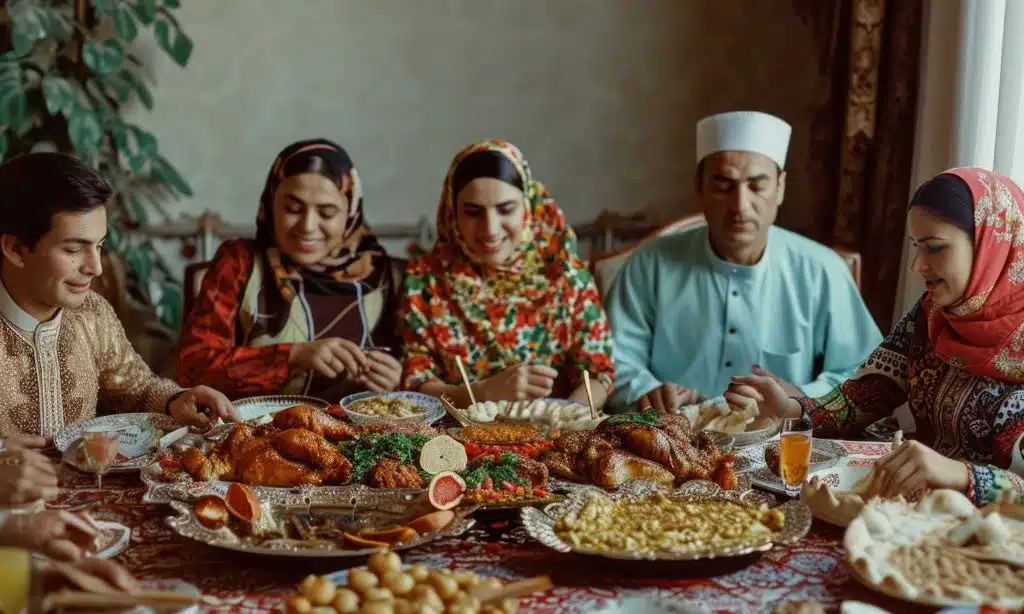
For me, family gathering is one of the most beautiful parts of Eid Al-Adha. In Bangladesh, Eid often means returning home, visiting relatives, meeting elders, and reconnecting with people we may not see every day.
In Dhaka, life moves fast. Work, responsibility, deadlines, traffic, and pressure can make people distant. But Eid creates a pause. It brings families back together.
When I think of Eid Al-Adha, I think of grandparents, parents, uncles, aunts, cousins, and relatives gathering in one place. I think of the emotional warmth that comes when everyone is involved in the same celebration. Some people handle Qurbani arrangements. Some prepare food. Some distribute meat. Some welcome guests. Some simply create joy through their presence.
This family-centered spirit is a big part of the Eid Al-Adha message. The festival reminds us that family is not only about living under the same roof. It is about responsibility, respect, memory, prayer, forgiveness, and love.
Helping the Poor Is Not Optional
One of the parts of Eid Al-Adha that touches me most is helping the poor.
Qurbani has a strong social message. It reminds us that food, wealth, and comfort should not remain limited to one family. The joy of Eid should reach people who cannot afford the same celebration.
In many communities, there are families who wait for Qurbani meat because it may be one of the few times in the year when they can enjoy meat properly. For them, this sharing is not small. It carries dignity, relief, and happiness.
This is why Eid Al-Adha should never become only a private celebration. It is a community festival. It teaches us to look beyond our own table.
A meaningful Eid means asking:
| Question | Why It Matters |
|---|---|
| Did we remember the poor? | Eid should include vulnerable people |
| Did we share with dignity? | Charity should never humiliate anyone |
| Did we avoid waste? | Sacrifice teaches responsibility |
| Did we help quietly? | Sincerity matters more than display |
| Did we teach children to share? | Eid values should continue across generations |
If our Eid does not touch another person’s life, we may have missed part of its purpose.
Sacrifice Is More Than an Act
Sacrifice is the heart of Eid Al-Adha. But sacrifice is not only about what happens on Eid day. It is also about what changes inside us.
Sometimes we need to sacrifice our ego to repair a relationship.
Sometimes we need to sacrifice comfort to help someone in need.
Sometimes we need to sacrifice pride to ask for forgiveness.
Sometimes we need to sacrifice greed to live with contentment.
Sometimes we need to sacrifice indifference to become more compassionate.
This is the deeper Eid Al-Adha message.
The festival reminds us that a better life is not built only through success, wealth, or comfort. It is built through values. Faith becomes stronger when it improves our behavior. Worship becomes more meaningful when it makes us kinder.
Eid Al-Adha in Bangladesh
Eid-ul-Azha in Bangladesh has its own emotional rhythm. In Dhaka, the days before Eid feel busy and intense. People prepare for travel, buy essentials, visit cattle markets, and make arrangements for Qurbani. Many people leave the city to return to their villages or hometowns. The streets slowly change. The mood of the country becomes festive.
But behind the movement and excitement, there is a deeper emotional story.
For many families, Eid is the only time when everyone comes together. For many city workers, Eid is the chance to go back home. For children, Eid becomes a memory. For elders, it becomes a moment of reunion. For the poor, it becomes a time of hope and support.
That is why Eid Al-Adha in Bangladesh feels deeply human. It is not only a religious festival. It is also a social and family experience.
My Eid Message as Acting Editor of Editorialge
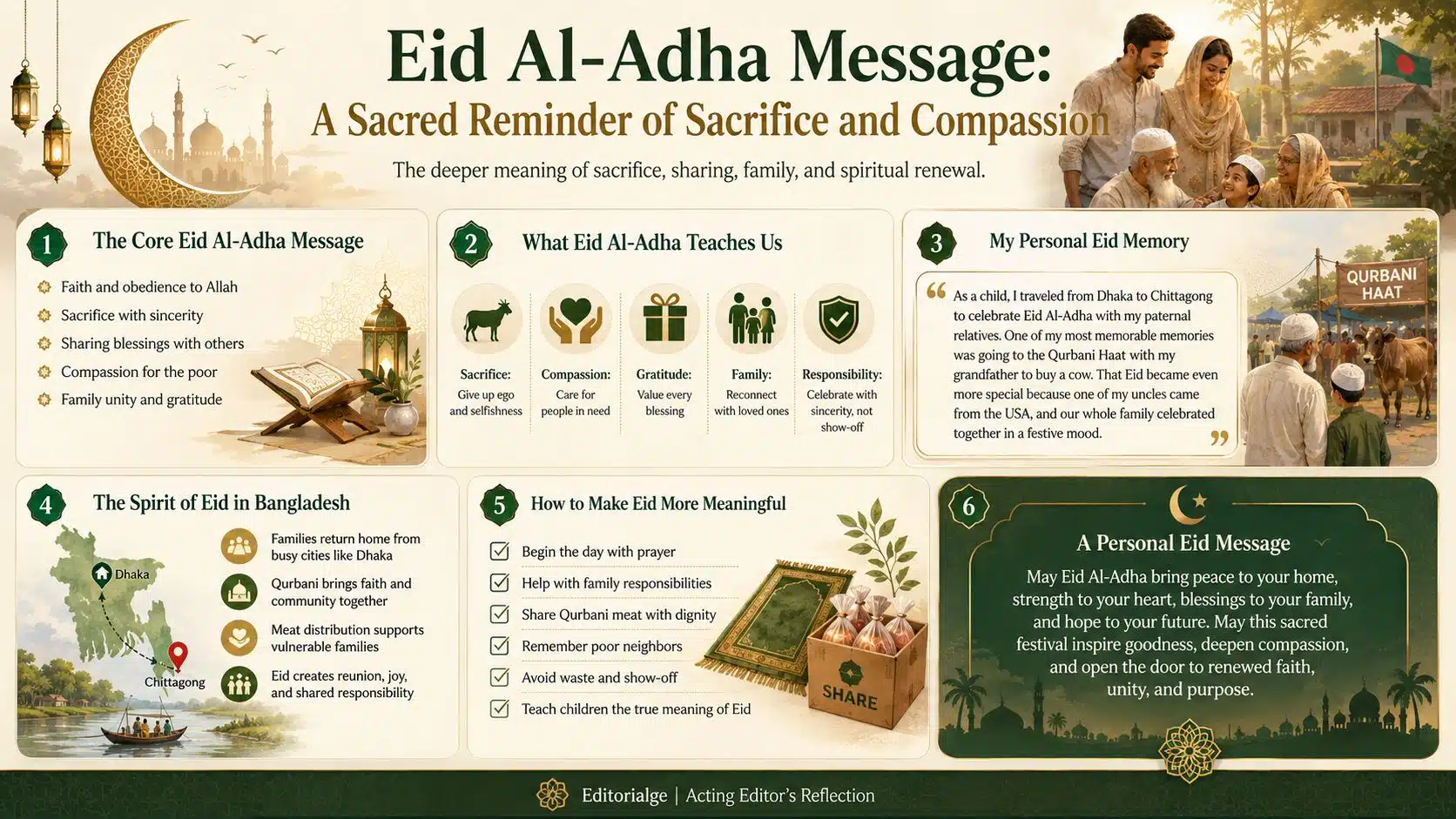
As the acting editor of Editorialge, I believe Eid Al-Adha is a moment when media should not only inform people but also inspire reflection.
We live in a time when people are busy, distracted, and often overwhelmed. Many of us celebrate festivals, but we do not always pause to understand their message. Eid Al-Adha gives us that chance.
My personal Eid message is this:
May Eid Al-Adha bring peace to your home, strength to your heart, blessings to your family, and hope to your future. May this sacred festival inspire goodness, deepen compassion, and open the door to renewed faith, unity, and purpose.
To me, Eid Al-Adha is emotional, family-centered, and spiritually powerful. It reminds me of childhood memories in Chittagong, family gatherings, Qurbani arrangements, helping the poor, and the responsibility of carrying meaningful values into the future.
As an editor, I also feel that we should use our platforms to spread kindness, not only information. Editorialge reaches readers from different backgrounds, and this Eid is an opportunity to remind everyone that sacrifice and compassion are values the world needs more than ever.
Teaching Children the Meaning of Eid
Children often remember Eid through clothes, food, relatives, travel, and excitement. These memories are beautiful. But elders also have a responsibility to teach children the real meaning of Eid Al-Adha.
Children should know why Qurbani is performed. They should understand that sacrifice is connected with faith. They should also learn that sharing with the poor is not a formality. It is one of the most important lessons of Eid.
When children see elders distributing meat, helping relatives, respecting workers, and treating poor people with dignity, they learn values that stay with them for life.
That is how Eid becomes more than a childhood memory. It becomes moral education.
Avoiding Show-Off During Eid Al-Adha
One thing we should remember is that Eid Al-Adha should never become a competition.
The size of the animal, the cost of preparation, the photos on social media, or the public display should never become more important than sincerity. The real value of Qurbani is not measured by how much attention it gets. It is measured by intention, obedience, and compassion.
A simple Eid with sincerity is better than a grand Eid filled with pride.
This is especially important today because social media can easily turn spiritual acts into public performance. Eid teaches us the opposite. It reminds us to lower our ego, not raise it.
How to Make Eid Al-Adha More Meaningful
A meaningful Eid does not need to be complicated. It begins with intention. Here are some simple ways to make Eid Al-Adha more meaningful:
| Action | Meaning |
|---|---|
| Begin the day with prayer | Keep faith at the center |
| Help with family responsibilities | Share the work, not only the joy |
| Distribute meat with respect | Protect the dignity of others |
| Remember poor neighbors | Make Eid inclusive |
| Avoid waste | Honor the meaning of sacrifice |
| Reconnect with relatives | Strengthen family bonds |
| Teach children | Pass values to the next generation |
| Reduce show-off | Keep the heart sincere |
The best Eid is not always the most expensive Eid. The best Eid is the one that brings peace to the heart and benefit to others.
The Eid Al-Adha Message the World Needs
The world today needs compassion. It needs less arrogance and more humility. It needs less division and more unity. It needs less selfishness and more sharing.
That is why the Eid Al-Adha message feels so relevant.
Sacrifice teaches us that we are not the center of everything. Compassion teaches us that another person’s pain matters. Faith teaches us that life has a higher purpose. Family teaches us that love needs time and care. Charity teaches us that blessings become more beautiful when shared.
Eid Al-Adha brings all these lessons together.
It is a festival, but it is also a call to become better.
Final Words
Eid Al-Adha is a sacred reminder of sacrifice and compassion. It teaches us that true celebration is not only about what we wear, what we eat, or where we go. It is about what we give, what we learn, and how we change.
For me, Eid Al-Adha will always carry the warmth of childhood, the memory of going to the Qurbani Haat with my grandfather, the joy of relatives gathering in Chittagong, and the deeper realization that Eid becomes complete when family, sacrifice, and helping the poor come together.
The real Eid Al-Adha message is not limited to one day. It should remain with us after Eid prayer, after Qurbani, after family gatherings, and after the festival ends.
May this Eid bring peace to every home, strength to every heart, blessings to every family, and hope to every future.
Eid Mubarak.
FAQs About Eid Al-Adha Message
What is the main Eid Al-Adha message?
The main Eid Al-Adha message is sacrifice, faith, compassion, gratitude, and sharing. It reminds Muslims to obey Allah, care for others, and use their blessings responsibly.
Why is Eid Al-Adha called the Festival of Sacrifice?
Eid Al-Adha is called the Festival of Sacrifice because it honors Prophet Ibrahim’s willingness to sacrifice in obedience to Allah. Qurbani symbolizes faith, surrender, and devotion.
Why is helping the poor important during Eid Al-Adha?
Helping the poor is important because Eid Al-Adha is not only a personal celebration. It is a community festival that encourages Muslims to share food, blessings, and happiness with people in need.
How can families make Eid Al-Adha more meaningful?
Families can make Eid Al-Adha more meaningful by praying together, sharing responsibilities, distributing Qurbani meat with dignity, visiting relatives, helping the poor, and teaching children the true meaning of sacrifice.
What should we avoid during Eid Al-Adha?
We should avoid show-off, waste, arrogance, and turning Qurbani into a competition. Eid Al-Adha should remain focused on faith, sincerity, gratitude, family, and compassion.





















