


Have you ever kicked off the new year with big plans, only to find yourself back to old habits by February? You promise to exercise more, eat better, and sleep earlier. Then life gets busy. Your good intentions fade. Here’s the thing: the problem isn’t your willpower. The problem is your plan. Learning how to build healthy habits that actually stick comes down to having the right strategy, not just more motivation.
Research shows it takes about 66 days to form a new habit. That means your brain can absolutely learn new behaviors. You just need to give it the right tools and enough time. Small, steady steps work better than giant leaps.
I’m going to walk you through exactly what works. You’ll learn proven strategies to start small, stay consistent, and reach your goals for good. So grab a cup of coffee, and let’s go through it together.
The Importance of Building Healthy Habits
Healthy habits form the foundation of your whole lifestyle. They shape how you feel each day, how much energy you have, and how long you live.
Your daily routine determines your future more than almost anything else. Small actions add up fast. A person who exercises three times a week feels stronger than someone who never moves. Someone who eats balanced meals has more focus at work. Your behavior patterns create the life you actually live, not the one you wish for.
- Physical health improves when you prioritize sleep, movement, and nutrition.
- Mental well-being strengthens through stress management and mindfulness.
- Self-discipline builds naturally as you repeat the same actions.
- Goal setting gives you direction, and your daily habits carry you there.
Consistency in your habits creates real change over time. Your commitment to small improvements compounds into major results. Progress happens when you stick with your routine, even on difficult days.
Motivation gets you started, but habit formation keeps you going. A sustainable lifestyle doesn’t require perfection. It requires persistence. The habits you build today become the person you become tomorrow.
Effective Strategies for Developing Healthy Habits
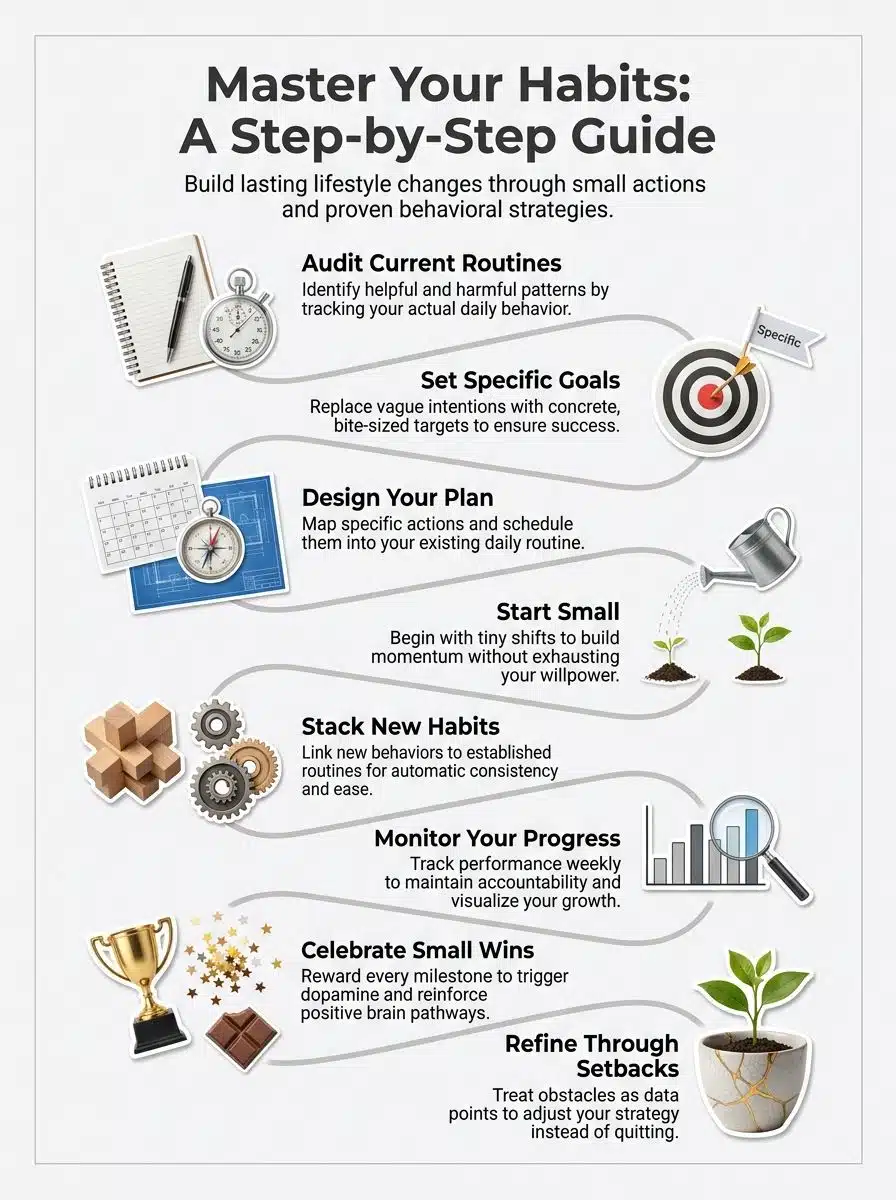
Building healthy habits starts with a hard look at what you’re doing right now. From there, you set goals that make sense for your life, create a real action plan, and track your progress as you go.
Evaluate Your Existing Habits
You can’t build a better lifestyle without looking at where you are today. Take an honest look at your daily routine and write down the habits you practice every single day.
Are you scrolling on your phone for an hour before bed? Do you skip breakfast most mornings? Your current behavior shapes everything.
Spend a few days tracking what you actually do, not what you think you do. Most people find big gaps between their perception and reality. This honest assessment becomes your starting point for real change.

You cannot change what you do not acknowledge. – Unknown
Your habits didn’t form overnight, so don’t expect them to vanish instantly either. Identify which habits help you and which ones hold you back.
Ask yourself some tough questions:
- What triggers these behaviors?
- Do you eat when stressed?
- Do you avoid exercise because you feel tired?
- Which habits drain your energy and motivation?
You’ll spot patterns that repeat day after day. Some habits serve you well and deserve to stay. Others hold you back, so you’ll want to replace them. Think of this phase like collecting data on yourself. That information guides your next steps toward lasting lifestyle transformation.
Define Clear and Achievable Goals
Now that you’ve examined your current habits, it’s time to set goals that actually work. Vague goals like “get healthier” go nowhere fast. You need specific targets.
Write down exactly what you want to accomplish. Say you want to exercise more, so you commit to walking thirty minutes, three times per week. That beats a fuzzy promise to “work out sometime.”
Your goals must fit your life right now. Ambitious targets feel great at first, but they often crash and burn. According to a 2024 Forbes Health/OnePoll survey of US adults, the average New Year’s resolution lasts just 3.74 months, and only 8% of people stick to their goals for even a single month. That’s a strong case for starting small.
Here’s a quick test for any goal you set:
- Is it specific enough to picture clearly?
- Can you achieve it within 30 days?
- Does it fit your current schedule?
- Can you easily track whether you did it?
Start with small wins you can reach within weeks or months. This approach builds your confidence and keeps motivation high. You’ll see real progress quickly, which makes you want to keep going.
Break larger goals into bite-sized pieces. If you want to eat better, your first goal might be adding one vegetable to dinner each night. Success breeds success, and each small victory pushes you forward on your personal development path.
Design a Detailed Action Plan
A solid action plan transforms your goals from wishes into reality. Your planning process shapes whether your lifestyle change sticks or fades away.
Here’s something worth knowing: according to research by Dr. Wendy Wood at the University of Southern California’s Habit Lab, a staggering 43% of our daily actions happen habitually while we’re thinking about something else entirely. That means willpower alone won’t cut it. Your environment and your plan do most of the heavy lifting.
- Write down your specific goal in clear, simple language. Skip vague statements and choose concrete targets instead.
- Break your main goal into smaller milestones you can track. These stepping stones help you celebrate progress and stay motivated.
- List the exact behaviors you must change to reach your targets. Identify which actions support your commitment and which ones hold you back.
- Schedule your new habits into your daily routine at specific times. Consistency grows stronger when you anchor your behavior to existing activities.
- Identify obstacles that might derail your progress before they appear. Planning around these challenges keeps your momentum strong.
- Set a review date to assess what’s working and what needs adjustment. Your action plan should flex as your lifestyle evolves.
A good action plan isn’t set in stone. It’s a living document that grows with you.
Monitor Your Progress Regularly
Tracking your progress keeps your motivation high and your goals in sight. Check in on your behavior change at least once a week. Write down what you did and how you felt.
Ask yourself a few simple questions each week:
- Did I complete my planned workouts?
- Did I stick to my eating goals?
- What did I do well this week?
- What can I improve next week?
Your progress tracker becomes a mirror that shows you the truth about your commitment. When you see concrete evidence of your work, you feel energized to keep going.
So grab a journal, use an app, or mark a calendar. According to a comprehensive meta-analysis of 138 studies published by the American Psychological Association, people who physically record or publicly report their goal progress have a significantly higher success rate than those who simply think about their goals internally. Tracking isn’t just motivational. It’s a proven psychological catalyst for success.
Celebrate the small wins along the way, because consistency builds through these tiny victories. Progress isn’t always linear, but regular monitoring keeps you honest and accountable to yourself.
Key Techniques to Ensure Habit Persistence
Sticking with healthy habits demands more than good intentions. You need real techniques that transform your goals into lasting behavior change.
Begin with Small Changes
Start your behavior change with tiny steps, not giant leaps. You don’t need to overhaul your entire lifestyle overnight. Small changes build momentum, and momentum builds commitment.
If you want to exercise more, take a ten-minute walk instead of signing up for a gym membership you’ll abandon. If you want to eat better, swap one sugary drink for water each day.
Here are a few easy swaps to start with:
- Take the stairs instead of the elevator.
- Add one vegetable to your dinner plate.
- Drink a glass of water before your morning coffee.
- Go to bed fifteen minutes earlier than usual.
These small shifts feel manageable, so you actually stick with them. Your brain rewards progress, no matter how small, and that reward keeps your motivation high.
This approach works because small changes require less willpower. You conserve your energy for the long haul. Each tiny win adds to your personal development and shows you that change is possible.
Once these small habits become automatic, you can layer on more challenging goals. Build one solid habit before you tackle the next one. This strategy transforms your lifestyle without burning you out.
Implement Habit Stacking Methods
Habit stacking links your new behavior to an existing routine, making change feel natural and less overwhelming. This method piggybacks on habits you already do daily, so your brain accepts the new action as part of your established lifestyle.
Here’s how to make it work for you:
- Identify one solid habit you already do every morning, like brushing your teeth or drinking coffee, then attach your new behavior right after it.
- Stack a five-minute meditation session right after your morning shower to build stress management into your day without extra effort.
- Add ten pushups after you pour your morning coffee, turning your caffeine break into a fitness opportunity.
- Drink a glass of water right before each meal, making hydration automatic through your existing eating schedule.
- Do three minutes of stretching right after you sit at your desk, embedding flexibility practice into your work routine.
- Journal for two minutes after dinner, connecting reflection and progress tracking to something you already do daily.
Your existing routine becomes the trigger. Consistency flows naturally because you’ve already mastered the foundation habit.
Maintain Consistency in Your Routine
Consistency forms the backbone of any successful lifestyle change. You show up for your routine every single day, and your body starts to expect it. Your brain adapts faster when you stick to the same time, the same place, and the same actions.
This repetition builds neural pathways that make your new behavior feel automatic over time. You might worry that skipping a day will derail everything. The good news: a 2024 meta-analysis by the University of South Australia revealed that missing a single day has no significant impact on long-term habit formation. One off day doesn’t reset the clock or send you back to square one.
What matters most is getting back on track the very next day. Three weeks of regular action beats one month of sporadic effort. Your commitment to showing up matters far more than perfection. Life throws curveballs, but you keep moving forward anyway. Treat your routine like a non-negotiable appointment with yourself. That’s how lasting change takes hold.
Celebrate Achievements Along the Way
Celebrating your wins, no matter how small, fuels your motivation and keeps your progress moving forward. Did you hit a new personal record at the gym? Take a moment to feel proud. Did you stick to your meal plan for a full week? That deserves recognition.
These small victories build momentum and make your lifestyle change feel real and achievable. Your brain releases dopamine when you acknowledge success, and that chemical boost makes you want to repeat the behavior.
Reward yourself with something meaningful:
- A relaxing bath or quiet time to yourself
- A favorite healthy snack or treat
- Time doing an activity you love
- Sharing your win with a supportive friend or family member
This positive reinforcement strengthens your commitment to your goals and makes habit formation feel less like a chore. Tracking your progress gives you concrete proof that your behavior change is working.
Seeing your self-discipline pay off in black and white makes the journey feel real and exciting. Share your milestones with people who support your wellness goals. Their encouragement adds extra fuel to your motivation.
Essential Healthy Habits to Adopt
These four core habits form the foundation of your wellness journey. They work together to transform your entire lifestyle.
Engage in Regular Exercise
Your body thrives on movement, and regular exercise forms the backbone of any solid lifestyle change. Exercise doesn’t mean spending hours at the gym or running marathons. It means finding activities you genuinely enjoy.
Walking, dancing, swimming, or cycling all count as valid forms of physical activity. Start with just thirty minutes, three times per week, and build from there. The CDC’s Physical Activity Guidelines for Americans recommend that adults aim for at least 150 minutes of moderate-intensity aerobic activity per week, which breaks down into five manageable 30-minute sessions. That’s a great long-term target to work toward.
Your consistency matters far more than intensity at the beginning. Physical activity boosts your energy levels, sharpens your mind, and strengthens your heart.
The real magic happens when exercise becomes part of your daily routine, not something you dread. Pick specific days and times for your workouts, then treat them like important appointments you cannot skip.
Track your progress by noting how you feel, how far you walk, or how many repetitions you complete. Celebrate small wins along the way. Your body adapts faster than you think, and soon enough, skipping a workout will feel wrong.
Eat a Balanced and Mindful Diet
Your body needs fuel just like a car needs gas, so feeding it right matters as much as moving it does. Food choices shape your energy levels, mood, and how well you stick to your fitness goals.
Eating mindfully means you slow down, taste your meals, and listen to your body’s signals instead of rushing through lunch at your desk. This lifestyle change transforms your relationship with food and helps you make smarter choices without feeling deprived.
Here’s a simple way to start:
- Fill half your plate with fruits and vegetables at each meal.
- Add lean proteins, whole grains, and healthy fats to round out your nutrition.
- Use smaller plates and pay attention to hunger cues rather than finishing everything on your dish.
- Plan meals ahead, shop with a list, and avoid keeping junk food visible in your kitchen.
Progress happens gradually, so celebrate small wins. Choosing water instead of soda or packing a healthy lunch for work are real victories worth recognizing.
Ensure Adequate Sleep and Rest
Your body needs good food, but it also needs recovery time. Sleep acts like your body’s repair shop, where your cells heal, your muscles grow, and your mind consolidates what you learned that day.
Most adults need seven to nine hours of quality sleep each night to function at their best. Going to bed at the same time and waking up at the same time helps your body fall into a natural rhythm, which makes sleep easier and deeper.
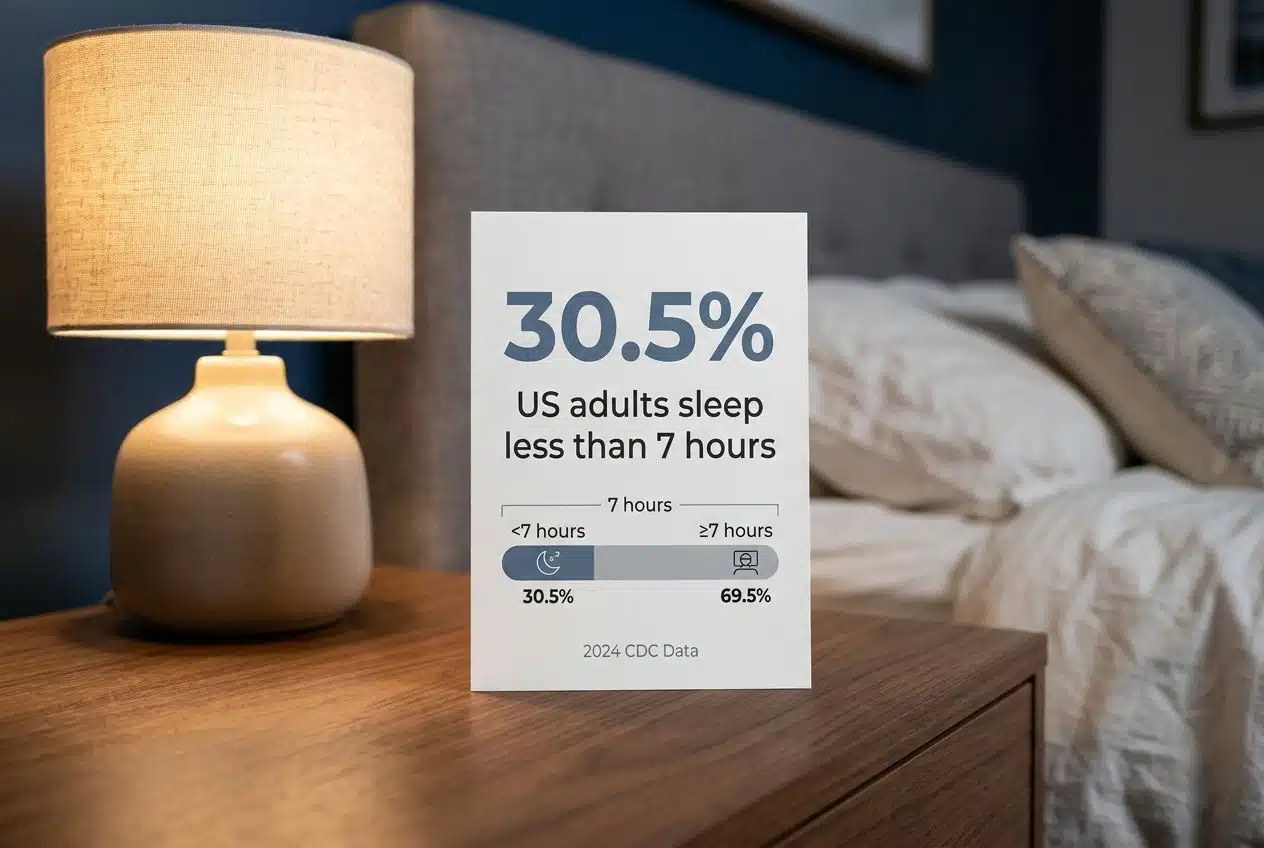
Poor sleep sabotages your wellness goals faster than you might think. When you skip sleep, your motivation drops, your cravings for junk food spike, and your ability to stick with any routine crumbles. According to 2024 survey data from the CDC and guidelines from the American Academy of Sleep Medicine, 30.5% of US adults sleep less than the recommended minimum of seven hours per night. That sleep gap is actively working against your willpower and your habit goals.
Treat sleep as non-negotiable, not as a luxury you earn after checking off everything else. Start by protecting your sleep schedule like your most important daily commitment.
A few small changes make a big difference:
- Dim the lights an hour before bed to signal to your brain that it’s time to wind down.
- Put your phone away at least 30 minutes before sleeping.
- Keep your bedroom cool and quiet for deeper rest.
- Stick to the same wake-up time, even on weekends.
These changes create the foundation for better rest, stronger willpower, and lasting lifestyle transformation.
Practice Mindfulness and Manage Stress
Mindfulness practice quiets your racing mind and cuts stress levels significantly. You sit quietly, focus on your breathing, and notice thoughts without judging them. This simple act rewires your brain to handle pressure better.
Even five minutes of mindfulness a day shifts your mood and sharpens your focus. Your commitment to this routine pays off in real ways.
Stress management becomes easier when you pair mindfulness with other wellness tools:
- Take walks outside in nature.
- Write in a journal to process your thoughts.
- Talk with friends who lift you up.
- Practice deep breathing during stressful moments.
These actions lower cortisol levels, the hormone that makes stress stick around. Your lifestyle improves dramatically when you make stress relief a core part of your daily behavior. Small moments of calm add up to big changes in how you feel and think.
Handling Challenges in Habit Formation
Building healthy habits tests your commitment, and roadblocks will pop up along the way. Your motivation might dip, life gets messy, and old patterns pull you back. But you can push through these rough patches and come out stronger.
Address Setbacks Effectively
Setbacks happen to everyone, and they don’t mean you’ve failed. You missed a workout, skipped meals, or broke your routine for a week. That’s normal, not a reason to quit. The key is how you respond. Instead of spiraling into guilt, pause and ask yourself what caused the slip.
- Did stress pile up?
- Were you too ambitious with your goals?
- Did life throw you a curveball?
- Does your routine need a practical adjustment?
Understanding the root cause helps you adapt your approach. You can adjust your action plan, lower your expectations temporarily, or find new ways to stay consistent. Progress isn’t a straight line. It’s more like a winding road with bumps along the way.
Your commitment to behavior change strengthens when you treat obstacles as learning moments, not failures. Talk to someone you trust about what went wrong. A fresh perspective can shift everything.
Reward yourself for getting back on track, even if it’s just a small celebration. This reinforces your self-discipline and reminds you that adaptation is part of the journey. The resilience you build carries into every area of your life, making future challenges feel less overwhelming.
Keep Motivation High Throughout the Journey
You’ve tackled setbacks head-on, and that resilience matters. Motivation fuels your entire journey, though, so protecting it requires active effort on your part.
Your commitment stays strong when you connect daily actions to your larger goals. Think about why you started this change in the first place. That reason becomes your anchor during tough moments.
Motivation isn’t something that magically appears. You build it through small wins and progress tracking. Each time you stick to your routine, you prove to yourself that transformation is possible.
Here’s what keeps motivation alive over the long haul:
- Switch up your exercise routine when it feels boring. Try a new class or run a different route.
- Invite a friend to join you. Social connection amplifies your commitment.
- Track your progress in ways that excite you, whether that’s photos, journals, or apps.
- Find an accountability partner who shares your wellness goals.
Your self-discipline strengthens when you see tangible proof of your efforts. Your consistency compounds over time, creating habits that feel automatic rather than forced. This is how lasting change takes root in your life.
Long-Term Advantages of Sustaining Healthy Habits
Your body transforms when you stick with healthy habits. Your mind sharpens, your energy soars, and your wellness reaches new heights that make daily life feel easier and more rewarding.

Boost Your Physical Health
Healthy habits transform your body from the inside out. Exercise strengthens your heart, bones, and muscles. Eating nutritious food gives your body fuel to work better. Good sleep lets your body repair itself each night.
These lifestyle changes lower your risk of heart disease, diabetes, and obesity. You feel stronger, faster, and more energetic when you stick to this routine. Your consistency pays off in real, measurable ways that you can see and feel.
Building physical health through commitment creates a ripple effect across your life:
- Better fitness means you climb stairs without getting winded.
- Proper nutrition stops energy crashes that make afternoons miserable.
- Sound sleep helps you think more clearly and handle stress better.
These behavior changes don’t happen overnight, but they compound over time. Six months of steady progress look completely different from where you started. This physical transformation sets the stage for the mental and emotional benefits that come next.
Enhance Your Mental Well-being
Your mental health matters just as much as your physical fitness. Solid habits reshape how your brain works, reducing anxiety and depression along the way.
Here’s what regular healthy habits do for your mind:
- Exercise releases feel-good chemicals that improve your mood.
- Sleep gives your mind time to process emotions and heal.
- Mindfulness calms racing thoughts and builds focus.
- Reaching your goals builds real confidence over time.
These lifestyle changes don’t happen overnight, but they do happen. Your commitment to consistency builds a stronger, happier mind. Progress appears faster than you’d expect.
Stress melts away when you stick to your routine. Your mood lifts as you practice self-discipline and reach your goals. Better sleep means clearer thinking. More exercise means less worry.
These habits work together like puzzle pieces, fitting into your life to create real change. Your mental wellness improves with each small victory you celebrate. This foundation of personal development sets you up for tackling the challenges that life throws your way.
Wrapping Up
Your journey toward building healthy habits that actually stick demands commitment, but the payoff proves worth every effort.
You’ve learned how to set goals, create action plans, and track your progress with intention. The strategies you’ve explored, from habit stacking to celebrating small wins, work together to reshape your lifestyle.
Motivation may fluctuate, but your routine becomes your anchor when willpower wavers. Self-discipline grows stronger each time you choose the harder path, and that growth compounds over weeks and months.
Sustainability matters more than perfection in this process. Behavior change sticks when you build it into the fabric of your daily life, not when you chase quick fixes.
The habits you develop today shape the person you become tomorrow. Keep your eyes on the lifestyle you’re building, stay flexible with your approach, and trust that consistency compounds into real transformation over time.
Frequently Asked Questions (FAQs) on Building Healthy Habits
1. How long does it take to build a healthy habit?
Research from University College London found that habits take an average of 66 days to become automatic. The time can range from 18 to 254 days depending on the habit’s complexity. Start small, stay consistent, and give yourself grace along the way.
2. What is the best way to start building healthy habits?
Pick one small habit and use the 2-minute rule: make it so easy it takes just two minutes to start.
3. Why do healthy habits fail?
About 80% of New Year’s resolutions fail by February because people set goals that are too big or vague. Set clear, simple goals that fit into your routine and track your progress.
4. How do I stay motivated to keep my healthy habits going?
Tie your new habit to something you already do each day, like drinking water right after you brush your teeth.






















