High-converting lead magnet ideas succeed by offering immediate, specialized utility rather than rehashed blog posts or broad ebooks. Modern users protect their inboxes, opting to exchange contact information only for assets that solve specific problems—such as interactive calculators, plug-and-play templates, proprietary industry benchmarks, or bite-sized video teardowns.
To maximize opt-in rates, effective lead magnets focus on rapid friction reduction: helping buyers calculate an ROI, diagnose an operational weakness, or organize complex workflows in minutes. This guide covers ten proven lead magnet formats—ranging from lightweight execution checklists to specialized data reports—designed to attract qualified leads and drive measurable conversion across every stage of your sales funnel.
What Most Lead Magnet Lists Miss
A high opt-in rate can hide a weak lead magnet. Discounts attract bargain hunters. Large template libraries attract people who collect resources without using them. A broad industry report may generate plenty of downloads but few relevant enquiries.
Before creating an asset, settle three questions:
- What specific task, problem, or decision will it make easier?
- What information does the business genuinely need from the user?
- What sensible next step follows the download or result?
The exchange should feel proportionate. Requesting a phone number, company revenue, job title, purchasing timeline, and full address for a one-page checklist creates needless resistance. A personalized audit or consultation can justify more qualification than an early-stage template.
Be equally clear about what happens after registration. UK guidance requires organizations to explain when personal information will be used for direct marketing. US CAN-SPAM rules follow a different framework, including requirements for accurate commercial messages and working opt-out methods. International campaigns should check the rules in each relevant market rather than relying on one global consent assumption.
10 Lead Magnet Ideas Worth Building
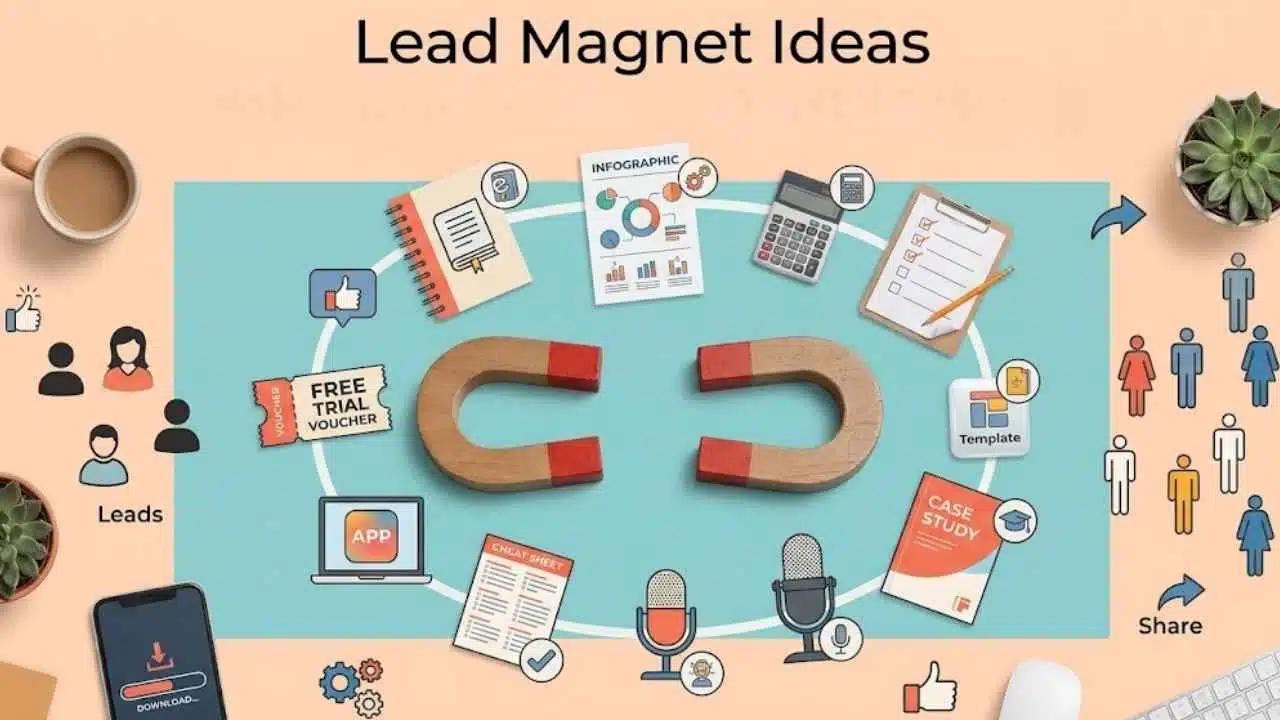
1. Interactive Calculators and Estimators
Calculators are one of the strongest options when buyers already have the numbers needed to produce a useful result. A paid media agency could build a break-even advertising calculator using average order value, gross margin, acquisition cost, and conversion rate. A SaaS company might estimate the cost of a manual workflow. A home-services business could offer a preliminary project budget planner.
The calculation needs to be understandable. Show the assumptions and explain what each input means. A polished output becomes untrustworthy when users cannot see how the figure was produced.
Consider displaying a basic result before requesting an email address, then offering a detailed breakdown or editable scenario as the lead magnet. Gating every result before proving the tool is useful may discourage visitors who do not yet know the brand.
Calculators require more work than PDFs, but a well-maintained one can support organic search, paid campaigns, and sales conversations at the same time.
2. Personalized Assessments and Scorecards
Assessments work best when people recognize a problem but cannot judge its seriousness or identify the next action. Possible uses include a sales-process maturity assessment, CRM data-quality scorecard, cybersecurity readiness check, product-fit quiz, or personalized product selector.
The result must reflect the answers. If every participant receives the same recommendation under a different label, the personalization is cosmetic. This is where many quizzes become overrated: they create interaction without producing a decision the user can act on.
Typeform currently supports scoring, calculations, branching, segmentation, and different endings based on responses. Those features can handle a straightforward assessment, although advanced scoring may still require careful configuration or custom work. Availability can also vary by plan.
Remove any question that does not affect the result or follow-up. A long sales form does not become more appealing simply because it has a progress bar.
3. Working Templates With the Difficult Parts Completed
For most small teams, a working template is the safest place to start. It is less expensive than a custom tool and can still remove a meaningful amount of work.
The weak version is an almost-empty document with branded headings. A useful template includes formulas, sample entries, instructions, dropdown choices, or completed examples.
The format should match the task:
- Use Google Sheets or Excel for budgets, forecasts, and reporting models.
- Use a project board for client onboarding or production workflows.
- Use an editable document for content briefs, interview guides, or RFP outlines.
A template should be usable within minutes of opening it. If the reader needs a separate webinar to understand the file, too much of the setup has been left unfinished.
4. Free Diagnostic Tools
Diagnostics evaluate something the visitor already owns: a website, advertisement, document, account, dataset, or workflow.
HubSpot Website Grader assesses areas including performance, mobile readiness, SEO, and security. Ahrefs offers free tools covering tasks such as keyword research, backlink checking, on-page work, and search visibility. Both demonstrate a useful principle: give prospects a limited but credible experience of the problem the paid product addresses.
Smaller companies can apply that principle narrowly. A UTM checker, image-size analyzer, formatting review, subject-line checker, or accessibility scan may be enough. A dependable micro-tool is often more valuable than a large resource library that becomes difficult to maintain.
Accuracy matters more than visual effects. Explain what the tool checks, what it misses, and how its output should be interpreted. If users submit documents, customer information, or internal URLs, provide clear information about processing and retention.
5. Original Research and Benchmark Reports
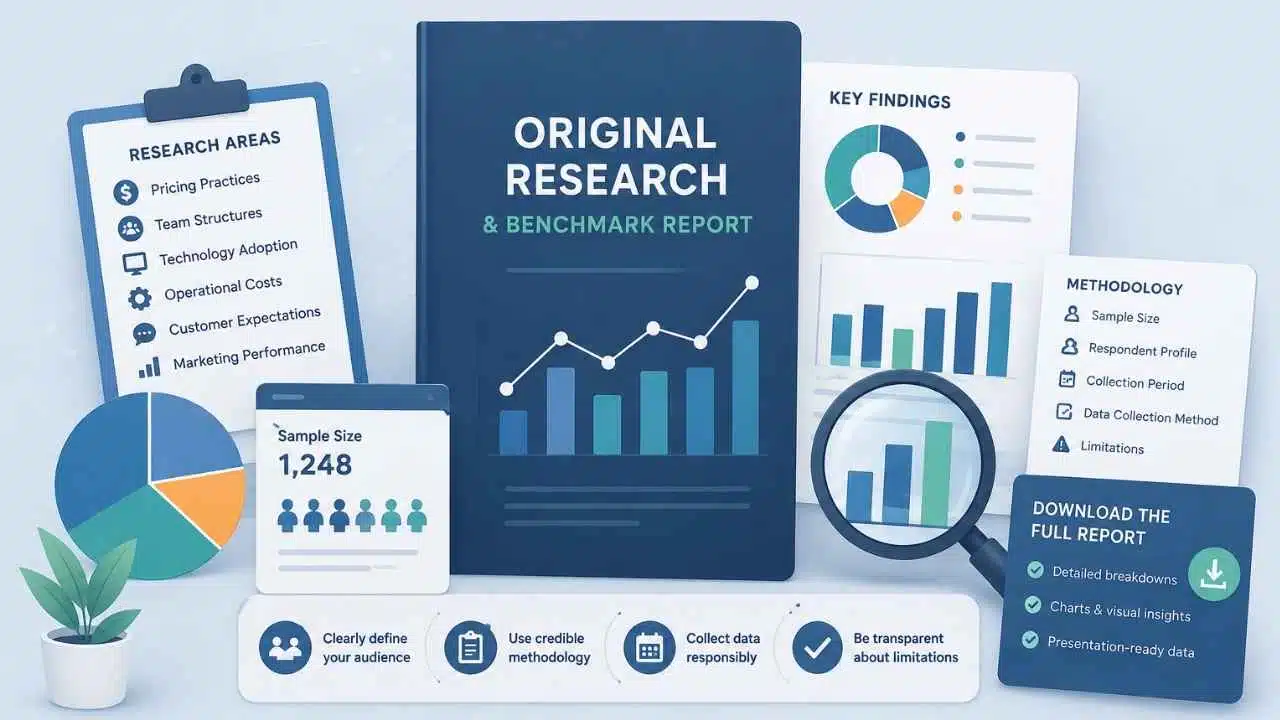
Original research can offer information that search summaries cannot reproduce. That makes it valuable in markets where readers need evidence for budgets, planning, or internal presentations.
A report might examine pricing practices, team structures, technology adoption, operational costs, customer expectations, or marketing performance within a defined industry.
This is not a sensible format for every business. Without access to a credible audience, proprietary dataset, or research partner, the result can become a thin survey presented with more certainty than it deserves.
Publish the sample size, respondent profile, collection period, methodology, and major limitations. A small social poll should not be described as an industry benchmark. Consider leaving the methodology and key findings open while offering deeper breakdowns, charts, or presentation-ready material in the downloadable edition.
6. Focused Workshops and Problem-Solving Clinics
Broad webinars are easy to schedule and easy to ignore. A focused workshop makes a clearer promise because participants should leave with something completed or understood.
A 45-minute landing-page clinic could review several real pages. An accounting firm might run a quarterly preparation session for small businesses. A SaaS provider could lead an implementation workshop using a sample workspace.
Use the registration form to ask about one relevant obstacle rather than collecting a full company profile. Major webinar platforms can support registration, polls, questions, and post-event reports, although features vary by product and account level.
The limitation is operational. Someone must promote the event, prepare examples, deliver it, and manage follow-up. Teams without that capacity should choose an on-demand asset instead.
7. Short Email Courses or Action Sprints
An email course makes sense when the problem requires several small actions rather than one download.
A short sequence might help subscribers clean up a CRM, prepare a product launch, create a portfolio, or build a basic analytics dashboard. Each message should contain one manageable task and a clear way to recognize completion.
Send the first lesson promptly while the subscriber still remembers why they registered. Avoid stretching three useful lessons into ten emails. Extra messages do not automatically create extra value, especially for an audience already struggling with inbox fatigue.
8. Decision Kits and Comparison Worksheets
Decision content is often underrated because it attracts fewer casual visitors. It can be far more useful to someone approaching a purchase. A decision kit might contain a vendor comparison matrix, software requirements worksheet, migration-readiness checklist, consultation brief, or RFP outline. These assets help buyers collect requirements and involve colleagues who were not part of the original search.
Keep the criteria fair. A worksheet designed so that only the publisher’s product can earn a good score is a sales brochure in disguise. Include switching costs, implementation difficulty, internal resource requirements, and the possibility that postponing a purchase may be reasonable.
This format is particularly useful for agencies, consultants, and SaaS businesses with longer evaluation cycles.
9. Annotated Swipe Files and Example Libraries
A swipe file earns its place through editing, not volume. Twenty landing pages with comments on hierarchy, offer framing, and form design are more useful than hundreds of unexplained screenshots. The same method works for onboarding emails, sales questions, advertising concepts, or customer research prompts.
Avoid republishing other people’s work as a downloadable collection. Use limited excerpts, link to original material where appropriate, and add analysis that helps the reader understand why each example was selected.
This is an affordable option for specialist businesses that already collect examples as part of their normal work.
10. Product Samples, Sandboxes, and Guided Previews
Some prospects do not want more educational content. They want to see what the product or service is actually like. A software company could provide an interactive tour, sample workspace, or sandbox with demonstration data. A training provider might release one complete lesson. An agency could offer an automated audit or a carefully limited sample deliverable.
These offers are better suited to product evaluation than broad audience building. They may attract fewer signups, but the interaction reveals more purchase intent than downloading a general checklist.
The preview must work without an immediate sales call. Mandatory account connections, broken sample data, or a required consultation before access makes the offer feel misleading. Service businesses should also calculate the delivery cost. A “free sample” that requires hours of manual work for every prospect can quickly become an expensive acquisition channel.
Measure More Than the Download
A form submission only confirms that someone wanted the asset. It does not show whether the lead was relevant or whether the asset influenced a commercial decision.
Google Analytics recommends the generate_lead event for initial lead actions. That event can be marked as a key event, while a CRM can track later movement through marketing and sales stages.
When comparing lead magnet ideas, review:
- Landing-page visitor-to-lead rate
- Asset access or activation
- Return visits to relevant commercial pages
- Trial starts, consultations, or demo requests
- Progression to a qualified lead or opportunity
- Revenue connected with the campaign
- Unsubscribes and spam complaints
Traffic context matters. A narrowly targeted search page should not be compared directly with a broad social campaign based only on form completion.
Map the follow-up before launching the asset. Deliver it promptly, explain the first useful action, and keep later emails connected to the original problem. Someone who requested a budgeting template should not immediately receive an unrelated product announcement.
A Practical Starting Point
A small team should start with one working template, focused workshop, or decision kit built around a question customers already ask. Companies with reliable data or development support can move toward calculators, diagnostics, or original research. Product-led businesses should examine guided previews and sandboxes.
The best lead magnet ideas do not need to be large. They need to provide enough value to justify the exchange and create a credible next step. Build one focused asset, connect it to the rest of the funnel, and evaluate what those leads do after registering—not merely how many names enter the database.