

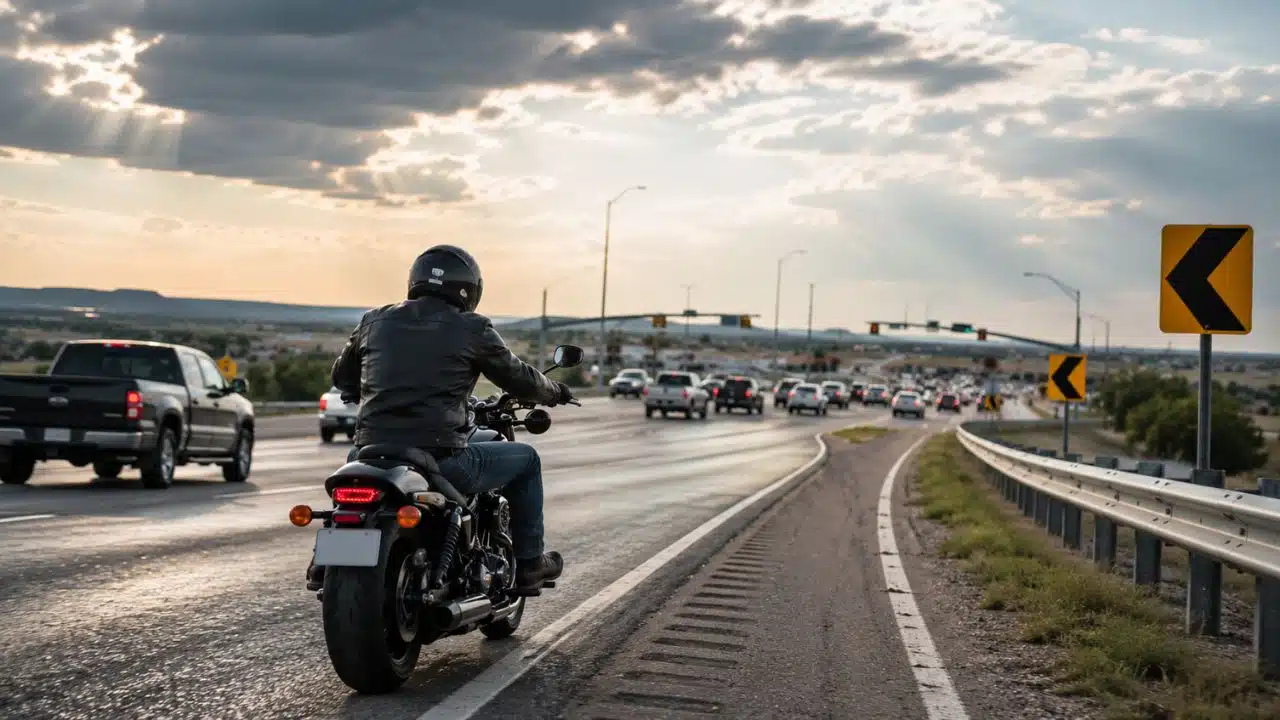
Texas roads carry heavy traffic, and some routes see far more motorcycle crashes than others. Riders face unique risks that drivers in cars rarely have to think about. Crash reports keep naming the same dangerous roads and intersections again and again. Knowing which roads carry the highest risk can help riders plan safer routes. Weather and road conditions change fast, and rider awareness often decides what happens next. Riders who notice a swerving car or a pothole early can brake or steer away in time.
Interstate Highways With High Crash Rates
Major interstates like I 35, I 45, and I 10 see some of the highest crash totals statewide. Heavy truck traffic and fast moving cars create dangerous conditions for riders on these routes. Cases handled by O’Hare & Koch Personal Injury Lawyers receive a closer review of medical records and damage calculations. Lane changes happen quickly, and drivers do not always check blind spots for motorcycles. High speeds mean less time to react when traffic suddenly slows or stops. Insurance adjusters often reach out within days, sometimes before injured riders can consult the right legal team.
Rural Roads And Hidden Dangers
Rural highways may seem safer, but they carry their own set of serious risks. A dark curve or a patch of loose gravel can surprise a rider before there is time to react. Wildlife crossing the road unexpectedly causes a surprising number of single vehicle motorcycle crashes. Emergency response times in rural areas tend to be slower than in cities. This delay can make injuries from rural crashes more severe than similar city accidents. Riders should stay alert and reduce speed when traveling unfamiliar country roads after dark.
Urban Intersections And Heavy Traffic
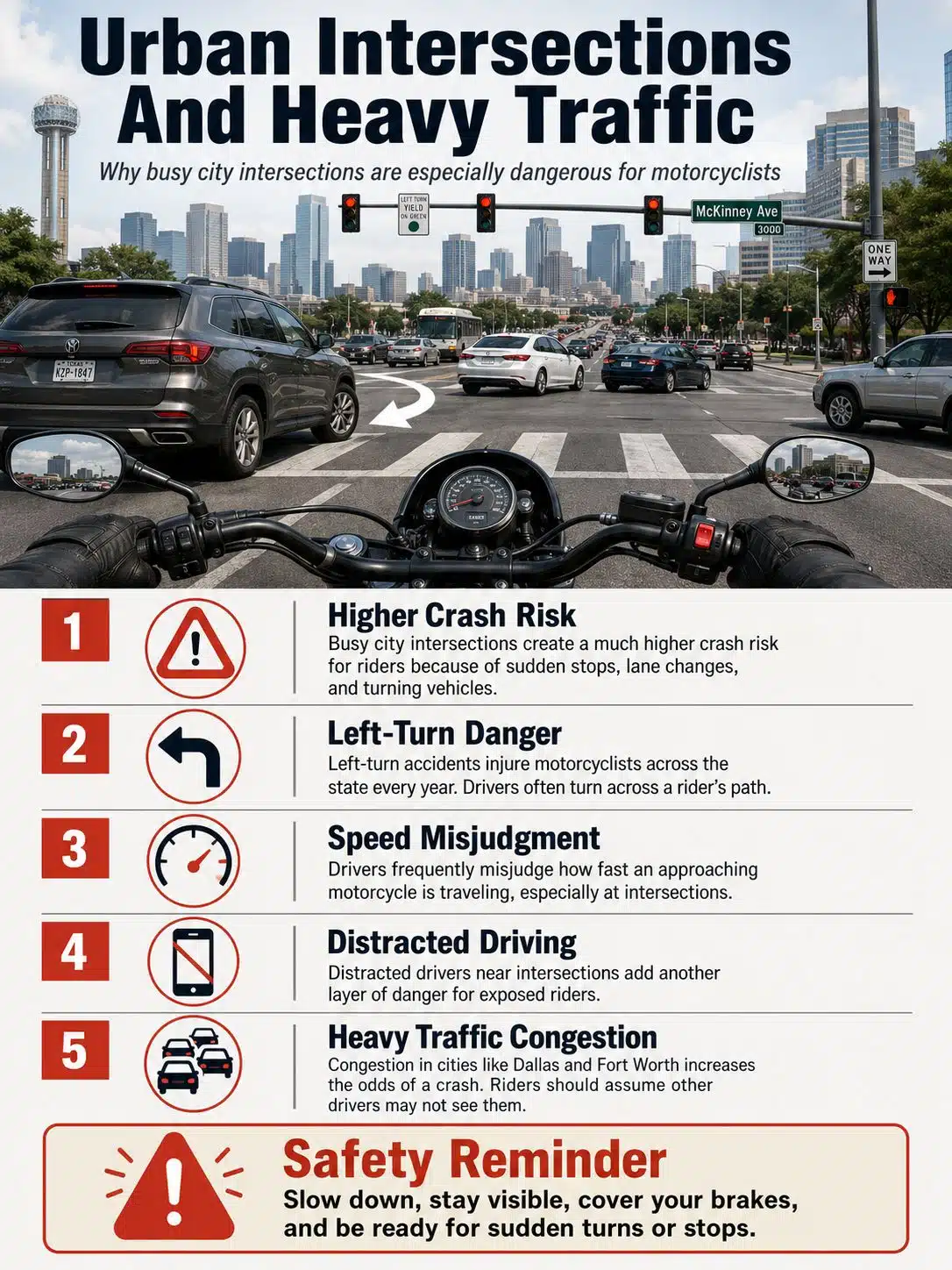
Riders face a much higher crash risk at busy city intersections filled with sudden stops and turns. Left turn accidents injure motorcyclists across the state every year. Drivers frequently misjudge how fast an approaching motorcycle is actually traveling toward them. Distracted driving near intersections adds another layer of danger for exposed riders. Heavy traffic congestion in cities like Dallas and Fort Worth increases the odds of a crash. Riders should assume other drivers may not see them at busy intersections.
Seasonal And Weather Related Risks
Motorcycle crash numbers tend to climb during warmer months when more riders hit the road. Summer weekends see especially high traffic volume from both bikes and passenger vehicles. Sudden rain showers make roads slick and reduce visibility for everyone on the highway. Wind gusts can push a motorcycle off course more easily than a heavier car. Holiday weekends often bring a mix of inexperienced riders and impaired drivers. When winter storms or heavy rain are forecast, motorcyclists can slow down and choose a safer route in time.
Steps Riders Can Take To Stay Safe
Riders wearing helmets and protective gear often survive crashes that would otherwise cause serious injuries. Defensive riding habits, like scanning ahead and avoiding blind spots, help prevent many accidents. A quick walk around a bike before riding often catches a worn tire or a dim light early. Avoiding known high risk roads during peak traffic hours can lower overall exposure. Staying visible with reflective gear and working lights matters more than most riders realize. Riders who take these steps seriously avoid injuries that careless habits often cause on the road.
Some Texas roads cause more crashes than others, especially during rush hour or bad weather. Highways near construction zones see frequent rear-end collisions from sudden braking. Rural roads often lack lighting, so drivers face sharp curves and deer crossings at night. Busy intersections in cities create constant merging that catches distracted drivers off guard. Riders who learn these patterns can slow down or change routes before trouble starts. Small changes like these lower the odds of a serious crash on any ride.





















