You might feel trapped by negative thoughts and anxious feelings. By 2026, experts say five top mobile applications will offer proven CBT tools for mood tracking. This guide will list five easy-to-use mobile applications that use CBT exercises to track moods, fight cognitive distortions, and ease stress.
Ready for a fresh start?
Key Takeaways
- Experts pick five top CBT apps for 2025: MindDoc, MindShift CBT, MoodTools, Youper, and CBT-i Coach.
- MindDoc logs mood three times a day (8 AM, 2 PM, 8 PM) and uses AI to spot worry and send tips.
- MindShift CBT halves worry with deep breathing, muscle release, daily habit trackers, and SMART goals.
- MoodTools blends guided journaling, video clips, thought records, and a link to the National Suicide Prevention Lifeline.
- Youper logged over 1 million chats in 2024 to offer real-time CBT and DBT help; CBT-i Coach uses five tools to build better sleep.
MindDoc: Best Overall CBT App

MindDoc feels like a coach in your pocket. You can track your moods on Android or iOS and tap into guided journaling mixed with CBT tips.
Features for mood tracking and personalized insights
Users log moods at 8 AM, 2 PM, and 8 PM. The platform records each entry. A digital mood chart tracks trends. Analytics tools highlight stress spikes. This record links to coping cards in the Journal tool.
Reports can go to a counselor or therapist.
Smart AI notes repeated worry or sadness. It then sends personalized insights. Those tips show how thoughts shape feelings. “Courses” module provides bite size lessons. Topics include cognitive behavioral therapy (cbt), behavioral activation, and relaxation techniques.
The app feels like an online therapy session in your pocket. Users gain quick tools for stress management.
Access to guided exercises and self-help tools
MindDoc brings CBT to your phone. It offers mental health tools that help you track moods and learn skills.
- Daily prompts nudge you into guided journaling, ideal for use between therapy sessions, that highlight distorted thoughts and help you reshape them.
- Self-help modules teach stress management, emotional regulation and positive psychology in brief lessons.
- Guided meditations and breathing exercises calm anxiety and improve focus in under ten minutes.
- Mood tracking charts reveal patterns over weeks and months, helping you catch negative cycles early.
- Coping cards remind you of helpful mantras and tasks use acceptance and commitment therapy and dialectical behavioral therapy principles.
MindShift CBT: Best for Managing Anxiety
MindShift CBT sends quick prompts for deep breathing and journal prompts when worry spikes on your smartphone. You can grab it on Google Play or the App Store, then track mood swings with graphs to calm racing thoughts.
Focused CBT techniques for reducing worry
Users set a worry watch to log anxious thoughts as they arise, like a mini radar for the mind. The tool then prompts a daily mood check and tracks stress in a simple chart. Guided journeys test each thought against facts, based on cognitive-behavior therapy logs.
Coping cards act like digital reminders, they nudge users to use mindfulness exercises or brief relaxation techniques. The app also offers mental health support with specific anxiety management tools and positive thinking challenges, drawn from acceptance and commitment therapy and dialectical behavioral therapy skills.
A clinical psychologist designed each session to build self regulation and cut worry in half.
Tools for relaxation and building healthy habits
MindShift helps you calm your thoughts fast. It also guides you to build healthy routines.
- Deep Breathing Sessions: These audio guides teach you to inhale slowly and exhale fully, which eases jittery thoughts and lowers heart rate in five minutes.
- Progressive Tension Release: You tense each muscle group for a few seconds, then relax it to melt away anxiety and support stress management.
- Mindful Relaxation Tracks: Short clips pair gentle voice prompts with soft nature sounds to ground your mind and boost emotional regulation.
- Daily Habit Tracker: You pick tiny goals like journaling for five minutes, walking ten minutes, or meditating twice a day; the app sends friendly reminders so you stick with them.
- SMART Goal Coach: It breaks big aims into simple steps, so you can plan, act, and review progress on sleep hygiene, exercise, or mood routines.
- Guided Journaling Tool: This feature asks targeted questions about your feelings, helping you spot patterns, track mood trends, and build strong coping cards for future stress.
MoodTools: Best for Combating Depression
MoodTools uses cognitive behavioral therapy to light a candle in a dark room with clip tutorials and reflection logs that target low moods. It runs on any mobile device or tablet, making mood tracking a snap and helping you spot patterns before they trip you up.
Evidence-based resources to tackle low moods
Researchers back paper worksheets and digital thought records. You can use the journaling feature for tracking thoughts and moods. Guided journaling in cognitive behavioral therapy apps mixes mood tracking with thought restructuring.
Coping cards pack quick tips for emotional regulation and stress management.
Built-in activity lists designed to improve mental health guide users through ACT and DBT drills. It offers mindfulness exercises, gentle breathing guides, and audio lessons by clinical psychologists.
A routine of five actions a day can lift low moods and strengthen positive thinking.
Video guides and thought records to improve mental health
Clips show CBT steps, blend them with guided journaling for mood tracking. Thought records help spot and shift wrong ideas.
- Users fill thought records to log emotions, spot triggers, track mood.
- The tool offers coping cards, and links to the National Suicide Prevention Lifeline for crisis resources and suicidal ideation support.
- Expert clips teach acceptance and commitment therapy and dialectical behavioral therapy tactics from psychotherapists for emotional regulation.
- App syncs entries with mental wellness tools for quick stress management tips and online therapy referrals.
Youper: Best AI-Powered CBT Chatbot
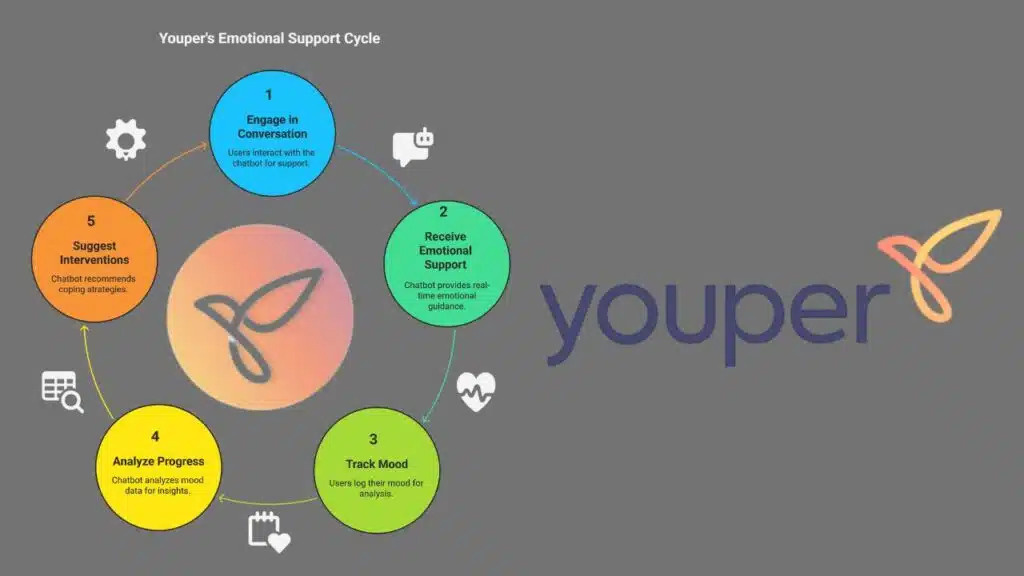
Youper feels like texting a buddy who cracks jokes just when your worries start to spin. This chatbot slips in emotional regulation tips to reel your mind back calm.
Conversational AI for real-time emotional support
This mental health app feels like a mindful friend you can tap at 2 a.m. It uses live CBT to guide you through mood tracking and calming your feelings. AI chat learns your daily ups and downs, then suggests DBT skills or mindfulness exercises in seconds.
It offers guided journaling prompts and coping cards to ease stress fast. People report calm talks and real time emotional support. The platform logged over one million chats in 2024, so it shows wide use.
Mental health pros call it a handy aid alongside online therapy.
Mood tracking and progress analysis
Users log mood in a diary each morning and evening. MindDoc does mood tracking with simple charts to record swings over weeks. The tool monitors changes over time.
It analyzes progress to give personalized feedback and aids stress management. App design blends cognitive-behavioral therapy with mindfulness exercises. A progress board updates in real time.
CBT-i Coach: Best for Insomnia Management
CBT-i Coach packs calm-down tricks and a rest log that help you build strong bedtime habits, so you can kiss sleepless nights goodbye. It guides you through deep breaths, prompted reflections, and thought records to rewire your brain and catch more z’s.
Sleep-focused CBT strategies for better rest
The app uses thought records and guided journaling to spot beliefs that keep you awake. It adds coping cards and quick prompts to shift worry into calm. Built-in relaxation techniques mix mindfulness exercises and breath drills.
That cuts racing thoughts and eases stress before bed.
Users set a sleep schedule with interactive tools that track wake and rest times. The coach logs sleep hygiene habits, like limiting caffeine and screen time. It sends reminders to hit the hay and rise at the same hour.
Reports show progress in insomnia management and mental health.
Interactive tools to create and maintain sleep schedules
CBT-i Coach adds hands-on tools for better rest. It helps you build sleep hygiene habits.
- Rest Frame Estimator shows your ideal sleep window, it uses sleep hygiene science and adapts to your data.
- Doze Alert pings your phone 30 minutes before bedtime, it blends CBT strategies like relaxation techniques to prep you.
- Efficiency Chart plots your bedtime against wake time nightly, so you spot shifts that affect anxiety management.
- Progress Dashboard sums your rest scores weekly, helping you track trends and tweak routines for better mental health support.
- Circadian Phase Mapper tracks light exposure and sleep time, then it suggests mindfulness techniques or sound therapy to ease you to slumber.
Takeaways
These tools guide your mind with mood tracking and thought records.
People find calm in mindfulness exercises and guided journaling.
Some apps back that with coping cards and sleep hygiene tips.
Every pick aims to boost emotional regulation and stress management skills.
Try one today to rewire thoughts and build healthy habits.
FAQs
1. What does mood tracking do in a cognitive-behavioral therapy (CBT) app?
It logs your mood each day, shows patterns, and guides your emotional regulation.
2. How do stress management tools work in these apps?
They use mindfulness exercises, guided meditation, guided journaling, coping cards, and short relaxation techniques, plus mental health education tips.
3. Can the ShiftMind App or StressTimer App help with anxiety management?
Yes, they give cognitive therapy steps, acceptance and commitment therapy (ACT) drills, and dialectical behavioral therapy (DBT) tips that calm racing thoughts.
4. Are there free CBT apps worth trying?
Yes, free CBT apps give mood tracking, mindfulness techniques, guided journeys, and they boast high ease of use so you can start fast.
5. Do I need a mental health professional when I use mental health apps?
These wellness apps offer online therapy tools and mental health support, but talking with a health professional adds deeper care.
6. How do these mental health tools keep my data safe?
Each app posts a privacy policy, locks your info, and follows mental healthcare rules to guard your personal data.