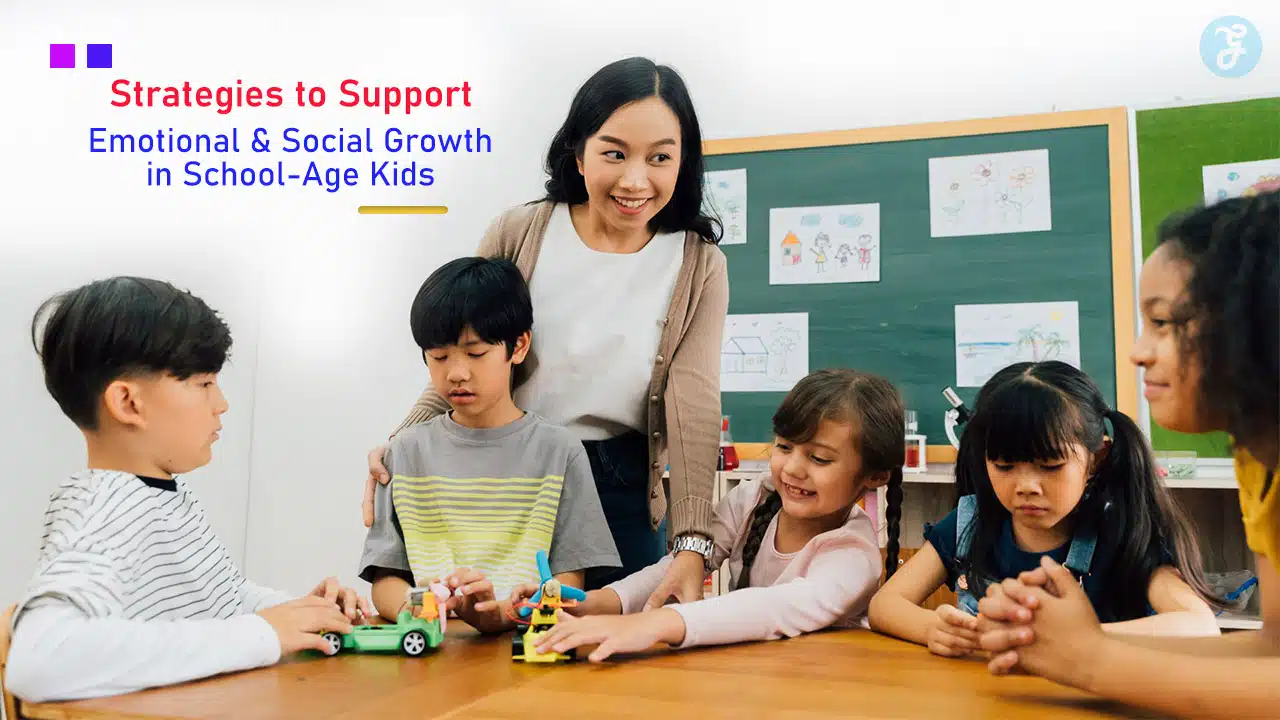
Emotional and social growth is crucial during the school-age years, as children begin to form deeper relationships, navigate complex emotions, and develop the skills they need to thrive in both personal and academic environments.
While academic learning is important, fostering emotional intelligence and social skills is equally critical for children’s overall development. These skills help children build meaningful relationships, manage stress, and understand their own emotions.
In this comprehensive guide, we’ll explore five effective strategies that parents, teachers, and caregivers can use to support the emotional and social growth of school-age children.
These strategies focus on nurturing qualities such as empathy, resilience, emotional regulation, and effective communication, laying the groundwork for a successful and emotionally balanced life.
Why Emotional and Social Growth Matters?
Before delving into specific strategies, it’s essential to understand the importance of emotional and social growth in school-age children. Children who develop strong emotional and social skills are better equipped to handle stress, form positive relationships, and engage in meaningful social interactions.
These skills are not only beneficial in childhood but also lay the foundation for long-term mental health and well-being.
The Benefits of Emotional and Social Growth
- Improved relationships: Children who develop strong social skills are more likely to form positive relationships with peers, teachers, and family members.
- Better academic performance: Studies have shown that children with good emotional regulation and social skills often perform better academically, as they are better able to focus, manage stress, and collaborate with others.
- Resilience in adversity: Emotional intelligence helps children build resilience, enabling them to cope with challenges such as failure, rejection, or disappointment in a healthy way.
By investing in the emotional and social development of children, parents and educators can help foster a sense of confidence, self-awareness, and empathy that will benefit them for the rest of their lives.
1. Encourage Emotional Expression and Emotional Literacy
One of the most fundamental strategies for supporting emotional growth in school-age kids is to encourage emotional expression and teach them emotional literacy.
Emotional literacy refers to the ability to recognize, understand, and manage emotions in oneself and others.
Teaching children to articulate their feelings and emotions effectively helps them develop emotional intelligence and better navigate their social interactions.
How to Encourage Emotional Expression
- Model emotional language: Children learn by example, so it’s essential for parents and teachers to model healthy emotional expression. When adults openly talk about their feelings, whether it’s joy, frustration, or sadness, children learn that it’s okay to express emotions.
- Use feeling words: Introduce children to a wide range of emotional vocabulary. Beyond “happy” and “sad,” help them explore more nuanced emotions like “frustrated,” “anxious,” “excited,” or “disappointed.”
- Validate emotions: Let children know that it’s normal to feel a wide range of emotions. Validating their feelings without judgment encourages openness and prevents children from bottling up emotions.
Emotional Literacy Activities
- Emotion cards: Use emotion cards or charts that display different facial expressions and feeling words. This helps children visually connect emotions with facial cues and words.
- Role-playing: Engage in role-playing activities where children practice expressing their feelings in various scenarios. This can be especially helpful in teaching empathy and understanding how others might feel in certain situations.
- Storytime with emotional discussion: Read stories that focus on characters experiencing emotions, and ask children how they think the characters feel and why. This fosters both emotional awareness and empathy.
By encouraging emotional expression and teaching emotional literacy, parents and educators help children develop greater self-awareness and the ability to navigate complex emotional experiences.
2. Foster Positive Peer Relationships and Social Skills
Developing strong peer relationships and social skills is critical for school-age children as they begin to navigate more complex social environments, such as classrooms, playgrounds, and extracurricular activities.
Children who learn how to form healthy relationships, resolve conflicts, and cooperate with others are better equipped for success in both social and academic settings.
Strategies for Promoting Positive Social Interactions
- Teach active listening: Active listening is a key social skill that helps children connect with others. Encourage children to focus on what their peers are saying, ask follow-up questions, and show empathy when responding.
- Model respectful behavior: Adults play a significant role in shaping children’s social interactions. By modeling respectful communication, turn-taking, and cooperation, parents and teachers demonstrate the importance of treating others kindly.
- Encourage group activities: Providing opportunities for children to work in groups—whether in school projects or extracurricular activities—helps them learn cooperation, teamwork, and compromise.
Social Skill-Building Activities
- Play cooperative games: Cooperative games that require teamwork, such as building a structure together or completing a group puzzle, can help children practice collaboration and communication.
- Conflict resolution role-playing: Role-playing different conflict scenarios teaches children how to resolve disputes calmly and respectfully. By practicing these skills in a safe setting, they’ll feel more confident in managing real-life conflicts.
- Peer mentoring programs: Schools or community programs can create peer mentoring systems where older or more socially adept children help younger or less experienced children develop their social skills.
Fostering positive peer relationships helps children build social confidence, which is vital for their emotional well-being and sense of belonging.
3. Promote Empathy and Compassion
Empathy—the ability to understand and share the feelings of others—is a cornerstone of emotional and social growth.
Teaching empathy helps children form stronger connections with others, reduces aggressive behaviors, and promotes kindness.
As children grow, empathy allows them to navigate relationships more successfully and become emotionally attuned to those around them.
How to Teach Empathy to School-Age Children
- Perspective-taking: Encourage children to put themselves in someone else’s shoes. Ask them how they think another person might feel in a given situation and what they could do to help.
- Use real-life examples: When children witness or experience conflict, use it as an opportunity to discuss empathy. Ask questions like, “How do you think your friend felt when that happened?” and guide them toward understanding different perspectives.
- Praise empathetic behavior: When children demonstrate empathy or kindness toward others, acknowledge and praise their actions. Positive reinforcement encourages them to continue these behaviors.
Empathy-Building Activities
- Reading stories about emotions: Reading books that focus on characters experiencing different emotions can help children practice empathy by thinking about what the characters are going through.
- Community service: Involvement in community service or charitable activities allows children to see the impact of helping others and fosters a sense of empathy and compassion.
- Emotion charades: In this activity, children act out different emotions without using words, and their peers try to guess what emotion they are portraying. This helps children recognize and empathize with a range of emotions in others.
By promoting empathy, parents and educators help children develop stronger, more compassionate relationships and create a foundation for emotional intelligence.
4. Teach Problem-Solving and Emotional Regulation Skills
Learning how to manage emotions and solve problems effectively is a vital part of emotional and social development. Children often encounter challenges—whether it’s handling frustration, coping with disappointment, or resolving conflicts with peers.
Teaching them emotional regulation and problem-solving skills empowers them to manage these challenges in healthy ways.
How to Develop Emotional Regulation in Children
- Teach calming techniques: Introduce calming strategies such as deep breathing, counting to ten, or taking a break when emotions become overwhelming. These techniques help children regain control in stressful situations.
- Label emotions: Encourage children to label their emotions when they are feeling upset, angry, or sad. Naming emotions helps children understand what they are experiencing and how to cope with it.
- Model self-regulation: Children learn emotional regulation by observing the adults in their lives. When parents or teachers model calm, controlled responses to stress, children are more likely to imitate those behaviors.
Problem-Solving Strategies for School-Age Kids
- Encourage brainstorming: When children face a problem, encourage them to brainstorm multiple solutions. This helps them develop critical thinking and teaches them that there is often more than one way to solve a problem.
- Teach the steps of problem-solving: Guide children through the steps of problem-solving: identifying the problem, brainstorming solutions, evaluating each option, and deciding on the best course of action. Practice these steps in different scenarios.
- Promote self-reflection: After a problem is resolved, encourage children to reflect on the situation. Ask them what worked well and what they could do differently next time.
Teaching children problem-solving and emotional regulation equips them with essential tools to handle conflicts, stress, and challenges in both social and academic contexts.
5. Build Self-Esteem and Resilience
Self-esteem and resilience are crucial components of a child’s emotional and social growth. Children with high self-esteem are more confident, capable of taking on new challenges, and better equipped to form positive relationships.
Resilience, on the other hand, is the ability to bounce back from setbacks, cope with adversity, and persevere through difficult situations.
Strategies for Building Self-Esteem in Children
- Provide praise and encouragement: Offer specific, meaningful praise that focuses on effort rather than outcomes. For example, praise a child’s hard work and perseverance rather than simply congratulating them for winning or achieving a result.
- Encourage independence: Allow children to take on age-appropriate responsibilities, such as completing tasks independently or solving minor problems on their own. This builds a sense of competence and self-confidence.
- Set achievable goals: Help children set realistic goals and support them as they work toward achieving them. Reaching small milestones boosts self-esteem and helps children believe in their abilities.
Developing Resilience in School-Age Kids
- Normalize failure: Teach children that failure is a natural part of learning and growth. Encourage them to view mistakes as opportunities to learn rather than as setbacks.
- Foster a growth mindset: A growth mindset encourages children to believe that their abilities can develop through effort and practice. By praising their perseverance rather than innate talent, you help children develop resilience in the face of challenges.
- Encourage problem-solving: When children face obstacles, encourage them to try different approaches rather than giving up. Help them see that overcoming challenges builds strength and resilience.
By nurturing self-esteem and resilience, parents and educators give children the confidence to face challenges head-on and bounce back from adversity with a positive attitude.
Conclusion
Supporting the emotional and social growth of school-age children is essential for helping them develop into well-rounded, resilient individuals.
By implementing the five strategies outlined in this guide—encouraging emotional expression, fostering positive peer relationships, promoting empathy, teaching problem-solving, and building self-esteem—parents, teachers, and caregivers can create a supportive environment that nurtures both emotional intelligence and social competence.
These skills will not only help children succeed in school and form positive relationships but will also serve as the foundation for lifelong well-being.
By prioritizing emotional and social development alongside academic achievement, we can ensure that children grow into emotionally healthy and socially aware adults.