Nutrition for active lifestyles does not begin with a perfect diet chart. It begins with a more honest question: are you eating in a way that actually supports the life you are asking your body to live? That question matters because many active people are not lazy, weak, or undisciplined. They are under-fueled, poorly hydrated, badly timed with meals, confused by supplement marketing, and stuck between office stress and fitness goals.
I have seen this pattern many times with busy professionals. They sit for long hours, survive the day on coffee, eat a late lunch, train after work, then wonder why their workouts feel heavy and their cravings get louder at night. They think the problem is motivation. Often, the problem is rhythm. Nutrition for active lifestyles is not the same as eating randomly “healthy” foods. It is about giving your body enough energy, protein, carbohydrates, fats, fluids, minerals, and recovery support to handle movement, training, work pressure, and daily life.
This guide is written for beginners, desk professionals, recreational athletes, home workout users, walkers, runners, cyclists, strength training beginners, and people trying to build an active person diet without turning food into a full-time job.
One important note before we begin: this article is educational. It is not a replacement for medical care, registered dietitian support, eating disorder treatment, or nutrition advice for specific conditions such as diabetes, kidney disease, pregnancy, gastrointestinal illness, heart disease, or serious metabolic concerns. If food feels emotionally stressful or you have a medical condition, professional guidance matters.
Why Nutrition for Active Lifestyles Is Different From Regular Healthy Eating?
Regular healthy eating gives you the base. Eat more whole foods. Include fruits and vegetables. Get enough protein. Drink water. Limit highly processed foods. Avoid living on sugar, snacks, and caffeine. These basics are still important. But nutrition for active lifestyles adds another layer. When you move more, lift weights, run, cycle, play sports, walk daily, or train after long workdays, your body has extra demands. You need energy before movement, nutrients for recovery, fluids for sweat loss, and enough meal structure to avoid crashes.
A person who only wants general health may do fine with simple balanced meals. A person training four days a week may need more intentional protein, carbohydrates, hydration, and post-workout recovery. A person doing long endurance work may need even more planning around carbs, sodium, and fluids. This does not mean every active person needs a professional athlete diet. A beginner doing three home workouts per week does not need the same nutrition plan as a marathon runner.
The principle is simple: your food should match your activity level, recovery needs, schedule, and goals.
The biggest mistake most beginners make is eating less when they start training because they want faster results. That can work for a short time if fat loss is the goal, but when the deficit is too aggressive, energy drops, cravings rise, sleep suffers, and workouts become harder. A better approach is to build a strong nutrition foundation first. Eat consistently. Add protein. Use carbohydrates intelligently. Hydrate before you are desperate. Support recovery. Once the basics are stable, you can adjust for specific goals like fat loss, muscle gain, endurance, or better energy.
| Nutrition Area | Regular Healthy Eating | Active Lifestyle Nutrition | Practical Beginner Move |
| Energy intake | Enough for daily living | Enough for activity, training, and recovery | Stop skipping meals on training days |
| Protein | Helpful for general health | Important for repair, fullness, and muscle support | Add protein to each main meal |
| Carbohydrates | One energy source | Key fuel for harder training and active workdays | Eat carbs before or after workouts |
| Fats | Support satisfaction | Help meals feel complete and support normal functions | Add small portions of healthy fats |
| Hydration | Drink water daily | Replace fluids based on sweat, heat, and workout duration | Keep water visible during work |
| Meal timing | Flexible | More important around training | Plan a snack before evening workouts |
| Recovery | Sleep and rest | Food, fluids, sleep, and training load work together | Eat properly after hard sessions |
| Supplements | Usually optional | May help specific gaps, but not the foundation | Use food first, supplements second |
Nutrition for active lifestyles is not about eating perfectly. It is about eating in a way that makes your active life easier to repeat.
The Corporate Athlete Nutrition Problem
The corporate athlete has a unique nutrition challenge. The body is often still for hours, but the mind is working hard all day. Emails, meetings, reports, calls, dashboards, deadlines, content work, client pressure, family responsibilities, and screen fatigue all drain energy before training even begins. This is why many desk professionals feel strangely exhausted. They may not be physically active during work hours, but their nervous system is constantly engaged. Then, after a mentally heavy day, they expect the body to perform in the gym, on a run, or during a home workout.
The problem is not only training. It is the entire daily rhythm. Coffee replaces breakfast. Lunch gets delayed. Water is forgotten. Snacks happen during stress. Dinner becomes too large because the day was underfueled. Then sleep quality drops, and the cycle repeats. A practical corporate athlete nutrition system needs to support both focus and fitness. Food should help you think clearly during the day and still have energy left for movement. That means breakfast or a strong first meal, a real lunch, planned hydration, useful snacks, and recovery meals that do not feel like punishment.
Editorialge Media LLC’s wellness direction fits naturally here. The brand is built for professionals who spend long hours at a desk but still care about health, focus, posture, energy, and performance. Ergonomic gear, recovery tools, desk wellness, and fitness nutrition all belong in the same practical system.
HappinessFit.com also fits this mission because active professionals need realistic guidance, not fantasy routines. A busy person does not need a six-meal athlete plan copied from a professional competitor. They need food systems that work during meetings, travel, deadlines, evening workouts, and imperfect weeks.
The Corporate Athlete does not need stricter food rules. The Corporate Athlete needs fewer nutrition emergencies. When food rhythm improves, energy, mood, training, and recovery often improve together.
| Corporate Athlete Challenge | What Usually Happens | Nutrition Problem | Better Practice |
| Coffee-only morning | Quick energy, then crash | Low protein and low calories | Add eggs, yogurt, oats, tofu, or fruit |
| Long desk blocks | Water is forgotten | Dehydration and low focus | Keep a bottle near the workstation |
| Late lunch | Afternoon cravings | Long gap between meals | Plan a reliable lunch template |
| Evening workout | Low training energy | Not enough pre-workout fuel | Add a snack 60 to 90 minutes before training |
| Stress snacking | Random food choices | Emotional eating and low satiety | Build planned snacks with protein or fiber |
| Heavy late dinner | Poor sleep and discomfort | Under-eating earlier | Strengthen breakfast and lunch |
| Weekend chaos | Monday reset cycle | No flexible structure | Keep simple meal anchors |
| Too much caffeine | Sleep gets worse | Recovery suffers | Set a caffeine cutoff |
Corporate Athlete nutrition is not about eating like a professional athlete. It is about eating like a professional who wants enough energy to live, work, train, and recover well.
The Foundation: Eat Enough Before You Optimize Everything
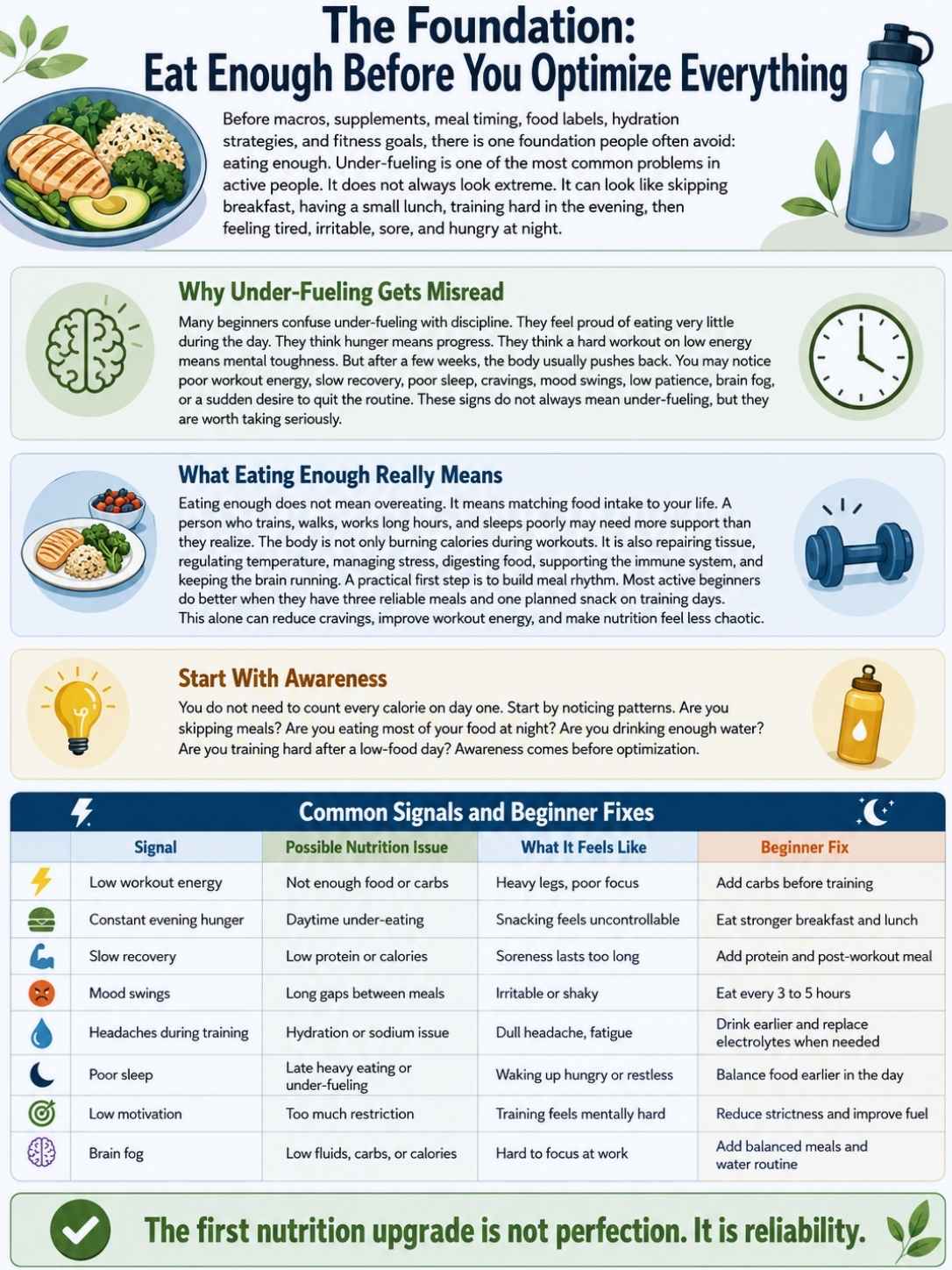
Before macros, supplements, meal timing, food labels, hydration strategies, and fitness goals, there is one foundation people often avoid: eating enough. Under-fueling is one of the most common problems in active people. It does not always look extreme. It can look like skipping breakfast, having a small lunch, training hard in the evening, then feeling tired, irritable, sore, and hungry at night.
Many beginners confuse under-fueling with discipline. They feel proud of eating very little during the day. They think hunger means progress. They think a hard workout on low energy means mental toughness. But after a few weeks, the body usually pushes back. You may notice poor workout energy, slow recovery, poor sleep, cravings, mood swings, low patience, brain fog, or a sudden desire to quit the routine. These signs do not always mean under-fueling, but they are worth taking seriously.
Eating enough does not mean overeating. It means matching food intake to your life. A person who trains, walks, works long hours, and sleeps poorly may need more support than they realize. The body is not only burning calories during workouts. It is also repairing tissue, regulating temperature, managing stress, digesting food, supporting the immune system, and keeping the brain running. A practical first step is to build meal rhythm. Most active beginners do better when they have three reliable meals and one planned snack on training days. This alone can reduce cravings, improve workout energy, and make nutrition feel less chaotic.
You do not need to count every calorie on day one. Start by noticing patterns. Are you skipping meals? Are you eating most of your food at night? Are you drinking enough water? Are you training hard after a low-food day? Awareness comes before optimization.
| Signal | Possible Nutrition Issue | What It Feels Like | Beginner Fix |
| Low workout energy | Not enough food or carbs | Heavy legs, poor focus | Add carbs before training |
| Constant evening hunger | Daytime under-eating | Snacking feels uncontrollable | Eat stronger breakfast and lunch |
| Slow recovery | Low protein or calories | Soreness lasts too long | Add protein and post-workout meal |
| Mood swings | Long gaps between meals | Irritable or shaky | Eat every 3 to 5 hours |
| Headaches during training | Hydration or sodium issue | Dull headache, fatigue | Drink earlier and replace electrolytes when needed |
| Poor sleep | Late heavy eating or under-fueling | Waking up hungry or restless | Balance food earlier in the day |
| Low motivation | Too much restriction | Training feels mentally hard | Reduce strictness and improve fuel |
| Brain fog | Low fluids, carbs, or calories | Hard to focus at work | Add balanced meals and water routine |
The first nutrition upgrade is not perfection. It is reliability.
Macronutrients Explained for Active People
Macronutrients are protein, carbohydrates, and fats. These are the nutrients your body needs in larger amounts. They provide energy, support repair, and help the body function properly. Active people hear about macros mostly through fitness apps, weight loss plans, bodybuilding videos, or social media meal prep content. That can make macros feel complicated. In reality, the basic idea is simple: protein repairs and supports muscle, carbohydrates fuel activity, and fats help with satisfaction and normal body functions.
The problem starts when people turn macros into a food war. Some people fear carbs. Some fear fats. Some think protein is the only nutrient that matters. Some count everything so tightly that eating becomes stressful. A better active person diet uses all three macros in a practical way. A balanced plate with protein, carbs, vegetables or fruit, and some fat will work for most active people better than a highly restrictive diet.
For example, a useful lunch could be rice, fish, vegetables, and olive oil. Another could be lentils, potatoes, greens, and yogurt. Another could be tofu, noodles, vegetables, and sesame sauce. The food can look different across cultures, but the structure is similar.
The right macro balance depends on your goal. Someone training for endurance usually needs more carbohydrates. Someone trying to build muscle needs enough protein and calories. Someone trying to lose fat needs a moderate calorie deficit while still eating enough protein and fiber. The goal is not to memorize a perfect macro ratio. The goal is to understand what each macro does so you can adjust meals intelligently.
| Macronutrient | Main Job | Beginner Sources | Best Use for Active People | Common Mistake |
| Protein | Repair, fullness, muscle support | Eggs, fish, chicken, yogurt, tofu, lentils | Include in most meals | Eating most protein only at dinner |
| Carbohydrates | Energy for brain and training | Rice, oats, fruit, potatoes, pasta, whole grains | Use around workouts and active days | Cutting carbs too low |
| Fats | Satiety and normal body functions | Nuts, seeds, olive oil, eggs, avocado | Add to meals for satisfaction | Eating very high fat before hard workouts |
| Fiber | Digestion and fullness | Vegetables, beans, fruit, oats | Supports gut health and appetite control | Ignoring fiber while chasing protein |
| Fluids | Hydration and temperature control | Water, milk, soups, electrolyte drinks | Drink across the day | Waiting until thirst becomes strong |
| Micronutrients | Support body systems | Colorful whole foods | Help energy, immunity, bone health, and recovery | Depending on supplements first |
| Balanced meals | Stable energy | Protein, carbs, plants, fats | Best daily foundation | Eating single-food meals |
Macros are not moral categories. They are tools. Use them to support your life, not to judge your food choices.
Protein for Strength, Recovery, and Fullness
Protein is one of the most important nutrients for active people because it helps repair and maintain muscle, supports recovery, and improves fullness after meals. When you lift weights, run, cycle, do bodyweight workouts, play sports, or even increase your daily walking, your muscles experience stress. Protein helps the body repair and adapt. This is why active people often need more protein than sedentary people.
But beginners often misunderstand protein. One group barely eats enough. Their breakfast is tea or coffee, lunch is mostly carbs, and dinner is the only protein-heavy meal. Another group becomes obsessed and starts buying every high-protein product while ignoring fruits, vegetables, carbs, fats, and total meal quality. Protein powder can be useful, but it is not required. People use it because it is quick, portable, and convenient. If you train after work and cannot eat a proper meal immediately, a shake can help. But protein powder is not better than eggs, fish, chicken, tofu, lentils, beans, yogurt, or other protein-rich foods. It is simply another tool.
The most useful strategy is protein distribution. Instead of eating almost all your protein at dinner, include some at breakfast, lunch, snacks, and dinner. This helps fullness, recovery, and meal stability. A practical approach is to build each main meal around a protein source. Then add carbohydrates, vegetables, and fats around it. This keeps meals balanced and easier to repeat.
Active people with medical conditions, kidney disease, or special health concerns should get personalized advice before making major protein changes. For healthy active adults, consistent protein intake is usually one of the most useful nutrition habits.
| Protein Situation | Better Choice | Practical Meal Idea | Why It Works |
| Low-protein breakfast | Add eggs, yogurt, tofu, or lentils | Eggs with toast and vegetables | Improves morning fullness |
| Busy lunch | Use a clear protein base | Chicken rice bowl or tofu wrap | Prevents afternoon crashes |
| Post-workout rush | Use quick protein | Protein smoothie with banana | Supports recovery when time is limited |
| Plant-based eating | Combine protein-rich plants | Lentils with rice and vegetables | Improves protein and fiber intake |
| Fat loss goal | Prioritize lean protein | Fish, vegetables, potatoes | Helps fullness during calorie control |
| Muscle gain goal | Add protein plus calories | Rice, meat or tofu, vegetables, olive oil | Supports growth and recovery |
| Evening hunger | Add protein snack | Greek yogurt or roasted chickpeas | Reduces random snacking |
| Travel day | Carry portable protein | Protein bar, nuts, yogurt, boiled eggs | Protects consistency |
Protein should support your routine. It should not turn eating into a supplement collection.
Carbohydrates Are Fuel, Not a Character Test
Carbohydrates are one of the most misunderstood parts of fitness nutrition. Many beginners cut carbs because they want fat loss, then wonder why workouts feel flat, mood drops, and cravings rise. Carbs are not automatically good or bad. They are fuel. Your brain uses carbohydrates efficiently, and your muscles rely on stored carbohydrate during harder training. If you lift, sprint, run, cycle, play sports, or do intense intervals, carbs can make a clear difference.
This does not mean you need sugar all day. It means you should use carbohydrates intelligently. Rice, oats, potatoes, fruit, beans, lentils, whole grains, pasta, bread, and starchy vegetables can all fit into an active person diet. The quality and timing matter. A high-fiber bean meal may be excellent for lunch but uncomfortable right before a hard run. A banana or toast may be better before training because it digests faster. A rice bowl after training can support recovery better than a tiny salad with no carbs.
Carb needs also change by activity. A light walking day does not require the same carb intake as a long cycling session. A strength workout may need moderate carbs. A long endurance session may need planned carbs before and during activity. Beginners often treat carbs emotionally. They feel guilty after eating rice or bread, then overeat later because they restricted too much. A healthier approach is to ask: what is this carb doing for me? Is it fueling training? Supporting recovery? Helping fullness? Providing fiber? Fitting into a balanced meal?
Carbohydrates become easier to manage when you stop treating them as a character test.
| Carb Type | Best Use | Examples | Practical Tip |
| Slow-digesting carbs | Regular meals | Oats, brown rice, beans, whole grains | Great for fullness and steady energy |
| Easy-digesting carbs | Before workouts | Banana, toast, rice cakes, low-fiber cereal | Better close to training |
| Recovery carbs | After training | Rice, potatoes, pasta, fruit | Pair with protein |
| High-fiber carbs | Gut health and appetite control | Lentils, beans, vegetables, oats | Avoid huge portions right before hard workouts |
| Quick sports carbs | Long intense sessions | Sports drink, gels, chews, dried fruit | Useful for endurance, not needed for every workout |
| Lower-carb meals | Light activity days | Protein, vegetables, smaller carb portion | Adjust based on hunger and goal |
| Cultural staples | Daily meal base | Rice, roti, potatoes, noodles | Keep portions goal-aware, not fear-based |
Carbs are not the enemy. Poor carb timing, poor food quality, and extreme restriction are the real problems.
Dietary Fats: The Quiet Support System

Dietary fats rarely get the same attention as protein and carbs, but they play an important role in an active lifestyle. They help meals feel satisfying, support normal body functions, and help absorb fat-soluble vitamins. The issue with fat is not whether it is good or bad. The issue is amount, quality, and timing. Healthy fats are useful, but they are calorie-dense. That means small portions can add a lot of energy. This can be helpful for muscle gain or high activity. It can be a challenge during fat loss if portions are not noticed.
Another practical point is digestion. Very high-fat meals can sit heavily before hard training because fat slows digestion. This is why a big greasy meal before running or intense lifting often feels uncomfortable. That does not make fat unhealthy. It means the timing was wrong. Good fat sources include olive oil, nuts, seeds, avocado, eggs, fatty fish, dairy, tahini, nut butter, and some traditional cooking fats used in reasonable amounts. The best choice depends on your culture, budget, digestion, and goals.
For active people, fats work best inside balanced meals. A little olive oil on vegetables, nuts with fruit, eggs at breakfast, or seeds in yogurt can make meals more satisfying. But if fats crowd out protein, vegetables, and carbs, the meal may become unbalanced. Beginners should not try to remove all fats. Low-fat diets can become bland and unsatisfying, which makes consistency harder. The goal is not fear. The goal is awareness.
| Fat Source | Best Use | Meal Example | Beginner Tip |
| Olive oil | Cooking and salads | Vegetables with olive oil | Use measured portions if fat loss is the goal |
| Nuts | Snacks and toppings | Nuts with fruit | Easy to overeat, portion first |
| Seeds | Oats, yogurt, smoothies | Chia or flax in oats | Adds fiber and healthy fats |
| Eggs | Breakfast or quick meals | Eggs with toast | Protein and fat together |
| Avocado | Bowls and toast | Avocado rice bowl | Good for satiety |
| Fatty fish | Protein plus fats | Salmon or sardines with rice | Supports protein and omega-3 intake |
| Nut butter | Quick calories | Peanut butter toast | Useful before long days, but portion matters |
| Tahini | Plant-based meals | Tahini sauce over chickpeas | Adds flavor and energy |
Fats make meals satisfying. Use them wisely, not fearfully.
Hydration Science Explained Without Overcomplication
Hydration science is one of the simplest topics to understand and one of the easiest to mess up in real life. Most active people do not need complicated hydration formulas every day. They need better timing, awareness, and adjustment based on sweat. Water supports temperature regulation, digestion, blood volume, joint function, focus, and exercise performance. Even mild dehydration can make workouts feel harder and concentration weaker. For desk professionals, low water intake often shows up as headaches, fatigue, dry mouth, and afternoon sluggishness.
The first practical fix is visibility. Keep water near your desk. Drink earlier in the day. Do not wait until evening to catch up. If your first real water intake happens after lunch, you are already making hydration harder than it needs to be. Sweat changes the equation. When you sweat, you lose water and electrolytes, especially sodium. For short indoor workouts, water is usually enough. For long, hot, humid, or very sweaty sessions, electrolytes may help. This is especially true for runners, cyclists, outdoor workers, and people who notice salty sweat marks on clothing.
At the same time, drinking too much can also be a problem during long endurance events. Hydration is not a contest. The goal is balance. Drink enough to support performance, but do not force large amounts beyond comfort without considering sodium.
A practical hydration routine is simple: drink water through the day, check thirst and urine color, adjust for heat and sweat, and use electrolytes when conditions demand it.
| Situation | Water Enough? | Electrolytes Helpful? | Practical Move |
| Normal desk day | Usually yes | Usually not needed | Keep a bottle visible |
| Short easy workout | Usually yes | Usually not needed | Drink before and after |
| Hot outdoor workout | Maybe | Often helpful | Add sodium or electrolyte drink |
| Long run or ride | Maybe | Often helpful | Practice hydration before event day |
| Heavy sweater | Maybe | Helpful | Notice salt marks and cramps |
| Headache after training | Not always | Sodium may matter | Replace fluids and salt |
| Multiple workouts | Maybe | Helpful | Rehydrate between sessions |
| Very light activity | Yes | Usually not needed | Follow thirst and normal water intake |
Hydration is not just drinking more. It is replacing what your body actually loses.
Pre and Post-Workout Nutrition
Pre and post workout nutrition should make training easier, not more stressful. Many beginners think they need exact timing, special shakes, or perfect meals. In reality, the best workout nutrition is the food you can digest, tolerate, and repeat. Before training, the goal is energy and comfort. You want enough fuel to perform, but not so much food that your stomach feels heavy. For most people, a full meal 2 to 4 hours before training works well. If training is closer, a lighter snack is better.
A pre-workout meal can include protein, carbohydrates, and a little fat. A pre-workout snack should usually be easier to digest, especially before running, intervals, or intense training. Banana, toast, yogurt, fruit, oats, smoothies, rice cakes, or a small sandwich can work. After training, the goal is recovery. You want protein for repair, carbohydrates to restore energy, fluids to rehydrate, and a balanced meal to return the body to normal. You do not need to panic if you do not eat within 10 minutes. But ignoring food for hours after hard training can hurt recovery.
The harder the workout, the more important recovery nutrition becomes. A gentle walk does not need a special post-workout meal. A heavy lifting session, long run, or intense cycling workout deserves more attention. Training time also matters. Morning workouts may need a small snack before and breakfast after. Evening workouts may need a planned afternoon snack and a prepared dinner. Busy professionals should not rely on willpower here. Plan the food before the workout starts.
| Workout Situation | Before Training | After Training | Why It Helps |
| Morning light workout | Small snack if hungry | Protein breakfast with carbs | Prevents energy dip |
| Evening strength workout | Lunch plus afternoon snack | Dinner with protein and carbs | Supports performance and recovery |
| Long run | Carb-rich meal and fluids | Carbs, protein, electrolytes | Replaces fuel and sweat losses |
| Short walk | No special fuel needed | Normal meal rhythm | Keeps things simple |
| High-intensity intervals | Easy carbs before | Protein plus carbs after | Supports hard effort |
| Yoga or mobility | Light meal if needed | Balanced normal meal | Avoids heaviness |
| Training after work | Desk snack 60 to 90 minutes before | Prepared dinner | Prevents post-workout chaos |
| Two-a-day training | Planned carbs and fluids | Recovery meal between sessions | Helps repeat performance |
Fuel before you ask the body to perform. Feed it after it has done the work.
Meal Prep Fundamentals for Fitness

Meal prep sounds simple until people try to do it. Then it becomes boring containers, dry chicken, overcooked rice, and food fatigue by Wednesday. The biggest meal prep mistake is trying to prepare every meal perfectly. That works for some people, but most busy professionals need flexibility. A better system is component prep. Instead of making 15 identical meals, prepare parts that can be mixed into different meals.
Think in categories: protein, carbs, vegetables, sauces, snacks, and emergency options. If you have cooked chicken, lentils, rice, roasted vegetables, yogurt sauce, fruit, and boiled eggs, you can build several meals without starting from zero.
Meal prep should protect your weakest points. For many active professionals, the weakest points are lunch, afternoon snacks, and post-workout dinner. If those are handled, the whole day becomes easier. A good meal prep system should also respect appetite. Some people want warm meals. Some prefer bowls. Some need portable food. Some get bored quickly. Some need budget meals. The best system is the one you will actually eat.
Fitness meal prep should include enough carbohydrates. Many beginners prep only protein and vegetables, then feel tired during training. If you are active, include rice, potatoes, oats, pasta, wraps, fruit, or other useful carbs. Meal prep is not about control. It is about reducing decision fatigue when life gets busy.
| Meal Prep Component | Why It Helps | Examples | Practical Use |
| Protein base | Supports recovery and fullness | Eggs, tofu, chicken, lentils, fish | Add to bowls, wraps, plates |
| Carb base | Supports energy and workouts | Rice, potatoes, oats, pasta | Use around training and lunch |
| Vegetable base | Adds fiber and nutrients | Frozen greens, salad, roasted vegetables | Make meals more complete |
| Sauces | Prevents boring food | Yogurt sauce, salsa, tahini, hummus | Changes flavor without cooking again |
| Snack prep | Reduces random eating | Fruit, yogurt, nuts, roasted chickpeas | Useful for office and training days |
| Hydration setup | Improves consistency | Water bottle, electrolyte tablets if needed | Keep near desk or gym bag |
| Emergency meal | Saves chaotic days | Frozen meal plus extra protein | Better than skipping food |
| Breakfast option | Makes mornings easier | Overnight oats, eggs, yogurt bowl | Reduces coffee-only mornings |
Meal prep should make active eating easier, not make your fridge feel like a punishment plan.
Reading Food Labels Effectively
Food labels are useful, but most people read them in the wrong order. They check calories first, then maybe protein. They ignore serving size, added sugar, sodium, fiber, and ingredients. The first thing to check is serving size. Every number on the label is based on that serving. If the package has two servings and you eat the whole thing, you need to double the numbers. This is where many people accidentally misread calories, sodium, and sugar.
Next, check the nutrients that matter for your goal. If you want fullness, look at protein and fiber. If you are managing blood pressure, sodium matters. If you are choosing yogurt, added sugar matters. If you are comparing bread, fiber and ingredients matter. If you are buying a protein bar, check protein, sugar alcohols, fiber, and calories. Percent Daily Value can help beginners. A low percentage means the food is low in that nutrient. A high percentage means it contains a lot. This is useful when looking at sodium, fiber, calcium, iron, potassium, and added sugars.
Then read the ingredients. Ingredients are listed from highest amount to lowest amount by weight. If sugar, syrups, refined oils, or filler ingredients appear early, that tells you what the product is mostly built from. Do not let front-package marketing make the decision for you. Words like natural, clean, high-protein, low-fat, keto-friendly, organic, or energy boosting do not automatically mean the food is useful for your goals.
Food labels are best used for comparison. Compare yogurt with yogurt, cereal with cereal, bread with bread, and protein bars with protein bars. This gives you better decisions without making food stressful.
| Label Step | What to Check | Why It Matters | Beginner Tip |
| Serving size | Amount per serving | Prevents misreading the whole package | Check this first |
| Calories | Energy per serving | Useful for goals, but not the whole story | Do not judge by calories alone |
| Protein | Grams per serving | Helps fullness and recovery | Useful in meals and snacks |
| Carbohydrates | Total carbs, fiber, sugar | Shows fuel type and quality | Look at fiber too |
| Added sugar | Added sugar grams | Shows sweetener load | Compare similar products |
| Sodium | Milligrams and %DV | Important for health and sweat context | High sodium is not always bad, but know why it is there |
| Fiber | Grams per serving | Supports digestion and fullness | Higher fiber usually helps |
| Ingredients | First few ingredients | Shows what food is mostly made from | Do not trust marketing words only |
Food labels are not there to scare you. They are there to help you make clearer choices.
Supplement Basics and Cautions
Supplement basics and cautions can be helpful, but they are not the foundation of fitness nutrition. Food, sleep, hydration, training consistency, and recovery come first. This is where beginners often waste money. They buy pre-workout before fixing sleep. They buy fat burners before fixing meal structure. They buy greens powders while eating almost no vegetables. They buy protein bars while skipping proper meals.
Some supplements have practical uses. Protein powder can help when meals are hard. Creatine is commonly used for strength and power training. Electrolytes can help during long, hot, or sweaty sessions. Vitamin D, B12, iron, omega-3, or calcium may matter when intake is low or a deficiency exists. But supplements also require caution. Not every product is well-made. Not every label is accurate. Some supplements may contain unnecessary stimulants, hidden ingredients, poor dosing, or claims that sound stronger than the evidence.
Competitive athletes need to be especially careful because they are responsible for what enters their body. Third-party testing is useful, especially from recognized sport certification programs. Regular consumers should also choose transparent brands with clear ingredient lists and realistic claims.
The safest supplement question is, “What problem am I trying to solve?” If you cannot answer that clearly, you probably do not need the product yet. Avoid miracle claims. Avoid extreme fat burners. Avoid stimulant-heavy products if you struggle with sleep, anxiety, blood pressure, or heart concerns. Always be careful if you take medication or have a health condition.
| Supplement Type | Possible Use | Who May Benefit | Main Caution |
| Protein powder | Convenience | Busy people, athletes, low-protein eaters | Not a full meal replacement |
| Creatine | Strength and power support | Lifters, sprinters, some active adults | Medical context matters |
| Caffeine | Alertness and performance | People who tolerate it well | Can hurt sleep and anxiety |
| Electrolytes | Sweat replacement | Heavy sweaters, endurance athletes | Not needed all day for everyone |
| Vitamin D | Low levels or low sun exposure | People with low intake or deficiency | Testing is helpful |
| B12 | Plant-based diets | Vegans and some vegetarians | Do not ignore it |
| Iron | Deficiency support | People with confirmed low iron | Do not self-prescribe high doses |
| Pre-workout | Energy boost | Some trained users | Watch stimulants and hidden blends |
| Fat burners | Usually unnecessary | Rarely needed | Often overhyped and risky |
Supplements should solve a specific problem. They should not distract from the basics.
Plant-Based Diets for Athletes and Active People
A plant-based diet can absolutely support an active lifestyle, but it needs planning. The mistake is assuming plant-based automatically means balanced. It can be excellent, but it can also be low in protein, calories, B12, iron, calcium, omega-3, zinc, and vitamin D if poorly designed. Plant-based active people need to think about protein density. Beans, lentils, tofu, tempeh, seitan, edamame, soy milk, chickpeas, pea protein, and mixed grains can all help. But portions matter because many plant foods contain more carbohydrates and fiber along with protein.
Fiber is healthy, but too much fiber too close to training can cause stomach discomfort. This matters for runners, cyclists, and people doing high-intensity workouts. A large bean meal may be great for dinner but not ideal one hour before intervals. Vitamin B12 is a major point. Fully plant-based eaters usually need fortified foods or supplements because reliable B12 is not naturally available in most plant foods. This is not a weakness of plant-based eating. It is simply a planning requirement.
Iron also needs attention. Plant-based iron is absorbed differently from iron in animal foods. Pairing lentils, beans, tofu, spinach, or seeds with vitamin C-rich foods like lemon, oranges, peppers, or tomatoes can help. Calories can also become an issue. Plant-based meals are often high in volume and fiber, which can make people feel full before they eat enough. Active plant-based athletes may need calorie-dense foods like nuts, seeds, tahini, avocado, olive oil, rice, potatoes, smoothies, and dried fruit.
| Plant-Based Need | Good Sources | Why It Matters | Practical Tip |
| Protein | Tofu, tempeh, lentils, beans, seitan, soy milk | Supports repair and recovery | Include at every meal |
| Calories | Rice, oats, potatoes, nuts, oils, smoothies | Fuels training | Add energy-dense foods if weight drops unintentionally |
| B12 | Fortified foods, supplements | Supports nerve and blood health | Do not rely on guesswork |
| Iron | Lentils, tofu, beans, spinach, seeds | Supports oxygen transport | Pair with vitamin C |
| Calcium | Fortified milks, tofu, greens | Supports bones and muscles | Check labels |
| Omega-3 | Chia, flax, walnuts, algae oil | Supports general health | Consider algae-based DHA/EPA |
| Zinc | Seeds, nuts, beans, whole grains | Supports immune and body functions | Use variety |
| Vitamin D | Sunlight, fortified foods, supplements | Supports bone and immune health | Testing may be useful |
Plant-based athlete nutrition works best when it is designed, not improvised.
Eating for Specific Fitness Goals

Nutrition changes when the goal changes. This is one of the most important things active people need to understand. Someone trying to lose fat should not eat exactly like someone trying to gain muscle. A runner should not fuel exactly like a casual walker. A strength athlete has different needs than someone doing yoga twice a week. A busy professional who wants steady energy may need a different plan than someone preparing for a race.
For fat loss, the goal is a sustainable calorie deficit while keeping protein, fiber, hydration, and training performance strong. Extreme restriction may create fast early weight loss, but it often damages consistency.
For muscle gain, the goal is enough total food, enough protein, progressive training, carbohydrates for performance, and patience. Many beginners say they cannot gain muscle, but they are simply not eating for specific fitness enough to support growth.
For endurance, carbohydrates and hydration become more important. Long runs, cycling, hiking, and sports require fuel before, during, and after activity. Gut training also matters for endurance athletes because the stomach needs practice tolerating fuel during movement.
For general health and energy, the goal is balanced meals, consistent hydration, enough protein, plants, fiber, and fewer chaotic gaps. Many corporate athletes are not chasing a physique goal. They want focus, stable mood, better sleep, and energy to train.
For body recomposition, where someone wants to lose fat and gain muscle slowly, patience matters. Protein, strength training, sleep, and a moderate approach are key. The scale may move slowly, but body shape, strength, and measurements can improve.
| Fitness Goal | Nutrition Focus | Best Practice | Common Mistake |
| Fat loss | Moderate calorie deficit, protein, fiber | Eat structured meals, not tiny meals | Cutting too hard |
| Muscle gain | Enough calories, protein, carbs | Add food gradually and train progressively | Only increasing protein |
| Strength | Protein, carbs, recovery | Fuel hard sessions | Training heavy while underfed |
| Endurance | Carbs, fluids, electrolytes | Practice fueling before long sessions | Waiting until event day |
| General health | Whole foods and consistency | Build balanced meals | Chasing perfection |
| Energy stability | Meal timing and hydration | Eat before crashes happen | Skipping meals |
| Body recomposition | Protein, strength training, sleep | Track strength and measurements | Expecting fast scale drops |
| Busy professional wellness | Practical meal rhythm | Plan lunch, snacks, and water | Depending on caffeine |
Your goal should guide your nutrition, but it should never make food feel like punishment.
Beginner Nutrition Mistakes That Quietly Hurt Progress
Most beginner nutrition mistakes are not dramatic. They are small habits repeated for months.
The first mistake is skipping meals accidentally. Some people intentionally fast and do fine. But many busy people are not fasting with a plan. They are just missing meals because work gets busy. That usually leads to low energy, poor training, and nighttime overeating.
The second mistake is fearing carbs while training hard. If you increase activity but remove your main fuel source, workouts may suffer. This is especially true for running, lifting volume, sports, and high-intensity sessions.
The third mistake is chasing supplements before fixing food. Supplements are easier to buy than habits are to build, but they cannot replace meal structure. A pre-workout drink will not solve poor sleep and weak lunches.
Another mistake is copying influencer meals. Social media meals are often designed for appearance, not your budget, culture, digestion, or schedule. What looks clean online may not be enough for your real energy needs.
Weekend inconsistency is another quiet problem. Many people eat strictly from Monday to Thursday, then lose structure from Friday night onward. This creates a cycle of restriction and rebound.
A more useful approach is flexible consistency. Eat well most of the time, plan enjoyable foods, and keep meal anchors even on weekends.
| Mistake | Why It Hurts | What It Looks Like | Better Practice |
| Skipping meals accidentally | Causes crashes and cravings | Coffee until lunch | Plan a first meal |
| Fear of carbs | Hurts training energy | Salad before heavy workout | Add carbs around training |
| Protein only at dinner | Weak recovery distribution | Low-protein breakfast and lunch | Add protein earlier |
| Too much caffeine | Can hurt sleep | Coffee all afternoon | Set a cutoff |
| No hydration plan | Low focus and headaches | Drinking water late | Drink earlier |
| Supplement chasing | Wastes money | Buying powders before fixing meals | Food first |
| Copying athletes | Unrealistic | Eating like a competitor | Match your own life |
| All-or-nothing weekends | Breaks consistency | Strict weekdays, chaotic weekends | Keep simple meal anchors |
Progress often improves when nutrition becomes less chaotic, not more extreme.
A Practical 30-Day Nutrition Plan for Active Lifestyles
A 30-day nutrition plan should not feel like a punishment. The goal is to build a food system you can continue after the month ends.
Week one should focus on awareness. Do not change everything immediately. Notice when you eat, how much water you drink, how workouts feel, when cravings appear, how sleep responds, and whether you are eating enough protein.
Week two should focus on meal structure. Add protein to breakfast, lunch, and dinner. Include carbohydrates around training. Drink water earlier. Prepare one reliable snack. This week is about building a base.
Week three should focus on training nutrition. Test pre-workout snacks. Try different post-workout meals. Notice what digests well. Adjust hydration based on sweat, heat, and workout length.
Week four should focus on refinement. Keep what worked. Remove what felt forced. Build a basic grocery list. Choose two breakfasts, two lunches, two dinners, and two snacks you can repeat without boredom.
The plan should include flexible versions. A full day might include three balanced meals, a planned snack, hydration, and a recovery dinner. A busy day might include a protein breakfast, water at the desk, a banana before training, and leftovers after. Both can count if the system stays alive.
The purpose is not to become perfect in 30 days. The purpose is to stop guessing.
| Week | Focus | Practical Actions | Success Sign |
| Week 1 | Awareness | Track meals, energy, hydration, training | You understand your patterns |
| Week 2 | Meal structure | Add protein, carbs, plants, water | Fewer crashes and cravings |
| Week 3 | Workout nutrition | Test pre and post-workout food | Training feels more stable |
| Week 4 | Refinement | Build repeatable meals and grocery list | Food decisions feel easier |
| Daily | Basics | Protein, carbs, plants, fluids | Meals feel balanced |
| Training days | Fuel | Add snack if needed | Better workout energy |
| Rest days | Recovery | Keep protein and whole foods steady | Less rebound eating |
| Weekend | Flexibility | Keep meal anchors | No Monday reset feeling |
A strong 30-day plan should make nutrition clearer, not stricter.
Final Thoughts
Nutrition for active lifestyles should not make your life feel smaller. It should give you more energy for work, movement, training, recovery, family, creativity, and daily responsibility. The basics are not glamorous, but they work. Eat enough. Include protein. Use carbohydrates intelligently. Do not fear fats. Drink water earlier. Replace electrolytes when sweat and heat demand it. Build meals you can repeat. Read labels clearly. Treat supplements with caution.
For the Corporate Athlete, nutrition is not separate from performance. The way you eat affects your focus at the desk, your patience in meetings, your workout quality, your sleep, your cravings, and your ability to stay consistent. Start with one reliable meal. Then improve hydration. Then add protein. Then fix your pre-workout fuel. Then prepare better lunches. Then refine based on your goal.
Do not chase the perfect diet. Build the food system your active life can actually run on.
That is where real fitness nutrition begins.
Frequently Asked Questions (FAQs) About Nutrition for Active Lifestyles
What is nutrition for active lifestyles?
Nutrition for active lifestyles means eating in a way that supports movement, training, energy, recovery, hydration, and long-term health. It includes protein, carbohydrates, fats, fluids, micronutrients, meal timing, and consistency. It is not only about weight loss or calories. The goal is to help the body perform and recover better.
What should an active person diet include?
An active person diet should include protein, quality carbohydrates, healthy fats, fruits, vegetables, fluids, and enough total energy. A good meal usually includes a protein source, a carbohydrate source, colorful plant foods, and some fat. The exact portions depend on your activity level, body size, hunger, training goals, and daily schedule.
Is athlete nutrition only for competitive athletes?
No. Athlete nutrition principles can help recreationally active people, but they must be scaled properly. A beginner doing three workouts per week does not need the same plan as a professional endurance athlete. The principles are useful, but the amount and timing should match real activity.
How much protein do active people need?
Protein needs vary based on body size, age, training type, goals, and health status. Many active people benefit from including protein in most meals and spreading it through the day. People with kidney disease or medical concerns should get professional guidance before making major protein changes.
Are carbohydrates bad for fat loss?
Carbohydrates are not automatically bad for fat loss. Fat loss depends on overall energy balance, consistency, food quality, and activity. Carbs can support training performance, mood, and recovery when used well. The real issue is often portion size, food quality, and total intake, not carbs themselves.
What should I eat before a workout?
Before a workout, choose food that gives energy and digests well. A full meal 2 to 4 hours before training can include protein and carbs. A smaller snack 30 to 90 minutes before training can include fruit, yogurt, toast, oats, or a smoothie. The best choice depends on your stomach and workout intensity.
What should I eat after a workout?
After a workout, aim for protein, carbohydrates, fluids, and a balanced meal. Protein supports repair, carbs help restore energy, and fluids help rehydration. A short walk does not need special recovery food, but hard lifting, long runs, or intense sessions deserve more attention.