
Pre post workout nutrition is not about chasing a perfect meal window or copying what a professional athlete eats on camera. It is about one practical question: what does your body need before training so you can perform well, and what does it need afterward so you can recover?
That sounds simple, but this is where many active people make nutrition harder than it needs to be. Some train on an empty stomach and wonder why they feel weak. Some eat a heavy meal too close to exercise and feel uncomfortable. Some take pre-workout supplements when they actually need carbs, water, and sleep. Some finish a hard session and then wait hours to eat because they think recovery can be handled later.
I have seen this pattern often with busy professionals. They work all day, drink coffee, eat a small lunch, train in the evening, and then feel flat during the workout. After training, they either overeat randomly or skip recovery food because they are tired. The issue is not always discipline. Many times, the issue is poor timing and poor planning.
A desk professional may not train like an elite athlete, but they still need enough energy to perform after long work hours. Pre and post-workout nutrition can help bridge the gap between office fatigue and active living.
This article is educational. It is not medical advice. People with diabetes, kidney disease, gastrointestinal conditions, eating disorders, pregnancy-related nutrition needs, heart disease, medication concerns, or special medical diets should get personalized guidance from a qualified professional.
Why Pre and Post-Workout Nutrition Matters?
Pre and post-workout nutrition matters because exercise creates demand. Your body needs fuel before movement and repair support afterward. If those needs are ignored, workouts can feel harder than they should, recovery can slow down, and consistency can become difficult. This does not mean every workout needs a special shake, supplement, or strict meal schedule. A short walk does not need the same nutrition strategy as a long run, heavy lifting session, or intense cycling workout. The point is to match food to the session.
Before exercise, food helps support energy, focus, and comfort. Carbohydrates are especially useful because they provide accessible fuel for higher-intensity work. Protein can help support muscle repair and may also improve fullness if the workout is not immediate. Fluids help you avoid starting training already behind. The closer you eat to the workout, the simpler the food usually needs to be. A full meal may work 2 to 4 hours before training. A smaller snack may work 30 to 90 minutes before. The body cares about digestion, not just nutrition theory.
After exercise, food helps the body return to a better recovery state. A useful post-workout meal usually includes protein, carbohydrates, fluids, and some sodium if sweat loss was high. Protein supports repair. Carbohydrates help restore used fuel, especially after longer or harder sessions. Fluids support rehydration. Sodium can help after sweaty training. The harder the workout, the more important this becomes. If you train again soon, recovery food matters even more.
For active people, workout nutrition also protects consistency. If you train under-fueled again and again, the routine starts feeling miserable. If you recover poorly, soreness and fatigue build. If you always leave food decisions until after the workout, you may end up with random meals that do not support your goal. Good workout nutrition is not about perfection. It is about reducing friction before and after training.
| Workout Nutrition Area | Why It Matters | What It Helps | Beginner Fix |
| Pre-workout carbs | Provides fuel for harder sessions | Energy, focus, training quality | Add fruit, oats, toast, rice, or potatoes |
| Pre-workout protein | Supports muscle repair and fullness | Recovery and satiety | Add yogurt, eggs, tofu, fish, or lean meat |
| Pre-workout fluids | Helps avoid starting dry | Comfort and performance | Drink earlier in the day |
| Post-workout protein | Supports repair | Muscle recovery | Add protein to the next meal |
| Post-workout carbs | Restores used energy | Glycogen and recovery | Add rice, fruit, potatoes, oats, or pasta |
| Post-workout fluids | Replaces sweat loss | Rehydration | Drink and eat after training |
| Sodium after sweat | Helps fluid retention | Recovery after heavy sweating | Use salty meals or electrolytes when needed |
| Meal timing | Reduces food chaos | Consistency | Plan before the workout starts |
Pre and post-workout nutrition is not a ritual. It is support for performance and recovery.
The Foundation: Your Whole Day Matters More Than One Perfect Meal
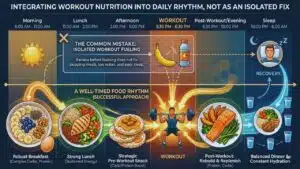
The biggest mistake with pre post-workout nutrition is treating one snack like it can fix the whole day. It cannot. A banana before training helps, but it will not fully make up for skipping breakfast, eating a tiny lunch, drinking little water, and sleeping badly. Workout fuel works best when the rest of the day has some structure. This is why the pillar article, Nutrition Fundamentals for Active Lifestyles, matters. The pre and post-workout meals are not separate from the daily diet. They are part of the whole system.
Many active beginners overfocus on the one hour before exercise. They ask what to eat before workout sessions but ignore what happened in the previous 8 hours. If you had enough food earlier, a small snack may be enough. If you underate all day, that same snack may not fix the problem. This is common among busy professionals who train after work. They try to solve an all-day fueling gap with one quick pre-workout drink. Sometimes the better answer is a stronger lunch and a planned afternoon snack.
The same is true after training. A post-workout meal helps, but recovery is also shaped by total daily protein, total calories, hydration, sleep, and training load. If your daily food intake is too low, one recovery meal cannot carry the whole routine. If your workouts are too aggressive, nutrition can help but not fully protect you. If you are not sleeping, recovery will still suffer. Workout nutrition is important, but it should not be isolated from real life.
A practical way to think about it is this: before workout nutrition prepares the body, post-workout nutrition repairs the body, and daily nutrition supports both. For the corporate athlete, this means breakfast, lunch, hydration, snacks, dinner, and sleep all matter. A well-timed snack is useful. A stable food rhythm is better.
| Daily Pattern | What Happens | Workout Effect | Better Move |
| Coffee-only morning | Low early fuel | Afternoon crash | Add protein and carbs |
| Small lunch | Low training energy | Weak evening workout | Build a stronger lunch |
| No water during work | Starts training under-hydrated | Headache or fatigue | Drink steadily during the day |
| No snack before evening workout | Long food gap | Heavy legs, low focus | Add afternoon snack |
| No post-workout meal | Poor recovery | Soreness and cravings | Prepare dinner or quick meal |
| Low total protein | Weak repair support | Slow recovery | Spread protein through meals |
| Low carbs on hard days | Poor workout fuel | Low intensity and cravings | Add carbs around training |
| Poor sleep | Weak recovery | Low motivation | Reduce late caffeine and improve wind-down |
The best workout meal works better when the whole day supports it.
What to Eat Before Workout Sessions?
What to eat before workout sessions depends on timing, workout type, intensity, and your stomach. A heavy meal right before running can feel awful. A tiny snack before heavy lifting may not be enough. A fasted walk may feel fine. A fasted interval session may feel terrible. There is no one meal that works for everyone, but there are reliable patterns.
The main pre-workout goal is to give your body usable energy without causing digestive discomfort. Carbohydrates are usually the most practical workout fuel because they digest faster than fats and support higher-intensity training. Protein can be useful, especially if the meal is a few hours before training. Fat and fiber are healthy, but large amounts close to training can slow digestion and cause bloating, cramps, or heaviness for some people.
Timing changes the meal. If you eat 3 to 4 hours before training, you can usually handle a normal balanced meal with protein, carbs, vegetables, and some fat. If you eat 1 to 2 hours before, the meal should usually be smaller and easier to digest. If you eat 15 to 30 minutes before, you may only want quick carbs such as a banana, dates, toast, applesauce, or a small sports drink during harder sessions.
I usually think of pre-workout food in layers. The earlier meal builds the base. The closer snack gives the final push. For example, if you train at 6 p.m., lunch at 1 p.m. gives the base, and a banana with yogurt at 4:30 or 5 p.m. gives the final support. That is more reliable than trying to eat one large meal right before training.
| Time Before Workout | Best Food Style | Examples | Best For |
| 3 to 4 hours | Balanced meal | Rice, chicken, vegetables, olive oil | Strength, cardio, mixed training |
| 2 hours | Light meal | Oats with yogurt and fruit | Most workouts |
| 60 to 90 minutes | Snack with carbs and some protein | Banana and yogurt, toast and egg | Evening workouts |
| 30 minutes | Quick carbs | Banana, dates, applesauce, sports drink | Hard sessions when time is short |
| Right before | Very small if needed | Few bites of fruit or sip of sports drink | People who tolerate it |
| Fasted | Only if comfortable and low intensity | Water, light walk, easy mobility | Short easy workouts |
| Hot session | Carbs plus fluids | Fruit, water, electrolyte if needed | Outdoor training |
| Long endurance | Carbs and fluids planned | Oats, toast, sports drink, banana | Running, cycling, hiking |
The best pre-workout food is not the fanciest one. It is the one your body can use without fighting your stomach.
Pre-Workout Nutrition by Workout Type
Different workouts need different fuel. A heavy strength session is not the same as a slow walk. A long run is not the same as a mobility session. This is why generic advice often fails. When someone asks what to eat before workout sessions, the first question should be: what kind of workout are you doing?
For strength training, carbohydrates and protein both matter. You do not need to eat a huge carb load for every lifting session, but training hard with no fuel can reduce performance. A meal with rice, potatoes, oats, bread, fruit, yogurt, eggs, chicken, tofu, fish, or lentils can work well. If training is close, a smaller snack with carbs and some protein is better than a heavy meal.
For endurance training, carbohydrates become more important. Running, cycling, rowing, hiking, and long sports sessions use stored carbohydrate over time. A carb-focused meal before a longer session can help energy. For sessions lasting longer, some people also need fuel during exercise. Gut tolerance matters here. High-fat, high-fiber meals too close to running can cause stomach problems.
For HIIT or intense circuit training, quick energy matters. These sessions are demanding and often feel bad when someone trains underfueled. Easy carbs before training can help. Heavy meals too close can also backfire because jumping, sprinting, and fast movements do not pair well with a full stomach.
For yoga, Pilates, mobility, or light walking, a special pre-workout meal may not be needed. If you are hungry, eat something light. If you feel fine, water may be enough. The goal is to avoid turning every small activity into a complicated fueling event.
| Workout Type | Pre-Workout Goal | Good Options | Avoid Close to Training |
| Strength training | Energy and muscle support | Rice meal, oats, yogurt, toast, banana | Very heavy fat meals |
| Endurance cardio | Carbohydrate availability | Oats, banana, toast, rice, potatoes | Too much fiber or fat |
| HIIT or circuits | Quick usable energy | Fruit, toast, sports drink, yogurt | Large heavy meals |
| Yoga or Pilates | Comfort and light energy | Fruit, yogurt, small snack | Overeating before class |
| Walking | Basic hydration and comfort | Water, normal meals | No special need usually |
| Morning workout | Light fuel if needed | Banana, dates, smoothie, toast | Big meal if time is short |
| Evening workout | Prevent low-energy training | Lunch plus afternoon snack | Training after long food gap |
| Long outdoor session | Fuel plus hydration | Carb meal, water, electrolytes | Guessing without practice |
Match the fuel to the workout instead of using one rule for everything.
What to Avoid Before a Workout?
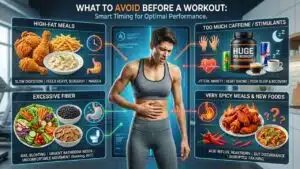
Pre-workout nutrition is not only about what to eat. It is also about what to avoid too close to training. Many foods are healthy but poorly timed. A large salad, beans, fried food, heavy cream sauce, spicy meal, or nut-heavy snack may be fine at other times, but uncomfortable before intense exercise. Timing matters because digestion competes with movement.
High-fat meals can slow digestion. This can make you feel heavy, sluggish, or nauseous during training. That does not mean fats are bad. It means a large fatty meal should usually be placed farther from the workout. Fats are useful, but timing affects comfort.
Fiber foods can also cause issues, especially before running, HIIT, or sports with jumping and fast movement. Beans, lentils, raw vegetables, bran cereal, large salads, and some whole grains are nutritious. But if eaten too close to training, they can create gas, bloating, or urgent bathroom needs for some people. Save larger fiber portions for meals farther from training or after the session.
Too much caffeine can also backfire. A moderate amount may help some people, but large doses can cause jitters, anxiety, stomach upset, heart racing, and poor sleep if taken late. This connects naturally with Supplement Basics and Cautions. A pre-workout product may feel powerful, but if it ruins sleep, it hurts recovery.
| Food or Habit | Why It Can Backfire | Better Timing |
| Large fried meal | Slow digestion and heaviness | Eat several hours away from training |
| Huge salad | Too much fiber close to movement | Eat after workout or earlier |
| Beans or lentils | Gas or bloating for some people | Use farther from workout |
| Very spicy food | Reflux or stomach discomfort | Avoid close to intense sessions |
| Too much nut butter | High fat slows digestion | Use small amount or eat earlier |
| Heavy dairy | May bother sensitive stomachs | Test tolerance |
| Large caffeine dose | Jitters, anxiety, sleep issues | Use carefully and earlier |
| New foods | Unknown gut reaction | Test on normal training days |
Healthy food still needs smart timing.
Fasted Workouts: When They Work and When They Backfire?
Fasted workouts get a lot of attention because they sound simple. Wake up, skip food, train, and burn fat. The problem is that fat burning during a workout is not the same as better long-term fat loss. Body composition still depends on the full pattern of food intake, training, recovery, and consistency.
Some people feel fine doing light fasted workouts. A short walk, easy cycling session, mobility routine, or low-intensity workout may not require food beforehand. If the session feels good, energy is stable, and recovery is fine, there may be no issue. The body can handle low-intensity work without a full meal for many people.
Harder workouts are different. Heavy lifting, intervals, long runs, intense sports, and high-volume training often feel worse when under-fueled. You may lose intensity, cut the session short, feel dizzy, or overeat later. For beginners, this can create a negative relationship with exercise because every session feels like punishment.
Fasted training can also be risky for some people. Anyone with blood sugar concerns, diabetes, pregnancy, eating disorder history, medication issues, or dizziness should be careful and seek guidance when needed. The goal is not to prove toughness. The goal is to train well and recover well.
| Fasted Workout Situation | Usually Works Better For | May Backfire For | Better Option |
| Short walk | Low intensity | People prone to dizziness | Water and normal meal later |
| Easy mobility | Gentle movement | Very hungry people | Small fruit if needed |
| Light cycling | Low effort | Long sessions | Add carbs if duration increases |
| Heavy lifting | Some experienced people | Beginners, high volume sessions | Snack with carbs and protein |
| HIIT | Rarely ideal for beginners | Low energy and nausea | Quick carbs before |
| Long run | Not ideal for many | Endurance fatigue | Carb meal or snack |
| Fat loss goal | Some prefer it | People who overeat later | Use sustainable deficit |
| Morning training | Time-saving | Weak or dizzy sessions | Banana, toast, or smoothie |
Fasted workouts are optional. They are not a requirement for fitness progress.
Post-Workout Nutrition: What the Body Needs After Training?
A good post-workout meal helps the body recover from the stress of exercise. It does not need to be fancy. It does not need to happen in panic. But it should give your body the materials it needs.
Protein is the first key piece. Exercise, especially strength training, creates a need for repair. A post-workout meal with protein helps support muscle recovery and adaptation. This can come from eggs, yogurt, fish, chicken, tofu, lentils, beans, lean meat, cottage cheese, tempeh, or protein powder when food is not practical.
Carbohydrates are the second key piece. They help restore used energy, especially after long, intense, or repeated sessions. If you train once lightly and eat normally, this is not urgent. If you train hard, run long, cycle, play sports, or train again soon, carbs after training become more important. Rice, potatoes, oats, pasta, bread, fruit, and grains can all work.
Fluids are the third piece. Sweat loss should be replaced. If the session was short and light, water is fine. If it was long, hot, or salty, sodium may help. This connects directly with Hydration Science Explained. Recovery is not only about food. It is also about fluids and electrolytes when needed.
The fourth piece is timing. You do not need to fear missing a 30-minute window in most normal situations. But waiting many hours after a hard session is not ideal, especially if you trained fasted, trained long, or have another workout soon. A practical target is to eat a balanced meal within a reasonable time after training.
| Post-Workout Need | Why It Matters | Food Examples | Beginner Tip |
| Protein | Muscle repair and recovery | Eggs, yogurt, chicken, tofu, fish, lentils | Include in next meal |
| Carbohydrates | Restores used fuel | Rice, fruit, potatoes, oats, pasta | More important after hard sessions |
| Fluids | Replaces sweat loss | Water, milk, soup, electrolyte drink | Drink steadily |
| Sodium | Helps after heavy sweat | Salted meal, soup, electrolyte product | Use when sweat demands it |
| Micronutrients | Supports body systems | Fruits, vegetables, beans, dairy | Add color to meals |
| Calories | Supports recovery | Balanced meal | Do not under-eat after hard training |
| Convenience | Protects consistency | Smoothie, leftovers, wrap | Prepare options |
| Timing | Reduces recovery gaps | Meal within a reasonable period | Do not wait all night |
A post-workout meal is not a reward. It is recovery work.
Best Post-Workout Meal Ideas for Real Life
The best post-workout meal is the one you can actually eat consistently. A perfect recovery meal that takes 90 minutes to cook will not help a busy professional who gets home tired at 8 p.m. A practical meal that includes protein, carbs, fluids, and some color will usually work better.
For evening workouts, leftovers are powerful. Rice with chicken and vegetables. Lentils with potatoes. Fish with grains. Tofu stir-fry. Pasta with lean protein. These meals are not glamorous, but they solve the real problem: after training, you need food quickly. This is where Meal Prep Fundamentals for Fitness becomes important. If recovery meals are prepared, post-workout nutrition becomes easier.
For morning workouts, breakfast can be the post-workout meal. Oats with yogurt and fruit, eggs with toast, smoothie with protein and banana, tofu scramble with potatoes, or cottage cheese with fruit can work. You do not need a separate sports product unless convenience demands it.
For plant-based active people, post-workout meals should include a strong protein source. Lentils, beans, tofu, tempeh, seitan, soy milk, edamame, and plant-based protein powder can help. Pair them with carbs and vegetables. A plant-based recovery meal should not be only salad.
For fat loss, post-workout meals should still be real meals. Skipping food after training may seem helpful, but it can increase hunger later and hurt consistency. The meal can be portion-aware without being tiny. Protein, fiber, carbs, and fluids help keep the plan sustainable.
| Situation | Post-Workout Meal Idea | Why It Works |
| Evening strength workout | Rice, chicken, vegetables, water | Protein, carbs, fluids |
| Morning gym session | Oats, yogurt, berries, nuts | Protein, carbs, micronutrients |
| Plant-based training | Tofu, rice, vegetables, sauce | Complete and practical |
| Long run | Pasta, fish, vegetables, electrolyte drink | Carbs, protein, sodium |
| Quick office workout | Protein smoothie and banana | Fast and portable |
| Fat loss phase | Eggs, potatoes, vegetables | Filling and structured |
| Muscle gain phase | Rice bowl with extra protein and olive oil | More calories and recovery support |
| Busy night | Leftover lentil soup and toast | Easy recovery meal |
Post-workout meals do not need to be perfect. They need to be ready.
The Truth About the Anabolic Window
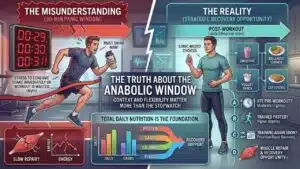
The “anabolic window” is one of the most misunderstood ideas in fitness nutrition. Many people think they must drink a shake within 30 minutes of training or the workout is wasted. That is too extreme.
Post-workout timing can matter, but context matters more. If you ate a protein-containing meal a few hours before training, your body still has amino acids available. You do not need to panic the second the workout ends. If you trained fasted, trained very hard, or have another workout soon, eating sooner becomes more useful.
The real issue is not whether you eat at minute 29 or minute 61. The real issue is whether your total daily protein, carbs, fluids, and calories support recovery. A person who eats well across the day but waits one hour after training is usually fine. A person who trains hard and then does not eat for five hours may struggle more.
For busy professionals, the practical rule is simple: do not panic, but do not ignore recovery. Have a plan. That may be dinner, a smoothie, leftovers, yogurt, or a protein snack before the full meal. The best approach depends on your schedule.
This is why pre post workout nutrition should be flexible. The body is not a stopwatch. It is a system. Timing matters most when the surrounding nutrition is weak, the session is demanding, or recovery time is short.
| Situation | How Urgent Is Post-Workout Food? | Practical Move |
| Ate meal 2 hours before training | Moderate | Eat normal meal later |
| Trained fasted | Higher | Eat sooner |
| Long endurance session | Higher | Prioritize carbs, fluids, sodium, protein |
| Hard strength session | Moderate to high | Eat protein and carbs within reasonable time |
| Training again soon | High | Recover quickly |
| Short walk | Low | Normal meal rhythm |
| Fat loss phase | Moderate | Eat structured meal, not random snacks |
| Busy evening | Moderate | Use quick backup option |
The anabolic window is not a panic window. It is a recovery opportunity.
Pre and Post-Workout Nutrition for Different Fitness Goals
Nutrition changes when the goal changes. This connects naturally with the cluster Eating for Specific Fitness Goals. A person training for fat loss should not approach workout fuel exactly like someone trying to gain muscle. A runner should not fuel exactly like someone doing light yoga. A corporate athlete chasing steady energy may need a different approach from an endurance athlete preparing for a race.
For fat loss, the goal is to support training while maintaining a sustainable calorie deficit. This means you should not use workouts as an excuse for uncontrolled eating, but you also should not starve before and after training. A small pre-workout snack and a structured post-workout meal can reduce rebound hunger.
For muscle gain, the goal is enough total food, protein, and carbohydrates to support progressive training. Many beginners think they cannot gain muscle, but they are simply not eating enough. Pre-workout carbs can support stronger sessions. Post-workout meals help recovery and daily calorie intake.
For endurance, carbohydrates and hydration are central. Before longer sessions, carbs matter. During long sessions, some athletes need carbs and electrolytes. Afterward, carbs, protein, fluids, and sodium help recovery. This should be practiced, not guessed.
For general wellness, the goal is consistency. You may not need advanced timing. A balanced meal before training and a normal recovery meal afterward may be enough. For the corporate athlete, practical timing is the real win: lunch, snack, workout, dinner.
| Goal | Pre-Workout Focus | Post-Workout Focus | Common Mistake |
| Fat loss | Enough fuel without overeating | Protein, fiber, structured meal | Training underfed then overeating |
| Muscle gain | Carbs and calories for performance | Protein, carbs, enough total food | Protein only, not enough calories |
| Strength | Fuel hard sessions | Protein and carbs for recovery | Lifting heavy while under-fueled |
| Endurance | Carbs and fluids | Carbs, protein, sodium, fluids | Waiting until race day to test fuel |
| General health | Comfortable energy | Balanced normal meal | Overcomplicating small workouts |
| Energy stability | Meal timing and hydration | Recovery without chaos | Skipping meals then using caffeine |
| Body recomposition | Protein and training quality | Protein, carbs, sleep support | Expecting fast scale changes |
| Busy professional wellness | Planned snack and water | Quick dinner or leftovers | No food plan after work |
Your goal should guide workout nutrition, but it should not turn food into punishment.
Pre and Post-Workout Nutrition for the Corporate Athlete
The corporate athlete has a special problem. Work drains the brain, sitting stiffens the body, and training often happens after the hardest part of the day. This means workout nutrition has to work inside a real schedule, not an ideal one.
For many desk professionals, the problem begins at breakfast. Coffee replaces food. Lunch is rushed. Water is forgotten. Then the person tries to train at 6 p.m. with low fuel and low hydration. A pre-workout snack helps, but the bigger fix is better daytime structure.
A good corporate athlete plan starts with lunch. Lunch should include protein, carbs, vegetables, and fluids. This gives the afternoon a stronger base. Then a snack 60 to 90 minutes before training can help. Good options include banana and yogurt, toast and eggs, fruit and protein shake, rice cakes and peanut butter, or a small wrap.
After training, dinner should be easy. This is where meal prep matters. If you have cooked rice, protein, vegetables, soup, eggs, tofu, lentils, or leftovers ready, recovery is simple. If nothing is ready, you may end up ordering random food or skipping recovery.
Caffeine timing also matters. Many professionals use pre-workout stimulants late in the day, then sleep poorly. That weakens recovery and creates a caffeine cycle the next day. Sometimes the better “pre-workout” is water, carbs, and an earlier bedtime.
| Corporate Athlete Moment | Common Problem | Better Nutrition Move |
| Morning | Coffee only | Add protein and carbs |
| Lunch | Too small or delayed | Build a real lunch |
| Afternoon | Energy crash | Snack before training |
| Pre-workout | Caffeine without food | Add carbs and fluids first |
| During workout | Low water | Sip based on thirst |
| After workout | No dinner plan | Use leftovers or quick meal |
| Late evening | Heavy random eating | Prepare recovery meal |
| Next day | Tired from poor sleep | Avoid late stimulants |
Corporate Athlete workout nutrition is not about perfection. It is about removing predictable problems.
Hydration and Workout Fuel Work Together
Workout fuel is not only food. Hydration affects how the workout feels. If you start training under-hydrated, even a good pre-workout snack may not fully help. This is why Hydration Science Explained connects directly.
Before training, fluids support comfort, circulation, and temperature regulation. During short sessions, water is usually enough. During long, hot, humid, or very sweaty sessions, electrolytes may help. After training, fluids should be replaced along with food. A post-workout meal with sodium can help the body retain fluids better after heavy sweat loss.
Carbohydrates and hydration also connect. Stored carbohydrates hold water with glycogen. If someone eats very low-carb while training hard, they may notice changes in body water, workout energy, and recovery. This does not mean everyone needs a high-carb diet. It means active people should understand that food and fluid work together.
For practical use, think in terms of the whole training block.
- Pre-workout: food plus fluids.
- During workout: sip as needed, add electrolytes when sweat demands it.
- Post-workout: meal plus fluids.
That simple rhythm works better than treating hydration as an afterthought.
| Workout Stage | Hydration Role | Practical Example |
| Morning | Replaces overnight fluid loss | Water after waking |
| Pre-workout | Avoids starting dry | Water with snack |
| During short session | Comfort and thirst | Sip water |
| During long session | Replaces sweat | Water plus electrolytes |
| Hot weather | Supports temperature control | Fluids and sodium |
| Post-workout | Supports recovery | Water and meal |
| Heavy sweat | Replaces sodium | Salty meal or electrolyte drink |
| Evening | Avoids sleep disruption | Rehydrate earlier, not all at bedtime |
Food and fluids should support the same workout, not compete with each other.
Supplements Around Workouts: Useful, but Not the Foundation
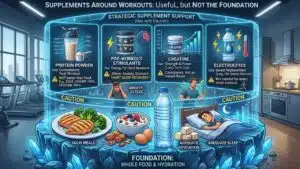
Supplements can help around workouts, but they should not replace food. This connects directly with the cluster Supplement Basics and Cautions. A supplement is useful when it solves a clear problem. It becomes a distraction when it hides poor meals, poor sleep, and poor hydration.
Protein powder can be useful after training if a meal is not available. It is convenient, portable, and easy to digest for many people. But it is not better than food by default. Eggs, yogurt, fish, chicken, tofu, lentils, beans, and lean meat all work too. Use protein powder when it makes consistency easier.
Pre-workout supplements are more complicated. Many contain caffeine and other stimulants. They may help energy, but they can also cause jitters, anxiety, stomach discomfort, and sleep disruption. If you train in the evening, late caffeine can hurt recovery. Before buying a pre-workout, ask if you actually need food, water, or rest.
Creatine does not need perfect workout timing for most people. It works through consistent use over time. If someone uses it, they should focus on regular intake and safety context rather than treating it like a pre-workout stimulant.
Electrolyte supplements may help during long, hot, or sweaty sessions. They are not needed for every short workout. Use them when sweat and conditions justify them.
| Supplement | Possible Workout Use | Best Fit | Caution |
| Protein powder | Convenient recovery protein | Busy schedules | Not a meal replacement |
| Pre-workout | Stimulant energy | Some users before hard sessions | Watch caffeine and sleep |
| Creatine | Strength and power support | Consistent training | Not an instant energy booster |
| Electrolytes | Sweat replacement | Long, hot, sweaty sessions | Not needed all day |
| Sports drink | Carbs plus fluids | Endurance or long sessions | Not needed for short workouts |
| Caffeine | Alertness and performance | Morning or early workouts | Can hurt sleep |
| BCAAs | Often unnecessary if protein is adequate | Low-protein cases | Whole protein usually better |
| Greens powder | General nutrient support | Limited diets | Does not replace vegetables |
Supplements can support workout nutrition, but food and hydration still lead.
Meal Prep for Better Pre and Post-Workout Nutrition
Meal prep makes workout nutrition easier because it removes decision fatigue. Most people do not make poor food choices because they know nothing. They make poor choices because they are tired, hungry, rushed, and unprepared.
For pre-workout nutrition, meal prep can be simple. Keep bananas, yogurt, oats, bread, boiled eggs, rice cakes, fruit, smoothies, or wraps available. You do not need fancy recipes. You need reliable options that digest well and fit your training time.
For post-workout nutrition, leftovers are the best tool. Cook protein, carbs, and vegetables in advance. A recovery bowl can be ready in 5 minutes if rice, chicken, tofu, lentils, vegetables, and sauce are already prepared.
Meal prep should also include emergency options. Frozen meals with extra protein, canned fish, eggs, Greek yogurt, tofu, beans, instant oats, fruit, and ready rice can save chaotic days. A backup meal is better than skipping food or eating randomly.
For the corporate athlete, meal prep should protect the weakest points: lunch, pre-workout snack, and post-workout dinner. If those three are handled, the whole training day becomes easier.
| Meal Prep Item | Use Before Workout | Use After Workout |
| Banana | Quick carbs | Add to smoothie |
| Yogurt | Snack with fruit | Protein recovery bowl |
| Cooked rice | Meal 2 to 4 hours before | Post-workout carb base |
| Boiled eggs | Light protein snack | Add to meal |
| Cooked chicken or tofu | Lunch protein | Dinner recovery protein |
| Lentils or beans | Earlier meal | Recovery bowl or soup |
| Oats | Pre-workout meal | Breakfast after training |
| Frozen vegetables | Not ideal right before | Add to recovery meal |
| Sauces | Improve appetite | Make leftovers enjoyable |
Meal prep should make workout nutrition easier, not turn eating into a chore.
Beginner Mistakes in Pre and Post-Workout Nutrition
The first beginner mistake is training hard after a long food gap. This is common with evening workouts. The person eats lunch at noon, trains at 6 p.m., and wonders why the session feels terrible. A snack between lunch and training can fix a lot.
The second mistake is eating too much too close to training. A large meal right before exercise can cause heaviness, reflux, cramps, and nausea. If time is short, keep the food simple and smaller.
The third mistake is fearing carbs. Many beginners prioritize protein but forget workout fuel. Protein is important, but carbs often make the workout feel better. This is especially true for running, lifting volume, HIIT, and sports.
The fourth mistake is ignoring post-workout meals. Some people skip food after training because they want fat loss. That can backfire if it leads to cravings, poor recovery, and low energy the next day.
The fifth mistake is relying too much on supplements. A pre-workout product may feel helpful, but it cannot replace food, fluids, and sleep.
| Mistake | Why It Hurts | Better Practice |
| Training after long food gap | Low energy and focus | Add pre-workout snack |
| Eating too close and too heavy | Stomach discomfort | Eat earlier or choose light snack |
| Fearing carbs | Poor workout fuel | Use carbs around training |
| Skipping post-workout food | Weak recovery | Eat protein and carbs |
| Only using protein powder | Misses full meal benefits | Build balanced meals |
| Ignoring hydration | Fatigue and headaches | Drink earlier and during training |
| Trying new foods before big session | Gut risk | Test on normal days |
| Late stimulant use | Poor sleep | Avoid late caffeine |
Workout nutrition improves fastest when beginners stop repeating predictable mistakes.
A Practical 7-Day Pre and Post-Workout Nutrition Reset
A 7-day reset helps you understand what your body actually needs. The goal is not perfection. It is testing simple changes and noticing results.
Day one is observation. Track when you train, when you eat, how much water you drink, and how the workout feels. Do not change much yet. Just gather information.
Day two focuses on pre-workout timing. Try eating a balanced meal 2 to 4 hours before training or a snack 60 to 90 minutes before. Notice energy and digestion.
Day three focuses on carbohydrates. Add an easy carb source before a harder session. Fruit, toast, oats, rice, or potatoes can work. Notice whether performance feels better.
Day four focuses on post-workout protein. Add protein to your recovery meal. It can be food or powder if needed.
Day five focuses on hydration. Review fluid intake before, during, and after training. Add electrolytes only if the session is long, hot, or very sweaty.
Day six focuses on meal prep. Prepare one pre-workout snack and one post-workout meal option.
Day seven reviews the week. Keep what helped. Remove what felt uncomfortable. Build your personal workout nutrition routine.
| Day | Focus | What to Do |
| Day 1 | Baseline | Track meals, water, workout energy |
| Day 2 | Timing | Test meal or snack timing |
| Day 3 | Carbs | Add easy carbs before hard training |
| Day 4 | Protein | Add protein after workout |
| Day 5 | Hydration | Review fluids and sweat |
| Day 6 | Meal prep | Prepare snack and recovery meal |
| Day 7 | Review | Keep what worked |
Your best workout nutrition plan should come from your body’s feedback, not only from online rules.
Final Thoughts
Pre post workout nutrition should make exercise feel more supported, not more complicated. Before training, ask what your body needs to perform. Most of the time, that means enough food earlier in the day, some carbohydrates, some protein if timing allows, and enough fluids. After training, ask what your body needs to recover. Usually, that means protein, carbohydrates, fluids, and a real meal you can repeat.
You do not need a perfect shake. You do not need a magic snack. You do not need to copy an elite athlete. You need a system that fits your workout, your schedule, your digestion, and your goals. For the Corporate Athlete, the biggest wins are often simple: eat a real lunch, drink water during work, use a planned snack before training, and have dinner ready after the workout.
Fuel before you ask your body to work. Recover after it has done the work. That is practical workout nutrition.
Frequently Asked Questions (FAQs) About Pre and Post-Workout Nutrition
What is pre post workout nutrition?
Pre post workout nutrition means eating and drinking in a way that supports exercise performance before training and recovery afterward. Before training, the focus is usually energy, comfort, fluids, and workout fuel. After training, the focus is protein, carbohydrates, fluids, and recovery. The best approach depends on workout type, timing, intensity, goals, digestion, and daily food intake.
What should I eat before workout sessions?
Before workout sessions, most active people do well with carbohydrates, some protein, and fluids. A full meal 2 to 4 hours before training can include rice, oats, potatoes, bread, fruit, eggs, yogurt, fish, chicken, tofu, or lentils. If the workout is close, choose a lighter snack such as a banana, toast, yogurt, smoothie, dates, or applesauce. Avoid very heavy, greasy, or high-fiber meals too close to intense exercise.
What is the best post-workout meal?
A good post-workout meal includes protein, carbohydrates, fluids, and some micronutrient-rich foods. Examples include rice with chicken and vegetables, eggs with toast and fruit, yogurt with oats and berries, tofu with noodles, lentil soup, fish with potatoes, or a smoothie with protein and banana. If you sweated heavily, sodium and fluids matter too. The best post-workout meal is the one you can eat consistently.
Do I need to eat immediately after a workout?
You do not need to panic if you cannot eat immediately after every workout. Timing depends on context. If you ate before training, trained lightly, and will eat soon, you are probably fine. If you trained fasted, trained very hard, completed a long endurance session, or will train again soon, eating sooner is more useful. Do not obsess over minutes, but do not ignore recovery for hours.
Should I eat carbs before a workout?
Carbs are useful before many workouts because they provide accessible fuel. They are especially helpful for running, cycling, HIIT, sports, lifting volume, and longer sessions. If you are doing light walking or easy mobility, you may not need special carbs. The amount depends on intensity, duration, and timing. For many people, fruit, oats, toast, rice, or potatoes work well.
Is protein better before or after a workout?
Protein can be useful both before and after training. If you eat protein a few hours before exercise, it can support muscle protein availability. After training, protein supports repair and recovery. The bigger goal is total daily protein and distribution across meals. You do not need to force protein at one exact minute, but you should include it regularly.