


Technology continues to bridge gaps in mental health care, offering innovative and practical tools for professionals to maintain their emotional and psychological well-being.
From managing stress to improving focus, wellness tech tools transform mental health for professionals in profound ways.
In today’s fast-paced professional world, mental health has become a growing concern. With increased workloads, constant digital connectivity, and the pressure to perform, professionals often find themselves grappling with stress, anxiety, and burnout. Thankfully, technology has stepped up to address these challenges.
Wellness tech tools transform mental health for professionals by providing accessible, effective, and innovative solutions tailored to meet modern needs.
In this article, we’ll explore how wellness tech tools transforming mental health for professionals and review 10 transformative technologies designed to support professionals in their well-being journey.
Why Mental Health Matters for Professionals?
Stress in the workplace is not just a personal issue; it’s a global concern. Studies reveal that workplace stress accounts for billions in lost productivity annually.
Employees facing chronic stress are more likely to experience burnout, reduced job satisfaction, and even physical health issues like heart disease and insomnia. Wellness tech tools transform mental health for professionals by offering proactive ways to combat stress and maintain balance in the workplace.
The Role of Technology in Mental Health Support
The advent of wellness tech tools is a game-changer in the mental health space. These tools offer tailored solutions that are accessible anytime, anywhere, breaking down barriers like cost, stigma, and geographical limitations. By leveraging wellness tech tools, professionals can access resources that promote mindfulness, improve emotional regulation, and foster resilience—all essential for thriving in demanding environments.
10 Wellness Tech Tools Transforming Mental Health for Professionals

The integration of technology into mental health care has revolutionized how professionals address stress, burnout, and other emotional challenges. Wellness tech tools transform mental health for professionals by providing cutting-edge solutions that are both practical and effective.
This section highlights 10 key tools that are helping professionals achieve a better work-life balance and improve their overall well-being.
1. Mindfulness and Meditation Apps
The practice of mindfulness has been a cornerstone of mental well-being for centuries, but technology has now made it more accessible than ever. Wellness tech tools transform mental health for professionals by offering mindfulness and meditation apps that fit seamlessly into busy lifestyles.
These apps are a go-to solution for individuals looking to reduce stress and enhance focus, even amidst a packed schedule. Mindfulness and meditation apps are among the most popular wellness tech tools transforming mental health for professionals.
These tools help users cultivate a sense of calm and focus, making them ideal for busy professionals juggling demanding schedules.
Headspace, Calm, Insight Timer
| App | Key Features | Benefits |
| Headspace | Guided meditations, stress relief programs | Improves focus and reduces anxiety |
| Calm | Sleep stories, breathing exercises, nature sounds | Promotes relaxation and better sleep |
| Insight Timer | Thousands of free sessions, progress tracking | Encourages consistency in mindfulness practices |
Actionable Tip: Use wellness tech tools like these apps during short breaks to recharge and maintain focus throughout the workday.
2. Wearable Wellness Devices
Wearable technology has revolutionized how professionals monitor their physical and mental health. These devices provide real-time insights that help users take proactive steps toward improved well-being.
Fitbit, WHOOP, Apple Watch
| Device | Key Features | Benefits |
| Fitbit | Tracks heart rate variability, sleep quality | Helps identify stress triggers |
| WHOOP | Monitors recovery, personalized performance metrics | Enhances productivity and recovery |
| Apple Watch | Breathing reminders, heart rate alerts | Promotes mindfulness and awareness |
Case Study: A marketing executive used Fitbit’s stress-tracking feature to identify patterns in their daily routine and incorporated walking breaks to reduce midday stress.
3. Virtual Therapy Platforms
Virtual therapy platforms are breaking down traditional barriers to mental health care. These platforms connect users with licensed therapists conveniently and affordably.
BetterHelp, Talkspace, Amwell
| Platform | Key Features | Benefits |
| BetterHelp | Video, phone, and text therapy options | Offers flexibility and convenience |
| Talkspace | Matches users with licensed therapists | Accessible therapy anytime, anywhere |
| Amwell | Telehealth services including mental health | Combines general healthcare with mental health support |
Actionable Tip: Schedule virtual therapy sessions using wellness tech tools during less demanding work hours to ensure consistency without compromising productivity.
4. Digital Journaling Tools
Journaling has long been a therapeutic practice, and digital journaling tools modernize this process. These tools encourage self-reflection, helping users gain clarity and process their emotions.
Day One, Journey, Penzu
| Tool | Key Features | Benefits |
| Day One | Customizable templates, multimedia integration | Enhances self-expression |
| Journey | Emotional pattern tracking, daily prompts | Encourages emotional awareness |
| Penzu | Privacy-focused journaling | Provides a safe space for reflections |
Actionable Tip: Set aside five minutes at the end of each day to jot down thoughts and reflections, building a habit of self-awareness using these wellness tech tools.
5. AI-Powered Mental Health Chatbots
AI-driven chatbots offer instant support for mental health concerns. These tools are particularly useful for users seeking non-judgmental, immediate guidance.
Woebot, Wysa, Replika
| Chatbot | Key Features | Benefits |
| Woebot | CBT-based guidance, stress relief techniques | Provides evidence-based support |
| Wysa | AI + human support for emotional challenges | Offers personalized coping strategies |
| Replika | Empathetic conversational AI | Helps users feel heard and connected |
Case Study: A customer service professional used Wysa for quick stress management exercises before high-pressure meetings, improving their emotional resilience.
6. Mood-Tracking Apps
Mood-tracking apps allow professionals to monitor and understand their emotional patterns. By tracking moods over time, users can identify triggers and implement effective strategies to manage them.
Moodfit, Sanvello, Bearable
| App | Key Features | Benefits |
| Moodfit | Goal-setting, progress tracking | Enhances self-awareness |
| Sanvello | Mood tracking, peer support, guided exercises | Combines tracking with community support |
| Bearable | Tracks triggers, symptoms, and habits | Offers comprehensive mental health insights |
Actionable Tip: Review weekly mood data using wellness tech tools to identify patterns and plan strategies to maintain emotional balance.
7. VR Therapy for Stress Relief
Virtual reality (VR) is making waves in mental health by offering immersive therapeutic experiences. These tools allow users to escape into calming environments, providing much-needed relief from daily stressors.
Healium, Limbix, Psious
| VR Tool | Key Features | Benefits |
| Healium | Immersive relaxation environments | Reduces stress and promotes calmness |
| Limbix | Exposure therapy for anxiety and PTSD | Tackles phobias in controlled settings |
| Psious | Programs tailored for therapists | Professional-grade mental health solutions |
Case Study: A software developer used Healium’s immersive relaxation environments after long coding sessions to decompress and improve focus.
8. Online Mental Health Communities
Online communities offer peer support and shared experiences. These platforms create a sense of belonging and reduce feelings of isolation.
7 Cups, Supportiv, Reddit’s mental health groups
| Platform | Key Features | Benefits |
| 7 Cups | Trained listeners for emotional support | Provides immediate peer connections |
| Supportiv | Topic-specific group chats | Offers tailored emotional support |
| Active mental health forums | Fosters community and advice-sharing |
Actionable Tip: Engage with online groups through wellness tech tools during tough times to gain perspective and feel less isolated.
9. Smart Lighting and Sound Devices
Environmental factors like lighting and sound significantly impact mental health. Smart devices help professionals create environments that promote relaxation and focus.
Philips Hue, Hatch Restore, Dodow
| Device | Key Features | Benefits |
| Philips Hue | Customizable lighting for mood enhancement | Boosts productivity and relaxation |
| Hatch Restore | Combines light and sound for better sleep | Improves sleep quality |
| Dodow | Guides breathing with rhythmic light | Enhances relaxation and stress relief |
Actionable Tip: Use smart lighting wellness tech tools to transition between work and relaxation modes effectively.
10. Biofeedback and Neurofeedback Devices
Biofeedback tools teach users to regulate physiological responses to stress. By providing real-time data, these tools empower users to make lasting improvements.
Muse, NeuroSky, FocusCalm
| Device | Key Features | Benefits |
| Muse | Tracks brain activity during meditation | Enhances meditation effectiveness |
| NeuroSky | Provides focus and relaxation insights | Improves mental clarity |
| FocusCalm | Neurofeedback for stress management | Promotes better performance |
Case Study: A financial analyst improved their focus and stress management using Muse during intense project deadlines.
How to Choose the Right Wellness Tech Tool?
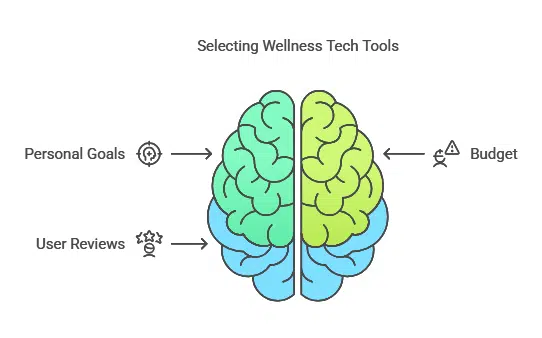
Selecting the right wellness tech tool depends on several factors:
- Personal Goals: Identify specific mental health needs, such as stress management or better sleep.
- Budget: Choose tools that fit your financial resources.
- User Reviews: Leverage feedback from others to assess effectiveness and usability.
Integrating Wellness Tech Into Daily Life
Incorporating wellness tech into your routine doesn’t have to be overwhelming:
- Start small by dedicating 5-10 minutes daily to mindfulness apps or mood trackers.
- Use wearables consistently to monitor progress.
- Balance tech use with offline activities like exercise or spending time in nature.
Wrap Up
Wellness tech tools transform mental health for professionals by offering accessible, innovative, and effective solutions to the challenges of modern life. From mindfulness apps to biofeedback devices, these tools empower users to take charge of their well-being and thrive in their careers.
Prioritizing mental health is no longer optional—it’s essential for long-term success and happiness. Explore wellness tech tools mentioned in this article and take the first step toward a healthier, more balanced professional life.
























