

Web3 is changing how businesses work online. Many companies feel overwhelmed by the idea of using this new technology. They fear it will mean starting over or spending too much time and money.
But here’s the good news: you don’t need to overhaul everything. There are smart, simple ways to use Web3 tools like blockchain technology, NFTs, and decentralized apps without major changes.
This guide will show “7 Ways Businesses Can Integrate Web3 Without Overhauling Everything”—helping you stay ahead while keeping things easy. Keep reading—you’ll want these tips!
What Is Web3 and Why Does It Matter for Businesses?
Web3 is the next version of the internet. It uses blockchain technologies to make online systems more secure and private. Unlike Web2, it allows direct peer-to-peer transactions without needing middlemen like banks or big tech companies.
Businesses can safely store digital identities, reduce fraud with smart contracts, and build trust through transparency.
This technology creates new ways to grow and connect with customers. Companies can use non-fungible tokens (NFTs) for exclusive perks or loyalty programs that boost customer engagement.
Blockchain-powered tools improve efficiency in supply chains by tracking goods more clearly. Web3 also reduces risks of data theft—offering businesses stronger security while creating a better user experience for their audience.
7 Ways Businesses Can Integrate Web3 Without Overhauling Everything
Businesses don’t need to start from scratch to use Web3 tools. Small steps, like using blockchain or NFTs, can make a big difference.
Tokenized Loyalty Programs
Tokenized loyalty programs use digital assets like NFTs or crypto to reward customers. These tokens can be stored in an e-wallet and redeemed for discounts, exclusive perks, or special access.
They offer brands a fresh way to increase customer engagement while boosting brand loyalty.
A coffee chain, for example, could give NFTs as rewards instead of traditional points. Customers might use these non-fungible tokens (NFTs) to unlock limited-edition products or membership tiers.
This makes rewards more unique and exciting than standard systems based on credit cards or subscriptions.
Transparent Supply Chains with Blockchain
Blockchain improves supply-chain traceability. Companies can track goods in real time on blockchain networks. This builds trust with customers by proving product authenticity and origin.
For example, retailers can verify if items are ethically sourced or meet safety standards.
Blockchains also improve inventory control. Businesses reduce waste by monitoring stock levels accurately. Smart contracts automate payments when goods arrive, cutting delays and errors.
These systems protect data from tampering, ensuring transparency for all parties involved.
NFTs for Certification and Exclusive Access
Businesses can use NFTs (non-fungible tokens) to verify certifications. These digital assets are tamper-proof and stored on the blockchain for added security. For example, a company offering training programs can issue NFT certificates instead of paper ones.
This ensures authenticity while saving costs.
NFTs also grant exclusive access to events or products. A concert could sell VIP passes as NFTs, giving fans something unique that cannot be forged. Online shops might offer special deals or memberships through these tokens, boosting customer engagement and loyalty rewards.
Decentralized Hosting Solutions
Decentralized hosting uses blockchain technology to store data across multiple servers. This removes the need for a central authority, reducing risks like server outages or hacks. For example, platforms such as IPFS (InterPlanetary File System) allow businesses to store files securely and access them quickly.
This method boosts security and protects customer privacy by avoiding single points of failure. It also lowers chances of data theft—a growing concern in e-commerce platforms. With decentralized applications, companies can build trust while improving uptime and reliability for users without expensive overhauls.
Low-code & No-code Smart Contracts
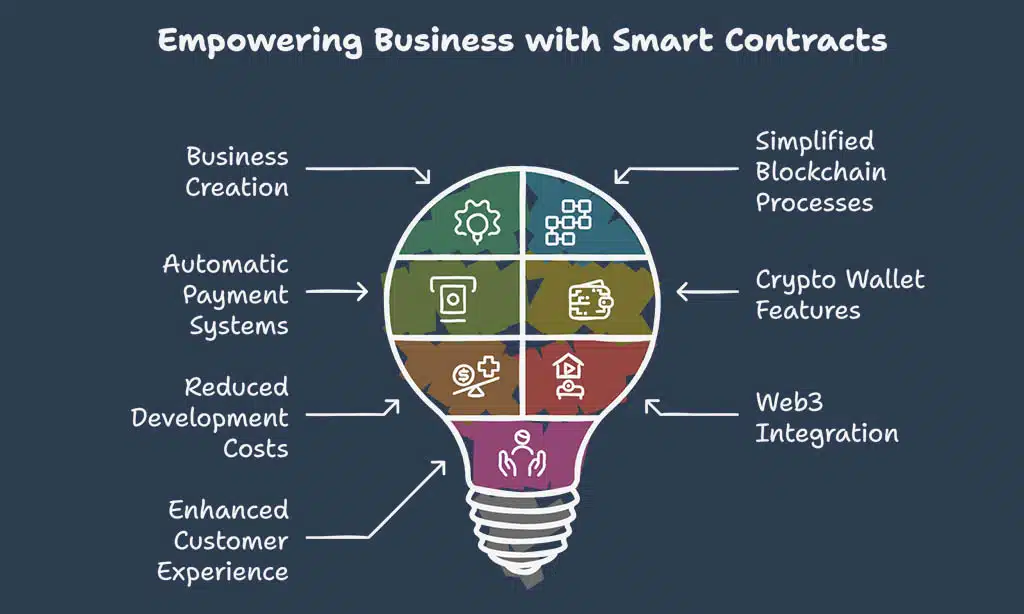
Low-code and no-code tools let businesses create smart contracts without deep coding skills. These tools simplify blockchain processes, making it easier for teams to use decentralized finance (DeFi).
For example, companies can set up automatic payment systems or crypto wallet features quickly.
Using these platforms reduces development costs and time. Businesses can deploy secure digital assets or streamline operations with minimal training. This approach supports Web3 integration while enhancing customer experience and trust in transactions.
Decentralized Identity Management
Decentralized identity lets users control their digital identities. Businesses can use it to enhance online security and protect user data. Blockchain technology makes this possible by storing information in secure, tamper-proof ledgers.
This reduces the risk of hacks and data theft.
Companies like PayPal or Facebook could use decentralized authentication systems for safer logins. Customers might enjoy signing in without sharing private details every time. This also builds trust while improving customer privacy with digital identities based on blockchain security.
Blockchain-Powered Payment Systems
Blockchain payment systems use secure technology. They allow businesses to accept crypto assets like Bitcoin or Ethereum. These payments are fast, transparent, and reduce fees by skipping banks or middlemen.
For example, using the Lightning Network enables quicker transactions with lower costs. Businesses can also avoid chargebacks since blockchain records cannot be reversed.
Customers gain more trust knowing their data stays private during transactions. Companies adopting blockchain-powered payments can tap into decentralized finance (DeFi) markets while offering a modern solution for buyers worldwide.
This shift helps improve customer engagement and supports online identity security in digital interactions.
Benefits of Gradual Web3 Integration
Gradual Web3 changes help businesses adapt without stress. They also build stronger trust and make processes smoother over time.
Enhanced Customer Trust
Businesses using Web3 make customer data safer. Blockchain technology adds security and stops unauthorized changes. Decentralized identity management lets users control their own information.
This reduces risks like hacks or misuse.
Transparent systems build confidence too. For example, customers can track product origins with blockchain-based supply chains. Seeing clear processes boosts trust in brands. Choosing Web3 tools improves customer relationships without huge system changes.
Streamlined Operations
Web3 tools like blockchain can simplify business processes. Smart contracts replace middlemen, cutting costs and saving time. Decentralized systems ensure better security, reducing data theft risks.
Payment systems powered by Web3 allow faster transactions without banks. Businesses using low-code solutions implement changes quickly. These methods boost efficiency while improving customer experience.
Takeaways
Businesses don’t need to rebuild everything to use Web3 tech. Small steps can bring big benefits, like better trust and smoother systems.
Dr. Alex Carter, a blockchain expert with over 15 years of experience, agrees. With a Ph.D. in Computer Science from Stanford and work on projects for top tech firms, he’s seen how new tools change businesses for the better.
He highlights that tokenized loyalty programs reward users while creating stronger bonds with customers. Low-code smart contracts save time and reduce errors in daily tasks. Using blockchain for payment ensures faster transactions without extra middlemen.
Alex explains safety is key here too. Blockchain protects data from hacks by sharing records across many computers, making tampering tough. He also supports NFTs as ethical ways to give exclusive value—like VIP access or certificates—to loyal users.
To fit these ideas into daily operations, start small: test one feature at a time like decentralized identity tools or safe payment methods online—especially if privacy matters most to your team or audience.
But Alex warns careful planning is vital; not all businesses see instant success with every method due to learning curves or costs upfront compared against older systems still thriving today.
His verdict? Using Web3 bit-by-bit lowers risks yet opens growth paths long-term—if done thoughtfully!
FAQs
1. What is Web3, and how can businesses use it without major changes?
Web3 refers to the next version of the internet that focuses on decentralization, digital assets like NFTs, and user privacy. Businesses can integrate Web3 by adopting tools like smart contracts or decentralized finance (DeFi) without changing their entire business model.
2. How can smart contracts help businesses in Web3?
Smart contracts are automated agreements that run on blockchain technology. They improve customer engagement by streamlining processes like payments or service delivery with secure and transparent systems.
3. Can a small business use NFTs without much technical knowledge?
Yes, small businesses can create non-fungible tokens (NFTs) for things like loyalty programs or unique digital products to enhance customer interaction—without needing deep technical expertise.
4. How does artificial intelligence fit into Web3 strategies for companies?
Artificial intelligence (AI) helps analyze data and improve usability in areas such as chatbots, online advertising, and personalized customer experiences within a Web 3.0 framework.
5. Are decentralized autonomous organizations useful for traditional companies?
Decentralized autonomous organizations (DAOs) offer new ways to manage decision-making through community voting while ensuring transparency—a feature even brick-and-mortar stores could explore for better operations.
6. Is integrating DeFi risky for existing business models?
Businesses don’t need to overhaul everything; they can start using decentralized finance (DeFi) tools at the application layer to test features like secure transactions or funding options before scaling up further efforts in this area.






















